
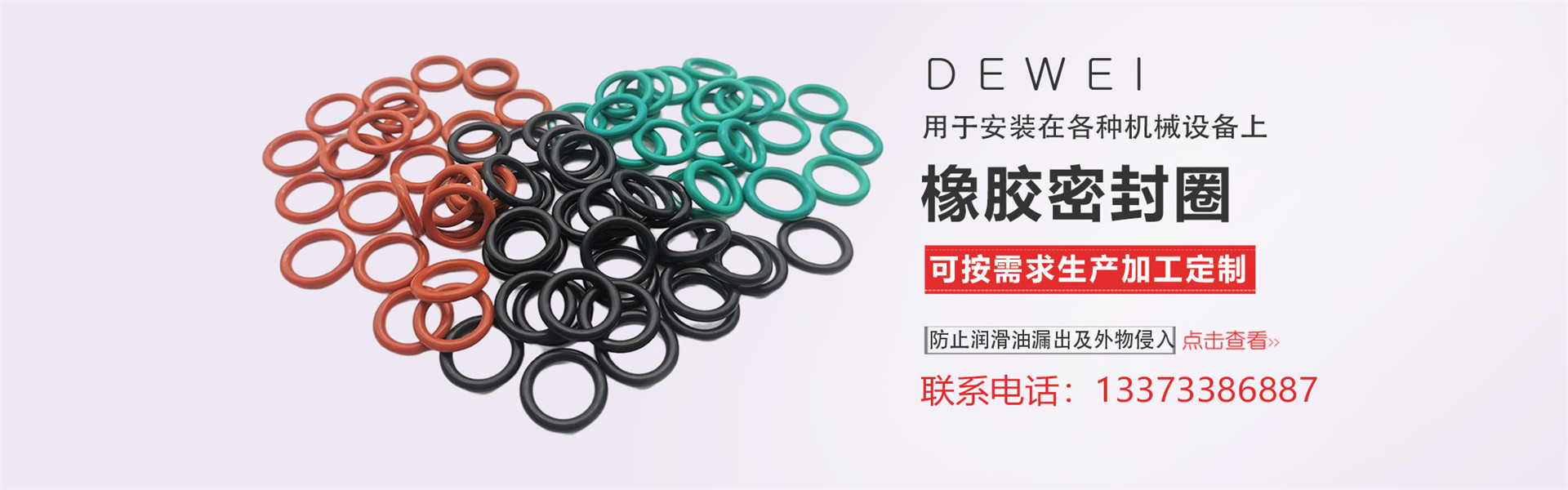
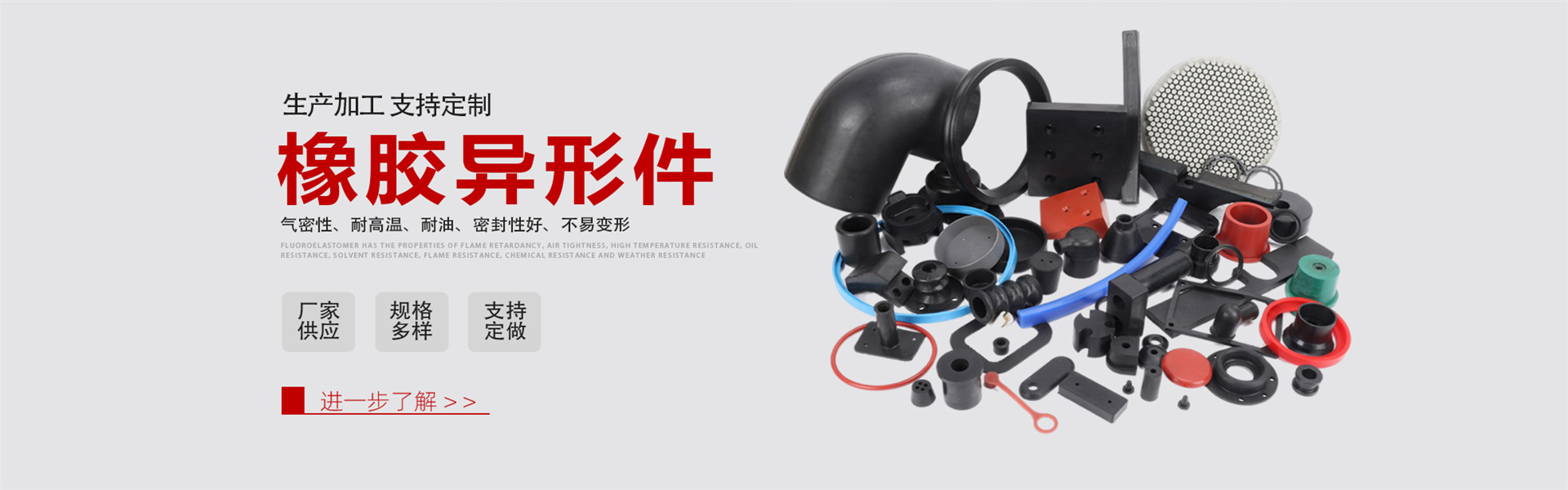

Rubber seals are annular covers made from one or several components, fixed to a sleeve or washer of a bearing and in contact with or forming a narrow labyrinth gap with another sleeve or washer, preventing the leakage of lubricating oil and the intrusion of foreign objects.
Features and Materials:
Sealed in static or moving conditions, these are designed for installation on various types of machinery, operating within specified temperature and pressure ranges, and in different liquids and gases.
Material Analysis of Rubber Sealing Rings
(1) Fluorinated rubber: Capable of withstanding high temperatures, it can be used in environments ranging from -30℃ to +250℃. It is resistant to strong oxidizers, oils, and acids and alkalis. Typically employed in high-temperature, high-vacuum, and high-pressure conditions, it is suitable for oil-based environments. Due to its versatile properties, fluorinated rubber is widely used in the petrochemical, aerospace, and other industries.
Silicone rubber: features outstanding high and low-temperature resistance, maintaining excellent flexibility within the temperature range of -70℃ to +260℃, and has advantages such as ozone resistance and weather aging resistance. It is suitable for use as a sealing gasket in thermal machinery. Can be used to produce thermal insulation, insulating products, and rubber products.
Nitrile Rubber: Known for its excellent resistance to oils and aromatic solvents, it is not resistant to ketones, esters, and chlorinated aliphatic hydrocarbons, thus nitrile rubber is primarily used for oil-resistant sealing products.
4. Chloroprene Rubber: Known for its excellent resistance to oils, solvents, and chemical media, chloroprene rubber is not suitable for aromatic oils. It is characterized by its resistance to weathering and ozone aging. In production, chloroprene rubber is commonly used to manufacture window and door seals, diaphragms, and general vacuum sealing products.
5. Ethylene Propylene Diene Monomer (EPDM): Known for its resistance to temperature, weathering, and ozone aging, EPDM is widely used in window and door seals and the automotive industry.
6. PTFE composite gaskets are a new type of sealing material made by combining polytetrafluoroethylene (PTFE) and full-synthetic rubber using special production processes. This material integrates the superior properties of both PTFE and rubber, offering excellent corrosion resistance, high-temperature resistance, as well as elasticity and sealing properties.
