

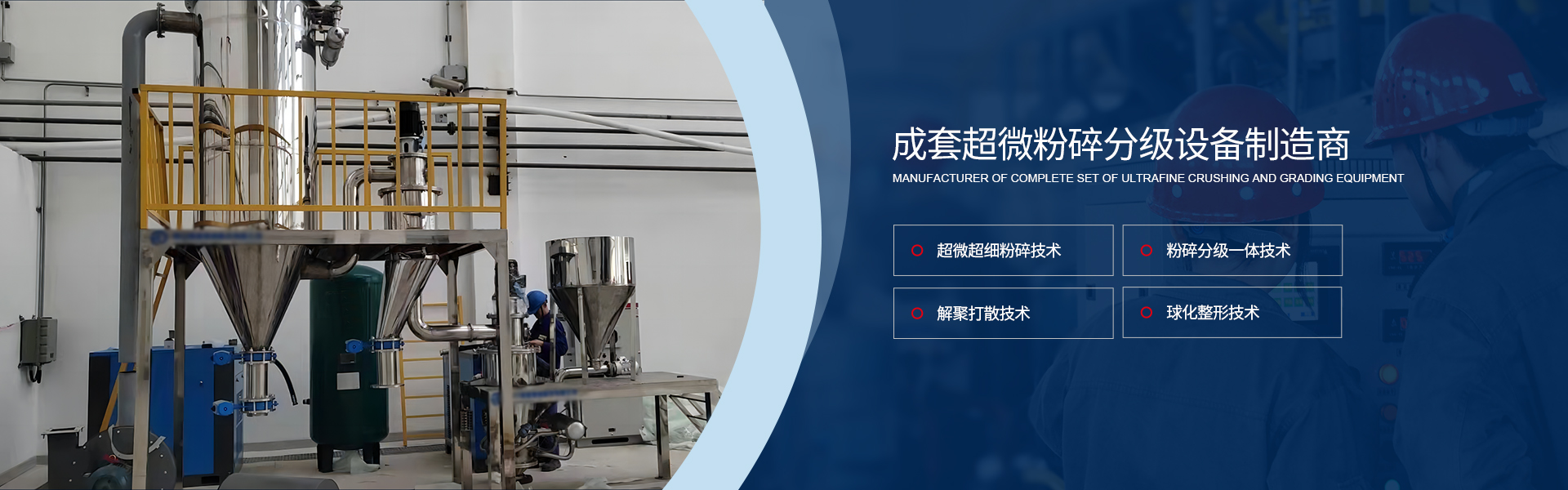
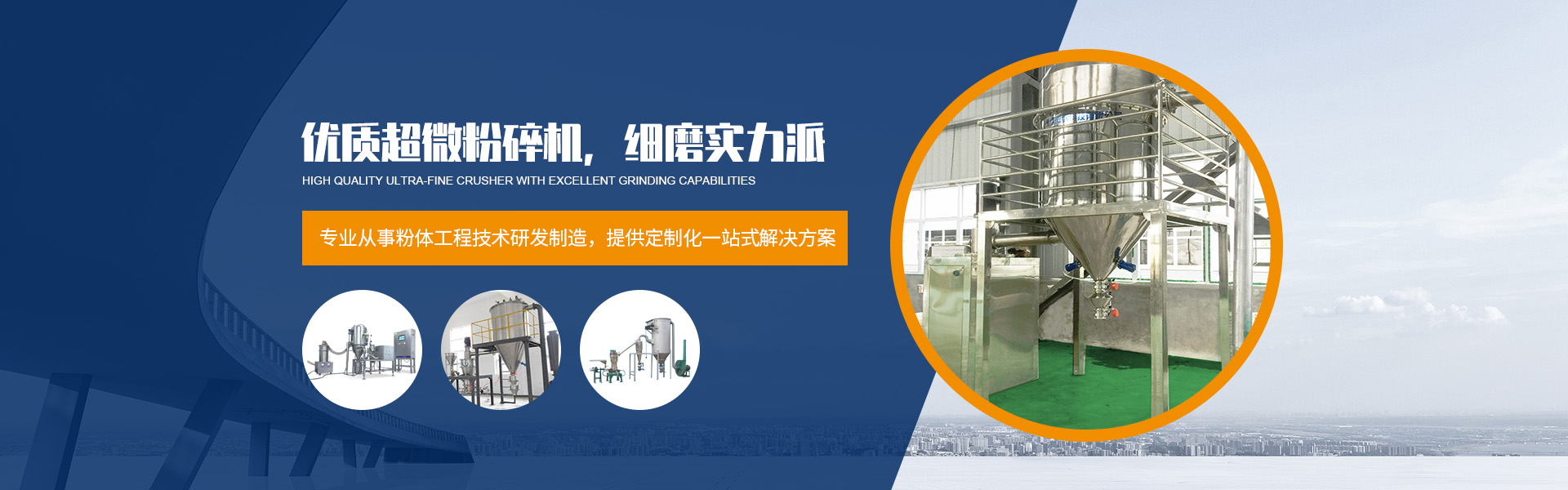
With the rapid development of the ultra-fine powder industry, due to its unique properties, air classifier mills have found widespread application in fluidized bed air grinding across various industries and are poised to become an important member and research focus in non-metallic industrial machinery and equipment.
The air classifier mill is the dominant type of air mill, boasting distinct advantages over other crushing equipment and symbolizing the mainstream direction of air mill technology. It is extensively used for ultra-fine crushing of dry powder materials such as traditional Chinese medicine, pesticides, chemicals, metallurgy, non-metallic minerals, talc, heavy stones, kaolin, graphite, flame-retardant materials, ***, and ceramics.
The air flow mill is widely used due to its high production capacity, high degree of automation, fine particle size, narrow particle size distribution, high purity, high activity, and good dispersibility.
The air jet mill operates by compressing air, freezing, filtering, and drying it, which is then expelled through multiple two-dimensional or three-dimensional nozzles to create supersonic airflow. This airflow is directed into the crushing chamber, utilizing the impact energy of the air stream to fluidize the material. The accelerated material meets at the intersections of the jet streams from multiple nozzles, resulting in intense collisions, friction, and shearing, thereby achieving ultra-fine particle crushing.
Airflow Pulverizer Installation and Operation: Before use, check that all fasteners are tightened. Inspect the pulverizing chamber for any metal or hard debris. Start the machine to ensure it runs smoothly and add material through the feed opening. When the unloader is in operation, do not insert your hand into the unloader outlet to avoid injury. The speed of the grading impeller must not exceed the specified limit; otherwise, it will damage the grading wheel and motor. The safety valve must be checked regularly.
