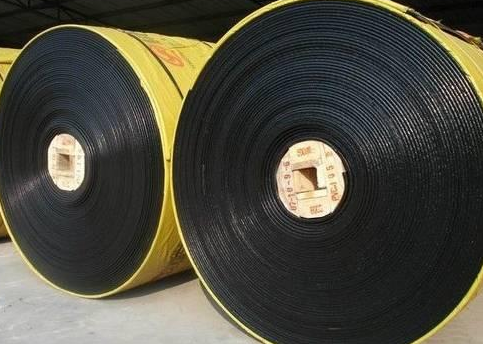


Overall CoreThe flame-retardant conveyor belt is manufactured by impregnating the solid belt core with a polyvinyl chloride emulsion and then plasticizing or vulcanizing it. This structure endows the conveyor belt with features such as high strength, large load capacity, and balanced transport, while also possessing excellent flame-retardant, antistatic, shock-resistant, wear-resistant, and corrosion-resistant properties.
High-quality Polyester FilamentThe body of flame-retardant conveyor belts is predominantly made from high-strength, low-elongation polyester filaments, combined with transverse high-strength, moderately molded nylon filaments, inherently possessing excellent characteristics such as lightweight, shock resistance, tear resistance, and high strength.
Flame Retardant ChemicalsTo achieve flame retardancy, flame retardants must be added. For instance, the flame-retardant layered PVG conveyor belts utilize a combination of antimony trioxide, chlorinated paraffin, zinc borate, and aluminum hydroxide, resulting in a strong flame-retardant effect through the coordination of various flame retardants.
RubberSome flame-retardant conveyor belts are coated with rubber on the belt surface, enhancing their wear resistance and friction coefficient through vulcanization processing, allowing for use at the same angle in wet and humid environments.
Glass FiberThermal-resistant glass fiber tape is a common flame-retardant material, characterized by its strong tensile strength, resistance to sulfuration, smoke-free, halogen-free, and non-toxic properties, as well as its non-flammability in pure oxygen. It is particularly suitable for applications such as flame-retardant cables, fire-resistant cables, low-smoke halogen-free cables, marine cables, and mining cables.
Fire-resistant fiberExpansion joint firestop strips are typically made from galvanized steel sheet and refractory fiber, while high-standard firestop strips are produced using alumina silicate refractory fiber and stainless steel sheets.