

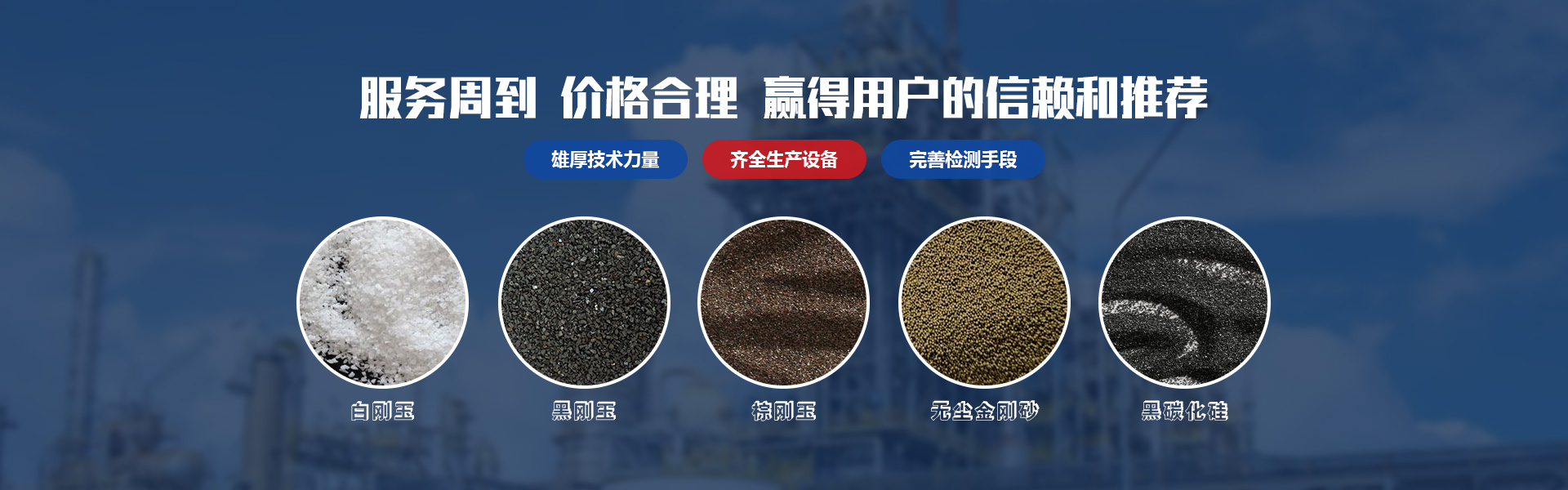

Black corundum is primarily composed of alumina (Al2O3) with a content of 70% to 80%, containing a significant amount of impurities such as silicon dioxide and titanium dioxide, and is a type of corundum that is black in color. It is a new type of environmentally friendly material. Many users may not be aware of its specific applications, so we will provide a detailed introduction to its content next.
Applied Discipline: Mechanical Engineering (Level I and Discipline); Abrasive Materials (Level II Discipline); Abrasive Materials (Level III Discipline) - Black Corundum, also known as Low-Alumina Corundum, is a gray-black crystalline substance primarily composed of α-Al2O3 and magnetite, obtained by melting bauxite in an electric arc furnace. It is characterized by a lower Al2O3 content and the presence of a certain amount of Fe2O3 (about 10%), thus offering moderate hardness, high toughness, high-temperature resistance, and stable thermal properties. It is widely used in free grinding, such as pre-plating sanding and rough grinding of products, primarily for stainless steel, metal products, optical glass, bamboo and wood products polishing and sandblasting. It is also a novel abrasive material for manufacturing resin砂轮, cutting sheets, and sandpapers.
The smelting process is essentially the same as that for brown fused alumina production. The method involves selecting high-quality bauxite, iron oxide, and other raw materials, adding trace elements, and then carefully smelting in a tilting arc furnace. This ensures that the resulting black corundum blocks are all of first grade, with minimal impurities, high purity, and stable quality. It lays the foundation for producing grinding media with moderate hardness, excellent toughness, and stable performance, including segmented sand, granular sand, and ultra-fine powder.
