

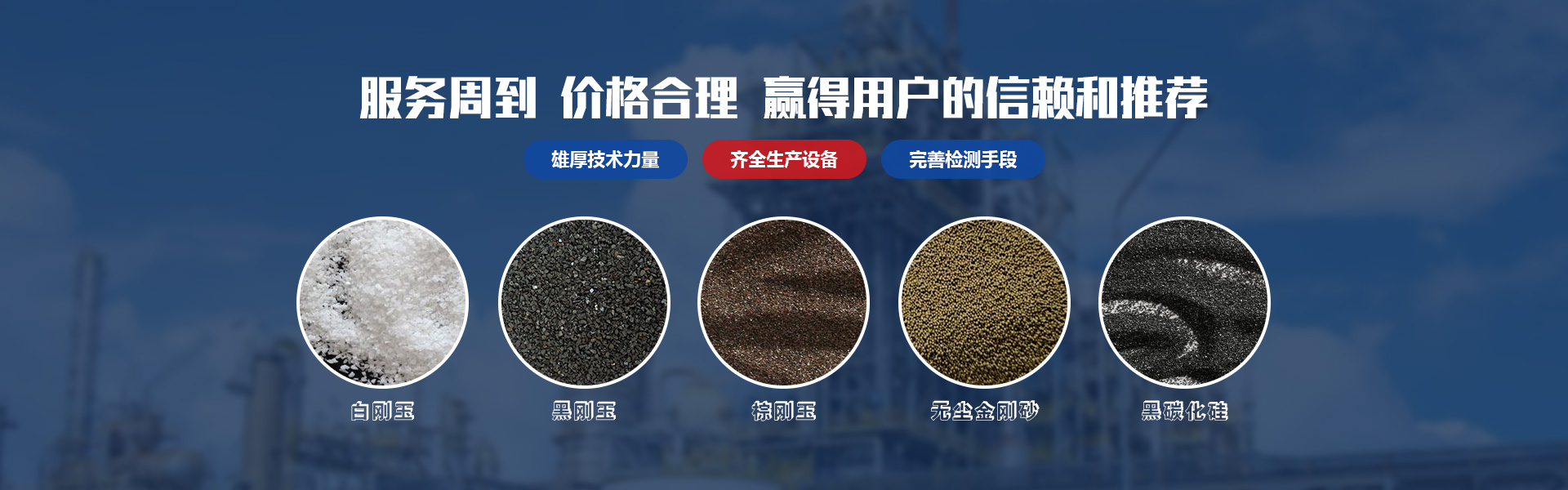

Brown fused alumina is a fundamental abrasive product, renowned for its excellent abrasive properties. It is a brown artificial corundum produced by melting and reducing bauxite, carbon materials, and iron shavings in an electric arc furnace. Currently, it finds extensive applications in industries such as refractory materials. What are its primary uses, then?
Brown fused alumina has four main application fields: functional ceramics, refractory materials, abrasives, and metallurgical raw materials.
1. As an abrasive, it can be used to manufacture abrasive tools such as grinding wheels, oilstones, grinding heads, and sand bricks, etc.
2. As a deoxidizer for metallurgy and high-temperature-resistant material.
High-purity single crystal, suitable for manufacturing semiconductor substrates and brown fused alumina fibers.
4. Due to its high hardness, excellent wear resistance, and high strength, it can be used in chemical systems as various reaction vessels and piping, as well as components for chemical pumps. It is also suitable for mechanical parts, various molds such as wire drawing dies and pencil lead extrusion nozzles; as cutting tools, abrasive molds, bulletproof materials, human joint replacements, and sealing rings.
Primary Applications: Used for wire sawing of monocrystalline silicon, polycrystalline silicon, potassium arsenide, quartz crystals, and other materials ranging from 3 to 12 inches. Engineering materials for solar photovoltaic industry, semiconductor industry, and piezoelectric crystal industry.
Covering fields such as semiconductor, lightning rod, circuit components, high-temperature applications, ultraviolet sensors, structural materials, astronomy, disc brakes, clutches, diesel particulate filters, fine wire thermometers, ceramic thin films, cutting tools, heating elements, nuclear fuel, jewelry, steel, protective gear, and catalyst carriers.
In addition, brown fused alumina is extensively used in the construction of furnace walls and roof linings for various high-temperature kilns. It not only withstands high temperatures but also provides insulation, playing a crucial role in enhancing the production efficiency of kilns.
