

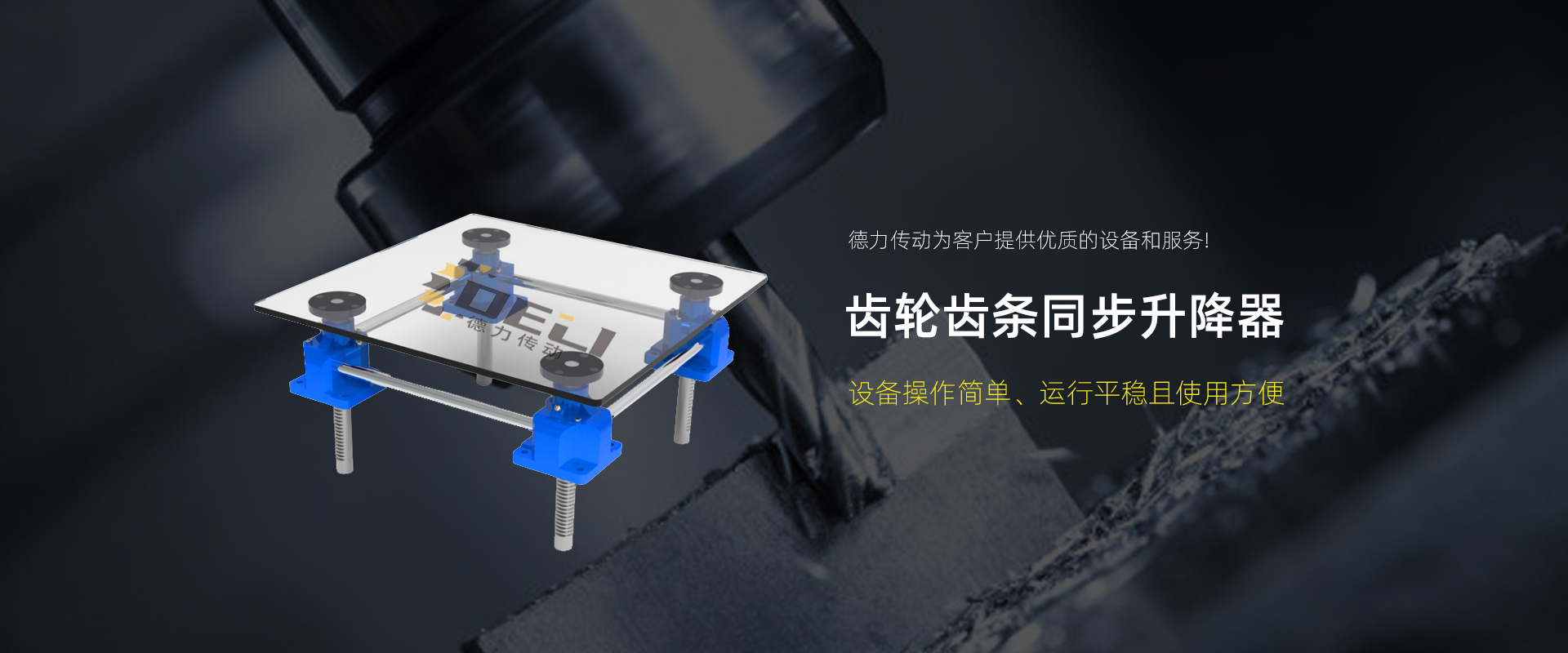
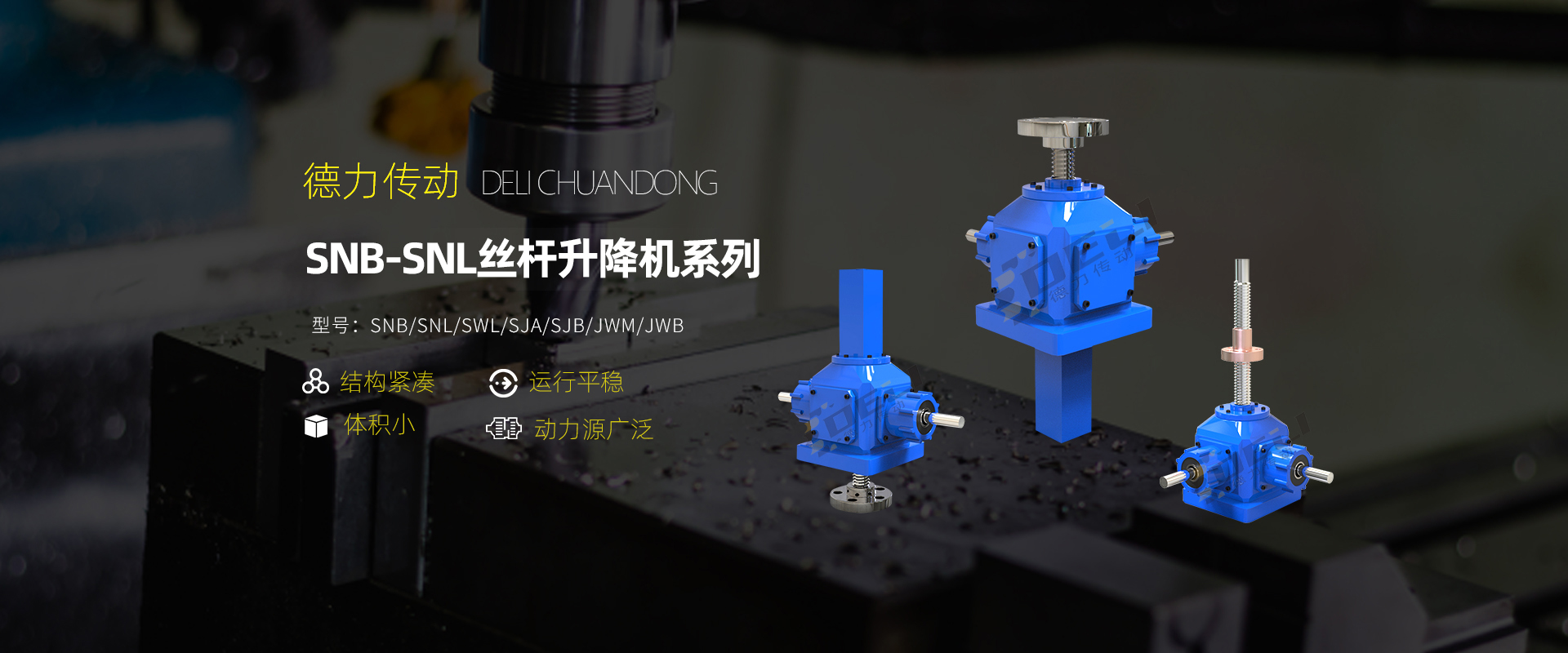
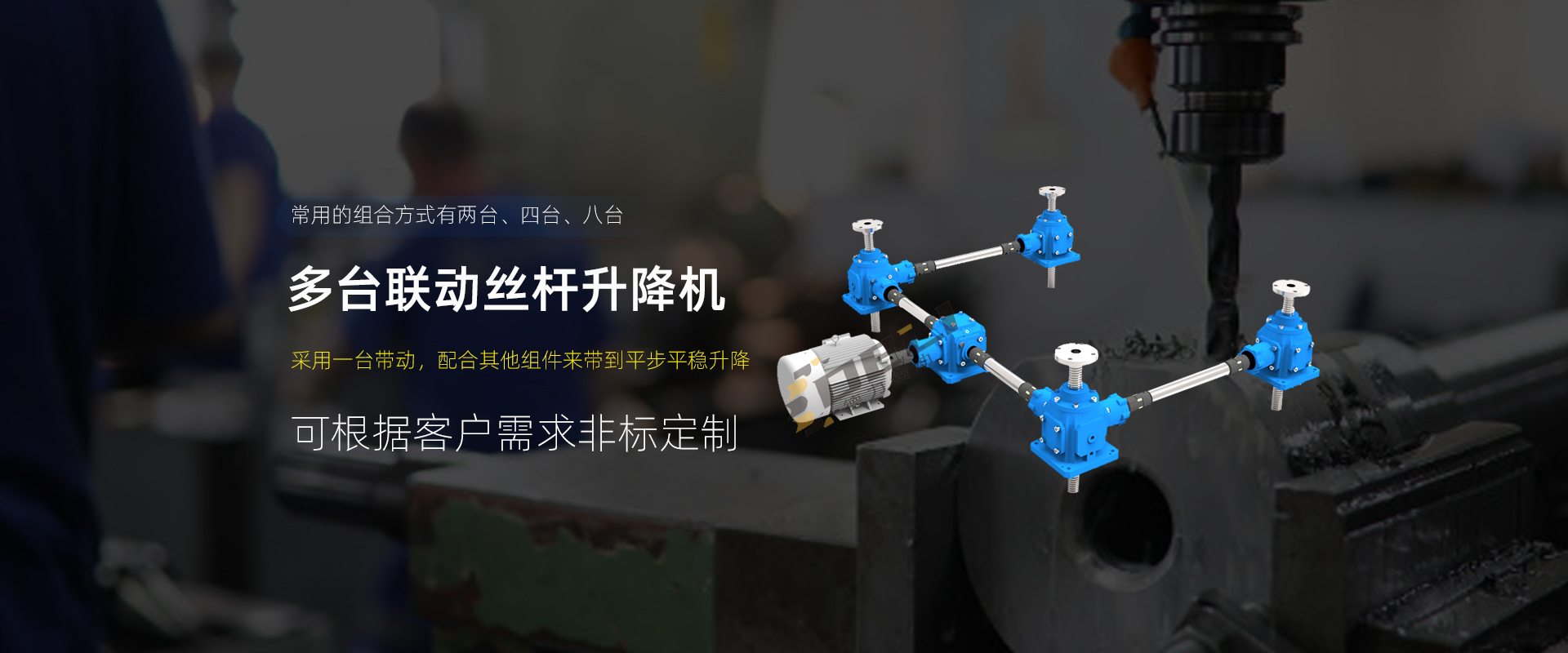

The worm and screw lifting machine, also known as the helical drive mechanism, is primarily used to convert rotational motion into linear motion or vice versa. There are types that are mainly used for transmitting motion, such as the feeding screw of machine tool worktables, as well as helical drive mechanisms for adjusting the relative positions of parts. The bearings are fixed at both ends of the worm, and oil seals are installed.
2. Place the turbine into the lower box 3 and cover the upper box. Remember to apply sealant between the cabinet interfaces or place it on the washers. Forgetting this step may lead to oil leakage. Secure the box nuts and check if the turbine is misaligned when pressing the box down.
3. Set-up, an adjustment of the offset must be made.
4. The end cover of the worm gear screw lifting machine should not be flattened or not be installed.
5. Never apply force when inserting a worm into the worm hole; otherwise, it may scratch the worm, worm bearing, and oil seal.
6. Seal the end cover of the turbine. Then press the end cover of the worm shaft to remember the seal. Rotate the worm shaft to see if it can turn. If it's too tight, adjust the tightness of the end cover. It's easy to do before the worm shaft is tightened.
7. Inspect and test the seal integrity of the reducer, as well as the vibration of the reducer.


