
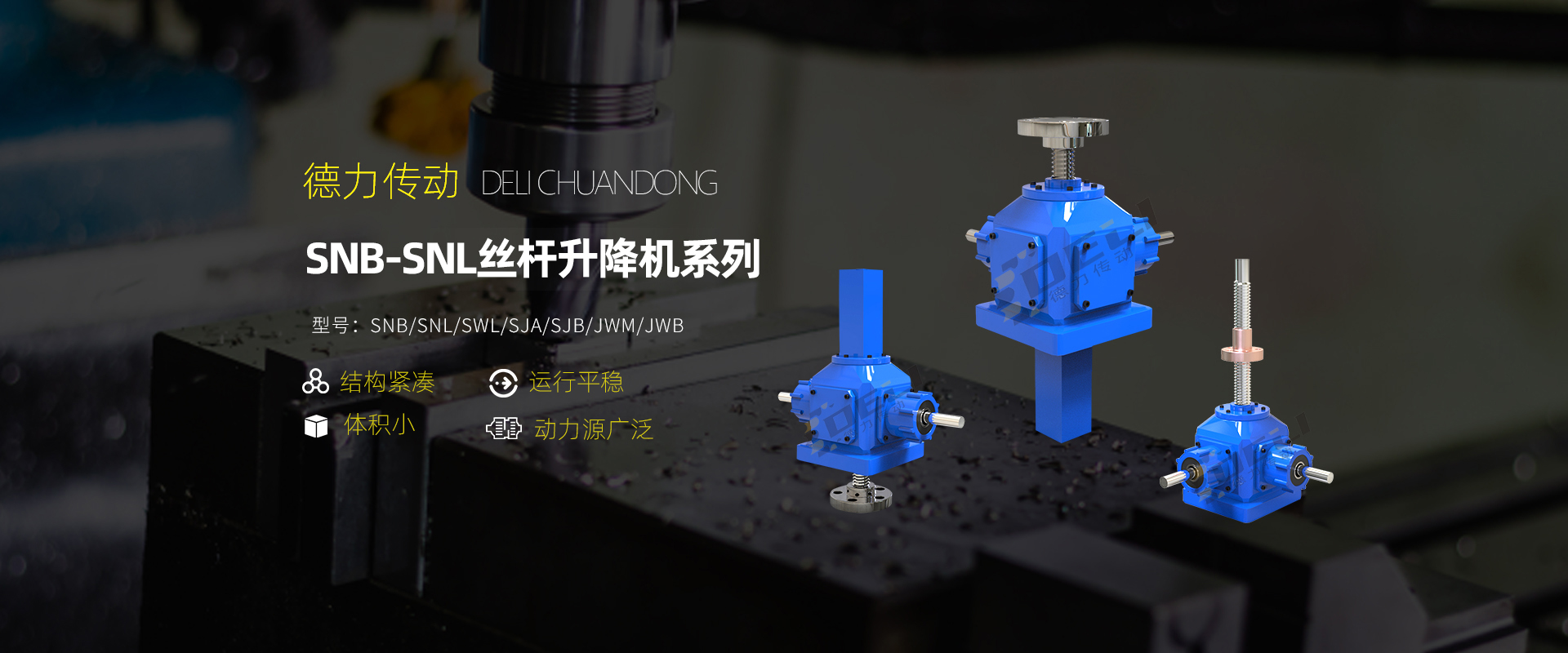
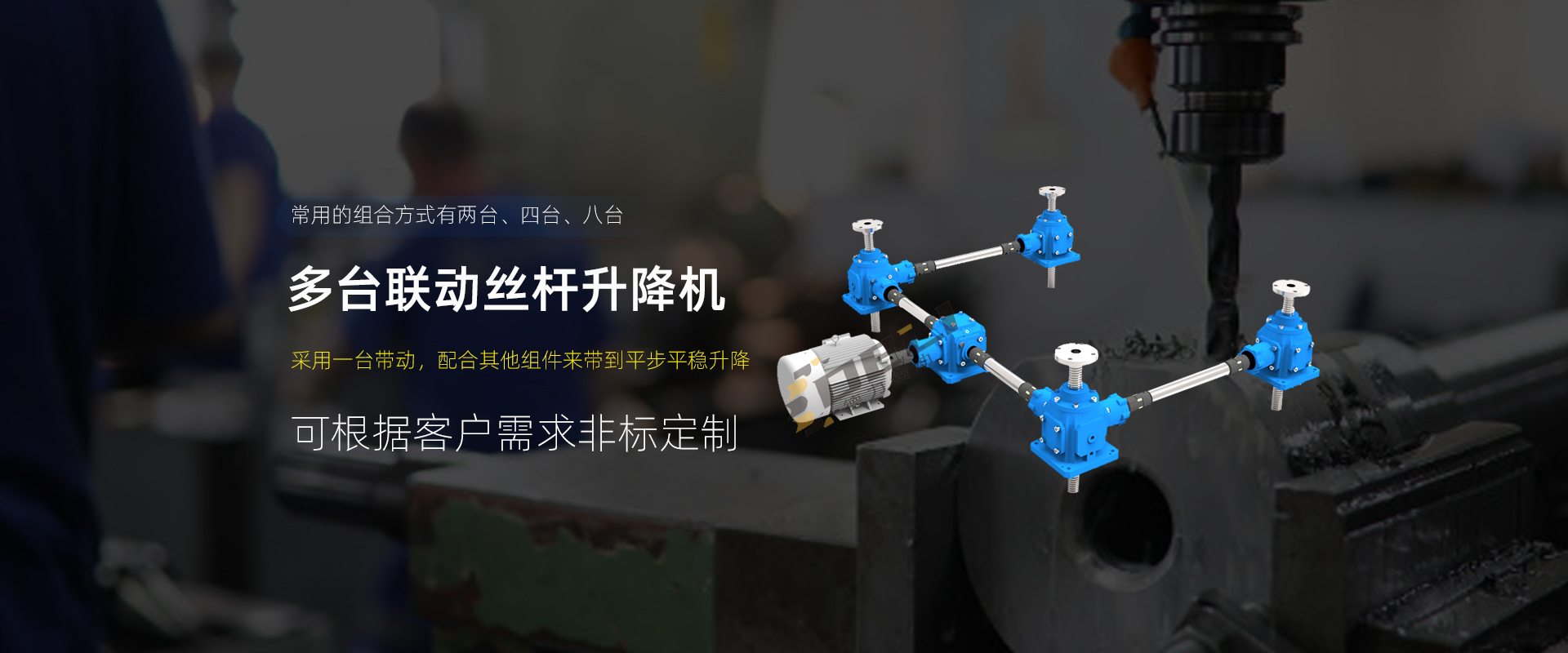

The screw jack is a fundamental lifting and lowering transmission device with a simple working principle. It is driven by an electric or manual motor to rotate the worm and worm gear. The internal cavity of the worm gear is machined with an internal thread, which drives the screw to move in a straight line axially. Due to the decelerating effect of the worm, worm gear, and screw combination, the screw jack can move objects in a straight line with very little force.
The screw jack can meet different load requirements ranging from 0.5T to 120T. The stroke is customizable based on actual usage needs. The number of teeth and module of the worm and worm gear are fixed, so each model of lifting jack can be selected with three speed ratios—fast, medium, and slow—to accommodate speed requirements. If the three speed ratios are not sufficient, a combination of ball screw and gear drive can achieve faster speeds; or adding a speed reducer can also slow down the speed. It is important to note that although the worm screw jack has a high load-bearing capacity, due to its structural nature, it has a low working speed and high energy consumption, making it unsuitable for long-term continuous operation on equipment. Prolonged continuous operation can cause the lifting jack housing to heat up and lead to severe wear between the various components.
The screw jack is easy to install, use, and maintain, and is widely used in industries such as automation equipment, machinery, metallurgy, and water conservancy. When selecting a worm screw jack, pay special attention to ensure that the static load, dynamic load, and impact load do not exceed its load-bearing capacity. According to the safety factor, use the stroke, check the stability of the screw, and choose a screw jack with sufficient capacity. As the pressure load decreases, the lifting height can be increased accordingly. The allowable torque, power, and speed vary with different loads, and the required power also differs with different work duration rates.
During the installation of the screw jack, adjust the bottom plane to ensure that the screw is aligned with the axis line. Calibration of the centerline elevation is necessary to prevent fractures in the housing and screw due to uneven installation forces. When connecting the couplings, alignment of the axes is required. For flexible couplings, the amount of float must not exceed the allowable range of the coupling. Additionally, during the installation process of the screw jack, ensure the screw is absolutely perpendicular to the installation surface, and prohibit the application of lateral forces externally. The worm gear housing of the lift must be securely mounted on the equipment to prevent loosening and vibration.
After installation, the screw jack should be operated without load first, then gradually loaded. Under normal circumstances, it should run smoothly without shocks, noises, or oil leakage. During operation, it is essential to promptly check and replace the lubricant to ensure sufficient oil lubrication for the worm and screw, reducing wear and extending the service life.


