

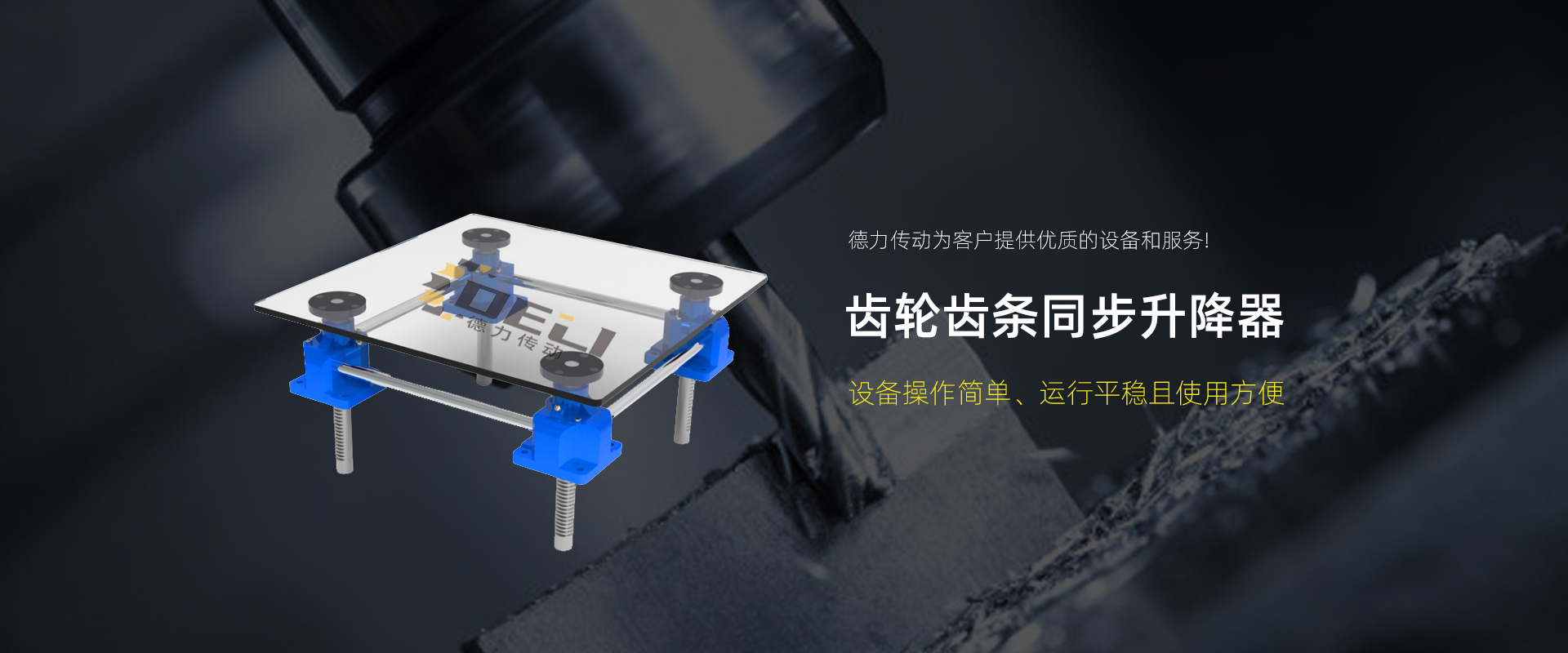
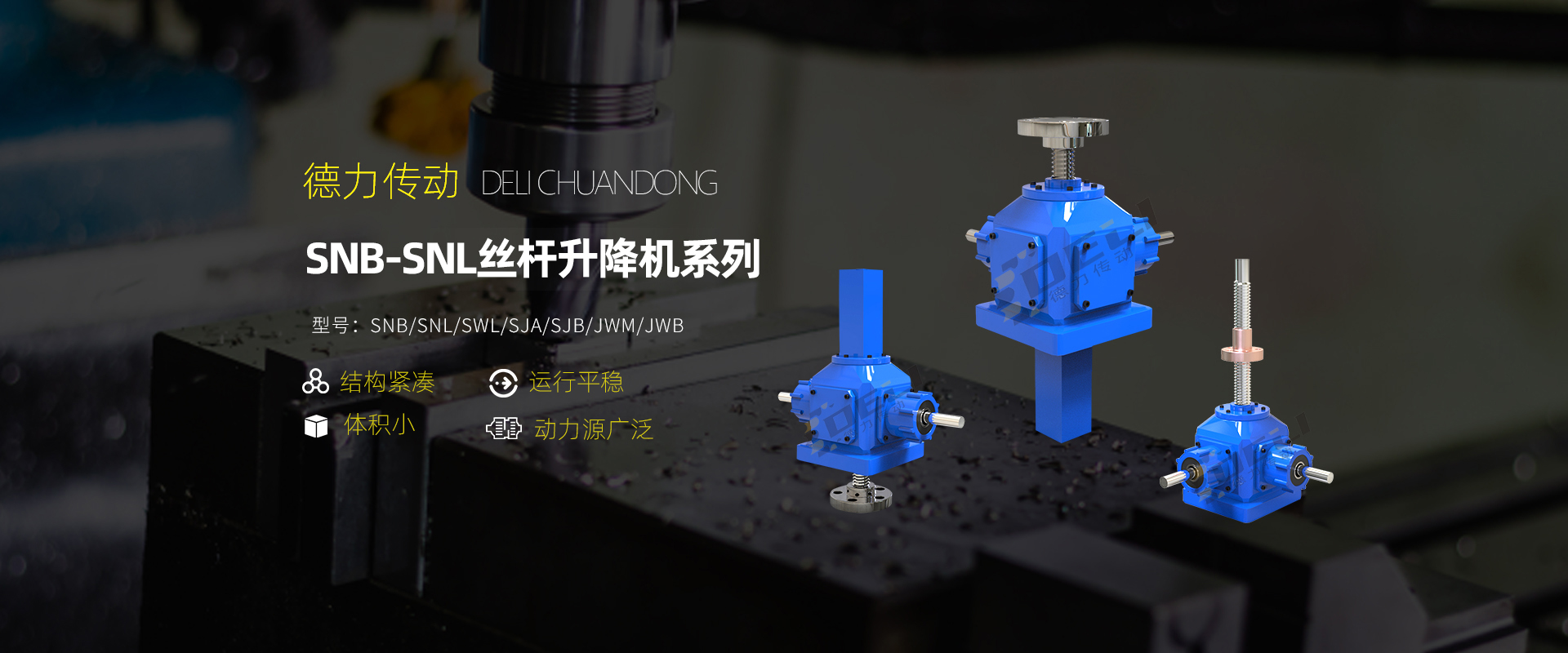
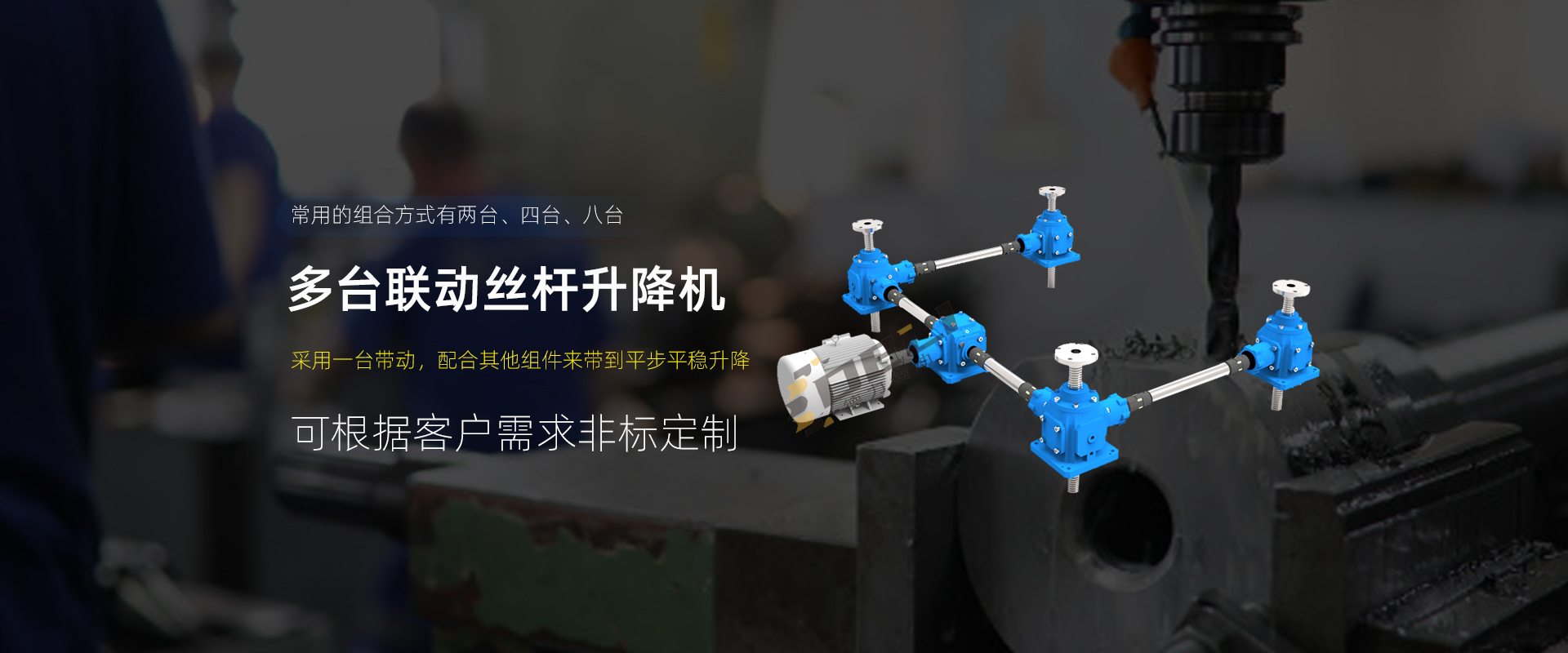

Helical Gear ElevatorEquipped with multiple functions such as lifting, advancing, descending, and flipping, it can accurately control the length of lifting or advancing according to a certain program. In the case of multiple units联动, it can bypass the bevel gear shift mechanism and directly connect. It can be powered by an electric motor or other sources, and can also be operated manually. The input speed is 500 rpm, with a lifting speed of 2.7 m/min. It offers various structural designs, with lifting heights customizable to customer requirements. The device typically features an automatic locking function.
Structural Style:
Hoist Structure Type:
Type 1 - screw rod performs axial movement.
Model 2 - The screw rotates, and the nut on the screw moves axially.
2. Assembly Type:
Each elevator structure is further divided into two assembly types.
Type A - Screw (or Nut) Moving Upward
B-type - screw (or nut) moves downward
3. Screw Thread Head Type:
The screw head parts of the 1st structural type are: I (cylindrical), II (flanged), III (threaded), and IV (flat head) in four styles.
The screw head in type 2 structural style is available in two types: I (cylindrical) and III (threaded).
4. Specifications:
Divided by lifting force: 2.5, 5, 15, 20, 35, 50×10KN, a total of eight types.
5. Transmission Ratio:
Lifts are categorized by lifting speed into two types: standard and slow. Slow speed is indicated by 'l', while standard speed is not marked.
6. Screw Protection:
I-TypePromotion to Elevator OperatorThe protection of screws is divided into: Basic Type, Anti-Rotational Type (F), and Enclosed Type (Z).
The protection of the 2-type lifting screw is divided into: Basic Type and Protective Cover Type (z)


