

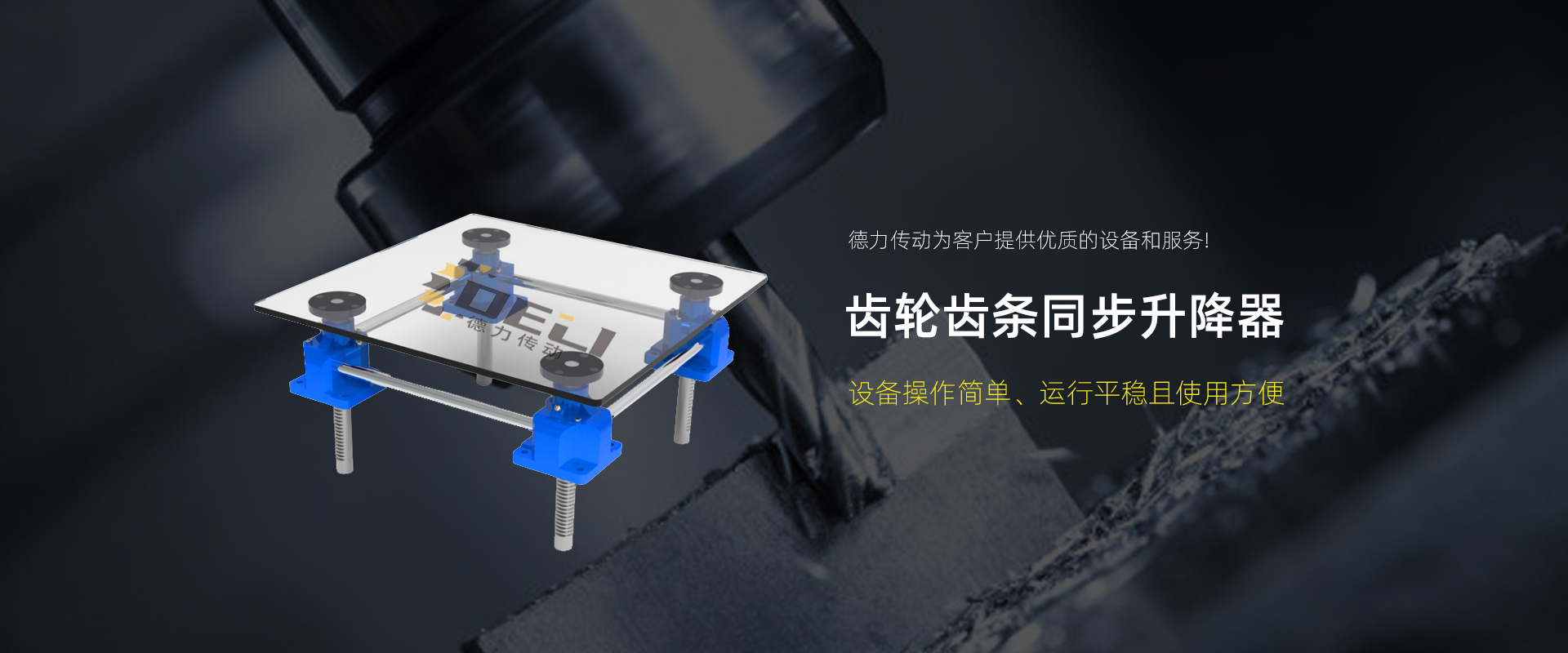
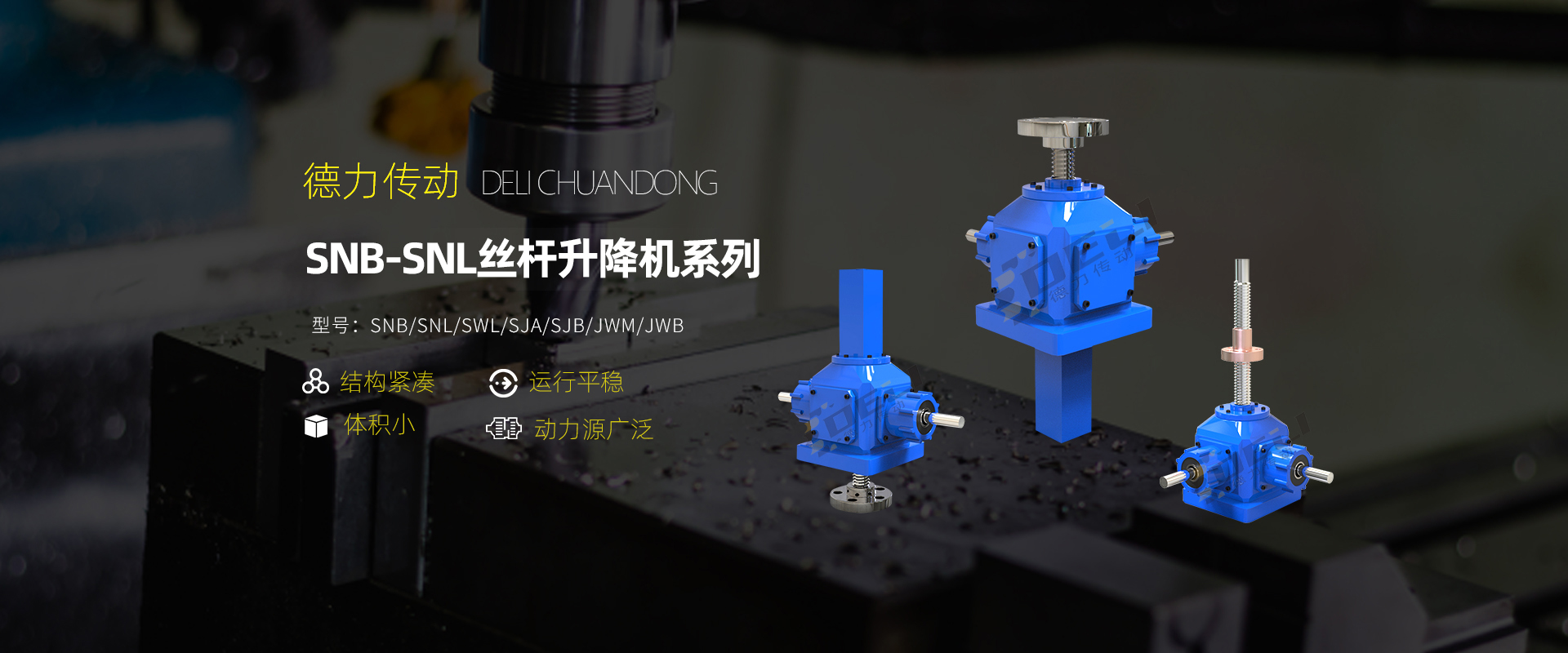
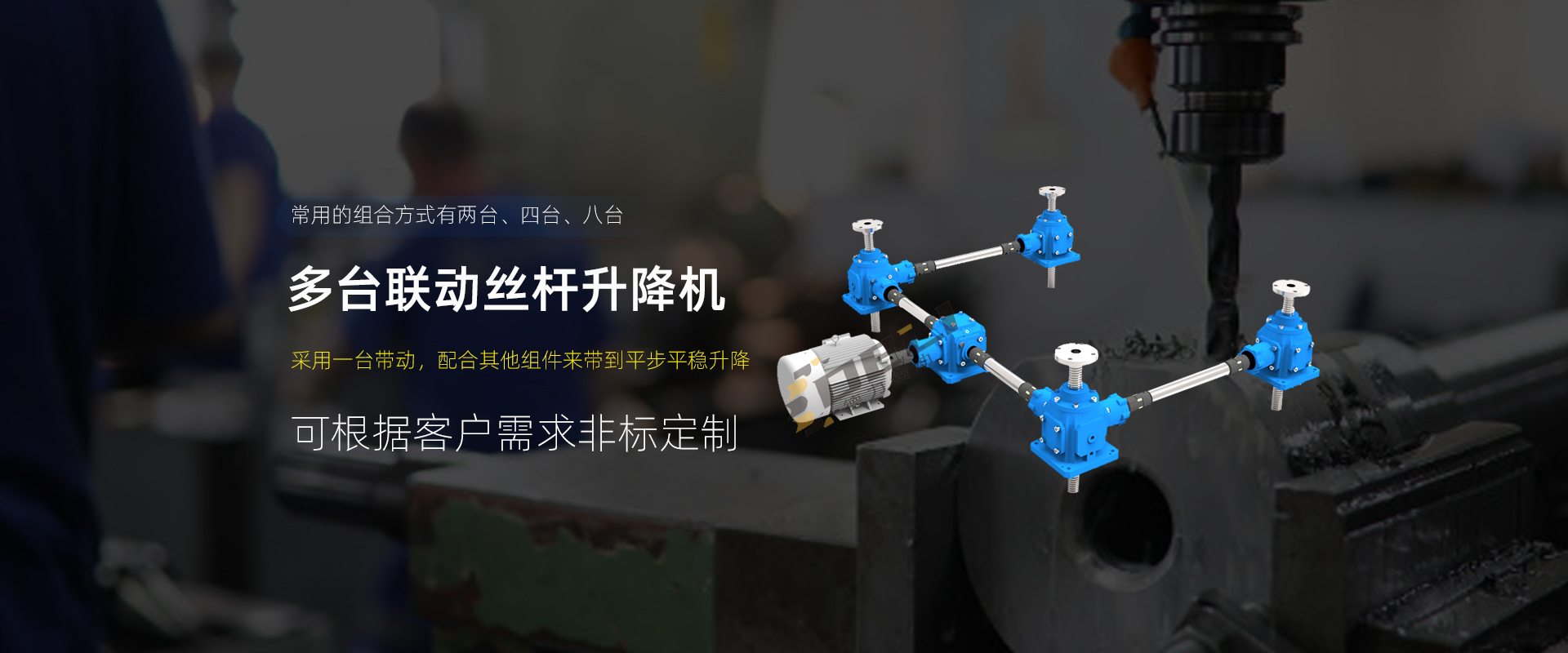

The screw jack, also known as the screw transmission mechanism, primarily converts rotational motion into linear motion or vice versa. There are those that primarily transmit motion, such as the feeding screw of machine tool tables, as well as screw transmission mechanisms used to adjust the relative positions of parts. The screw jack consists of a worm gear reducer and a screw, with the减速 component being the worm gear drive, which uses the worm to drive the worm gear for减速. The worm gear acts as the nut for the lifting screw, matching it perfectly.
Features of the screw jack:
The screw and nut have ball bearings placed between the threaded grooves.
When the screw or nut rotates, the ball bearings roll along the thread groove, generating rolling friction between the screw and nut during relative motion. To prevent the ball bearings from rolling out of the groove, return guide devices are installed at both ends of the nut's helical slots.
They form a circulating loop with the threaded raceway, allowing the ball to circulate within the nut's raceway.
Transmission forms are based on the combination of relative motion between the screw and nut. There are two basic types of basic transmission forms for screw lift machines.
(1) Nut fixation, screw rotation, and movement are achieved in this transmission method, which, due to the nut's inherent supporting role, eliminates additional axial movement that could arise from screw bearing, resulting in a simpler structure and higher transmission accuracy. However, the axial dimensions should not be too long, as this would reduce rigidity. Therefore, it is only suitable for applications with shorter travel distances.
(2) The screw turns and the nut moves. This type of transmission requires limiting the nut's rotation, hence the need for a guiding device. It features a compact structure, good screw rigidity, and is suitable for applications with a large working travel.
The screw jack is widely used in various industries such as machinery, metallurgy, construction, chemical industry, cultural and health sectors. It can accurately control and adjust the height of lifting or propulsion according to a certain program, and can be directly driven by an electric motor or other power sources, as well as manually.


