

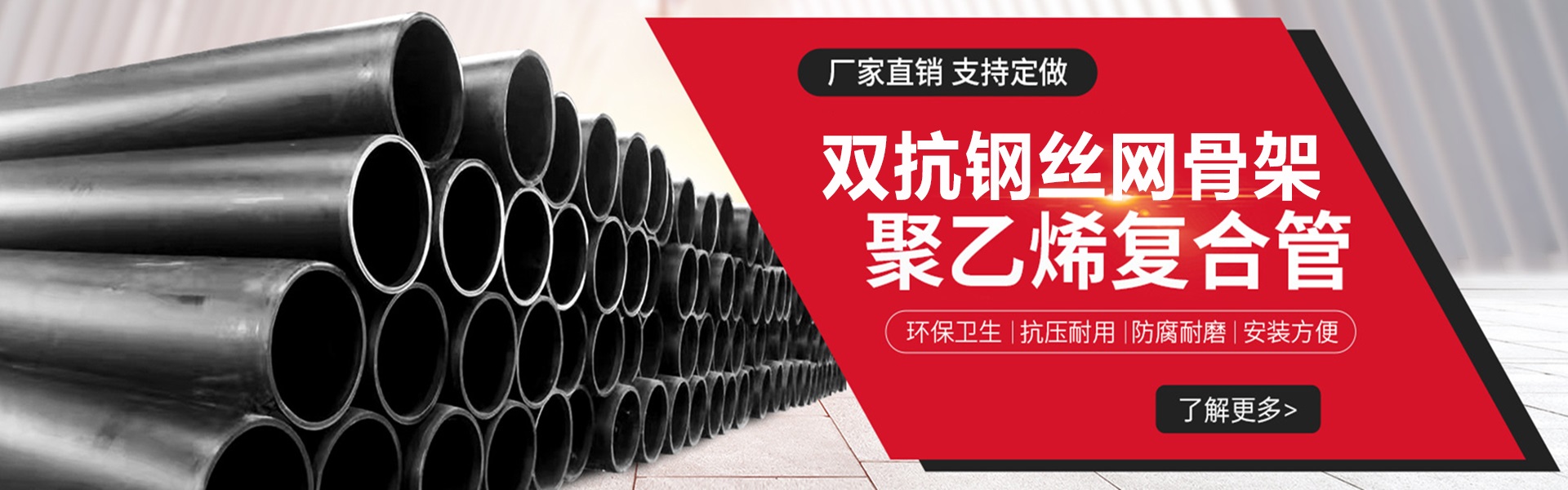

With the continuous advancement of technology, the variety and applications of plastic pipe materials have been expanding, gradually replacing products made from other materials. Although there is a wider range of options, this also brings some headaches for users. When purchasing, they often compare different types of products, such as what are the differences between steel-wire reinforced polyethylene composite pipes and PE pipes?
I. Unique Features
1. Steel-reinforced polyethylene composite pipe: Overcomes the rapid stress cracking phenomenon of plastic pipes. As the structure of steel and plastic materials is composite, rapid stress that plastic pipes find difficult to overcome does not occur.
2. PEX pipes: Free from heavy metal salt stabilizers during processing, the material is non-toxic, free of scaling, and does not promote bacterial growth, effectively addressing the secondary pollution of urban drinking water.
Two: Different Main Subjects
1. Steel wire mesh reinforced composite pipe: A composite pipe made of high-strength plasticized steel wire mesh as the reinforcing skeleton and thermoplastic polyethylene as the raw material, with the steel wire mesh as the reinforcing element for the polyethylene plastic pipe.
2. Polyethylene (PE) Pipes: Composite pipes made from monomer ethylene, which can produce resins of different densities due to varying polymerization reaction conditions such as pressure and temperature during the聚合 process.
Section Three: Applications Vary
1. Steel-wire-reinforced polyethylene composite pipe: A superior new type of pipeline, widely used in oil fields, power plants, chemical and petrochemical enterprises, water supply companies, municipal gas pipelines, and seawater utilization systems across various fields.
2. PEX pipe: Widely used, with water supply and gas pipelines being its two primary application markets.
Steel-wire mesh reinforced polyethylene composite pipes and PE pipes, although both fall under the category of plastic pipes, there are some differences in both the production process and application scope. Understanding the distinctions between the two can also help users make better choices.
