
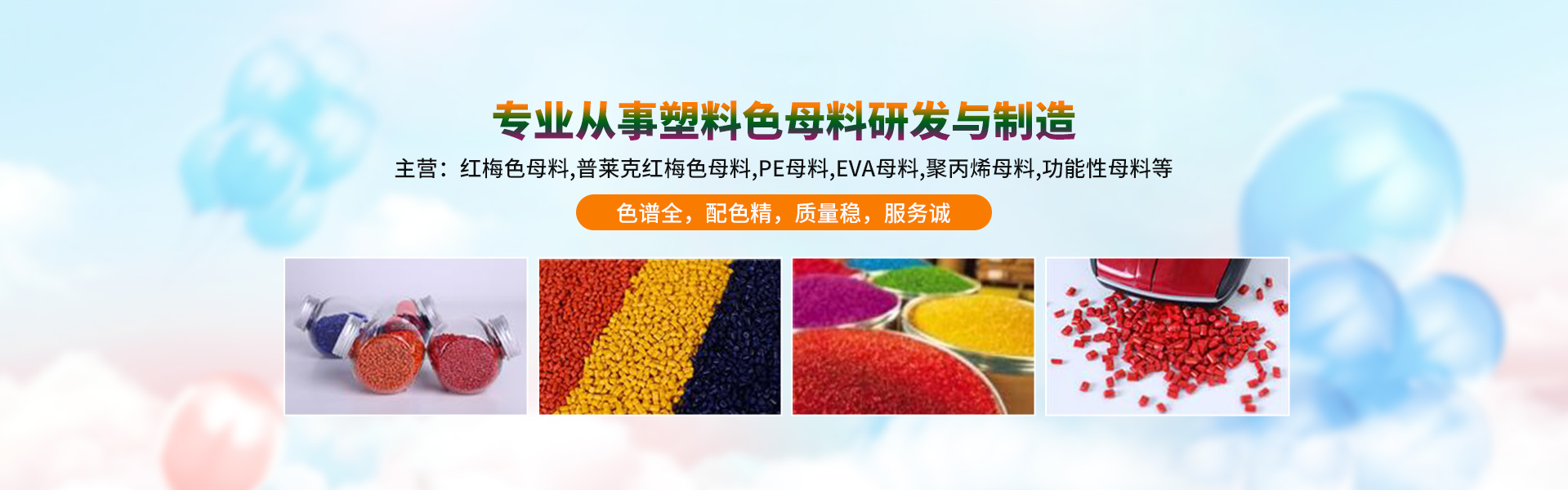
公司主营:An early-established domestic company specializing in the research, development, and manufacturing of plastic masterbatches, mainly focusing on the Pulei Hongmei masterbatch and other Hongmei masterbatches.
13401546619
Product Center
Company Qualification
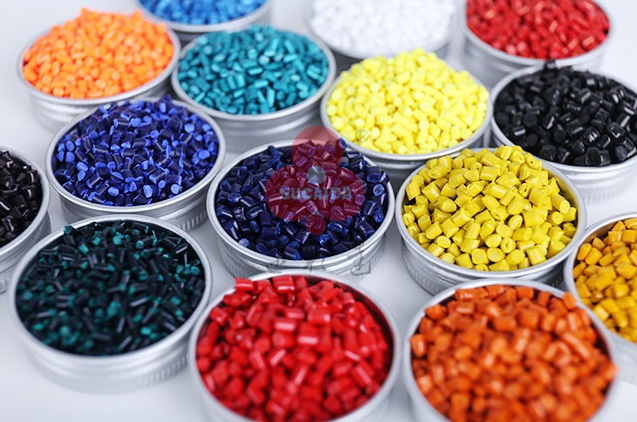
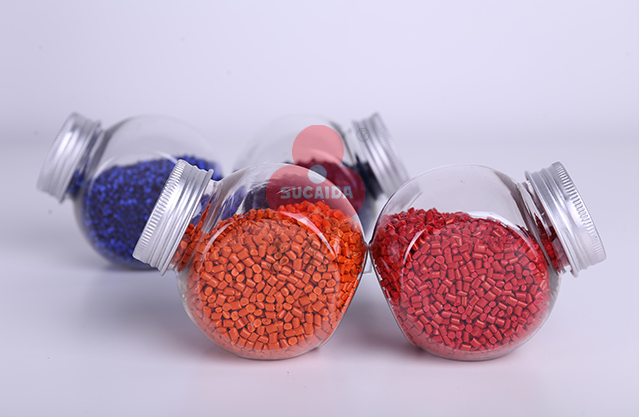
Red Plum Color Masterbatch Manufacturer /普莱克Red Plum Color Masterbatch
Details Introduction
Red Plum Masterbatch Manufacturer /普莱克 Red Plum Masterbatch
How to Choose the Suitable White Masterbatch for Yourself
The application range of the white base material:
White masterbatches have a wide range of applications on films, including courier bags, milk packaging, detergent bags, protective films, food packaging bags, and more. Besides their extensive use in films, white masterbatches are also in high demand in sheet materials, tubes, blow molding, injection-molded products, and other fields. These applications are mainly achieved by blending white masterbatches with resins in extruders, followed by blowing, coating, stretching, blow molding, and injection molding processes. The application areas of white masterbatches cover the packaging industry, electronic consumer goods, real estate, automotive, and home appliance sectors, making white masterbatches an indispensable part of the national economy.
Performance characteristics of white mother:
Whiteness
The brightness of white masterbatch is primarily presented by the titanium dioxide in the masterbatch. There are many factors affecting the brightness of titanium dioxide, including the size, shape, and particle size distribution of the titanium dioxide particles, the types and concentrations of impurities, and the defects in the crystal lattice of the titanium dioxide particles. Generally, due to the higher purity of raw material titanium dioxide in the chlorination process and fewer impurities during preparation, the brightness of chlorination titanium dioxide is better than that of sulfuric acid method. In the real white masterbatch market, many white masterbatch manufacturers add calcium carbonate, barium sulfate, and zinc sulfide with equal ash content to imitate titanium dioxide. In fact, the brightness of these inorganic powders is not comparable to that of titanium dioxide.
![(7]OYHU2`7BC2HTCRGS7{NV](http://l.b2b168.com/2018/01/11/12/201801111234044946324.jpg "(7]OYHU2`7BC2HTCRGS7{NV")
2. Coverage
Covering power is a crucial specification for white masterbatch that users demand. Good covering power indicates strong coloring ability of the pigment, allowing for the desired effect with a smaller addition. The covering power of white masterbatch depends on the choice of titanium dioxide and the processing technology. Rutile-type titanium dioxide, compared to anatase-type, has smaller and denser unit crystals, as well as a higher refractive index, thus offering superior covering power and UV resistance. For white masterbatch using the same type of rutile titanium dioxide, a smaller particle size and narrower particle size distribution, well dispersed in the base material, results in better covering power than that with a wider particle size distribution and poor dispersion. Similarly, the covering power of common substances like calcium carbonate, barium sulfate, and zinc sulfide is incomparable to that of titanium dioxide.
Material - Refractive Index
Polyethylene $1.48
Barium sulfate 1.64
Calcium Carbonate 1.68
Zinc Sulfide 2.37
Titanium Dioxide (Type A) - $2.55
Titanium Dioxide (R-Type) - 2.75
The refractive index comparison above shows that the rutile titanium dioxide has a significant difference in refractive index with the carrier PE resin, offering excellent dispersion properties and strong covering power, i.e., coloring strength.
3. Dispersibility
Dispersibility significantly affects the application of titanium dioxide in plastics. Generally, the finer the titanium dioxide particles, the better the dispersion, resulting in higher color strength. Moreover, when fine printing is required on films, using white masterbatch with excellent dispersibility yields clearer patterns, better depth of field, and brighter colors. This is because the microsmoothness of the base film material is one of the key determinants of the quality of the printed patterns.
Moisture Content
The moisture content in white masterbatch significantly impacts its performance. Generally, moisture content should be controlled below 1500ppm, with stricter requirements below 600ppm. In injection molding processes, raw materials are typically dried before production. For film production, customers purchase pre-mixed materials and use them directly. High moisture content in masterbatch can directly lead to film破裂, or form small bubbles and "crystal spots" on the film. The reasons for high moisture content in white masterbatch can be attributed to both the raw materials selected and the manufacturing process.
5. Odor
Some film manufacturers may detect a strange odor after using white masterbatch, which is not permitted in milk film and food-contact films. This is primarily due to the inappropriate choice of coating aids or excessive addition in the organic processing of the titanium dioxide in the masterbatch, or issues with the dispersant used during the masterbatch production process. Consider changing to a different white masterbatch brand.
6. Color Tone Selection
Titanium dioxide rutile, due to its lower reflectance in the violet region, has a "yellowish" tint. This "yellowish" tint gives colored products a "vintage" feel and can reduce the vibrancy and depth of fine print images, which is generally disliked by many users of white masterbatches. However, by adding a trace amount of fluorescent whitening agent to the titanium dioxide, it can absorb ultraviolet light with wavelengths of 300-400nm and convert it into blue fluorescence with wavelengths of 400-500nm, making the white masterbatch appear "blueish." Users of white masterbatches can consider this based on their needs.
7. Liquidity
The flowability of white masterbatch can be expressed as the melt index (MI). A lower value indicates poor flow, while a higher value signifies better flowability. Good flowability implies superior processing properties, lower machine torque, and reduced power consumption. When selecting white masterbatch, in addition to ensuring good flowability, users should also pay attention to the compatibility of the MI with the carrier resin used in their factory's products. Generally, the MI of the color masterbatch should be higher than that of the carrier resin.
8. Printing Heat Sealing Properties
White film products usually require printing and heat sealing. The addition of calcium carbonate in the white masterbatch can affect the clarity and vibrancy of the printed patterns. Improperly added or excessive dispersants in the masterbatch can also impact the heat-sealing and printing properties.
9. Fade and weather resistance
White masterbatch generally requires UV resistance to 7-8 levels, weather resistance to 4-5, and heat resistance up to 280 degrees. These requirements largely depend on the quality of the titanium dioxide, and to meet these conditions, rutile titanium dioxide is a must.
10. RoHS&FDA
Heavy metal testing and food contact approval are also critical indicators for white masterbatch, as many white films are used in food packaging, and passing the FDA food certification is a mandatory test to be conducted.
A brief introduction to titanium dioxide:
Manufacture white masterbatch, its quality largely depends on the core material—titanium dioxide. Below is a brief overview of titanium dioxide.
Titanium Dioxide Categories
Titanium dioxide exists in three crystalline forms in nature: rutile, anatase, and brookite. Brookite belongs to the rhombohedral crystal system and is an unstable form, converting to rutile above 650°C, making it commercially unfeasible. Anatase is stable at room temperature but transforms into rutile at high temperatures. Both rutile and anatase are tetragonal, but have different lattices. Rutile crystals are slender and acicular, often occurring as twins, while anatase is generally near-regular octahedra. Due to its unit cell composed of two titanium dioxide molecules compared to anatase's four, rutile has a smaller and denser unit cell, resulting in greater stability and relative density. Consequently, it boasts higher refractive indices and dielectric constants and lower thermal conductivity than anatase.
Titanium dioxide manufacturing process
Sulfuric Acid Process
Titanium iron powder is reacted with concentrated sulfuric acid to produce titanium sulfate, which is then hydrolyzed to form metatitanic acid. After calcination and crushing, the titanium dioxide product is obtained.
2FeTiO3 + 6H2SO4 (concentrated and hot) = Fe2(SO4)3 + SO2↑ + TiOSO4 + 6H2O
TiOSO4+2H2O=H2TiO3↓+H2SO4
H2TiO3 = high temperature = H2O + TiO2
Chlorine gas method
The chlorination process involves reacting titanium-containing raw materials, such as high-titanium slag, artificial rutile, or natural rutile, with chlorine gas to produce titanium tetrachloride. After purification through distillation, gas-phase oxidation is conducted. Following rapid cooling, a gas-solid separation yields TiO2.
2FeTiO3+6C+7Cl2=2FeCl3+2TiCl4+6CO
TiCl4+O2=TiO2+2Cl2
To shield ultraviolet light and enhance the weather resistance of titanium dioxide, an inorganic coating is initially applied. Common inorganic coatings include silicon, aluminum, zirconium oxides, and hydroxides. Organic coatings are then used to improve the dispersion of titanium dioxide in plastics, primarily dimethylsilane and polyethylene glycol.
Current status of white masterbatch
White masterbatch is produced by adding titanium dioxide to the carrier resin and improving the dispersion effect of the titanium dioxide in the carrier with a partial dispersant to achieve a uniformly dispersed, high-quality masterbatch. As one of the main forms of auxiliary applications in today's world of high polymer materials, it boasts simple processing, ease of use, excellent dispersion effects, ease of achieving production automation, increased labor productivity, and environmental protection, which also contributes to a clean and civilized production environment beneficial to worker health. This has led to the rapid development of the white masterbatch market. The main characteristics of the white masterbatch market include:
One, foreign-invested companies control the high-end market.
China's market is currently a technologically advanced and highly competitive one, with almost all leading global products making their way into the Chinese market, including Clariant, PolyOne, Schulman, Cabot Plastics, and foreign white masterbatch companies. These companies mainly focus on the high-end coloring market. As their clients' businesses expand, they have set up offices or production bases in China's economically developed regions, such as Clariant with factories in Beijing, Shanghai, and Guangzhou; PolyOne with production bases in Suzhou and Shenzhen; DIC with a factory in Zhongshan, producing textile sizing and masterbatch products; and CABOT with a branch in Shanghai, mainly engaged in the production and sales of carbon black and its masterbatches. Despite their relatively low production volume, foreign-invested enterprises still hold the sway in the Chinese market due to their dominance in the high-end market segment.
Two, domestic companies vary in quality.
China has over 500 manufacturers of white masterbatches, with these production facilities predominantly located in Fujian, Guangdong, Shandong, Zhejiang, Jiangsu, Shanghai, Liaoning, Tianjin, Beijing, and Hebei provinces. The output from these regions accounts for more than 85% of the total white masterbatch production. In contrast, the international market for white masterbatches is mainly concentrated in Western Europe, North America, and Japan, where the producers are mostly multinational corporations or Fortune Global 500 companies, leading to a high level of industry concentration. In comparison, China has a large number of domestic enterprises, resulting in a highly competitive market. Among the numerous masterbatch manufacturers in China, there are relatively few with superior quality, with a significant proportion being small and medium-sized enterprises and individual businesses. Additionally, the lack of a unified industry standard in China leads to varying product quality.
Three, there is no unified testing standard for white base material.
With the implementation of regulations like EU RoHS and REACH, and the increasing application of white masterbatches, customers are encountering more issues during use. There is often a dispute between masterbatch manufacturers and customers over quality issues. This is primarily due to the lack of an authoritative testing institution in China capable of issuing professional masterbatch test reports.
Domestic white masterbatch prices range from 8 to 20 yuan per kilogram, varying due to the lack of a unified standard. Manufacturers often substitute titanium dioxide with other inorganic powders such as calcium carbonate, talc, and barium sulfate, and commonly replace polyethylene wax with paraffin wax. These inexpensive raw materials, when added to the white masterbatch formula, can have adverse effects on the masterbatch's performance in customers' products. Since there are no unified testing conditions and standards, customers lack authoritative reports for quality complaints.
赖 (Mr.)
13401546619
13401546619
1419536172@qq.com
Jiangsu Province, Changzhou City, New North District
b2b.china9.net © Zhongshang 114 Hebei Network Technology Co., Ltd.Address: Room 6009, Oriental New World Center, No.118 East Zhongshan Road, Qiaoxi District, Shijiazhuang City, Hebei ProvincePlatform Service Hotline: 4006299930
