
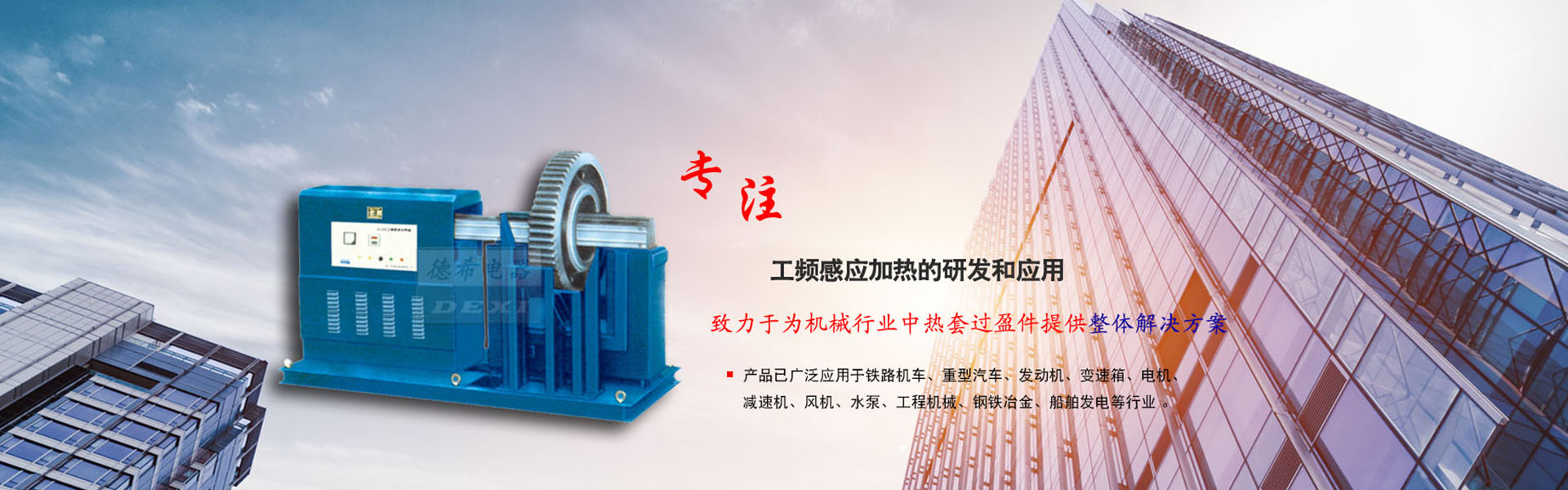



In recent years, the electrical industry has seen rapid development, with the emergence of gear heaters K-3, K-4, and gear ring heaters, which are widely used in our daily lives. We have invited a removable heater manufacturer to introduce how induction heaters implement self-protection. Let's follow the editor to find out more!
How Inductive Heaters Implement Self-Protection
通常, an induction heater is a heat exchanger with tubes as its heat transfer surface. The heat transfer process primarily involves convection and conduction. Cold and hot fluids are separated by the tube walls, with heat transferring from the hot fluid to the cold fluid through the wall. In the induction heater, different heat transfer zones—such as the steam condensation section, saturated steam condensation section, and drain condensation section—feature different forms of hot fluids, namely superheated steam, saturated steam, and condensate. The tube side of the induction heater is under high-pressure make-up water, while the shell side is connected to a much lower-pressure steam header. During operation, the shell space is connected to the steam turbine body via steam inlet and exhaust piping. A破裂 U-tube or a leaky weld at the tube outlet can cause a large amount of water to enter the shell side, leading to a drastic rise in water level and a rapid increase in steam pressure inside the shell. At this point, the high-pressure make-up water within the shell can reverse flow into the steam turbine through the exhaust piping, causing a severe shutdown. Water from the induction heater is harmful, causing mechanical damage to the turbine blades, leading to cavitation and other consequences. Furthermore, the shell system is designed for medium pressure, and the rapidly increasing steam pressure can lead to overpressure in the shell or even cause a burst. Additionally, in the heating process, condensate accumulates. If the steam turbine's exhaust pressure suddenly drops, it can cause the condensate to suddenly vaporize, and the steam, carrying water, may be drawn into the turbine.
The article primarily discusses how induction heaters implement self-protection, which should have deepened your understanding of this aspect. If you find our introduction insufficiently detailed, please continue to follow our updates. Your support is greatly appreciated!
