
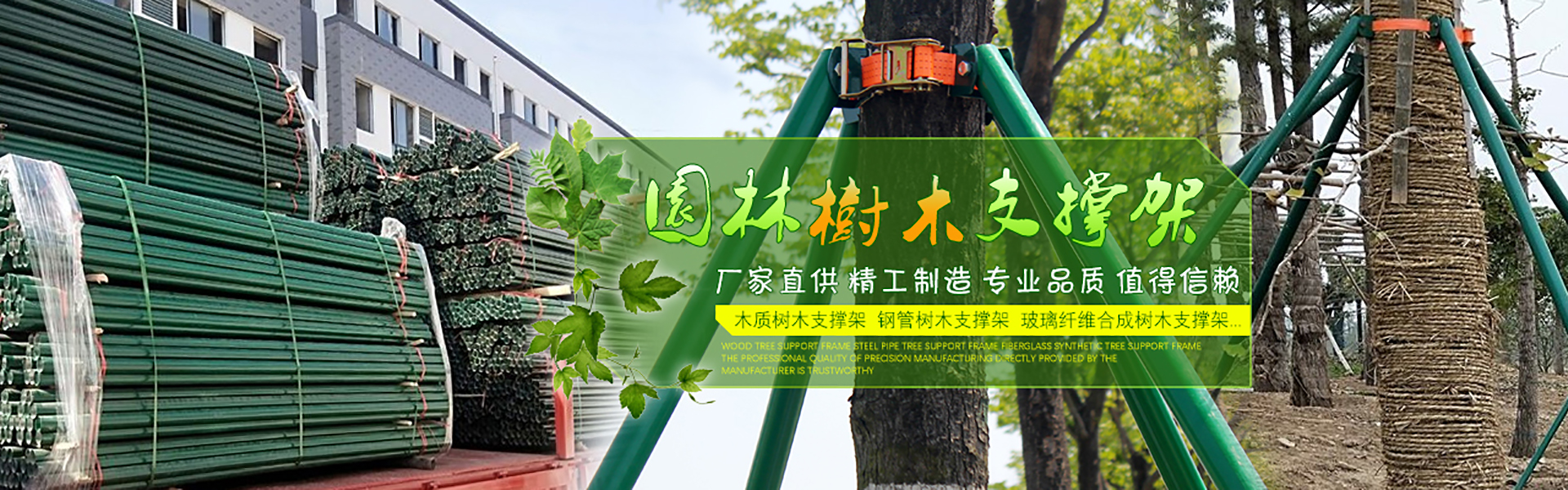
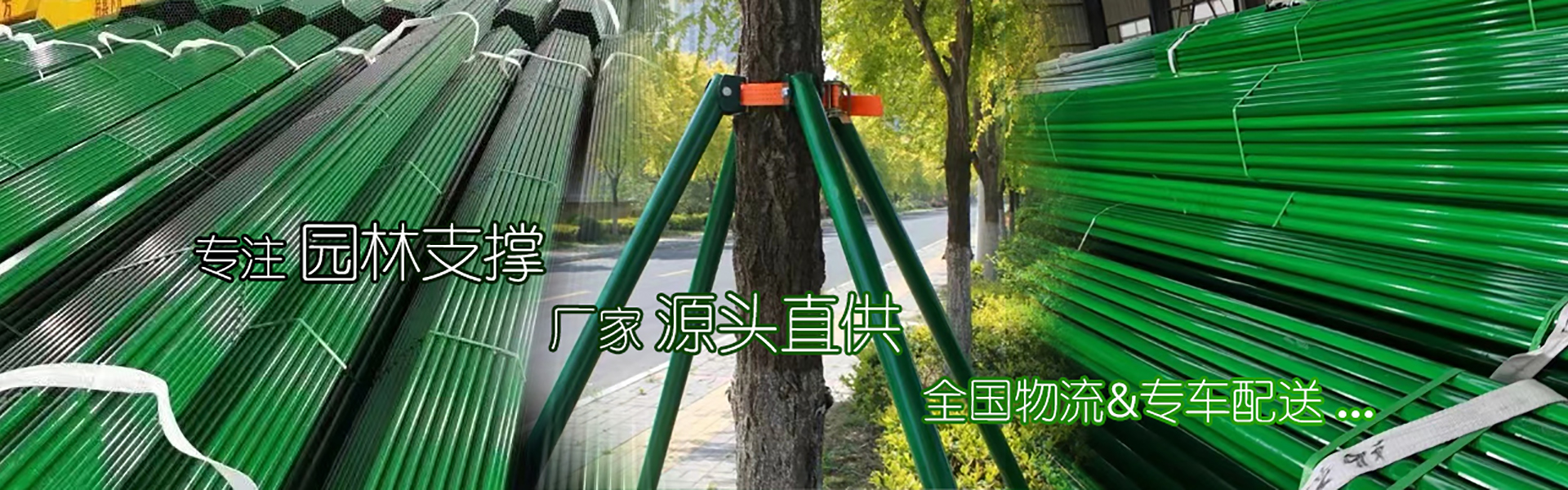

1. Our Green Landscape Support Frames come in various sizes, including 2-meter, 3-meter, and 4-meter bamboo poles. These are primarily used for supporting trees in green landscapes, tree supports, and fixed frames for trees, also known as tree support cups. Generally, trees requiring support are around 50 pounds, and there are no strict regulations regarding their primary effect; it is mainly for the normal growth of trees. Common methods for supporting green landscape trees include methods such as the prop pole,扁担式扶架the plank support, the triangular frame, the continuous row frame, and the cross-shaped pillar, such as the cross-shaped support. There are no specific regulations for this; it depends on the purpose of the定额 calculation. If it's for a contractor's final account, choose the one with the highest price. For cost estimates, refer to the requirements of the construction unit. The "Green Landscape定额 Book" is very practical, with detailed descriptions of the calculation rules. Generally, trees with a diameter over 10cm use a four-leg post for support, while those with a diameter of 10cm or less use a three-leg post.
2. This is a common protective measure for newly planted green trees in landscaping. The wooden sticks supporting them are called "flower poles," which are wooden rods used to protect the plants. Three are used because triangles offer stability. Typically, three full-crown seedlings with large canopies require protective measures after planting. It is generally the case that supports are added along with the planting of the trees. According to construction regulations, all trees, regardless of size, must be supported. This is to prevent them from being blown over by rain or strong winds, ensuring the root ball does not dislodge, and to prevent damage that could affect survival rates. Even if the construction requirements do not specify, supports must still be installed.
3. Wooden supports are chosen with different lengths based on the size of the trees, with attention to the requirements for head sizes, pest conditions, and whether the bark needs to be removed. Bamboo supports are mainly used for bamboo planting in a mesh pattern, with diameters generally around 12cm, serving as乔木 supports due to their aging and lower wind resistance. Staff used Moso bamboo, Phyllostachys bamboo, and glass fiber support rods to add emergency supports to the Greeting Pine. As the snowfall in Huangshan increased, by 2 AM on the 27th, a total of 24 support rods had been installed on the Greeting Pine. Staff took turns monitoring in front of the Jade Screen Pavilion in Huangshan, with technical personnel from the gardening department and the emergency team working together. Then, the tree support rods were mounted on nails or hooks, and the tube ends were inserted into shallow holes around the tree, with each support rod being tightened individually. This allows the tree to stand upright, after which inspections are conducted to check the stability of the tree. The installation of plastic tree fasteners generally occurs within gardens.
4. The greenery support poles are inserted around the trees, typically four in number. The support frame is then tightened to ensure the trees stand upright. Subsequently, check the stability of the four-legged support for the trees. The feature lies in the connection rod, which includes two supports and four support legs. The two ends of the connection rod are respectively connected to the center of the two supports, forming an H-structure.
5. It is important to note that wrapping the trunk directly is not permitted to avoid severe damage to the trees from the high temperatures under direct sunlight. The stability of the support is crucial for the survival of landscape and greenery transplanted trees, which are generally transplanted with full crown. Therefore, the support point should be located at a position greater than 1/3 of the tree's total height, and the angle between the support rod and the ground should be as minimal as possible.
6. The supporting positions are generally chosen downstream of the planting point, with the supporting materials depending on the type of tree and its size. Both practicality and aesthetics should be considered.
