



- AllProduct Category
-
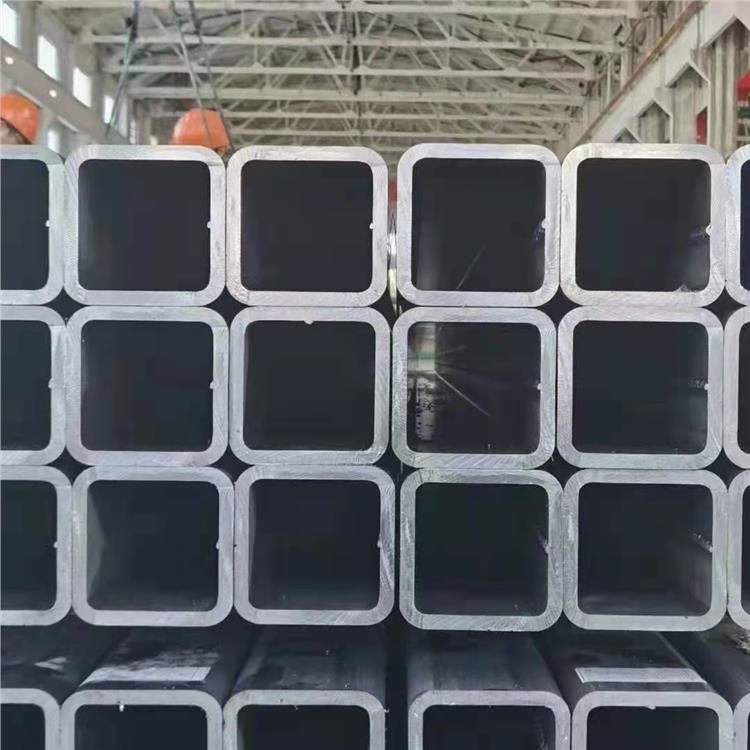
Galvanized Square Pipe
Galvanized Round Tube
Galvanized Channel Beam
Spiral Welded Steel Pipe
Galvanized Patterned Sheet


详情描述
Chongqing Steel Processing Factory - Steel Plate Cutting, Chongqing Laser Cutting of Steel Plates, Chongqing Patterned Steel Plate Processing Factory, Chongqing Zhanen Steel Plate Manufacturer Steel Plate Theoretical Weight, Chongqing Cold Rolled Steel Plate Manufacturer, Chongqing Hot Rolled Coil, Chongqing Plain Steel Plate Manufacturer, Chongqing Plain Medium Plate Flatting, Chongqing Steel Plate Manufacturer, Chongqing 16Mn Steel Plate Processing Factory, Chongqing 16MN Steel Plate Standard Length Flatting
Chongqing Renbang Steel Co., Ltd. is a professional company specializing in the sale of stainless steel pipes, plates, coils, gutters, angles, channels, flats, and round bars. It enjoys a high reputation in the market and has been long-term supplier of stainless steel products!
Our company's years of operation have honed our maturity and standardization in all business processes, and we have stable business relationships with major manufacturers and distributors. Adhering to the business philosophy of "Integrity," we innovate, strive for excellence, strengthen our internal quality, and shape our external image! We are committed to sincerely serving our customers and look forward to joining hands with new and old clients to forge great achievements! We warmly welcome friends from all walks of life to visit and do business with us!
We will serve a wide range of customers with our solid reputation, strong capabilities, high-quality products, and competitive prices. We sincerely thank all our friends and customers, both new and old, for their continued support, care, and assistance. We sincerely hope to establish a long-term cooperative relationship with mutual benefits and seek common development together...
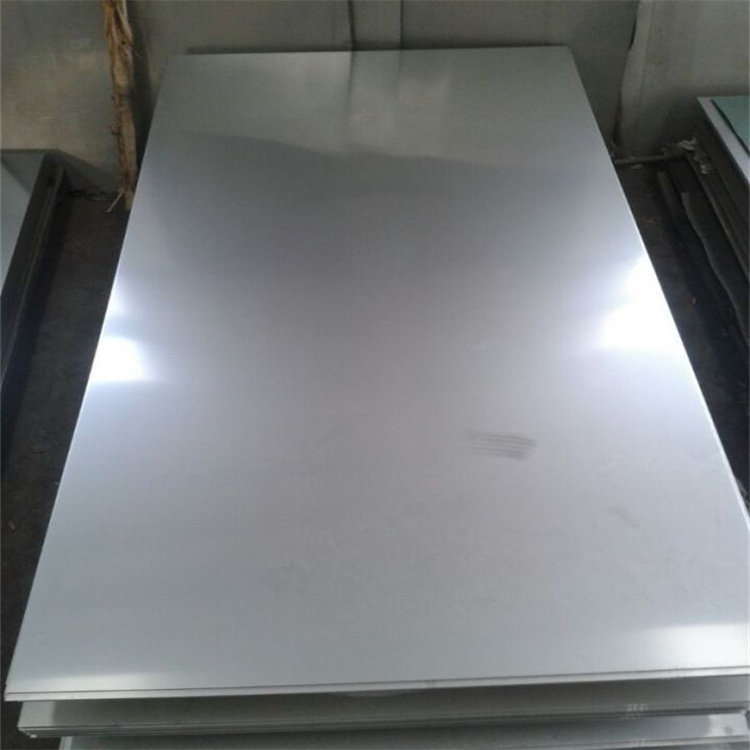
Chongqing Renbang Steel Co., Ltd. is one of the leading steel plate suppliers in Southwest China, offering a wide variety of products, full specifications, and a large scale of sales. We have been long-term suppliers of cold rolled steel, 45# steel plates, flat plates, medium plates, medium-thick plates, 20# steel plates, extra-thick plates, common plates, manganese plates, boiler plates, vessel plates, ASTM vessel plates, ship plates, high-strength plates, bridge plates, 65Mn steel plates, 16Mn medium-thick plates, and special material steel plates. Additionally, we also sell various specifications of anti-corrosion steel pipes. Welcome to call for purchases!
Special rolling technique for I-beams: When it is difficult to roll the required I-beams using the conventional rolling method due to certain reasons, a special rolling technique can be employed to fully utilize the skills of uneven deformation and die design. For instance, when the billet cross-section is narrow but wider I-beams are required, a wavy rolling technique can be used; or when the billet is wide but narrower I-beams are needed, negative width reduction rolling can be adopted, etc.
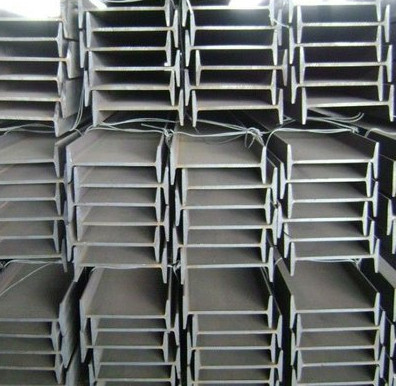
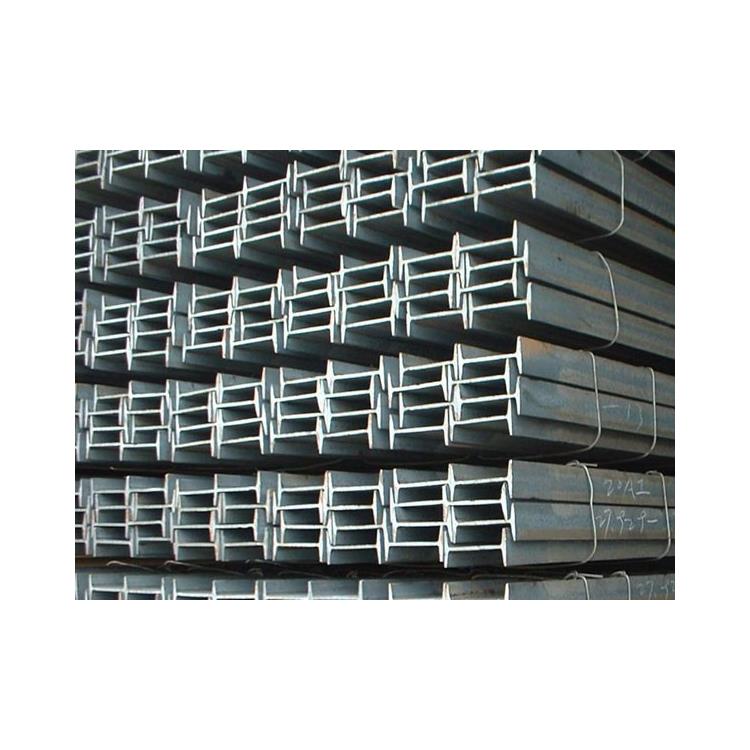
I-beams, also known as steel beams, are long strips of steel with an I-shaped cross-section. I-beams are categorized into standard I-beams and light I-beams. They are steel shapes with an I-shaped cross-section.
I-beams are mainly categorized into standard I-beams, light I-beams, and wide flange I-beams. They are further divided into wide flange, medium flange, and narrow flange I-beams based on the height ratio of the flange to the web.
The first two produce specifications ranging from 10-60 numbers, which correspond to heights of 10cm to 60cm. At the same height, lightweight I-beams have narrower flanges, thinner webs, and are lighter in weight. Wide
Flange I-beams, also known as H-beams, feature parallel legs with no slope on the inner side of the legs. They are economic cross-section steel shapes, manufactured on a four-roller mill.
Also known as "I-beam." Standard I-beams and light I-beams have been established.
W-beam steel, whether it's standard or light, due to its relatively high and narrow cross-sectional dimensions, the inertia moments of the two main axes differ significantly, thus it can only be used directly
Components subjected to bending within the plane of their web or those composed into trussed structural components. Not suitable for axially compressed components or those with bending perpendicular to the web plane.
This greatly limits its scope of application. With robust production management, comprehensive quality control, and the strength to deliver superior quality and passionate service to meet customer needs, we sincerely hope to establish and develop various forms of relationships with new and old friends.

W-beam specifications and models:
Its specifications are indicated by height × leg thickness × waist thickness, and can also be denoted by a number to represent the main size. For example, an 18# I-beam indicates an I-beam with a height of 18 cm. For I-beams with the same height, additional letters a, b, or c can be added after the number, such as 36a, 36b, 36c, etc. It is categorized into standard I-beams, light I-beams, and wide flange I-beams. According to the height ratio of the flange to the web, it is further divided into wide flange, medium flange, and narrow flange I-beams. The specifications for the first two types range from 10# to 60#, corresponding to heights of 10 cm to 60 cm, respectively.

I-beam
I-beams, as their name suggests, are steel sections with an "I" shaped cross-section. The inner surfaces of the top and bottom flanges have an inclination, typically 1:6, which makes the flanges thinner on the outside and thicker on the inside. This results in a significant difference in the cross-sectional characteristics of the I-beam between the two main planes, making it difficult to utilize its full strength properties in application. Although thicker I-beams have appeared in the market, the structure of the I-beam has already determined its weakness in torsional resistance.
H-beam
H-beams are widely used in today's steel structural buildings. They differ significantly from I-beams. Firstly, the flanges have no slope on the inner surface, and the top and bottom surfaces are parallel. The cross-sectional characteristics of H-beams are distinctly superior to those of traditional I-beams, channel steels, and angle steels.
H-beams are an economically efficient cross-sectional profile with optimized area distribution and a more reasonable strength-to-weight ratio, named for their cross-section resembling the English letter "H." The two outer edges of H-beams are straight without any slope. This makes welding and joining easier compared to I-beams, offers superior mechanical properties per unit weight, and can save a significant amount of materials and construction time.
The I-beam section withstands direct pressure well and is tensile-resistant, but due to the narrow flanges, it cannot resist torsion. The H-beam is the opposite; each has its own pros and cons.
H-beams vs. I-beams: Differences and Applications
W-beam steel, whether standard or lightweight, due to its relatively high and narrow cross-sectional dimensions, has significantly different moment of inertia for the two principal axes. Consequently, it is generally suitable only for members that bend within the plane of the web or for components in truss-like structures. It is not suitable for axially compressed members or for members with bending perpendicular to the web plane, which greatly limits its application range.
H-beams are economic cross-section shapes (others include cold-formed thin-walled sections, corrugated steel plates, etc.). Due to their reasonable cross-sectional shapes, they allow steel to be utilized more effectively, enhancing load-bearing capacity. Unlike standard I-beams, the flanges of H-beams are widened, and their inner and outer surfaces are typically parallel, making them easier to connect with high-strength bolts and other components. Their dimensions are well-structured, facilitating design selection. (Except for crane beams, which use I-beams.)
The flanges of H-section steel are all of equal thickness, featuring rolled cross-sections as well as composite cross-sections composed of three plates welded together. I-section steel has rolled cross-sections, and due to poor production technology, the inner edge of the flange has a 1:10 slope. The rolling process for H-section steel differs from that of standard I-section steel, which uses only a set of horizontal rolling rolls. Since the flanges of H-section steel are wider and have little or no slope, an additional set of vertical rolling rolls is required for rolling. Consequently, the rolling process and equipment are more complex than those of standard rolling mills. The largest rolled H-section steel that can be produced domestically is 800mm in height, and anything larger would require a welded composite cross-section.
Our national standard (GB/T11263-1998) for hot-rolled H-section steel categorizes it into three types: narrow flange, wide flange, and steel pile, with codes hz, hk, and hu respectively. Narrow flange H-section steel is suitable for beams or bending components, while wide flange H-section steel and H-section steel piles are suitable for axially compressed components or bending components. Compared to I-beams, the H-section steel has superior w, ix, and iy values under the same weight.
Our company will serve a wide range of users with our good reputation, strong capabilities, high-quality products, and low prices. We sincerely thank our new and old friends and customers for their consistent care, support, and assistance. We also sincerely hope to establish a long-term cooperative relationship, mutually beneficial, and seek common development together...


