

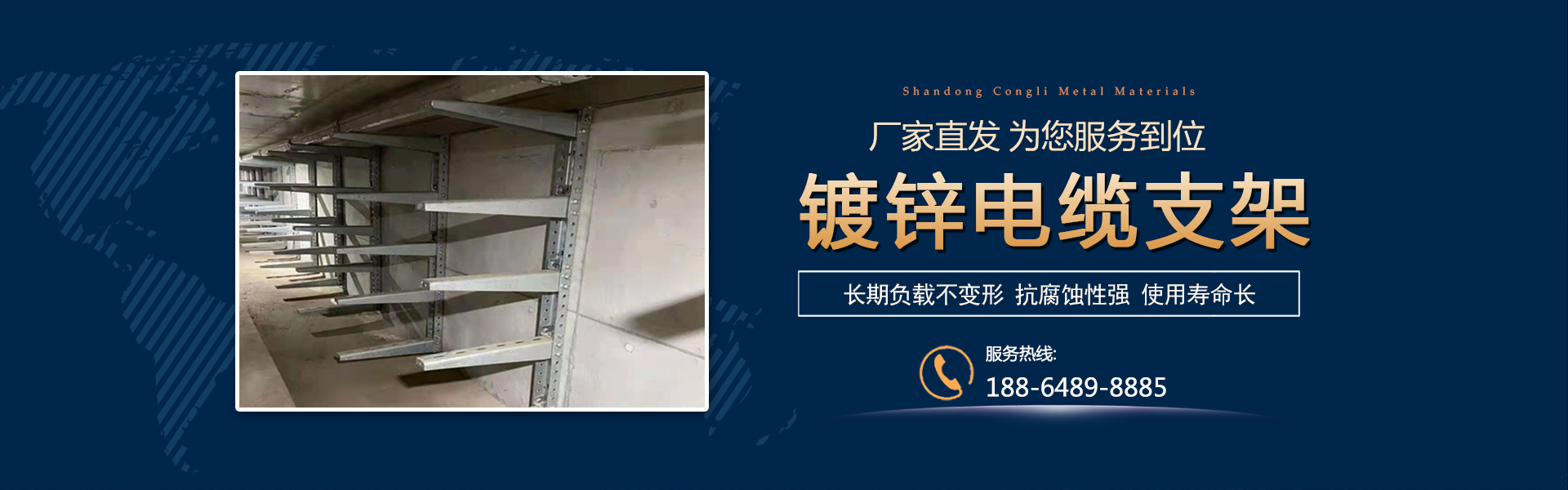

The installation direction of cable trays and conduits should be shorter, and they should be laid as close to walls, columns, or beams as possible.
2. When proposing locations for pre-buried steel plates and their load-bearing capacity for the installation of floor openings, wall openings, and suspended structures based on the direction of cable tray and cable conduit laying, it should be coordinated with the plumbing, electrical power, and process engineering departments.
To facilitate the rational determination of road routes and equipment selection based on different structural types and architectural layouts, close coordination between the ground concealed metal conduit wiring and the civil engineering specialty is essential during design.
Cable Bracket Installation Conditions:
Based on the cable channel, the cable trench's net width, and the size of the cable model, select the specifications of the bracket, such as: SFZ-3/540 supports three cables, and SFZ-2/430 supports two cables.
2. The cable bracket is suitable for temperature variations ranging from -20°C to +70°C.
During installation, the cable bracket should be horizontal. If it's inclined, other measures must be taken to secure the cable.
4. The requirement is for a balanced vertical structure, with a horizontal spacing of 80cm between the side supports. The supports are installed in an alternating pattern on both sides to ensure balanced load distribution.
5. During the pre-burial of cable brackets, ensure the base area is properly supported while avoiding any twisting. It is essential to achieve a full, tight fit and interlocking with the concrete of the wall, maintaining a right-angle with the fixed wall. When laying cables, they should be installed from top to bottom, and cables should be pulled horizontally.
