
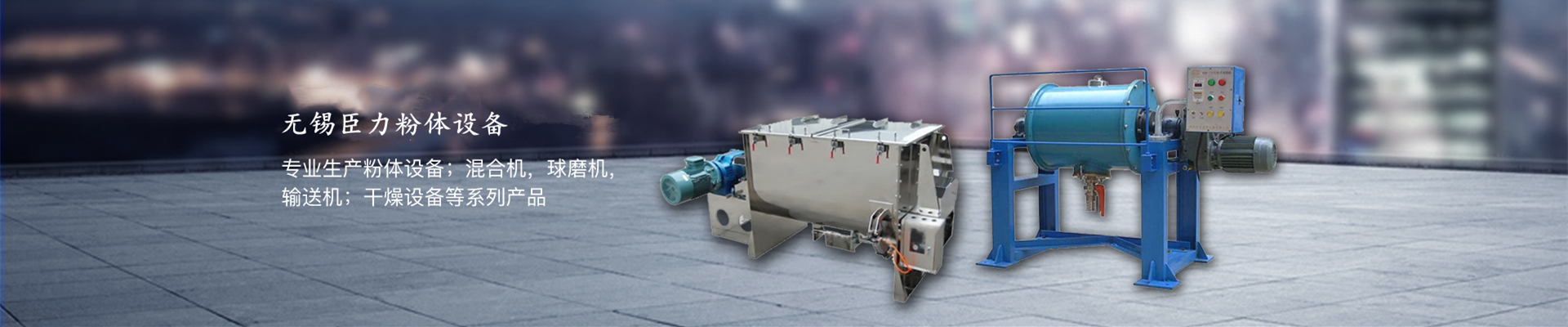

Our common mixers are categorized into four types: gas and low-viscosity liquid agitators, medium to high-viscosity liquid and ointment agitators, and powder and granular solid material mixers.
The features of our gas and low-viscosity liquid mixers include a simple structure, no rotating parts, minimal maintenance, and low energy consumption. These mixing machines are available in four types: air flow mixing, pipeline mixing, jet mixing, and forced circulation mixing. The accessories of the mixer are mainly made of wear-resistant alloy materials, including high-speed curved blades, winged curved blades, wear-resistant linings, curved arms, curved shovels, planetary shovels, plow curved blades, curved strips, and curved rakes. Mixers for medium and high-viscosity liquids and pastes typically offer strong shearing effects.
Thermoplastic material mixers are primarily used for blending thermoplastic materials and additives, such as rubber and plastic. Powder and granular solid material mixers are mainly intermittent in operation and also include machines that combine mixing and grinding functions, such as rotaries. The moving parts of the mixer also exert a shearing action on liquids. Liquids also experience shearing action within various fixed components installed on the walls and inside the container. This shearing action can lead to the formation of many vortexes and diffusions. For liquids of different densities and compositions that do not dissolve in each other, the shearing action caused by bending and strong turbulence will tear the denser liquid into small droplets, uniformly dispersing them within the main liquid.
General Mixing Machine Types:
Common mixers include plow mixers, screw mixers, loss-in-weight mixers, V-type mixers, double spiral cone mixers, high/low-speed liquid mixers, and planetary power mixers. The conical mixer is a new type of high-precision granular mixing equipment, widely used in various industries such as chemicals, pesticides, dyes, food, feed, petroleum, metallurgy, and mining for powder and particle mixing.
What are the main features of the mixer?
(1) Well-structured, user-friendly, and safe and reliable in operation.
(2) The mixing speed is fast and the quality is even. The basic double helix is asymmetrically arranged, with an expanded range of size and curvature, making it more suitable for mixing materials with uneven densities.
(3) The machine boasts exceptional energy-saving performance, consuming only one-tenth of the energy compared to drum mixers.
Particle materials exhibit negligible wear and pressure supply, ensuring that the blending with heat-sensitive materials will not trigger overheating reactions.
(5) The mixture is stable, without any stratification or separation.
(6) Basicly dust-proof and sealed, with simple operation, easy maintenance, and a long service life. Additionally, upon customer request, the taper can be manufactured into a pressure vessel for pressure or vacuum operations.
(7) The aircraft has completed the motor housing and helical bevel reducer for its autogyro and air combat operations.