




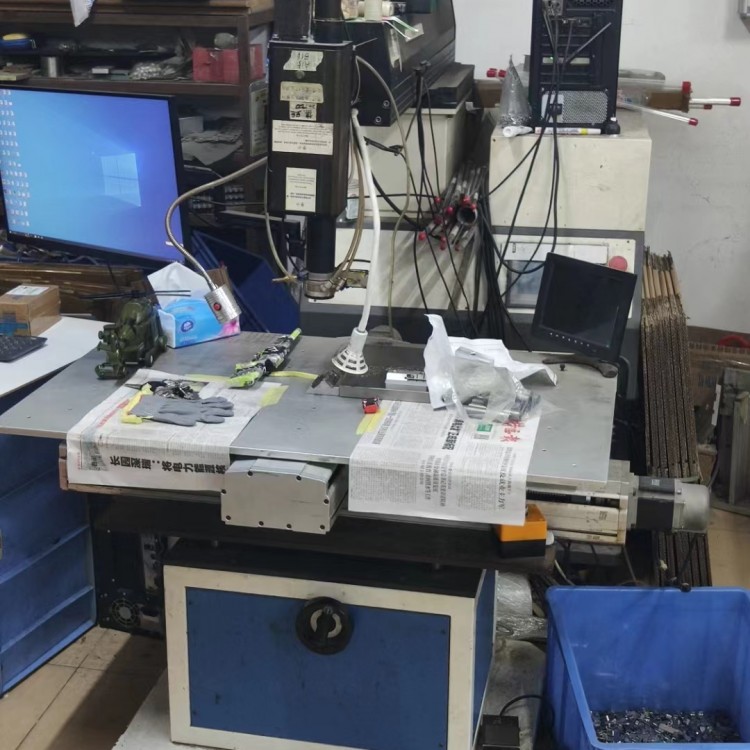
详情描述
Aluminum products laser welding processing is a technique that utilizes laser as the heat source for welding aluminum alloys or aluminum materials. Compared to traditional welding methods, laser welding offers numerous advantages, such as a small heat-affected zone, fast welding speed, and high weld quality. Here are some key points about aluminum products laser welding processing:
1. **Types of Lasers**: Common laser welding equipment includes fiber laser and CO2 laser. Fiber lasers excel in aluminum welding due to their high speed and stability.
2. **Protective Gas**: Nitrogen or argon gas is commonly used as a protective gas during laser welding to prevent aluminum alloys from reacting with oxygen in the air at high temperatures, forming oxides that can affect welding quality.
3. **Welding Parameters**: Welding speed, laser power, and focal position should be adjusted according to the thickness and type of aluminum material to ensure optimal welding results.
4. **Weld Quality**: Laser welding achieves precise weld seams with lower heat input during the process, which aids in reducing welding distortion and internal stress.
5. **Application Fields**: Laser welding of aluminum products is widely used in industries such as automotive manufacturing, electronic equipment, and household appliances.
6. **Surface Treatment**: Prior to welding, the surface of the aluminum material must be cleaned to remove oil and oxidation layers, thereby enhancing the welding quality.
7. **Welding Techniques**: Common welding techniques include continuous laser welding and pulsed laser welding. Continuous welding is suitable for thicker materials, whereas pulsed welding is ideal for thinner aluminum products.
As laser technology continues to evolve, the application of laser welding in aluminum products will become more widespread, with increasing efficiency and welding quality.
The laser welding process for radiators boasts several characteristics:
1. **High Precision**: Laser welding technology achieves high precision in welding, suitable for applications that require strict seam alignment, such as radiators.
2. **Small Heat Affected Zone**: The lower heat input during the laser welding process results in a smaller heat affected zone, which helps to minimize material deformation and residual stress, maintaining the radiator's performance.
3. **Fast Welding Speed**: Laser welding is quick, enhancing production efficiency and ideal for mass production.
4. **Weldable with Various Materials**: Laser welding is capable of effectively welding different metals and alloys, offering strong adaptability.
5. **Reduced Welding Reinforcement**: Laser welding typically does not require additional welding materials, simplifying the process and reducing costs.
6. **High Level of Automation**: Laser welding can be integrated with robots and automated equipment to enhance the automation and intelligence of the production line.
7. **Excellent Weld Quality**: Laser welding creates seams that are typically smooth and void-free, ensuring high-quality welding that meets the requirements of radiators for airtightness and strength.
8. **Environmental Protection**: The laser welding process produces minimal smoke and waste, meeting modern environmental protection standards.
These features make laser welding a crucial and efficient processing method in the manufacturing of heat sinks.
Aluminum product laser welding processing features the following characteristics:
High welding quality: Laser welding achieves precise and high-quality connections with aesthetically pleasing and smooth welds, reducing the need for subsequent finishing.
2. **Small Heat Affected Zone**: Laser welding features low heat input, effectively reducing the heat affected zone and minimizing deformation and physical property changes in aluminum due to high temperatures.
3. **Rapid Welding Speed**: Laser welding is relatively fast, suitable for mass production and enhancing production efficiency.
4. **High Adaptability**: Laser welding is suitable for various thicknesses and shapes of aluminum materials, especially for welding thin-walled aluminum.
5. **High Automation Level**: Laser welding easily integrates with automated equipment, enabling automatic welding to enhance production efficiency and consistency.
6. **Low Energy Consumption**: Compared to traditional welding methods, laser welding consumes less energy, which helps reduce production costs.
7. **High Flexibility**: Adaptable to various welding requirements by adjusting laser parameters (such as power, pulse frequency, etc.), suitable for complex welding processes.
8. **Suited for Welding Dissimilar Materials**: Laser welding technology can be used for welding aluminum with other metals, expanding the possibilities of material combinations.
These features have made laser welding processing of aluminum products widely applied in fields such as automotive manufacturing and electronic equipment.
Aluminum products laser welding processing features the following characteristics:
High-quality welding: Laser welding achieves precise and quantitative welding, with even weld seams and high strength, suitable for applications with strict requirements.
2. **Small Heat Affected Zone**: Laser welding has a lower heat input, resulting in a smaller heat affected zone, which reduces material deformation and stress, and eases the difficulty of subsequent processing.
3. **Rapid Welding Speed**: Laser welding offers quick welding speeds, enhancing production efficiency and is ideal for mass production.
4. **Versatile**: Capable of welding thin-walled aluminum components and complex shapes, suitable for processing various aluminum alloy materials.
5. **High Automation Level**: Laser welding allows for automated production, reducing manual operations and enhancing production consistency and stability.
6. **Touchless Processing**: The laser welding process requires no physical contact, thus avoiding material damage that could occur during traditional welding.
7. **Environmentally Friendly**: The laser welding process produces less smoke and harmful gases, benefiting environmental protection and the health of operators.
8. **Minimal Post-Processing**: Due to high welding quality, complex post-processing procedures are often unnecessary, saving time and costs.
In summary, laser welding is a process for aluminum products that is not only effective but also environmentally friendly, and it is gaining widespread application across various industries.
6063 aluminum alloy is a commonly used aluminum alloy material, widely applied in construction, transportation, electronics, and other fields. The laser welding processing of 6063 aluminum alloy offers the following features and advantages:
1. **High-Precision Welding**: Laser welding achieves high precision in welding, suitable for connecting complex structures and thin-walled materials.
2. **Rapid Welding Speed**: Laser welding is fast, enhancing production efficiency and reducing processing time.
3. **Small Heat Affected Zone (HAZ)**: The laser welding process involves minimal heat input, reducing the heat affected zone (HAZ), thereby lowering material deformation and stress.
4. **High Welding Quality**: Laser welding produces quantitative welds with excellent mechanical properties of the weld joints.
5. **Adaptable**: Laser welding is suitable for joining aluminum alloys and can accommodate different thicknesses and shapes of workpieces.
6. **High Automation Level**: Laser welding can be integrated with robotic and other automated equipment, enabling unmanned operation and enhancing production flexibility.
7. **Environmental Protection**: Laser welding produces relatively less waste gas and pollutants, making it more environmentally friendly.
8. ****: Although the initial equipment investment is high, it can reduce production costs in the long run by improving efficiency and minimizing human error.
Overall, laser welding processing for 6063 aluminum alloy is an environmentally friendly and cost-effective manufacturing solution suitable for industrial applications.
Laser welding of aluminum alloy products is widely used in various fields, primarily applicable to scenarios including:
1. **Automotive Manufacturing**: Aluminum alloys play a crucial role in automotive lightweighting. Laser welding is used for joining body, chassis, and other structural components, enhancing strength and reducing weight.
2. Laser Welding Technology: Utilized in the manufacturing of aircraft structural components, wings, and parts, this technology meets stringent requirements for welding quality and material performance.
3. **Electronics**: In electronic devices such as cell phones, computer casings, and heat sinks, laser welding of aluminum alloys ensures excellent thermal conductivity and structural strength.
4. **Appliance Industry**: Aluminum alloy components are commonly used in appliances such as refrigerators and air conditioners, where laser welding provides precise connection solutions.
5. **Building and Structure**: Aluminum alloy usage in the construction industry is increasingly prevalent, with laser welding suitable for welding structures like aluminum alloy doors and windows, curtain walls, etc.
6. **Equipment**: In equipment, aluminum alloys are commonly used for precision component connections via laser welding due to their lightness and corrosion resistance.
7. **Rail Transit**: Includes aluminum alloy carriages and structural components for high-speed and similar vehicles, with laser welding offering a high-strength and durable connection solution.
Laser welding is suitable for the manufacturing of aluminum alloy products requiring precise welding, thanks to its high speed, high precision, and minimal heat-affected zone.
询价单


