

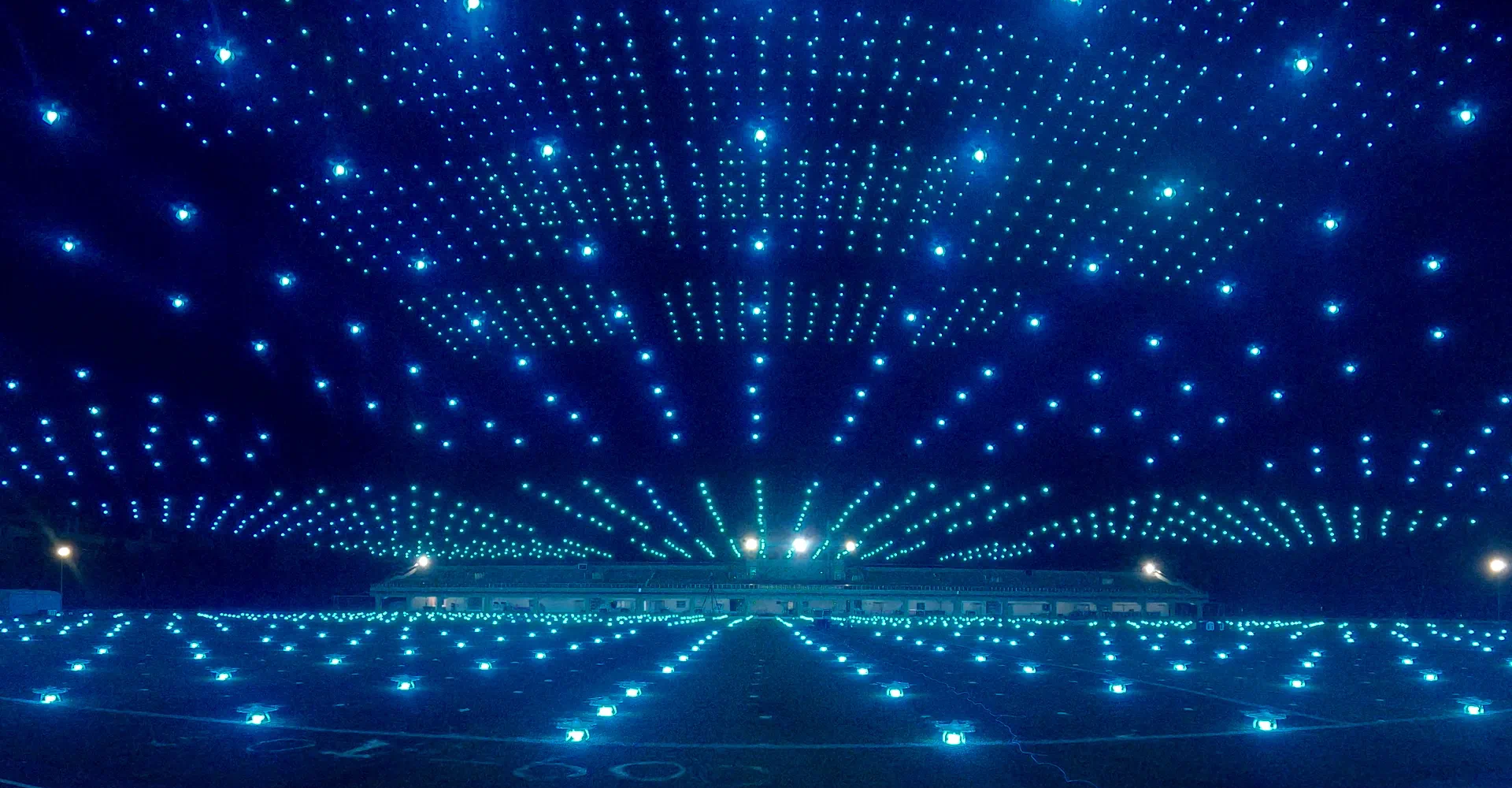
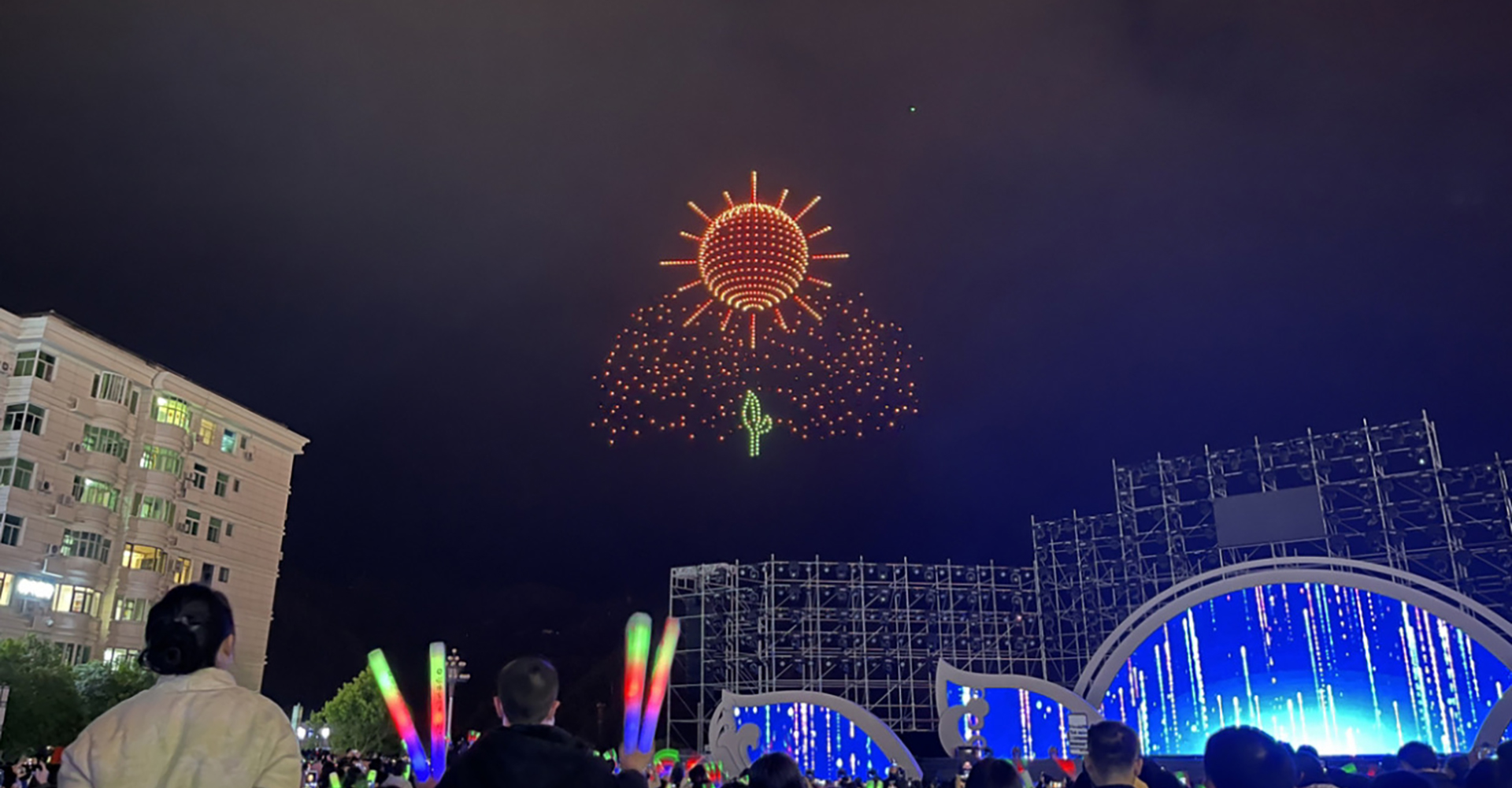

The operation of drone performances requires first becoming familiar with the drone's control devices.Prior to the performance, drones must be inspected and tuned to ensure their safety and stability. Typically, this involves placing the drone in a designated take-off area and checking the battery charge, sensors, and communication equipment for proper functioning. During the performance, operators control the drones using remote controls or autopilots, including take-off, flight, landing, and hovering operations. Flight altitude, speed, posture, and routes must be set and adjusted according to the performance content. Communication and coordination between the drone and ground station must also be monitored. Operators control the drone's flight direction, altitude, speed, and route via the ground station, while also receiving signals like commands, images, and sound for directing the performance. For stunts, operators must choreograph and adjust flight paths, altitude, speed, and methods to execute specific maneuvers and tricks, particularly for high-difficulty moves like take-offs, spins, ascents, rolls, and flips, which require advanced skills and precise operation. Overall, drone performance operation requires proficiency in using remote controls, autopilots, and ground stations, as well as a high level of technical expertise and extensive experience. Throughout the performance, safety and stability must be prioritized, and all regulations and standards must be adhered to for a smooth show.
News Center Co., Ltd.
