
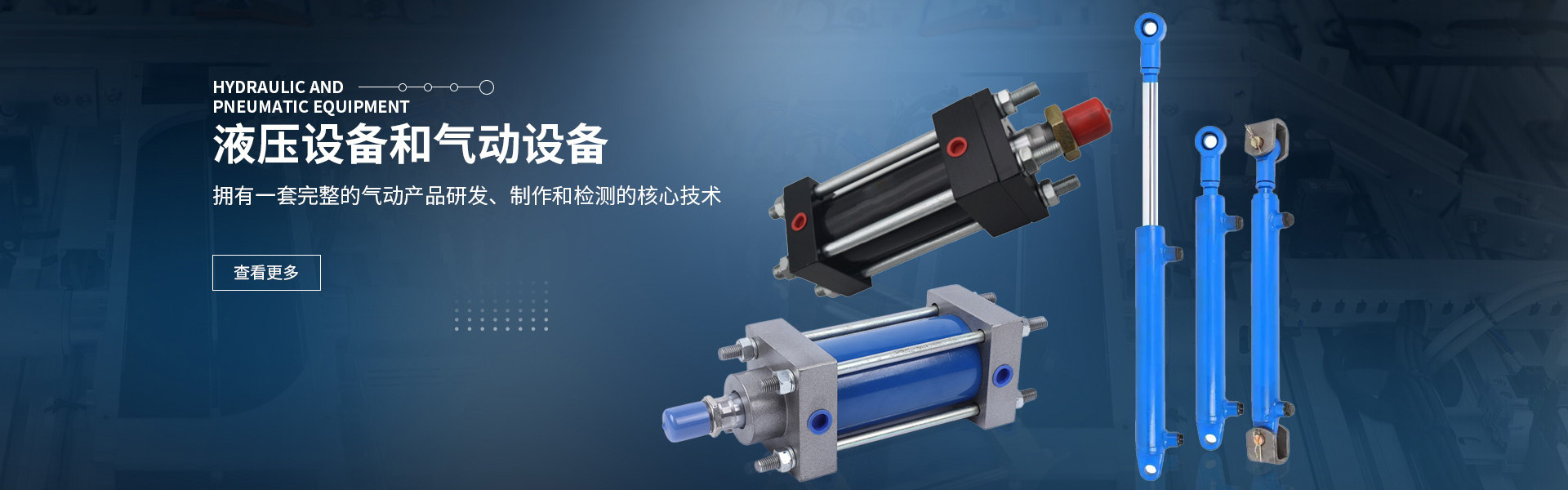

Cylinders are widely used in various industries. How do they operate in the actual production process?
A set of high-strength permanent magnetic rings is installed on the piston. The magnetic lines pass through the thin-walled cylinder and interact with another set of magnetic rings on the outside. Due to the opposite magnetic poles of the two sets of rings, there is a strong attractive force. As the piston is pushed within the cylinder by air pressure, it moves the magnetic ring套 on the outside of the cylinder under the influence of the magnetic force. The thrust of the cylinder piston must match the attractive force of the magnetic rings. Standard mechanical contact cylinder: A groove is opened along the axial direction of the cylinder tube, and the piston moves above the groove. To prevent leakage and dust, stainless steel sealing tape and dust-proof stainless steel tape are used to secure the ends of the cylinder covers. The piston frame passes through the groove, connecting the piston with the shaft. The piston and the shaft are connected to drive the actuator mounted on the shaft to achieve reciprocating motion. The standard cylinder contains a piston without a piston rod, with the piston assembly mounted in the guide rail. External loads are connected to the piston, and the movement is powered by air intake.
Thus, the cylinder meets the production demands of people.
