


Ultrasonic Cleaning Principle
High-frequency oscillating signals emitted by the ultrasonic generator are converted into high-frequency mechanical oscillations by a transducer and propagate into the medium—the cleaning solvent. The ultrasonic waves radiate alternately in the cleaning fluid, causing liquid flow and generating tens of thousands of tiny bubbles with diameters ranging from 50 to 500 μm. These bubbles form, grow, and rapidly collapse in the positive pressure zone while under negative pressure due to the longitudinal propagation of the ultrasonic waves. In this process, known as cavitation, bubble collapse can produce hundreds of degrees of high temperature and over 1000 atmospheres of instantaneous pressure. The continuous generation of these instantaneous pressures acts like a series of small explosions impacting the surface of objects, rapidly removing dirt and grime from the surface and crevices, thereby achieving the goal of surface purification.
Industry Applications
Optics Industry Watch Industry Electronics Industry Hardware Industry Precision Parts Industry Surface Treatment Industry
Ultrasound Cleaning Features
Compared to ultrasonic cleaning and various chemical, physical, electrochemical, and materialization cleaning methods, it boasts the following unique advantages:
○ Can quickly and thoroughly remove various dirt from the workpiece surface.
Can clean precision parts with complex shapes such as cavities and grooves without damaging the workpiece surface.
Effectively reduces pollution and minimizes the damage to human health from toxic solvents.
○ Various cleaning agents can be used, achieving different effects depending on the solvent, such as: degreasing, rust removal, or phosphatizing.
Significantly reduce labor intensity and eliminate potential hazards, such as saving solvents, paper, energy, workspace, and labor.
Scope of Application
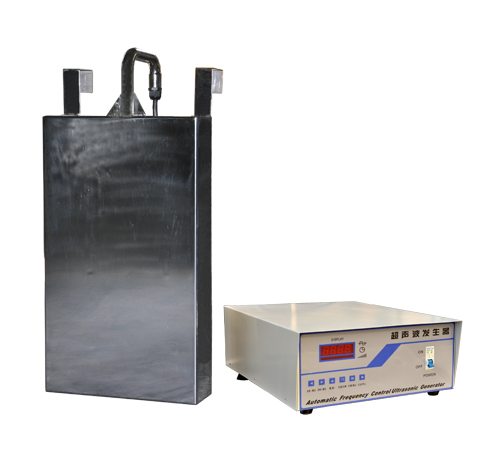
The immersion ultrasonic vibration plate is composed of a vibration plate and an ultrasonic generator, suitable for placement in various cleaning tanks to function as an ultrasonic cleaning machine. The size of the vibration plate and the direction of the lead tube can be designed into three types—bottom vibration, side vibration, and top vibration—depending on the installation location, each achieving different cleaning effects.
Features
○ 100% imported stainless steel structure, acid and alkali resistant.
The ultrasonic vibration plate and generator are separate units, connected by a high-frequency line socket for easy operation and maintenance.
Flexible installation and layout; the vibration plate radiation surface can be installed on the bottom, side, or top of the cleaning tank as needed.