




Overview
With the continuous development and progress of societyOur urban power grids have undergone significant changes, with most cities now forming or in the process of forming numerous densely populated power consumption areas. The traditional power supply from 12/24KV lines (or branch lines) to direct users is no longer sufficient to meet the demands of urban development. As a result, a new power supply method has emerged, which supplies power to users through sub-stations. However, with the intensification of urban densification, some existing civil-type sub-stations have been limited by land and urban planning. Therefore, a more advanced and practical outdoor intelligent sub-station (outdoor ring main unit) has emerged. This sub-station requires no civil construction and occupies less space, offering highly flexible configurations and a more reliable power supply method. It significantly shortens the construction, installation, and debugging time, and reduces the overall cost.
With the development of modern industryElectrical control equipment is increasingly automated and intelligent, utilizing modern electronic technology, sensor technology, communication technology, and computer network technology to integrate monitoring, protection, control, and measurement of power equipment under normal and accident conditions, achieving effective management and becoming a developing trend.
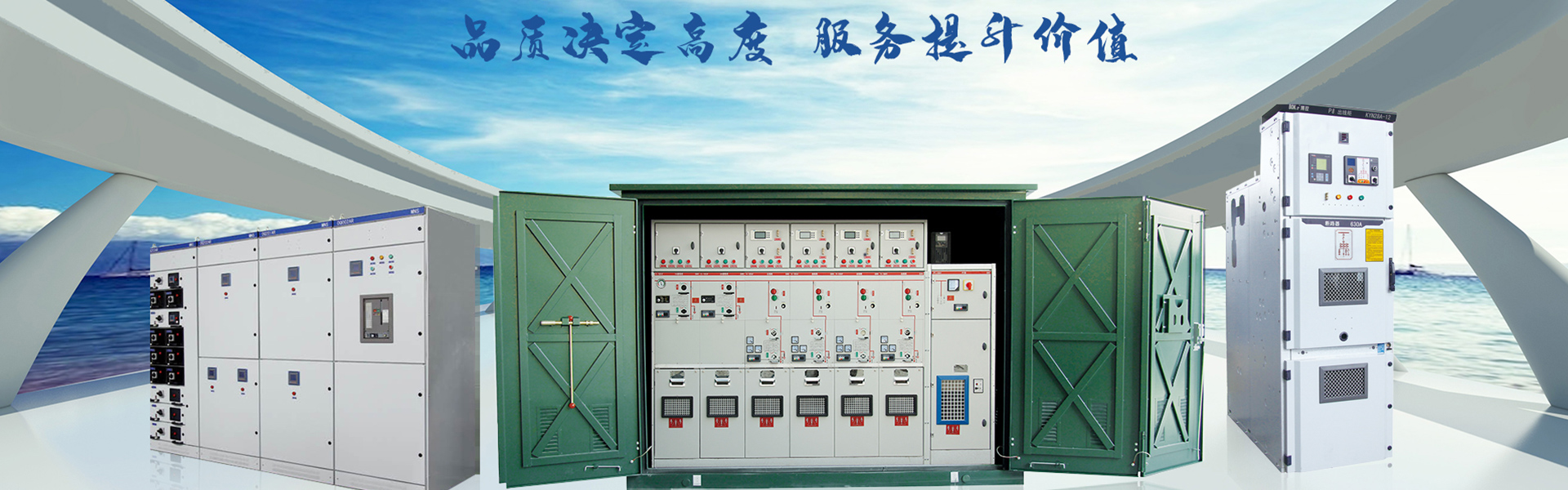
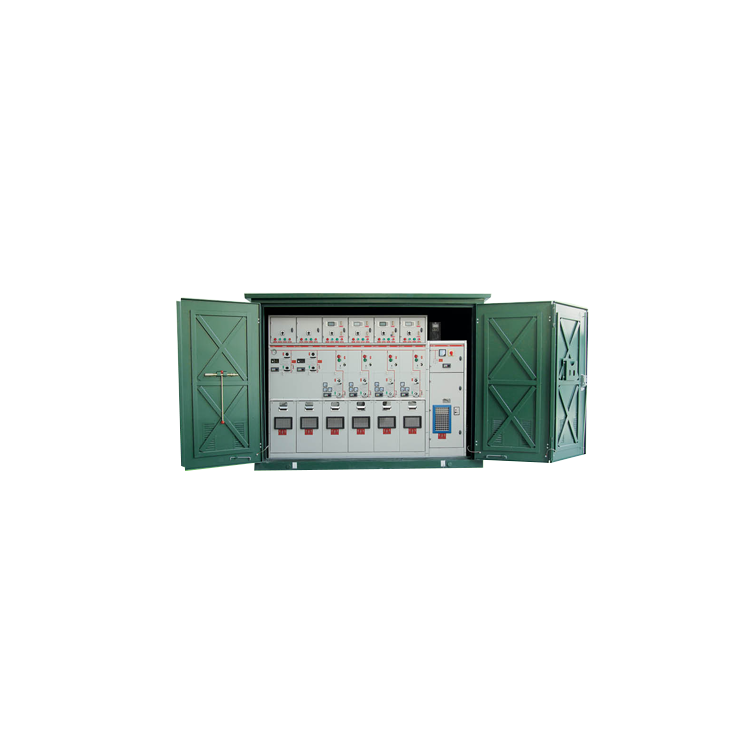
Intelligent SwitchgearThe (outdoor ring main unit) incorporates advanced technology to install and adjust 12/24kV switchgears, circuit breakers, load switches, current-voltage transformers, 12/24kV power PTs, substation FTU.RTU, communication control terminals (CCU), 12/24kV metering and automatic meter reading, USP power supplies, and indicating instruments into a portable, sealed, and moisture-proof stainless steel cabinet. This achieves integration and modular assembly of primary and secondary systems in urban power distribution networks, shortening the construction period and significantly enhancing the reliability of urban power grid operations.
Structural and Technical Requirements
The load switch in the box-type switchgear is a three-position type.SF6 Load Break Switch, The electrical life of the SF6 Load Break Switch should meet the E3 grade requirements; the electrical life of the circuit breaker should meet the E2 grade requirements.
In PT cabinets, metering cabinets, and other switch cabinets insulated with air, anti-condensation measures are taken [equipped with a condensation controller inside the cabinet], such as adding a resistive heater (with a control switch).
2. The relative pressure of SF6 in the gas tank of the unit-type SF6 ring main unit should not exceed 1.4 bar. The entire gas-filled shell must meet the requirements of the "Enclosed Pressure System" as specified in IEC60298, with an annual leakage rate not exceeding 1%, 30 years of maintenance-free operation, and no need for recharging. The pressure of the SF6 gas inside can be monitored through an SF6 pressure gauge.
3. The fuse rating of the circuit breaker should match the load. The circuit breaker specifications are: rated voltage 12kV, rated breaking current (rms) 63kA. The switchgear used for transformer protection should be able to trip both by fuse and easily by electrical means.
4. The box-type switchgear should be equipped with a complete five-interlock function.
Through the control of the interlock device, Fully operational with the following five interlock functions
1. Prevent misclassification and failure of circuit breakers (load switches)
2. Prevent load-carrying circuit breakers from being opened or closed.
3. Prevent live wire (circuit) grounding wire (grounding switch) from touching ground
4. Prevent the closing and opening of circuit breakers (load switches, disconnect switches) with grounded conductors (grounding switches).
5. Prevent Accidental Entry into Live Spaces
6. The switchgear is constructed with a fully enclosed structure, primarily consisting of compartments such as the gas chamber, cable room, and mechanism room (secondary room). The distance from the cable joint to the cable entrance (hole or fixed band) is 2370mm. The inner sleeve and insulating components are made of epoxy resin material, with a creepage distance of 220mm/kV. Intermediate connections use copper busbars, while the grounding busbar also employs copper busbars. The selection of the cross-section should meet the requirements of GB3906.
7. Install a voltage indicator with a test function on the institutional box panel, easy to replace, and capable of connecting an external phase comparator.
8. The box-type switchgear's single-line diagram identification is clear.
9. Internally installed high-voltage electrical components, such as SF6 load switches, circuit breakers, transformers, lightning arresters, etc., should all have durable and clear labels. The labels should be installed in positions that are easily visible during operation or maintenance.
10. The secondary room or control box is equipped with a secondary circuit matching the operating mechanism. It is configurable with manual/electric operating mechanisms and includes预留 electric operation functionality. Remote control and remote signal interfaces are provided to accommodate remote monitoring needs. It should also have a short-circuit fault indicator, meeting requirements for full phase-to-phase short circuit and single-phase ground fault indication, and possess switch quantity output capabilities. Terminal blocks within the ring main cabinet must use dust-proof and flame-retardant products. The secondary wire cross-section of the CT is copper 2.5 square millimeters, and a current test box is installed in the circuit. The voltage and control wire cross-section is copper core 1.5 square millimeters.
11. The cabinet door features a viewing window made of flame-retardant transparent material.
12. Cable installation and maintenance are completed in front of the cabinet with box-type openings, allowing for wall-mounted installation.
13. The load switch features a three-position structure with a clear position indicator on the front panel. The three-position switch has separate handles for the grounding switch and the load switch/isolation switch.
14. The box-type switchgear structure is equipped with a function to prevent harm to operators in the event of internal fault arc: the compartments are fitted with metal partitions to prevent accident expansion; the gas compartments have pressure relief zones; the rear of the cabinet features a pressure relief panel.
15. The installation dimensions for load switches and operating mechanisms are uniform; identical parts, consumables, and spare parts are interchangeable.
16. The box-type switchgear gas chamber is welded from 3mm thick 304 stainless steel plate. The cabinet is made of galvanized aluminum steel plate (except for ventilation, exhaust outlets, and observation windows), with a steel plate thickness of not less than 2mm, offering sufficient mechanical and fire resistance.
All components of the live main circuit are installed within the gas-tight chamber, with the gas protection level meeting IP67 requirements; the cabinet meets IP4X requirements.
18. The lifting rings (one on each side) are properly positioned for hoisting, ensuring that the switch equipment remains level during suspension. There should be no frictional contact between the lifting chain and any components to prevent scratching the surface coating of the box during the hoisting process.
19. Along the entire length of all box-type closures, a grounding busbar should be installed. If it is made of copper, the current density should not exceed 200A/mm2 during the specified grounding fault, but the cross-sectional area should not be less than 30mm2. The grounding conductor should have a fixed terminal for connection to the grounding grid and a clear grounding mark. If the grounding conductor is not copper, it should also meet the requirements for peak withstand voltage and short-time withstand current as specified on the label. The contact area of the shell grounding point should meet the requirements, and the grounding screw diameter should not be less than 12mm. The grounding point should be marked with the word "Ground" or other grounding symbols.
20. The main busbars in the gas compartment are made of copper material, with the cross-sectional area of the branch leads in the busbar segment cabinets being the same as the main busbar; the outer surface of the main busbar and branch busbars (including the connecting parts) should be insulated with organic material, meaning that there should be no exposed parts on the busbar compartments and cable compartments (except for cable terminal connectors).
21. Other requirements for SF6 load break switches involve the use of organic insulation, meaning that busbars within the busbar compartment and cable compartment must not have any exposed parts (except for cable terminal connections).
22. Additional requirements for SF6 load disconnectors:
Arc-extinguishing medium and insulating medium for load switchesSF6 gas
Each independentThe SF6 gas compartment should generally be equipped with a device capable of displaying the internal pressure, which should clearly indicate the pressure range for safe operation of the equipment.
