

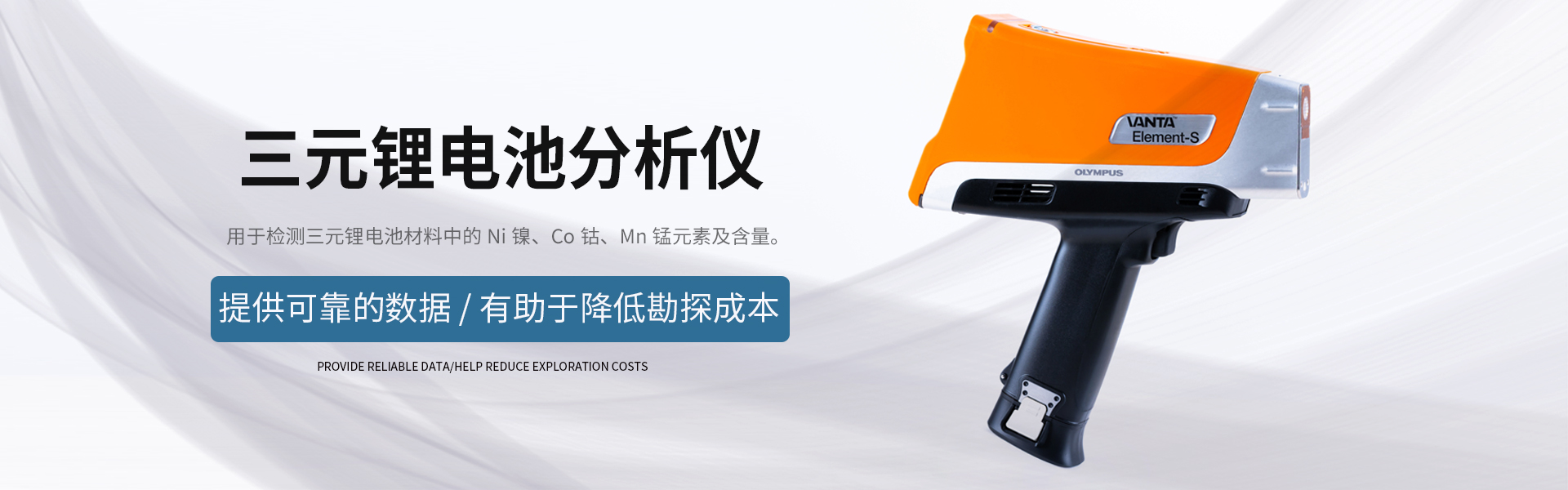


Rock is a mixture of solid minerals and mineraloids, typically composed of elements such as calcium, magnesium, sodium, aluminum, barium, iron, zinc, and more. A mineral element analyzer is an instrument used to analyze the elements and their content in ores. An ore analyzer utilizes the properties of X-ray fluorescence spectroscopy to study and analyze the composition, content changes, and cultural grade of various metallic and non-metallic elements in ore samples. Below is a detailed introduction to the principles and applications of the mineral element analyzer, hoping to help users better utilize the product.
Research on the Basic Principles of Ore Element Analyzer
X-ray fluorescence spectrometry analysis is a method used to determine the types and concentrations of trace nutrients in substances, also known as X-ray secondary electron emission analysis. It utilizes primary X-ray photons or other microscopic particles to excite atoms within the material being tested, thereby generating secondary characteristic X-rays (X-ray fluorescence spectrometer), which are used for material composition analysis and chemical state research.
The ore element analyzer excites X-rays, which are emitted through an X-ray tube onto the ore sample, causing the energy conversion of elements within the ore, resulting in secondary radiation.
2. Application of Ore Element Analyzer
(1) Rapidly measure large mining areas, accurately determine zone shapes, map out mines, and conduct real-time measurements.
(2) Identify abnormal development situations to prioritize mining in rich areas.
(3) On-site rapid mineralization anomalies are effectively identified, pinpointing "hotspots" and delineating ore body boundaries.
(4) Analyze ore heads, refined ore, and slag to establish mining and enrichment processes.
(5) Identify abnormal ore belt orientations and mineral content to prevent erroneous mining.
Evaluate the grade of high-quality selected ore to provide a basis for the acquisition value of the ore.
(7) Analyzing residual minerals in slag and tailings, the value of stone elements can be further assessed.
(8) Quality inspections, grading, and analysis are conducted on filter ponds, storage ponds, and steel bath solutions during the mining, drilling, grinding, concentration, and smelting processes.
(9) Maintain power equipment, pipelines, and production lines; analyze trace metals in equipment lubricants and other oils to determine the wear condition of the equipment.