
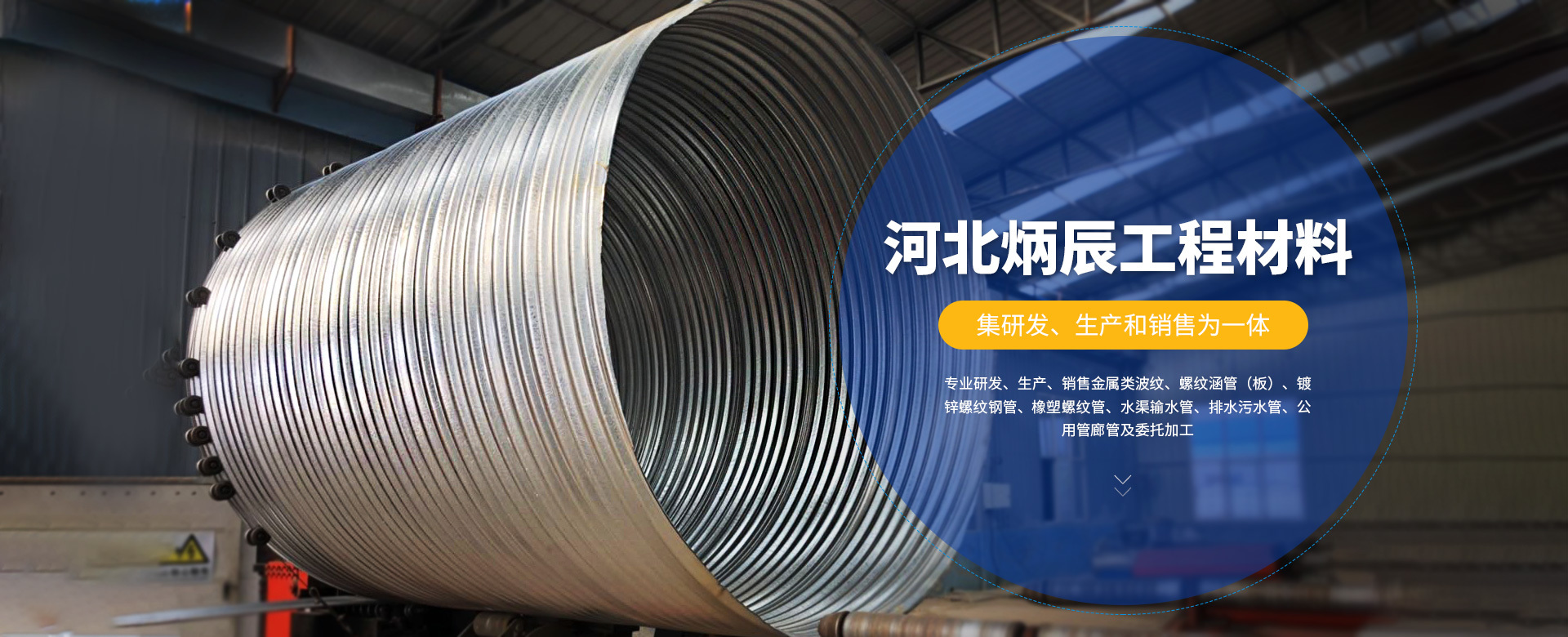
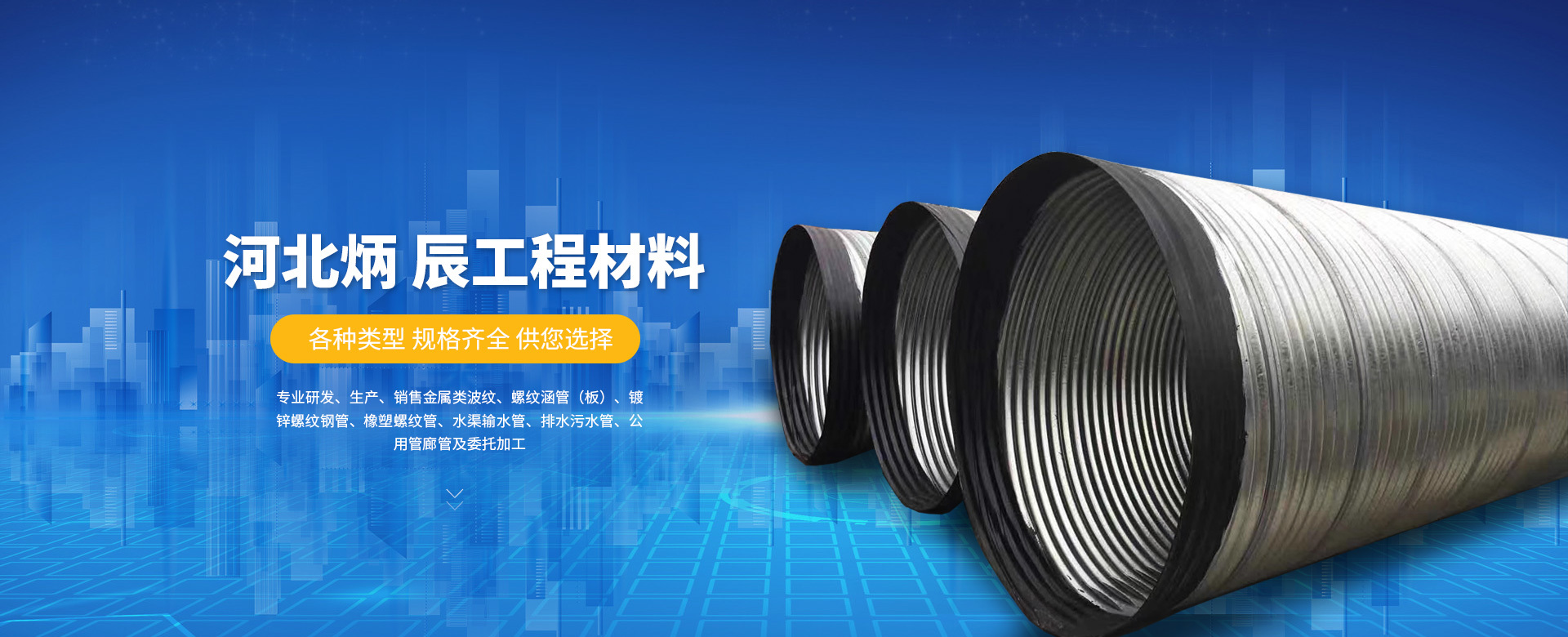

Galvanized corrugated pipes are a common pipeline material, offering advantages such as corrosion resistance, waterproofing, and durability. They are commonly used in construction pipelines, interior decoration, electrical pipelines, and other fields. Additionally, they are widely employed in general factory equipment, public facilities, outdoor billboards, bridges and tunnels, and communication cables.
Galvanized corrugated pipes are a highly practical type of piping material, widely used in construction, oil, electricity, and chemical industries. They offer several advantages:
Excellent corrosion resistance. The zinc coating on the surface effectively prevents the pipes from oxidation and corrosion, thereby extending their service life. The corrugated design of the sleeve enhances its flexural resistance, making it less prone to damage during transportation and installation, ensuring the stability and safety of the pipeline. It boasts excellent sealing performance. The interlocking structure design achieves both airtightness and watertightness, further ensuring the safe operation of the pipeline. Due to these advantages, it is widely used in industries such as construction, prefabricated houses, automotive engines, trains, bearings, ships, oil, and petrochemicals. Particularly in the field of hazardous material transportation, such as in oil and petrochemicals, the application of corrugated sleeves is indispensable.
Galvanized corrugated pipe is a pipeline material that involves coating the surface of a metal tube with zinc, effectively protecting against oxidation, corrosion, and outdoor degradation. It is made from a metal tube with a zinc coating applied to its surface. Common manufacturing methods include hot-dip galvanizing and electroplating, with hot-dip galvanizing being the most common. This process involves immersing the metal tube in a molten zinc bath, causing a reaction between the zinc and the metal surface to form a reactive layer, ultimately creating a zinc coating.
Galvanized corrugated conduit is widely used in construction, power, and communication fields, primarily serving as protective pipelines for wires and cables. It is also employed in industries such as plumbing, mechanical manufacturing, petrochemicals, and water supply pipelines. Compared to other types of piping, the advantages of corrugated conduit include its corrosion and oxidation resistance, high surface finish, long service life, and ability to withstand high temperatures, pressures, and other harsh environmental factors.
Prepare the surrounding environment around the pipeline and gather necessary materials. Measure the pipeline length to ensure it meets the required specifications. Install pipeline supports and secure the pipeline. Fabricate pipeline joints and connect them. Conduct pipeline acceptance and protective work.
Galvanized corrugated pipes, while offering excellent performance, produce pollution during the manufacturing process. Therefore, both manufacturers and users must pay attention to the environmental protection issues of the piping materials. Rational production processes, high-quality zinc materials, and proper usage methods can all reduce the risk of environmental pollution.
