


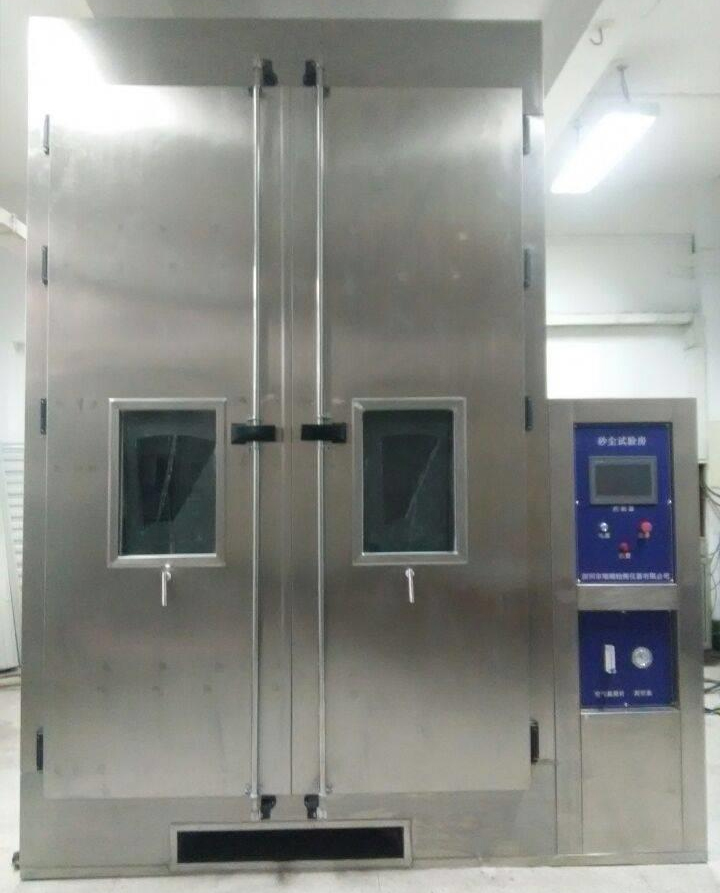
High-Temperature Aging Room Function
1. The role of high-temperature aging for lithium batteries is of course to promote some side reactions, to pick out the faulty batteries, and this step is crucial to ensure battery quality. It also helps to stabilize the SEI film on the anode, making subsequent processes or cycles more effective.
2. Constant-temperature aging room, also known as a constant-temperature aging chamber, is a device designed to simulate a constant temperature and harsh environment for high-performance electronic products, an essential testing equipment for enhancing product stability and reliability. If you're purchasing items like smart conference tablets or LCD monitors, they must undergo aging tests. It is an important production process for manufacturers to improve product quality and competitiveness, hence enterprises in fields such as power electronics, computers, and communications all have constant-temperature aging rooms. Next, let's explore the advantages of the constant-temperature aging room: Product Stability: Utilizing mature technology and equipment, the aging room produces a product with low failure rates, high stability, and favorable cost-performance, ensuring customer satisfaction and ease of use. Simple Operation: The design of the aging room includes a control cabinet for its operational functions, allowing for fully automatic control of the aging process. Time, temperature, and various operation switches can be controlled from a single control cabinet, with the cabinet panel designed for aesthetic appeal and simplicity in operation.
3. In the scenario of simulated aging test environment, high temperatures in natural conditions are the primary chemical reaction affecting product performance. A high-temperature aging room is a device with high adaptability, mainly simulating the photo-damage from sunlight. By increasing the temperature, it can quickly detect the light-induced performance of the product.
4. Aging rooms, also known as burn-in rooms, are facilities that simulate high-temperature and harsh environment tests for high-performance electronic products. They are crucial experimental equipment for enhancing product stability and reliability, and are an important production process for various manufacturing enterprises to improve product quality and competitiveness. This equipment is widely used in power electronics, computers, telecommunications, chemicals, and other fields.
5. A high-temperature aging room is a common laboratory equipment used to simulate the aging process of products under high temperatures.
The effect of high-temperature aging
1. Burn-in refers to applying environmental stress to products using high-temperature methods. Environmental Stress Screening (ESS) encompasses not only high-temperature stress but also many other types of stress, such as temperature cycling and random vibration, as shown in the figure. Therefore, burn-in is a type of environmental stress screening.
2. Lithium-ion battery aging generally refers to the placement after the battery is assembled and filled with electrolyte, and it comes in two types: normal temperature aging and high temperature aging. The purpose of both is to stabilize the properties and composition of the SEI (Solid Electrolyte Interphase) film formed after the first charge. The normal temperature aging temperature is 25 degrees Celsius, while the high temperature aging temperature varies by manufacturer, with some at 38 degrees and others at 45 degrees. The aging time ranges between 48 to 72 hours.
3. High-temperature aging allows for the early exposure of potential safety hazards such as defects, welding, and assembly during the production process. After aging, electrical parameter measurements are conducted to identify and filter out failed or altered components, aiming to eliminate early failures in normal operation as much as possible, thereby ensuring that the products leaving the factory can withstand the test of time. Generally, after the production and manufacturing of electronic products, they become complete products that can deliver their intended use value. However, it is often discovered that issues arise during use, usually within a few hours to several days. Consequently, the aging and testing of electronic products, following the usage conditions of similar or equivalent products, is completed by the manufacturer. After retesting, non-compliant products are retained in the factory, while problem-free products are provided to users to ensure that the purchased products are reliable or virtually problem-free. Posted on August 10, 2021, 00:45. Manufacturing Process, Electronic Manufacturing, Power Electronics Components, Upvoted 1, Shared, Liked, Apply for Reprint
4. High-temperature aging and loaded aging of products are designed to bring them into maturity sooner, avoiding early failure. However, if the aging time reaches a certain level, such as the product shell temperature at 125 degrees Celsius and aging time at 1000 hours, it becomes an important means to evaluate the product's lifespan and failure rate.
5. Aging: Aging typically refers to the placement of batteries after the assembly and filling process and the first charging cycle. This can be done at normal temperatures or high temperatures, both of which serve to stabilize the properties and composition of the SEI (Solid Electrolyte Interface) film formed after the first charging cycle, ensuring the stability of the battery's electrochemical performance. The main purposes of aging are threefold: After the battery undergoes the pre-formation process, the internal graphite anode forms a certain amount of SEI film, but this film is tightly structured with small pores. Aging the battery at high temperatures helps restructure the SEI, forming a loose and porous film. The voltage of the battery after formation is in an unstable stage, slightly higher than the actual voltage. The purpose of aging is to make the voltage more accurate and stable. Placing the battery in high or normal temperatures for a period of time ensures that the electrolyte can fully wet the electrodes, which is beneficial for the stability of the battery's performance.
6. Currently, both domestically and internationally, the high-temperature aging process is widely used to enhance the stability and reliability of electronic products. This process allows for the early exposure of defects, soldering, and assembly issues during production, ensuring that the products leaving the factory can withstand the test of time.
7. Inquiry: What is the purpose of high-temperature aging in electronic products? #Hot Topic# What diseases might improper use of air conditioners cause? During the processing of electronic products, due to complex processing and the extensive use of components and materials, various defects can be introduced (even in well-designed products).
How significant is the role of the high-temperature aging room?
1. High-temperature aging room, also known as a high and low temperature test lab or a temperature rise room, is a device designed to simulate high-temperature and harsh environment tests for high-performance electronic products (such as: complete computers, monitors, terminals, automotive electronics, power supplies, mainboards, monitors, and switchable chargers, etc.). It is an essential experimental equipment for improving product stability and reliability, and it is a crucial production process for manufacturers to enhance product quality and competitiveness. This equipment is widely used in power electronics, computers, communication, and other fields. After discussing the concept of high-temperature aging rooms, let's focus on the issues that our customers are more concerned about: What is the basic structure of Komet's high-temperature aging room? What are the differences between the integrated and isolated aging rooms? How is the temperature uniformity and stability of Komet's high-temperature aging room? Q1: What is the basic structure of Komet's high-temperature aging room? A: Komet's high-temperature aging room is mainly composed of four parts: an insulation main body, a refrigeration system, a ventilation system, and a control system. A laboratory storage panel
2. High-temperature aging rooms, thermal aging chambers, drying chambers, and high-temperature testing chambers are all types of temperature testing equipment, but they differ in specifications, functions, and standards. High-temperature aging rooms are generally used for pre-shipment screening of products to exclude early failure components, and are commonly used for electrical and electronic products. Aging rooms are non-standard equipment and typically follow the GB/T11158-2008 "Technical Conditions for High-Temperature Test Chambers." Thermal aging chambers are used for air thermal aging tests on samples, to measure the aging rate of the samples in a high-temperature air environment, and to assess the lifespan of the samples. The current standard for thermal aging test chambers is JB/T7444-94 "Air Thermal Aging Test Chamber." Drying chambers, also known as ovens or furnaces, primarily use electric heating and convection to dry samples, dehydrate them, and maintain their dryness. The current standard for drying chambers is JB/T5520-91 "Technical Conditions for Drying Chambers."
What is the function of a high-temperature aging room?
1. High-temperature aging rooms, thermal aging chambers, desiccators, and high-temperature testing chambers are all temperature testing equipment, but they differ in specifications, functions, and standards. High-temperature aging rooms are generally used for the preliminary screening of products before they leave the factory, to exclude defective workpieces in the early stages. They are mostly used for electrical and electronic products, and aging rooms fall under...
The role of battery cell high-temperature aging
1. The aging system for lithium titanate batteries typically involves high-temperature aging, with temperatures ranging from 40℃ to 55℃. The aging duration is usually 1-3 days, followed by vacuum exhaust after aging. Multiple high-temperature aging cycles ensure that internal moisture reacts fully, expelling gases to effectively suppress the swelling issue in lithium titanate batteries and enhance their cycle life.
2. Aging generally refers to the placement after the battery assembly is filled with liquid and after the secondary charge and discharge process. This can be done at normal temperature or high temperature. The purpose of aging mainly includes the following aspects: Placing the battery at high or normal temperature for a period of time ensures that the electrolyte can fully wet the anode plate, which is beneficial to the stability of the battery's performance.
3. The operating temperature for power batteries is 15℃-35℃; however, in daily applications, it's impossible to fully meet the battery's needs. Therefore, common scenarios affecting battery aging are high temperatures and low temperatures. Besides the environment, battery operating parameters also play a role in accelerating or decelerating aging. Thus, the selection of cell charging and discharging parameters has a significant impact.
4. The purpose of aging primarily includes several aspects: Firstly, it improves the infiltration of the electrolyte, which is beneficial for the stability of battery performance; secondly, after aging, the active substances in the positive and negative electrode materials can accelerate certain side reactions, such as gas generation and electrolyte decomposition, allowing the electrochemical performance of lithium batteries to stabilize rapidly; thirdly, it involves screening the consistency of lithium batteries after aging for a certain period. After formation, the voltage of the cell is unstable, and its measured value may deviate from the actual value. The voltage and internal resistance of the cells after aging are more stable, facilitating the selection of batteries with high consistency. The main factors affecting the performance of lithium batteries due to aging are primarily the aging temperature and aging time. Additionally, the state of the battery being sealed or open during aging is also quite important. For open formation, if the humidity in the factory can be controlled, it is better to seal after aging. If high-temperature aging is used, aging after sealing is preferable.
5. The aging of a lithium battery pack involves a full charge-discharge cycle, with the purpose of testing the overall performance of the battery pack. The focus is on inspecting the spot welding of the cells and the protective board, as well as the assembly for any issues.
6. Batteries that have undergone high-temperature aging exhibit improved stability in performance. The majority of lithium-ion battery manufacturers employ high-temperature aging during the production process, aging at a temperature of 45~50 degrees Celsius for 1~3 days.
7. Aging generally refers to the placement of batteries after the assembly and filling process, before their first charge. This can be done at normal temperature or high temperature aging. Both methods serve to stabilize the properties and composition of the SEI (Solid Electrolyte Interphase) film formed after the first charge, ensuring the stability of the battery's electrochemical performance.
The effect of battery high-temperature aging
1. The degree of battery aging's impact on thermal runaway temperature largely depends on the battery's State of Charge (SoC) status. Batteries with higher aging at 0% SoC have poorer thermal stability, whereas those with more aging at 75% SoC exhibit higher thermal stability. To make the comparison of thermal runaway and self-heating temperatures for batteries of different aging degrees more intuitive, the author has created a bar chart (as shown below), where the blue section represents the non-self-heating area, the yellow section is the self-heating area, and the red section is the thermal runaway area. By comparing the lengths of the yellow and red bars in the self-heating and thermal runaway areas, one can directly assess the battery's thermal stability; the longer the red and yellow areas, the poorer the thermal stability. From the above analysis, it's clear that the battery's SoC status affects its safety the most. The higher the SoC, the poorer the thermal stability, and the lower the temperature at which thermal runaway occurs.
2. Formation is the activation of the electrochemical performance of lithium-ion batteries. Sorting involves categorically selecting the battery based on its voltage, capacity, and internal resistance. Aging of the lithium-ion battery pack is a complete charge-discharge cycle, aimed at testing the overall performance of the battery pack, with a focus on checking for issues in cell spot welding, protective board welding, and assembly.
3. Causes of Lithium-ion Battery Aging: Aging generally refers to the storage after the first charge of a battery assembly, which can be at normal temperature or high temperature aging. All functions are aimed at stabilizing the performance and composition of the SEI (Solid Electrolyte Interface) film formed after the initial charge. Normal temperature aging is at 25°C, while high temperature aging varies...
4. Lithium-ion battery aging generally refers to the placement after the battery is assembled and filled with electrolyte and the first charge cycle is completed. It can be either at normal temperature or high temperature aging, both serving to stabilize the properties and composition of the SEI (Solid Electrolyte Interphase) film formed after the first charge. For lithium-ion batteries, the principle and purpose of aging are twofold: to ensure the electrolyte is fully wetted, and to deactivate certain active components in the positive and negative electrodes through specific reactions, resulting in a more stable overall battery performance. Batteries that undergo high-temperature aging exhibit greater stability. Most lithium-ion battery manufacturers adopt high-temperature aging during production, with temperatures ranging from 45 to 50 degrees Celsius, aging for 1 to 3 days, followed by normal temperature storage. High-temperature aging can reveal potential issues in the battery, such as voltage fluctuations, thickness changes, and internal resistance changes, all of which directly test the safety and electrochemical performance of the batch.
5. In lithium-ion batteries, aging typically occurs in the positive and negative electrodes. This section discusses the aging mechanism of the negative electrode. Aging of the negative electrode happens on three scales: on the surface of the negative electrode material particles, which is the interface between the electrolyte and the electrode. Within the interior of each individual particle.
The effects of high-temperature aging on lithium batteries
1. The purpose of high-temperature aging for lithium-ion batteries is, of course, to promote certain side reactions, allowing for the identification and removal of defective batteries. This step is crucial in ensuring battery quality. It also contributes to a more stable formation of the negative electrode's SEI film, which is beneficial for subsequent processes or cycles.
2. Lithium-ion battery aging generally refers to the placement after the battery is assembled and filled with liquid, following the initial charging process. This can be done at normal temperatures or high temperatures, with the purpose of stabilizing the properties and composition of the SEI (solid electrolyte interphase) film formed after the first charge.
3. Lithium-ion battery aging generally refers to the placement after the battery is assembled and filled with liquid, and it comes in two types: normal temperature aging and high temperature aging. The purpose of both is to stabilize the properties and composition of the SEI (solid electrolyte interphase) film formed after the first charge. The normal temperature aging temperature is 25 degrees Celsius, while the high temperature aging temperature varies by manufacturer, with some using 38 degrees Celsius and others 45 degrees Celsius.
4. The formation and capacity distribution of lithium batteries refer to individual cells. Formation activates the electrochemical properties of lithium batteries. Capacity distribution is a classification and selection process for the battery's voltage, capacity, and internal resistance.
