



Tungsten Evaporation Particles, Pure Tungsten Evaporation Material, Tungsten Additive for Carbon and Sulfur Analyzers
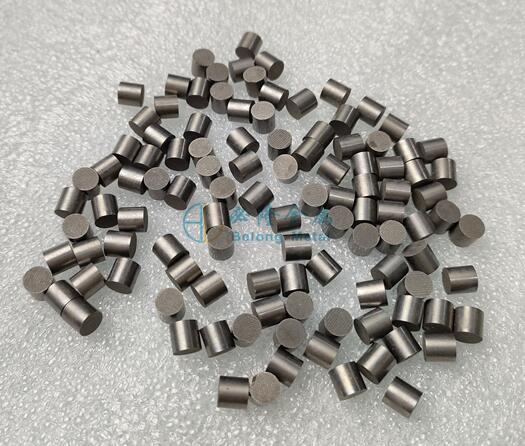
Tungsten is a metal known for its high melting point, high density, and high hardness, widely used in various industrial sectors. Tungsten evaporating materials, as a special type of tungsten material, have garnered attention due to their unique properties and promising applications.
Baoji Bilong Metal will here provide a detailed introduction to the concept, properties, preparation methods, and main applications of tungsten evaporation materials.
The concept of tungsten evaporation material
Tungsten evaporation material refers to a thin film material made of tungsten through Physical Vapor Deposition (PVD) technology. During the PVD process, solid tungsten material is evaporated and deposited onto a substrate to form a film with a specific thickness and structure.
2. Properties of Tungsten Evaporation Materials
Tungsten evaporation materials possess the following significant properties:
High Melting Point: Tungsten has a melting point of up to 3422°C, making tungsten evaporation material highly stable in high-temperature environments.
b. High Density: Tungsten's density of 19.25 g/cm³ gives tungsten evaporation material an advantage in applications requiring increased mass.
c. High Hardness: Tungsten's hardness is second only to diamond, making tungsten evaporative materials excel in wear resistance.
d. Excellent Conductivity and Thermal Conductivity: Tungsten evaporation materials boast good conductivity and thermal conductivity, suitable for the manufacturing of electronic devices.
Method for Preparing Tungsten Evaporation Material
The preparation of tungsten evaporation materials primarily employs physical vapor deposition technology, including:
The Evaporation Method: The process involves heating tungsten material to induce evaporation, which then condenses on the substrate to form a thin film.
b. Sputtering Method: Utilizing ion bombardment to impact tungsten target material, causing tungsten atoms to sputter out and deposit onto the substrate to form a film.
c. Chemical Vapor Deposition (CVD): A process that generates tungsten films through chemical reactions in the gas phase, which are then deposited onto a substrate.
4. Primary Applications of Tungsten Evaporation Materials
Tungsten evaporation materials, due to their unique properties, are widely used in the following fields:
Tungsten evaporation materials can be used to manufacture electrodes, resistors, heat sinks, and other components for electronic devices.
Optical Devices: Tungsten evaporation material boasts a high reflectivity, suitable for manufacturing mirrors and other optical components.
c. Abrasion-Resistant Coating: The high hardness of tungsten evaporation material makes it an ideal material for manufacturing abrasion-resistant coatings.
d. In the nuclear energy sector, tungsten evaporated material serves as a neutron absorption material in nuclear reactors, contributing to enhanced nuclear safety.
5. Conclusion
Tungsten evaporation material, a tungsten material with unique properties, holds broad application prospects across various fields. As preparation technologies continue to advance, the scope of application for tungsten evaporation material is expected to expand further, bringing more possibilities to industrial development.
Baoji Bilong Metal Co., Ltd. produces and sells a variety of non-ferrous metals, including tungsten, molybdenum, tantalum, niobium, zirconium, and nickel, in the form of plates, bars, wires, strips, foils, and deep-processed products such as crucibles, fasteners, vacuum furnace hearths and accessories (electrode rods, heating bands, insulating screens, connecting pieces, reinforcing plates), ion implantation parts, MOCVD, PVD, MBE equipment components, shielding parts, high-density alloy counterweights, target materials, boats, and material trays. We offer custom processing of non-standard parts according to customer drawings or samples. Our products are widely used in industries such as aviation, aerospace, vacuum furnaces, special metals, special glass, machinery, electronics, chemicals, lighting, LED, semiconductors, and solar photovoltaic.
