
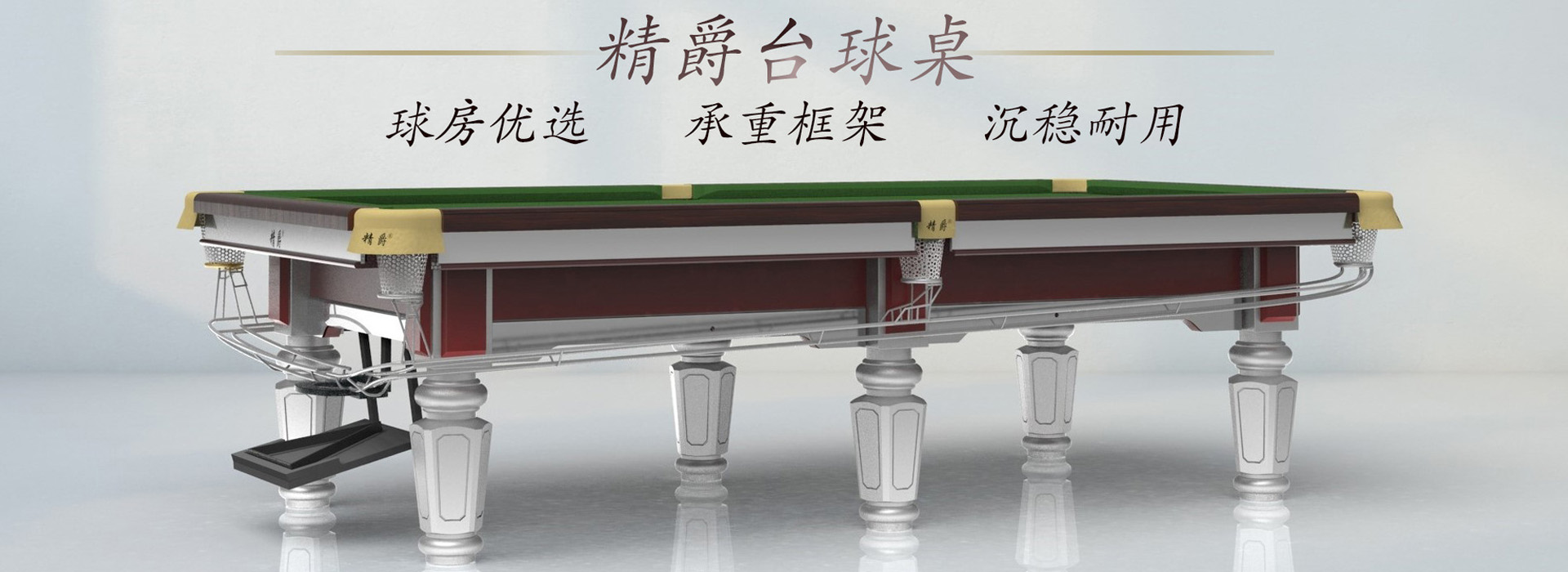
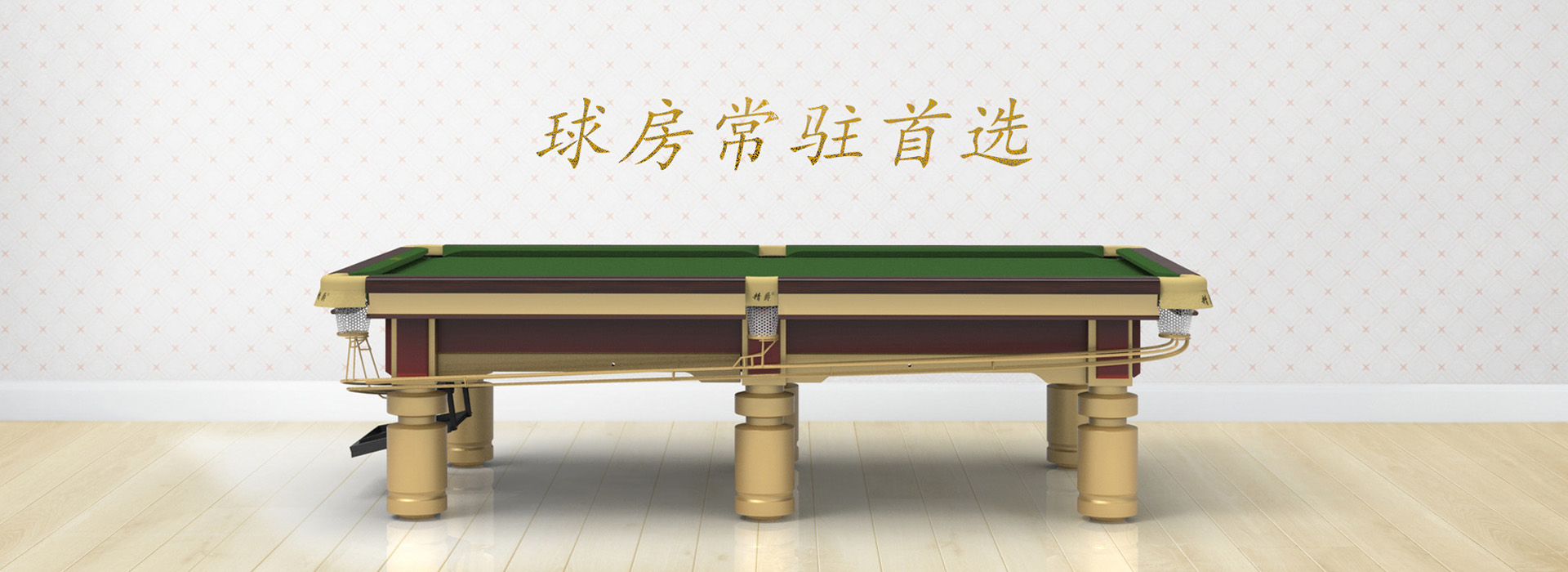


With the improvement of the national economy and the development of billiards worldwide, the sport has flourished in China, with billiard halls springing up everywhere. More and more people are falling in love with the game. What are the types of billiards? How do you choose a billiards table? How do you select a cue? What are the rules of the game? What are the different techniques? Let's dive into an in-depth introduction to the world of billiards, brought to you by our editor.
What is Pool Billiards:
Billiards is a popular indoor sport worldwide, a form of recreational sports entertainment that involves striking balls on a table with cues and determining the winner based on points scored.
Billiards has evolved into a variety of forms: Chinese 8-ball, Russian pool, English pool, Carom billiards, American pool, and snooker, with snooker being the most common and having become a competitive sport. Billiards is also known as table tennis (in Guangdong, Hong Kong, and Macau) and cue ball (in Taiwan).
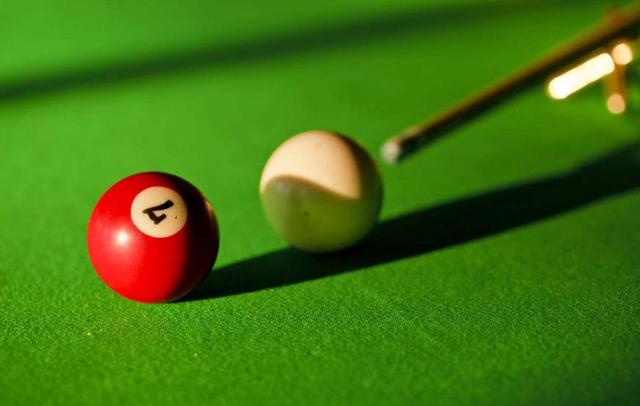
Billiards Varieties:
1. Pool tables can be categorized into two main types based on their construction: pocketless and pocketed.
2. There are two main categories based on play style: pocket billiards and cue ball billiards.
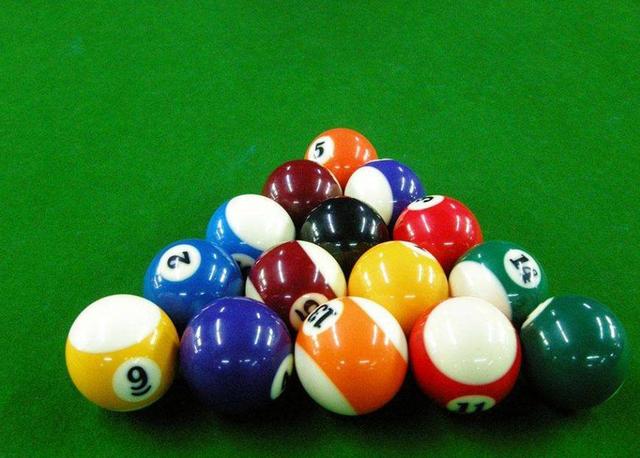
3. Divided by region, they are: English Billiards, French Billiards, and American Billiards. English and American billiards are sinking balls, while French billiards is a collision game. American Billiards (16 balls) is widely popular in our country, with main playing styles including: rotation ball, 8 ball, call shot, potting on, and fixed ball play.
Billiard Table Selection:
Take a look:
(1) Look at the appearance. A high-quality table tennis table boasts an aesthetically pleasing design, exquisite craftsmanship, and elegant paint. It complements the bright color balls and velvet-like green felt, resembling a precious piece of craftsmanship that instantly ignites a strong desire to play. In contrast, a low-quality table tennis table has rough workmanship and dull paint, giving off an uncomfortable vibe.
(2) Examine the craftsmanship. The pool table is meticulously crafted, with straight lines and tight seams at all joints; the paint is as smooth as a mirror, with a smooth and delicate texture. Additionally, gently strike the edge of the table with the waist, observing whether the balls on the table surface wobble? The less wobble, the better. A table that cannot be knocked over indicates the wood used is harder and the workmanship is exquisite.
(3) Inspect the edges. Check for gaps where the edge meets the countertop (i.e., the degree of straightness on the vertical surface). Edge deformation typically involves a bulge in the middle or upward curling at the sides. If the gap is too small to see clearly, try inserting a credit card at the bottom of the edge to ensure it doesn't fit. Squat at one end of the edge and observe if both edges and the gasket are aligned in a straight line on the horizontal surface (i.e., the degree of straightness on the horizontal surface); check if the edge is parallel to the countertop, and whether the edge and gasket are lifting up or down.
(4) Inspect the bag mouth. Centered on the circular arc below the bag mouth, check if the arcs on both sides of the cabinet are symmetrical and if the edge curves of individual arcs are smooth and consistent. Look for creases in the felt wrapping at the bag mouth, especially in the middle bag. Check if the leather wrapping around the bag mouth is even and if there are excessive gaps between the edges and the cabinet ends. Shake the bag mouth up and down with your hand to see if it is loose. Strike the mother ball with the middle rod with force to observe if the target ball spits out when it falls into the pocket.
(5) Observe the ball's movement. Notice the speed, uniformity, and whether it deviates from a straight line. When stopping, observe any side-to-side wobble. A good rolling ball is fast, flowing like a cloud, almost appearing stationary, gliding as if on ice.
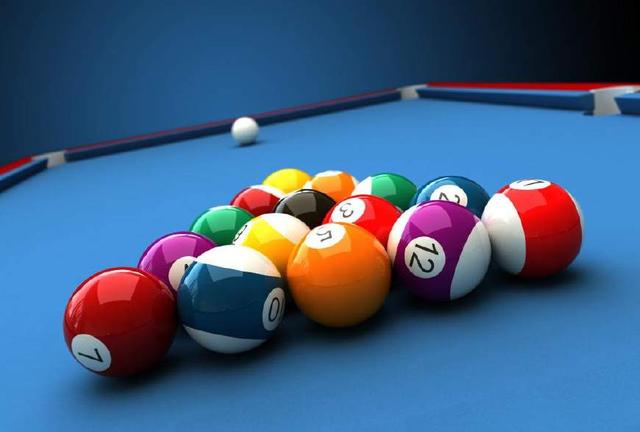
(6) Check the elasticity. Use your hand to throw the ball tightly against the table with force, or strike the ball with the cue stick with great power. Observe the number of times the ball bounces back on the long or short side of the table to determine the elasticity. A good range for the long side is between 4 and 4.5 cushions, while for the short side, it's between 4.5 and 5 cushions. Another method to distinguish is to strike the ball with the cue stick hard at the middle of the side cushion near the top pocket, aiming to the right, and a ball that can rebound 6 cushions or more is preferable.
(7) Inspect the slate surface for smoothness, and check for any defects such as large white lines, large patterns, sand eyes, hard beans, rust, cracks, scratches, or artificial repairs.
(8) The joint filler at the seating area's stone slab seams is either a thin line equal in width to the seam or a patchy wide strip. The presence of a wide strip of filler indicates that one of the two slabs is lower or uneven in that area.
Billiards Rules:
Scoring Rules:
Players may continue to hit the ball legally after scoring a legal ball. They must continue until they are unable to legally pocket a ball of their chosen suit. After all of their own suit balls have been legally pocketed, they must then hit the 8 ball into a pocket.
Players will lose the game if they violate the following rules:
1. Foul on the 8 ball shot (exception: hitting the 8 ball into the pocket on the opening shot)
2. The player pocketed a ball of their own color and the 8 ball at the same time.
3. At any time, cause the 8 ball to jump off the table.
