



 通过中商114认证

Below, we'll discuss how to choose a Roots vacuum pump.
Key Considerations When Purchasing a Roots Vacuum Pump Unit
As the demand for Roots vacuum pump units continues to rise, the quality of products on the market varies greatly. Therefore, we must be extra cautious during the procurement process. Here are some points to consider when selecting Roots vacuum pump units:
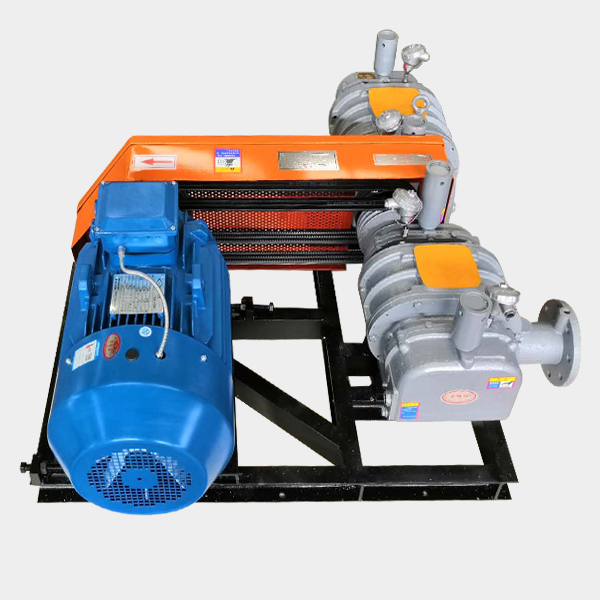
Work Stress:
The operating pressure of the Roots vacuum pump unit should meet the requirements of vacuum degree and the working pressure of the vacuum equipment. Typically, the vacuum degree of the selected pump is half to one order of magnitude higher than that of the vacuum equipment.
Choose the Right Work Point:
Each pump has a specific operating pressure range, such as for diffusion pumps, it is between 10^-3 to 10^-7 mmHg. Within this wide pressure range, the pump's pumping speed varies with pressure, with its stable operating pressure range being from 5 x 10^-4 to 5 x 10^-6 mmHg. Therefore, the pump's operating point should be selected within this range.
3. The Right Mix:
Due to the selective exhaust of the Roots vacuum pump unit, sometimes a single pump is insufficient to meet the exhaust requirements, necessitating the combination of multiple pumps to complement each other.
4. Vacuum Equipment's Requirements for Oil Contamination
If the equipment requires strict oil-free operation, various oil-free pumps should be chosen, such as water ring pumps, molecular sieve adsorption pumps, sputtering ion pumps, and low-temperature pumps. If the requirement is not strict, oil pumps can be used in conjunction with additional anti-oil contamination measures like cold traps, baffles, and oil separators, which can still meet the requirements for clean vacuum.
5. Understand the composition of the pumping gas:
Whether the gas contains condensable vapor, particulate dust, corrosive substances, etc., it is necessary to understand the gas composition and select the appropriate pump for the gas being pumped. If the gas contains vapor, particulates, and corrosive gases, it is advisable to install auxiliary equipment such as condensers and dust collectors on the pump's intake pipeline.
Why is the Roots vacuum pump low in pressure?
Vacuum pump units, when experiencing low pressure, not only fail to start and operate normally but also may cause some adverse effects on the unit. Therefore, when low pressure is detected in the unit, it is crucial to promptly identify the cause of the low pressure and then take targeted measures to address the issue. But what could be the reasons behind the low pressure in the unit?
If the vacuum pump unit has not been filled with water or properly vented, check whether both the pump casing and the inlet pipeline are fully filled with liquid.
2. If the suction is too high, check the existing net pressure head.
3. If the system's head is too high, check the system's head (especially for friction losses).
4. If the speed is too low, check if the motor is properly wired, if the voltage is normal, or if the steam pressure of the steam turbine is within the correct range.
5. The impeller diameter of the vacuum pump unit is too small. For the correct impeller diameter, please consult the manufacturer.
6. If the immersion depth of the bottom valve or the inlet pipe is insufficient, consult the manufacturer for the correct immersion depth or use a baffle to eliminate eddies.
7. The pressure gauge is located incorrectly. Check the position and inspect the outlet nozzle or pipeline.
8. If there is air or air intake leakage, check for bubbles or air leaks in the intake管道.
About the introduction of Roots vacuum pumps, that's all the editor has to say for now. Thank you for watching. If you need Roots vacuum pumps, please contact our manufacturer, Shandong Baihui Blower Co., Ltd.
