



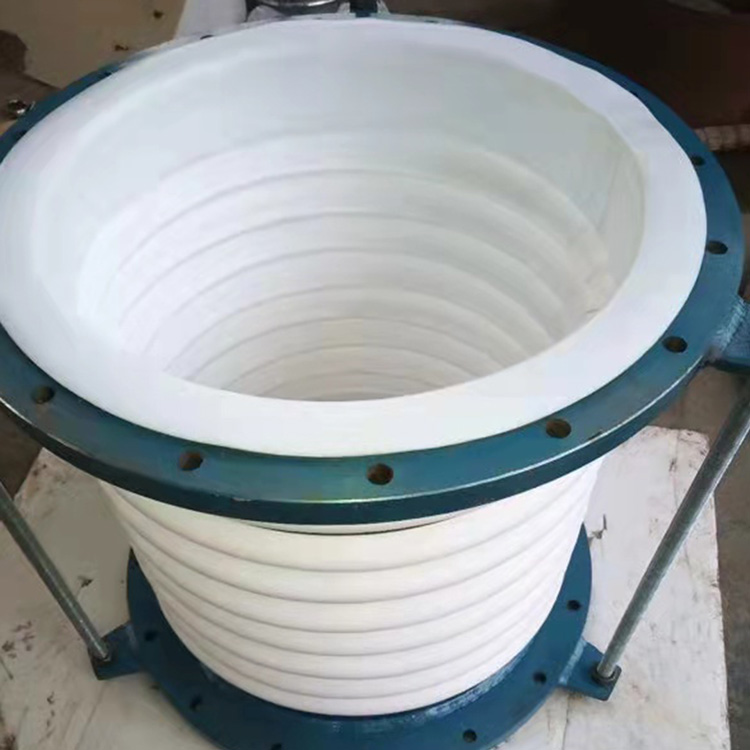


Polytetrafluoroethylene bellows compensator (also known as an expansion joint) is an industrial instrument used in pipeline systems for corrosive media to compensate for thermal expansion and contraction displacement and installation deviation, and to reduce pipeline system vibration.
Installation Notes for Compensators
1. The installer should follow the pipeline construction drawings and the compensator installation manual as required.
2. Pipelines equipped with compensators must be properly guided and secured to ensure the compensator functions effectively. Consequently, the installation of guiding and securing brackets must strictly adhere to the technical specifications provided by the design department. For principles regarding the setup of guiding and securing brackets, please refer to the "Wavy Compensator Installation Guide."
3. The bellows used in compensators are formed from thin-walled stainless steel plates, so care must be taken during transportation, lifting, and welding to avoid damage to the bellows due to reasons such as impacts, scratches, arc striking, and welding spatter.
4. Prior to installation, remove any foreign objects from the bellows and piping to ensure normal movement of the bellows.
5. Compensators with flow direction requirements should be installed according to the arrow indicating the medium flow direction.
6. To ensure the bellows is in good working condition, the installation should not use the compensator's deformation, including axial, lateral, and torsional adjustments, to correct the installation errors of the pipe system position.
7. After the compensator is installed, remove all transport securing bolts painted yellow before the system is operational.
