
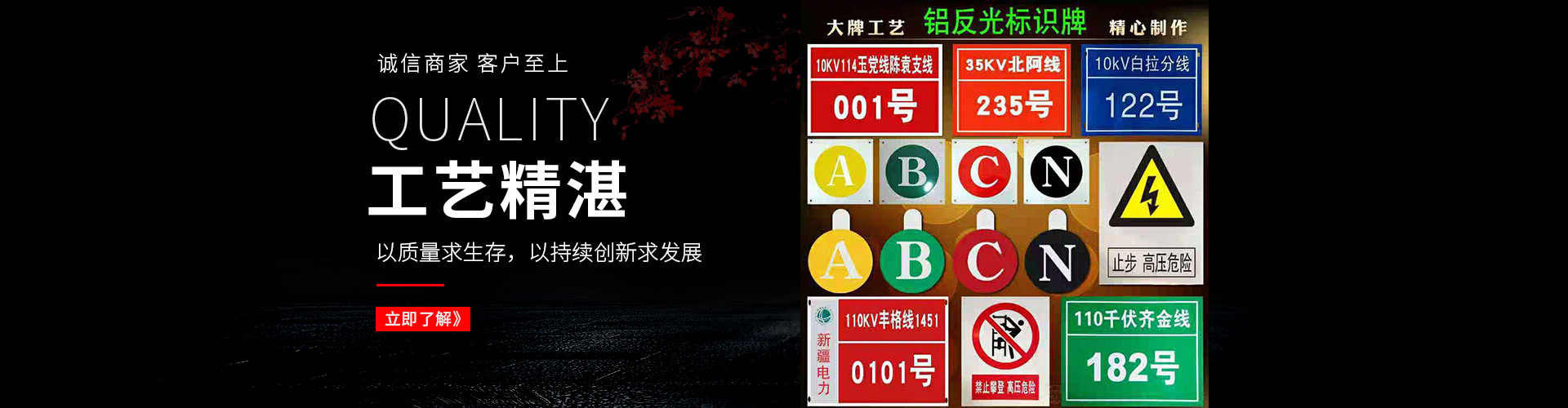
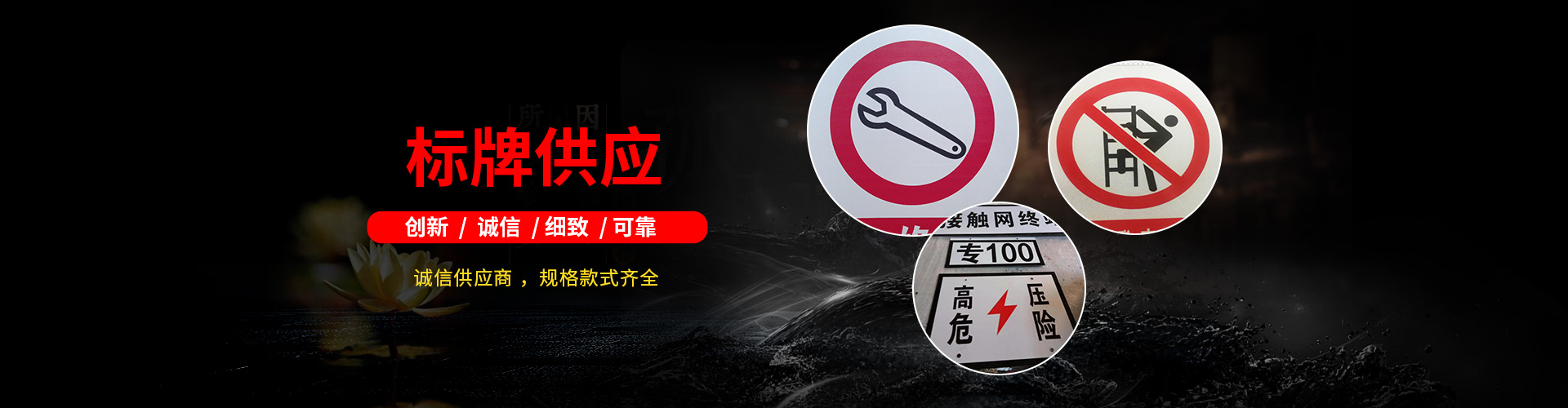
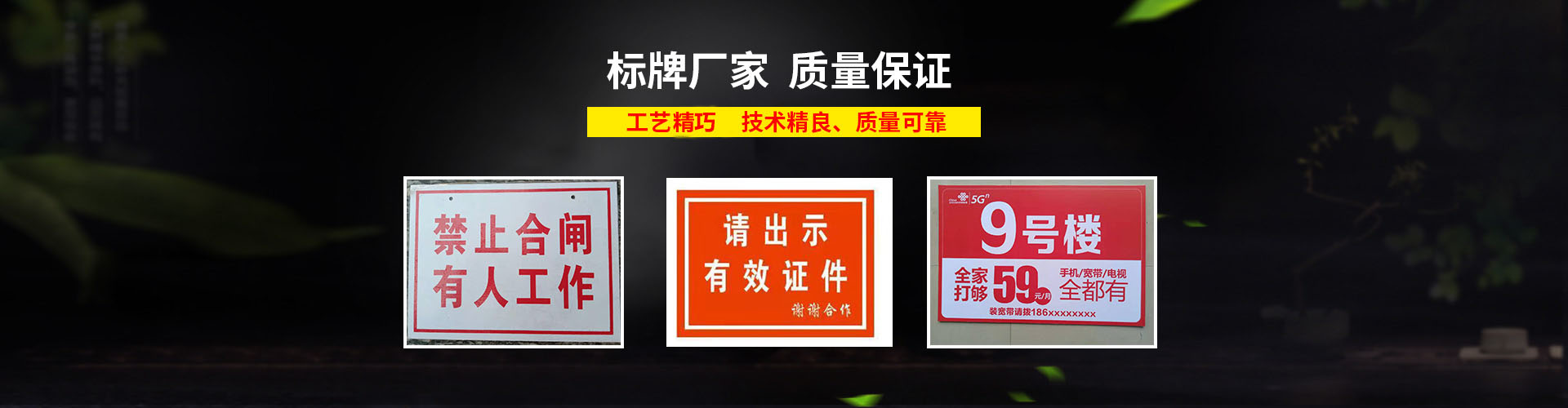

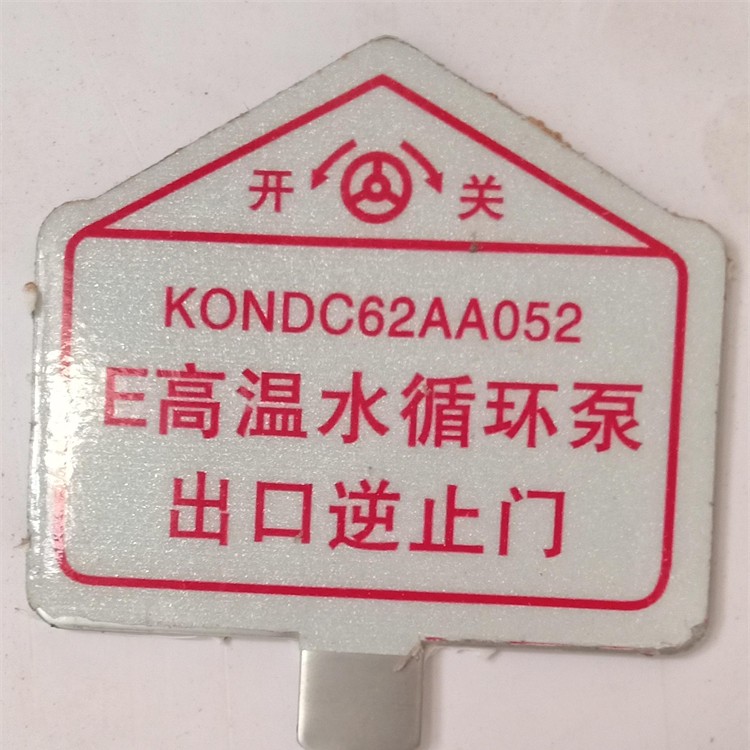


The term "sign" we refer to is one used for visual representation purposes. Conceptually, it should be called a "panel sign." Since people refer to panel signs as the form of signs, it is through the exchange between the East and West that the term has gradually acquired its nominal significance of a "sign."
Label Making Process
The plate-making process determines the quality of the signs, and the production steps of the sign-making process decide the quality of the sign production. During production, it is necessary to strictly adhere to the relevant standards of the three production steps to ensure high-quality sign products.
1. Plate Making. The text and graphics on signs are typically produced using offset and photographic plating techniques. First, a single original is created, followed by a multi-image assembly using a continuous imager. During assembly, either gapless or gapped assembly can be used based on the required precision of the parts. For signs with less stringent size requirements, gapless assembly can be employed. After printing, the signs can be cut directly or cut and then formed into shape. For signs with high precision size requirements, gapped assembly is recommended. After printing, holes are punched and formed according to the positioning holes, with a spacing of 2mm between parts, positioning hole diameter of 2mm with a spacing of 4mm, and an overall area of 400×400mm, or as determined by the design process. If the screen-printed sign is in two or more colors, the photographic plate should have positioning guidelines. The positioning holes can be drawn on the photographic plate of the main pattern of the sign to ensure accuracy during cutting.
2. Positioning of screen printing meshes. Positioning is crucial for precision, and the accuracy of positioning is the key to determining the quality of metal screen-printed labels. The guidelines on the screen printing label plate ensure the accurate, uniform placement, and full-color registration precision of the graphics on the same printed workpiece surface. Depending on the different materials and shapes of the substrate, the positioning methods for screen-printed labels vary. Common methods include:
One type is edge positioning. Suitable for straight-edged workpieces, such as: nameplates, panels, various scales, etc., simply place the two right angles of the workpiece tightly against the positioning strip during screen printing.
Two types are edge positioning. Suitable for screen printing on irregularly shaped formed parts. The outer frame of the part's forming and cutting process can be attached to the required position on the platform after trimming the gaps, following the edge positioning method. During screen printing, simply place the irregularly shaped part into the outer frame.
The third method is hole positioning. Hole positioning is suitable for screen printing of panels with the same graphic. This involves punching positioning holes into the board first, using these holes for alignment during screen printing, and then using the positioning holes for mold cutting and forming of the workpiece.
The fourth method is overlapping positioning, suitable for screen printing on transparent materials. During positioning, the two cases can be screen printed on a board, covered with a film that has the cases printed, ensuring that the corresponding positions of the two cases meet the design size requirements. Then, the printed film is securely attached to the platform. When screen printing the cases, simply align the transparent workpiece with the case printed on the platform to achieve the positioning.
3. Metal Screen Printing Label Ink Mixing. The requirements for screen printing inks used on metal labels are strong adhesion, good abrasion resistance, clear print graphics after printing, quick drying, and no blocking. Metal label screen printing inks generally use alkyd, phenolic, and other synthetic resins as binders, mixed with some pigments and additives to form the ink. This ink has good printing properties, dries naturally or can be dried in 2 hours at 120°C. The ink film is bright and has a three-dimensional feel, with excellent adhesion and abrasion resistance to aluminum plates. The ink film is tested with a JM-1 type film abrasion tester, capable of withstand over 500 cycles of rubber abrasive wheel grinding with a load of 7509, and over 5000 cycles of cloth wheel grinding.
If screen printing colored labels, refer to the color samples of the printing inks for mixing. When adjusting the ink, add a suitable amount of ink thinner and drying agent. The addition of the ink drying agent should be about 5-8% of the total ink volume. Adding too little makes it difficult to dry, while adding too much affects the adhesion of the ink.
4. Quality requirements for metal wire printing labels. The text, scales, graphics, positioning holes, and colors on the printed labels must conform to the drawings. The finished product surface should be free of visible scratches and spots, and the adhesion of the ink film should meet the requirements.

Classification of Identification Signs
1. Horizontal: The overall proportion is longer horizontally. Typically, the entire surface is used for signage. It is commonly seen on the walls of small shops and large buildings.
2. Vertical: The entire proportion is longer vertically. Generally, the entire surface is utilized for identification signs and banners.
3. Prominent: Projecting from the building's walls, these signs utilize the entire front or both sides as advertising surfaces, except for the back.
4. Ground Pillar Shape: Horizontal, vertical, or three-dimensional identification signs marked on certain fixed structures on the ground.
5. Rooftop-mounted: Refers to the installation of fixed structures on the roof of a building, with flat, cuboid, or holographic signage hanging or affixed to them.

What to note when printing UV on acrylic?
When printing acrylic with UV inkjet, if a coating is not applied, the pattern printed directly will easily peel off, resulting in poor color sensation, fading, and the color washing out with water. To avoid these issues, here are some important considerations for UV acrylic printing:
Currently, acrylic spray coatings on the market come in two-component or multi-component products, which require precise mixing ratios before use, making them inconvenient. Due to the investment in acrylic spray, it's advisable to consider safer water-based coatings. If solvent-based coatings are a must, it's recommended to store them separately from acrylic to eliminate potential safety hazards.
As high-value decorative products, UV printed items typically demand high aesthetic standards, necessitating colorless and transparent film coatings. Currently, some two-component coatings based on epoxy resins are yellowing upon curing, affecting their decorative appearance. Additionally, weather resistance is crucial; UV printed products, especially outdoor signage, billboards, and prints, must maintain a bright, new appearance for an extended period without fading.
Adhesion issues can be addressed through various methods, such as the 100-Grid Method. For higher quality printing products, you can also test whether the printed image peels off after soaking in water or boiling. Adhesion is a key factor in evaluating the coating.
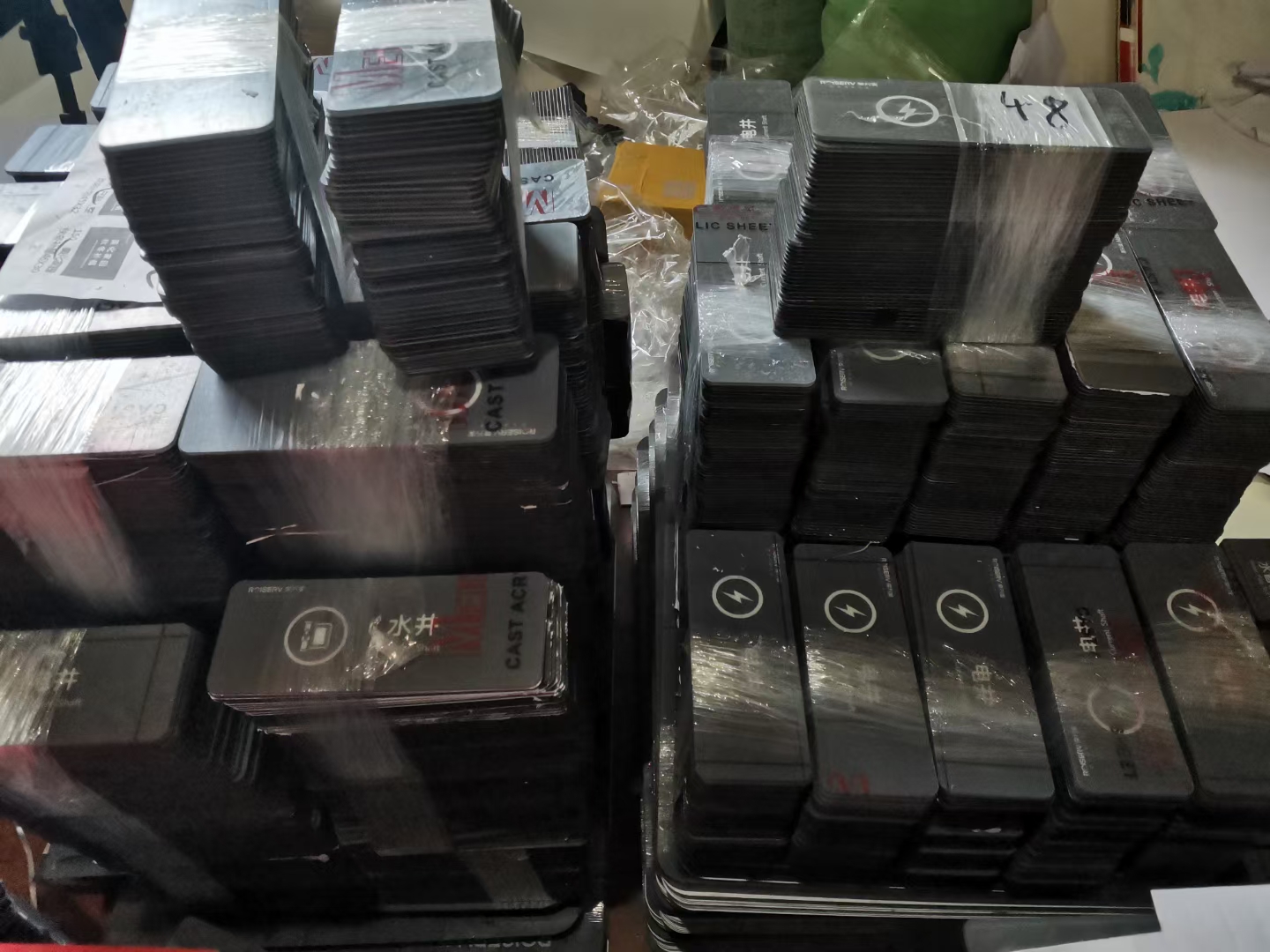
The function of the signboard includes two points:
1. Marked with symbols and warnings, signage primarily communicates its purpose visually. For instance: text conveys symbolic, directional, and suggestive functions, etc.
The style of text can convey personality, background, and meaning. Shape and symbols together express symbolic and constructive significance.
2. Signs are a medium for conveying information, serving both advertising and warning functions.
Product Description: Utilizes photo-luminescent self-illuminating material with light absorption and storage capabilities. Absorbs visible light such as sunlight and artificial light for 20 minutes in bright conditions, and continues to glow for over 12 hours.
Absorb and emit light processes can be repeatedly used indefinitely. No power required, maintenance-free, with a high safety factor for emission.
A continuous service life of up to 15 years.
Wall-mounted options include frosted PVC with silver trim and clear PVC with silver trim, both with self-adhesive backing.
We specialize in the design, production, sales, and service of various signage. Our main products include mechanical nameplates, control panels, touch panels, electronic membrane switches, acrylic craftworks, door signs, directional signs, identification signs, trophies, charts, labels, and more. We also offer services such as soft and hard silicone rubber, material printing, and metal etching for signage.
