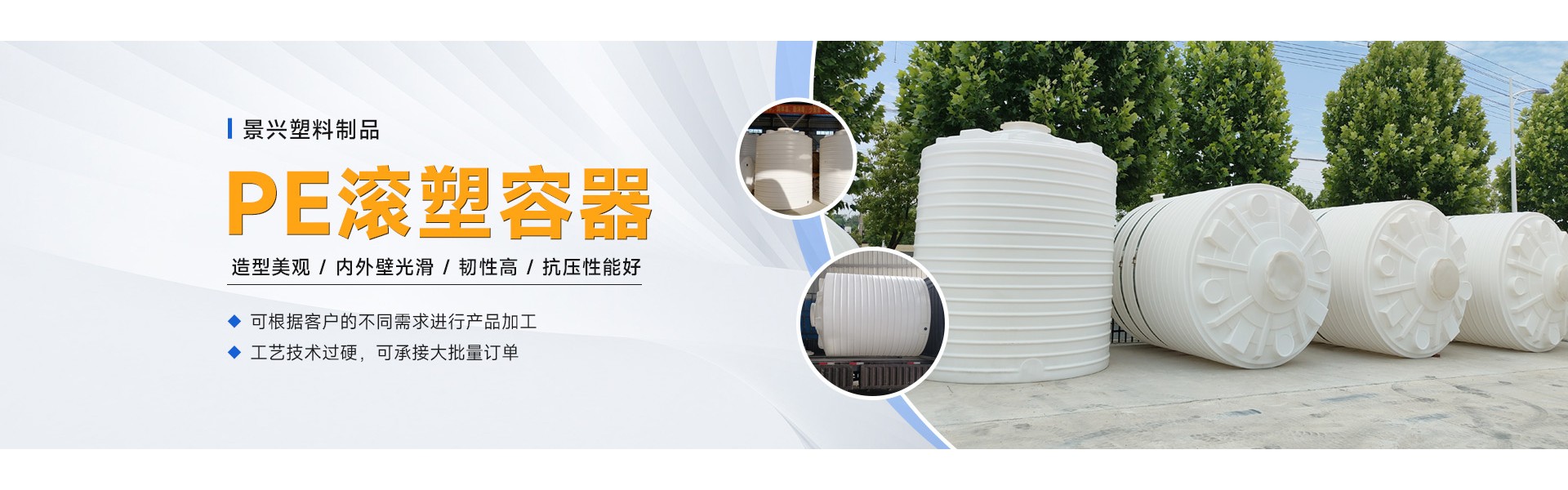
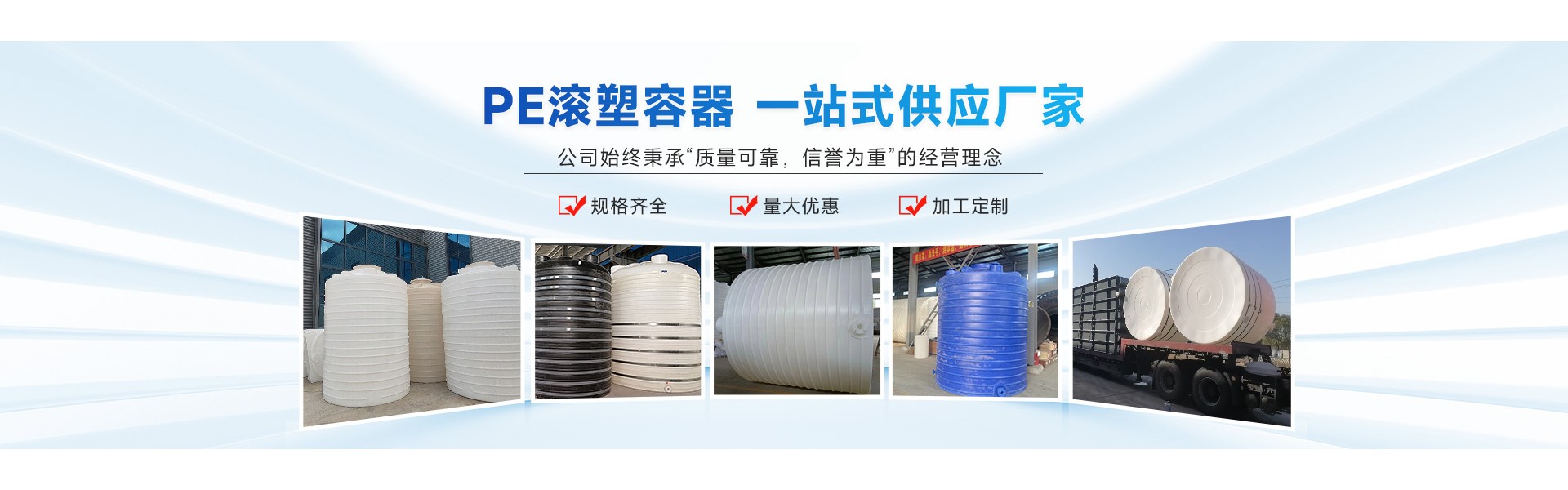
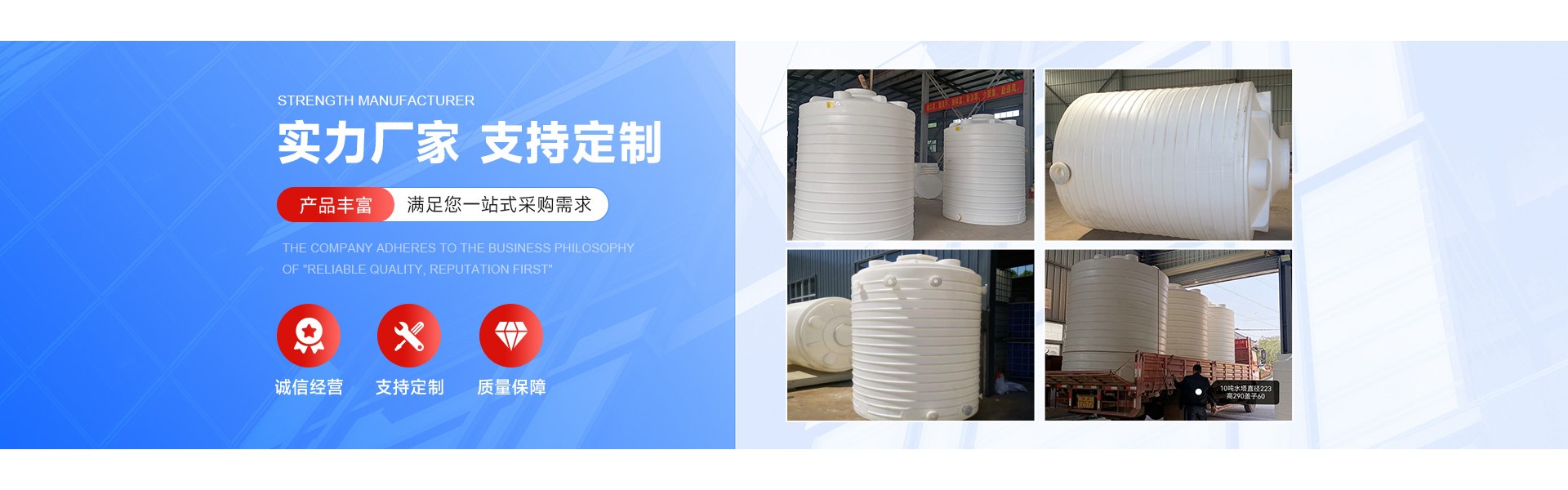
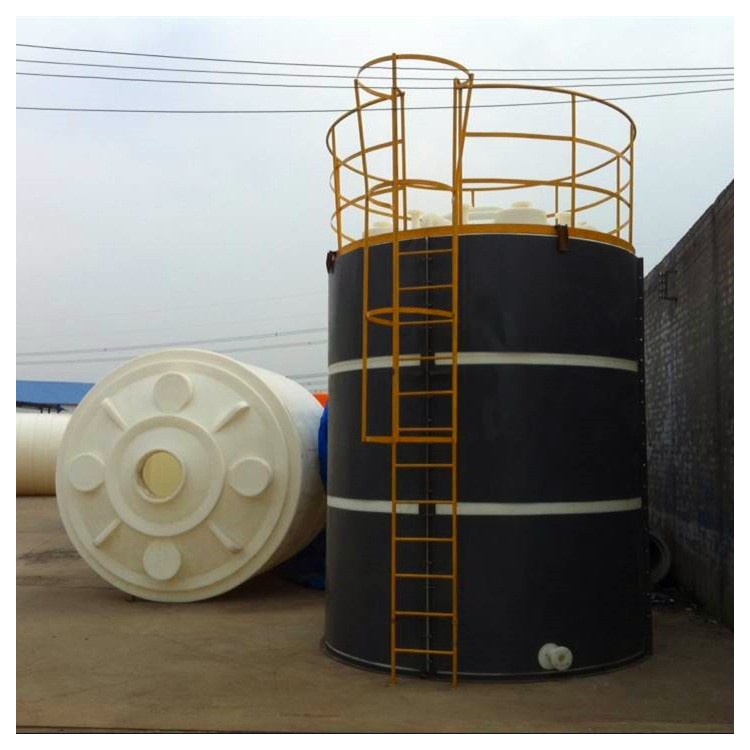
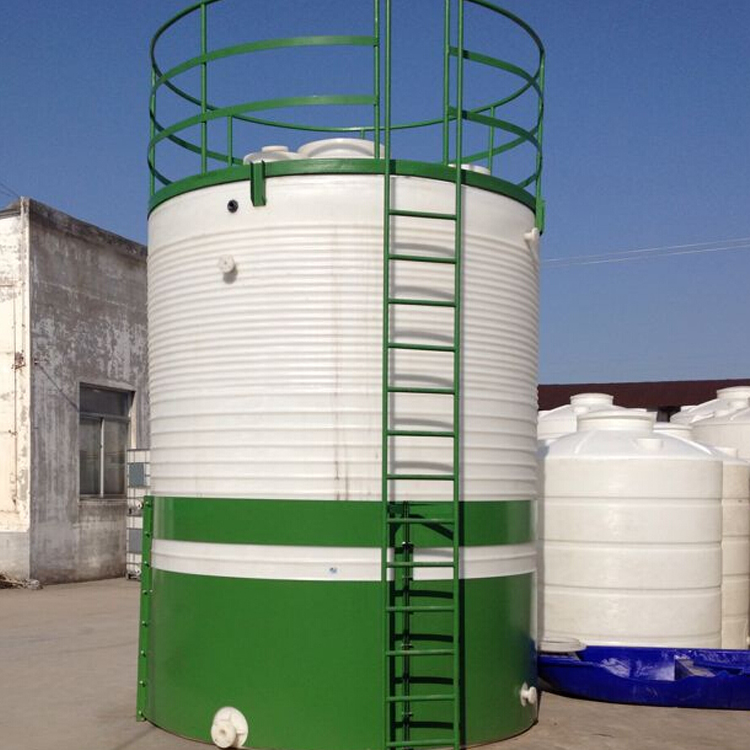
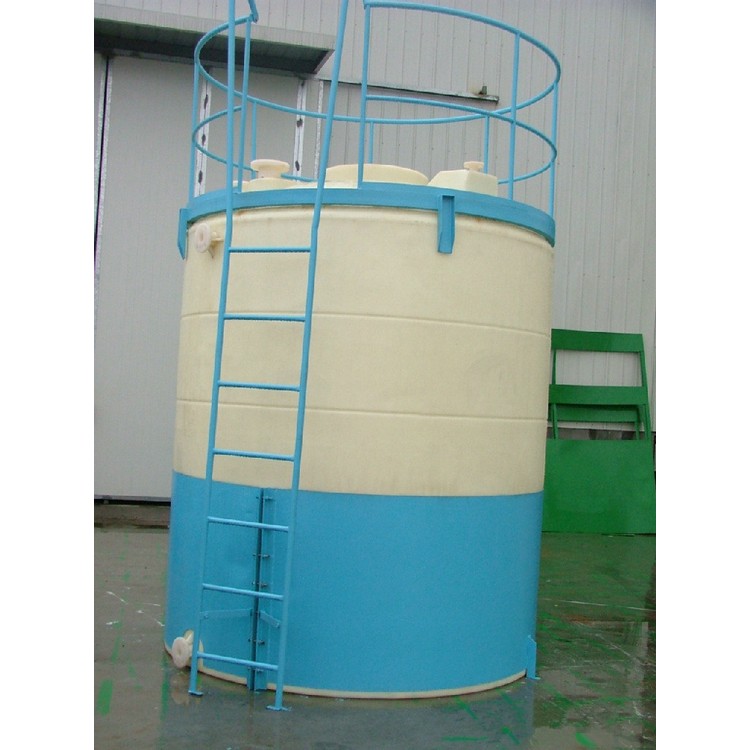
PE Full Plastic Anti-Corrosion Acid-Resistant Storage Tank
1. Due to the superior performance of linear low-density polyethylene (LLDPE and HDPE) and the unique structure of rotational molding tanks, their lifespan exceeds 15 years.
2. Exceptional chemical resistance; almost all substances' solutions can withstand it, except for a few that can swell it.
3. Plastic storage tanks feature both internal and external corrosion resistance, suitable for placement in highly corrosive environments.
4. Rotomolded corrosion-resistant storage tanks offer significant advantages for large-scale, high-capacity, and large-volume products. Despite their large size, they maintain the characteristic of one-time molding integrity that other storage tank processes cannot achieve.
5. Compared to traditional anti-corrosion storage tanks, our option is more affordable with a higher performance-to-price ratio.
6. Plastic storage tanks are formed in one piece for excellent integrity, with no welds or leaks, strong impact resistance, high tensile strength, and good antioxidant and aging resistance, meeting sanitation and food safety standards.
7. The plastic has a low softening point of 108°C and a high fracture point of -70°C, thus generally suitable for
8. Refer to the "Chemical Properties Table" when unsure about the suitability for containing a particular substance.
9. The foundation for the storage tank must be level and capable of withstanding the corresponding pressure. If a steel structure is used, the gaps should not be too large, and wooden or iron boards should be laid on top.
10. When storing chemical substances, the site should have a well-designed drainage trench and dilution facility around the storage tank.
Our products are widely used in various industries such as secondary water supply and storage in high-rise buildings, water treatment, pharmaceuticals and food, electronics and chemicals, aquaculture, textile dyeing, petrochemical reagents, acid pickling and electroplating, brewing and sugar production, vegetable pickling, freezing and refrigeration, tea production, and environmental protection and hygiene.
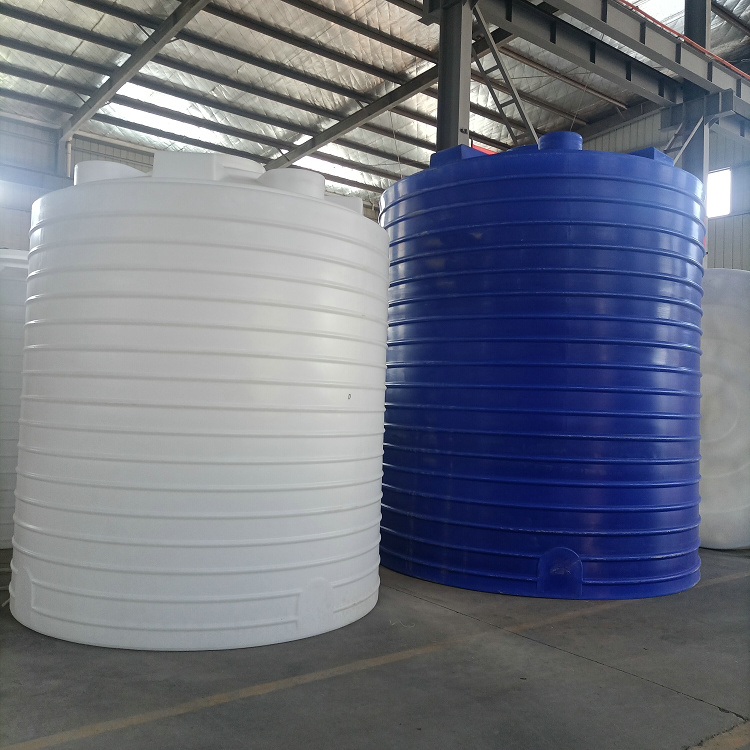 15-ton waste water treatment chemical storage tank
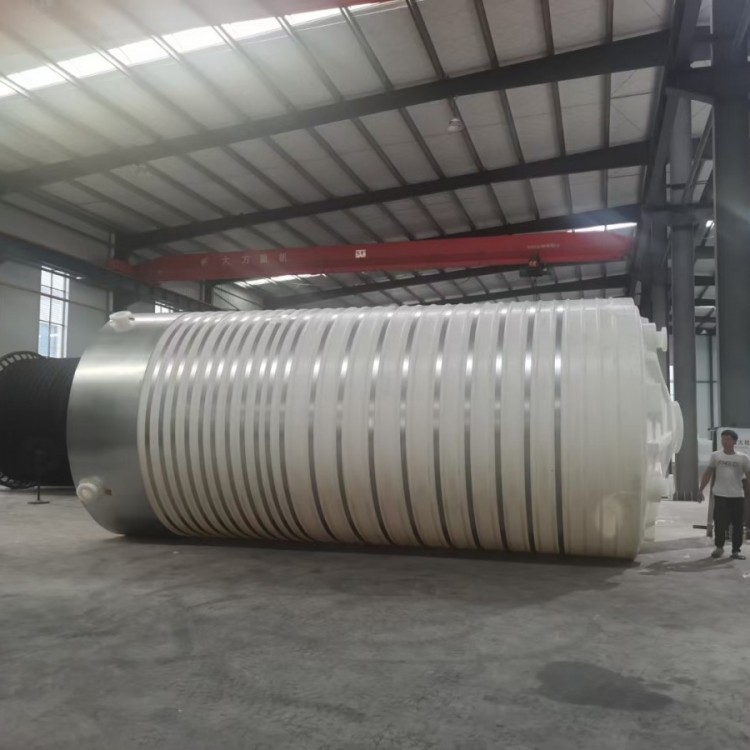 60-ton PE plastic storage tank
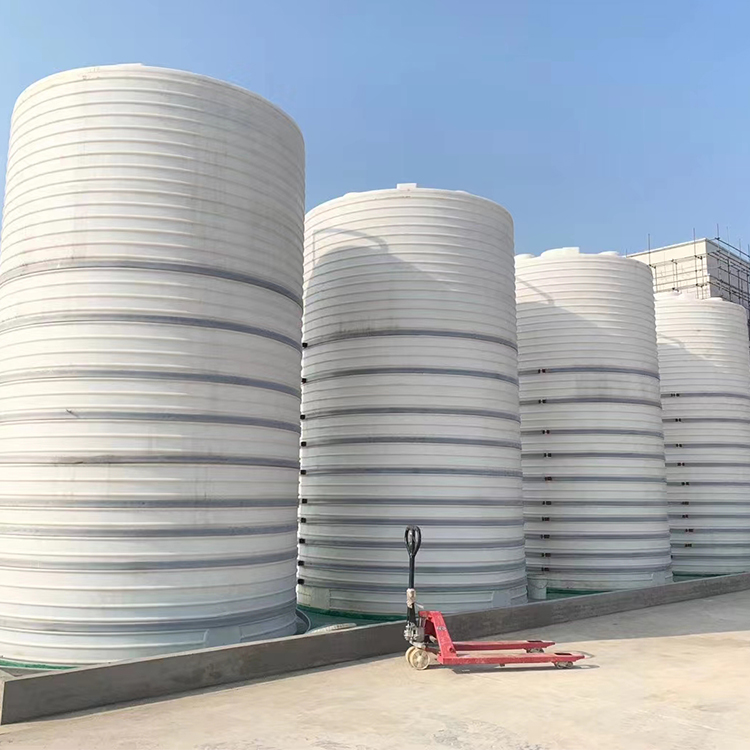 50-ton large capacity PE water tank

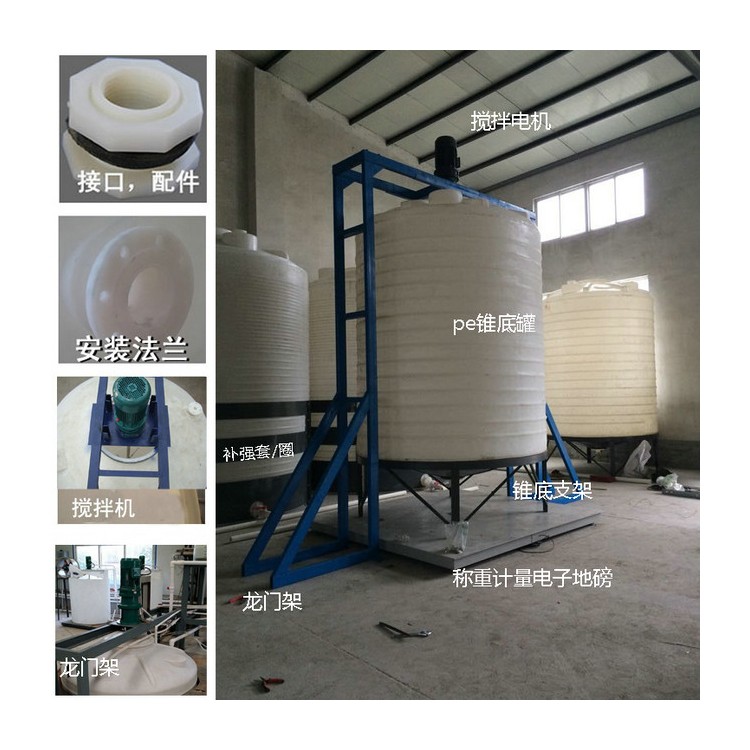 5-ton cone-bottom storage tank, thickened custom pointed-bottom plastic drum
 40 Cubic PE Tank
 20-ton PE coated storage tank
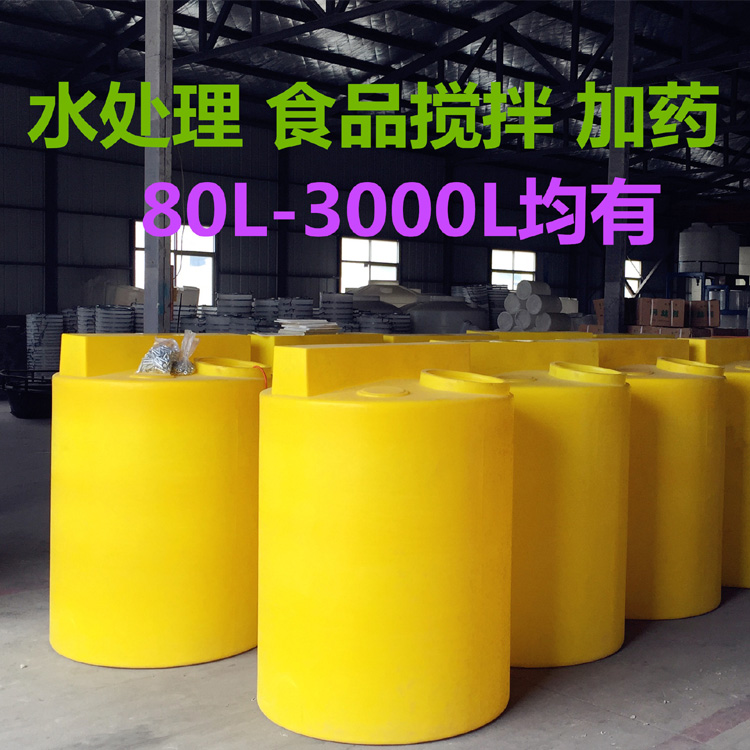 1000L Water Treatment Chemical PAC Mixing Drum with Chemical Feed Tank