




- AllProduct Category
-
Elastomeric Filler
Suspension Ball Filler
Hollow Sphere Packing
Polyurethane Foam Filler
Composite Filler
Plaited Packing
MBBR Biofill
Tilted Tube Filler
TPU Aerator Tube
170 Agitator Aerator
Vibration Aerator
Disk-Type Micro-Porous Aerator
Turbulent Aerator
Turbulent Mixing Aerator
Tube Aerator
Single-Hole Membrane Aerator
Flat Plate Aerator


详情描述
Product Overview
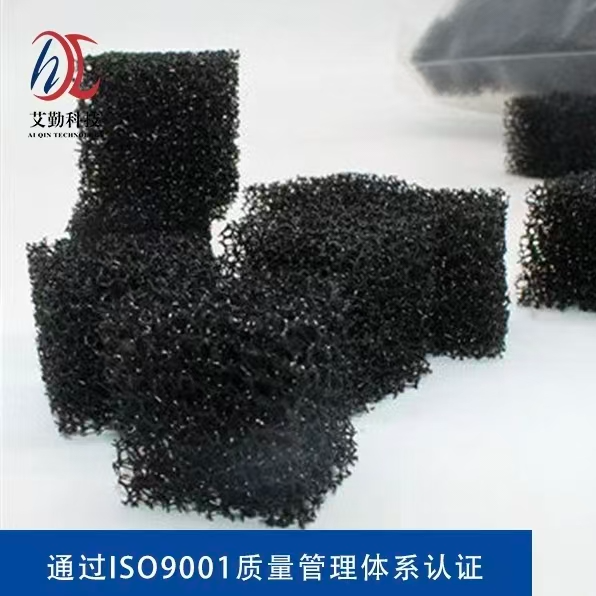
Hydrophilic polyurethane biofiller is a new type of biofiller synthesized from high polymer materials. It combines large pores and micropores in polyurethane fillers, where large pores maintain good contact conditions for gas, liquid, and solid, and micropores are used for immobilizing microorganisms. These micropores contain hydrophilic active groups such as amino, carboxyl, and epoxy groups, which can form ionic or covalent bondings with certain active groups in the microbial peptide chains, thus immobilizing microorganisms and biological enzymes on the carrier. After immobilization, the biofiller's density is close to that of water, featuring a high microbial load, high volume load, and large specific surface area. Due to its structural characteristics, polyurethane biofiller allows for mixing and contact exchange between wastewater, air, and biofilm. The biofilm not only accommodates a large amount of microorganisms within the carrier, maintaining good activity and porosity variability, but also, during operation, gas bubbles are continuously sheared into smaller sizes by the蠕动状态的 microbial biofiller driven by three-dimensional flow in the wastewater, increasing oxygen utilization and reducing aeration requirements. Therefore, it boasts strong bubble-cutting capabilities, high space volume utilization, and no dead zones, making it an updated and replaced product in the current biofiller market.
Product Features
1) Polyurethane fillers have a large specific surface area, allowing microbial flora to reproduce and grow on their surface, forming a highly active biofilm. This prevents the loss of slow-reproducing, low-yield microbial flora, such as nitrifying bacteria.
2) Enhance the efficiency of the biochemical system and the stability of the biochemical pond.
3) Reduce the toxic effects of non-biodegradable substances and toxic substances on microbial populations.
4) Enhanced system tolerance to load, toxic inhibitory substance shocks, as well as changes in pH and temperature. Reduced the generation of residual sludge.
5) Achieve simultaneous nitrification and denitrification.
Application Range
This media is suitable for various types of structures in submerged biofilter oxidation processes and for general bio-tower filters with sprinkling water, effectively distributing air and water flow uniformly. It offers distinct performance in the biological treatment of various organic chemical wastewater, domestic sewage, and urban wastewater, as well as in micro-pollution pretreatment and denitrification technologies. It is applicable to wastewater treatment projects involving nitrogen and phosphorus removal from high-concentration organic wastewater, various industrial wastewater, oil refining wastewater, daily chemical wastewater, pharmaceutical wastewater, biofilters, desulfurization, deodorization, and urban domestic wastewater.


