



I. Overview
1. Overview
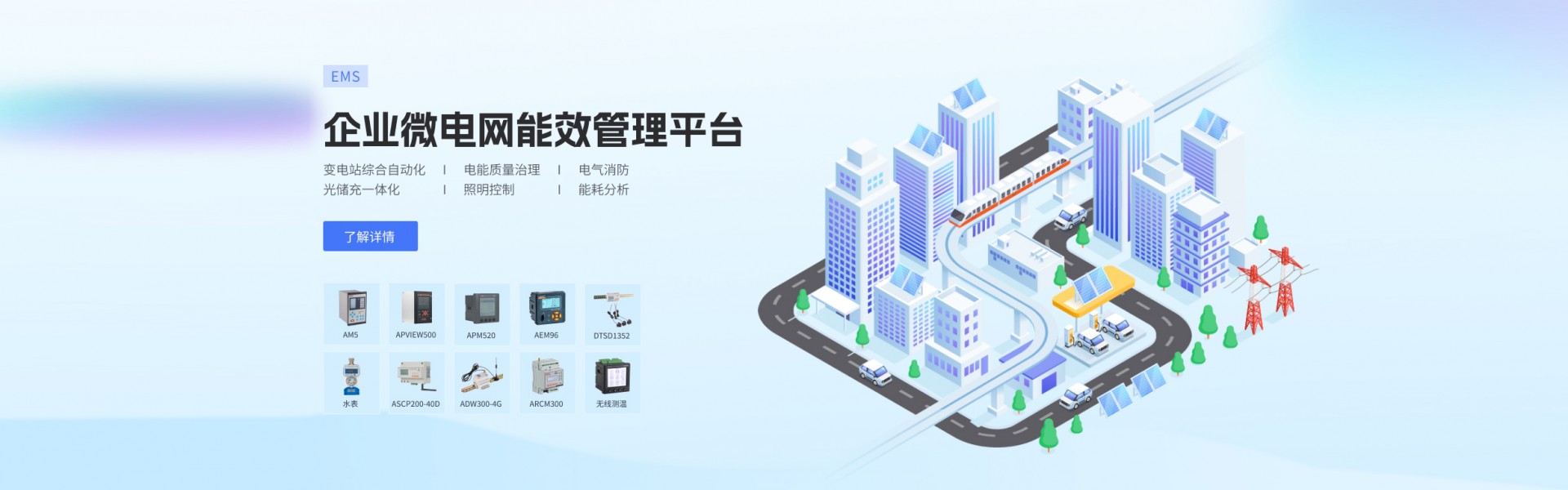
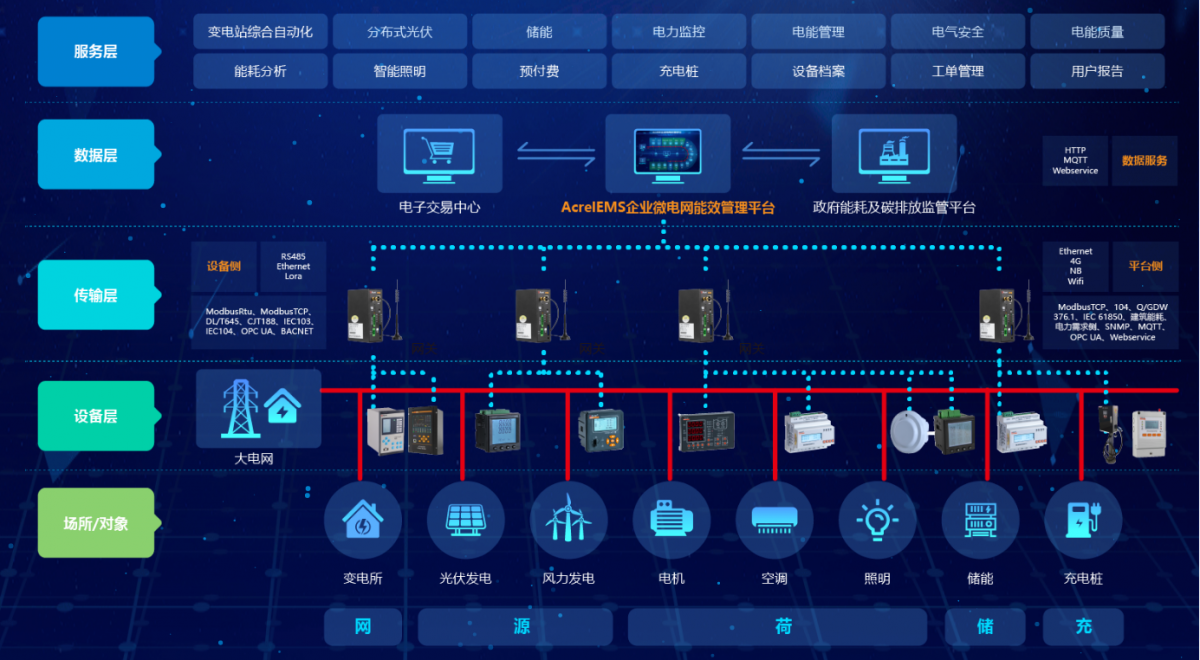
By installing monitoring, analysis, protection, and governance devices at key nodes of sourcing, networking, loading, storage, and charging, data is collected by high-performance edge computing gateways and uploaded to the corporate microgrid platform. The platform adjusts control strategies based on new grid prices, power consumption loads, grid dispatch instructions, and other conditions, remotely issuing updates to ensure the stable operation of the corporate microgrid. This reduces the company's electricity costs and achieves energy interconnection and information interaction.
2. Application Sites
New and expansion projects for internal microgrid management systems suitable for enterprises in various industries.
3. Platform Structure
II. Platform Features
1. Management Dashboard
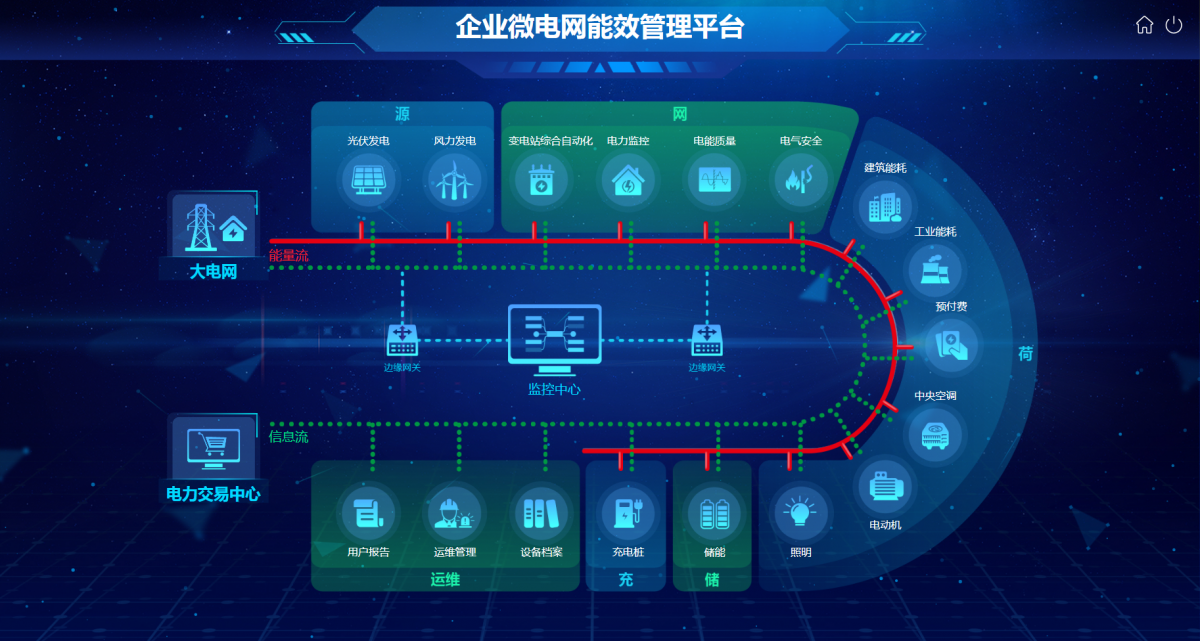
For the platform's main interface, install monitoring, analysis, protection, and governance devices at each key node of the corporate microgrid, including sources, grids, loads, storage, and charging. Utilize high-performance edge computing gateways to collect data and upload it to the corporate microgrid platform. The platform adjusts system control strategies based on new grid prices, power consumption loads, grid dispatch instructions, and other factors, remotely issuing adjustments to ensure the stable operation of the corporate microgrid, reduce electricity costs for the enterprise, and achieve energy interconnection and information interaction.
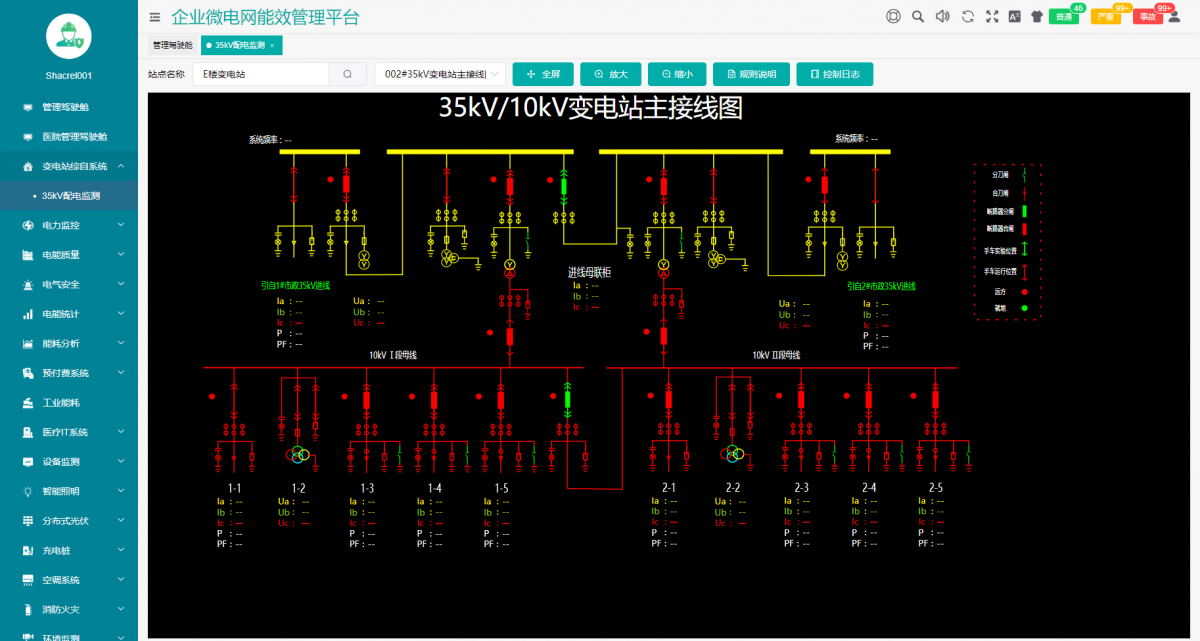
2. Substation Integrated Automation
Real-time data collection for substation, switchgear, and transformer stations up to 35kV, switch status detection, and remote control, providing continuous protection and monitoring for the user's power distribution network and electrical equipment, enhancing the automation level of the user's power distribution system, and ensuring reliable and safe power supply.
3. Power Monitoring
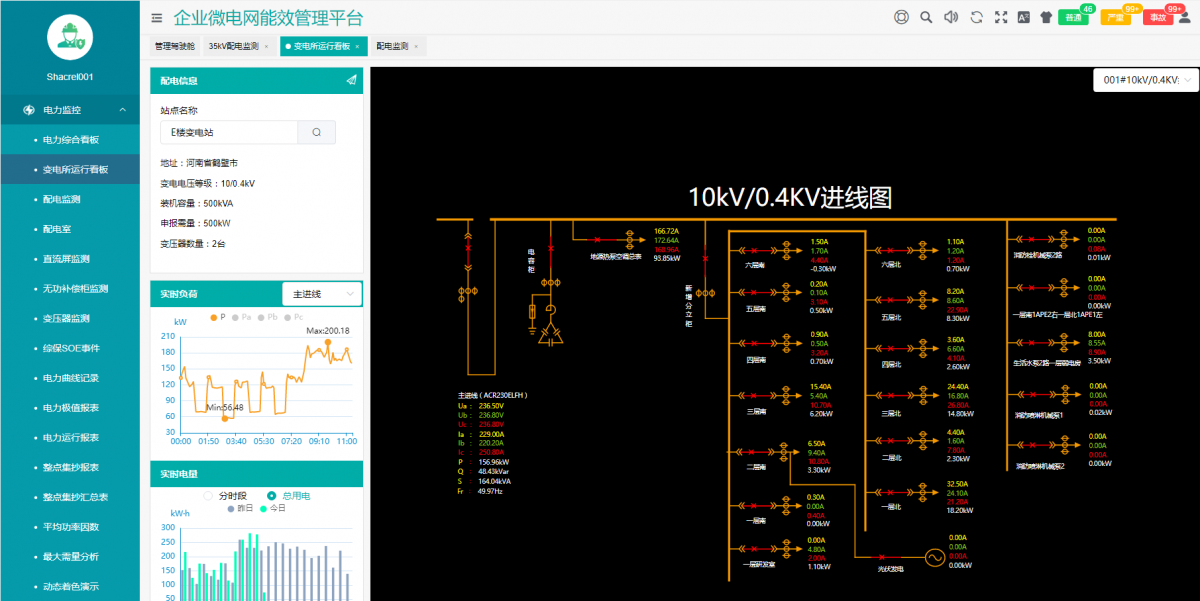
The platform can monitor the operation of transformers and distribution circuits in real-time within the substation, and record the historical data of various power parameters.
4. Power Quality
The platform can real-time monitor harmonic distortion, voltage fluctuations, flicker, and tolerance index analysis of the distribution system to assess the power quality of the distribution system.

5. Electrical Safety
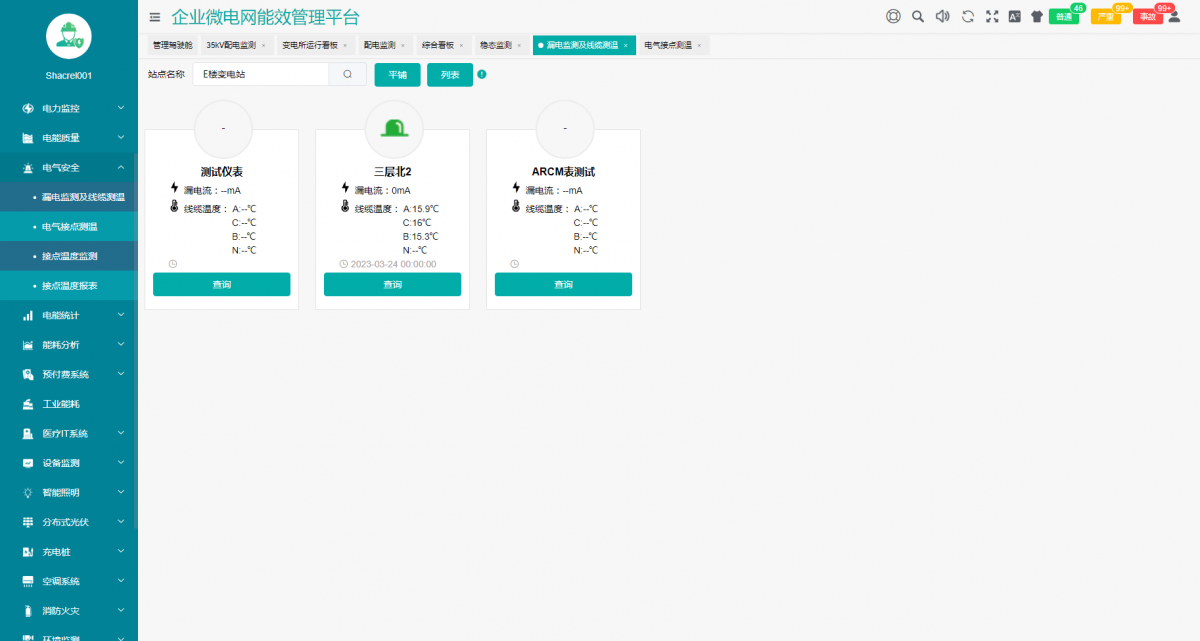
Real-time monitoring of leakage current in distribution system circuits and cable temperatures is available, ensuring safety alerts. Additionally, it can be connected to the power supply monitoring system for fire equipment, fire door monitoring system, emergency lighting, and evacuation sign systems for alarm information.
6. Electric Power Statistics
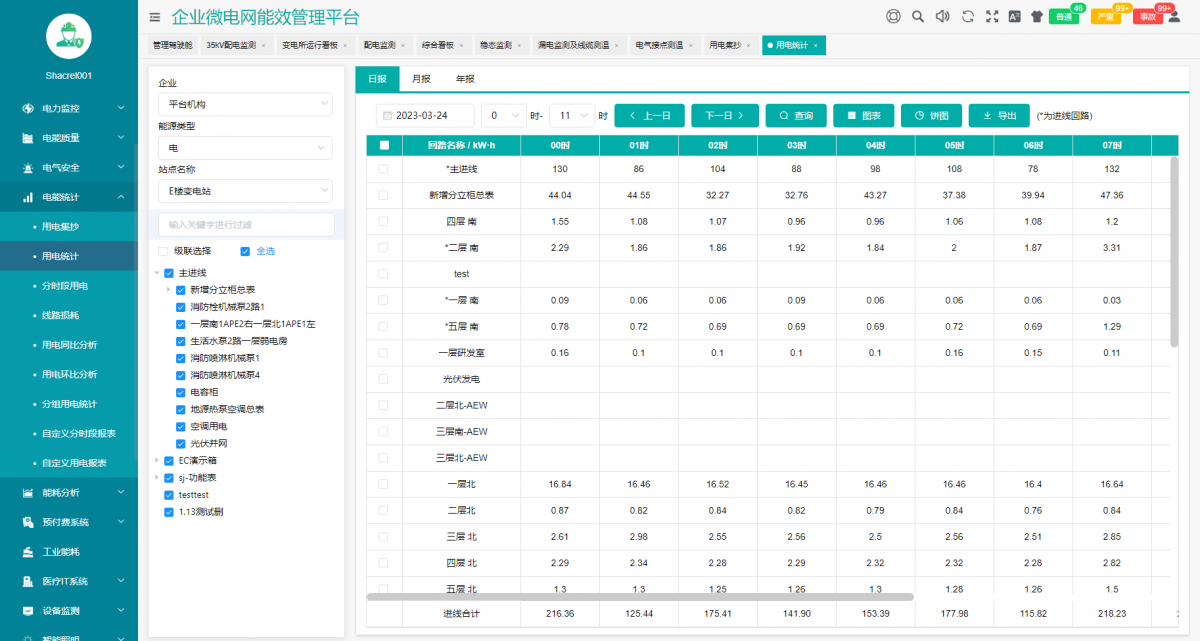
The platform features a scheduled meter reading and summary statistics function, allowing users to freely inquire about the power usage of each distribution node within any time period since the platform's normal operation.
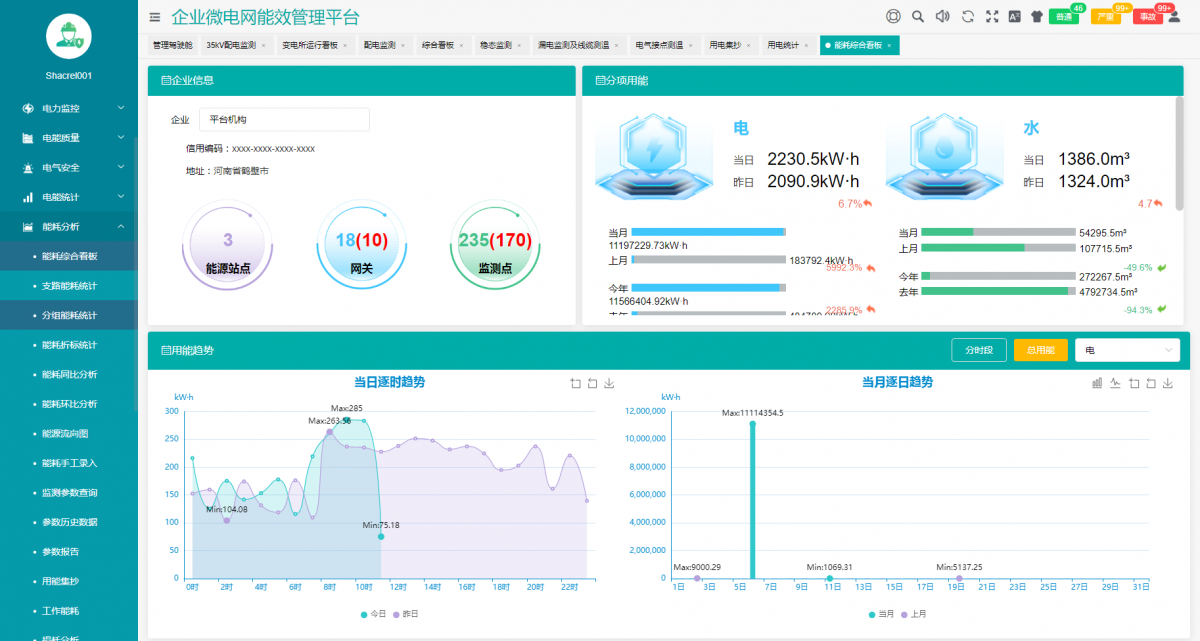
7. Energy Consumption Analysis
Track and compare consumption of electricity, water, gas, etc., through year-on-year and month-on-month analysis, standardize calculations, and monitor trends in CO2 emissions.
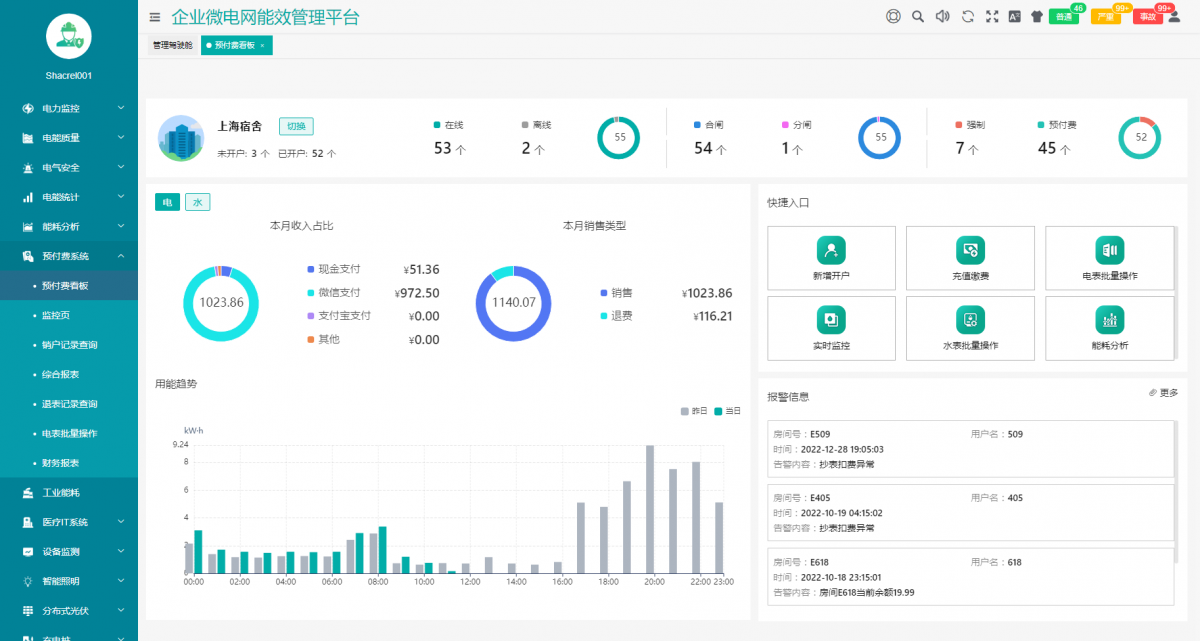
8. Pre-Paid Management
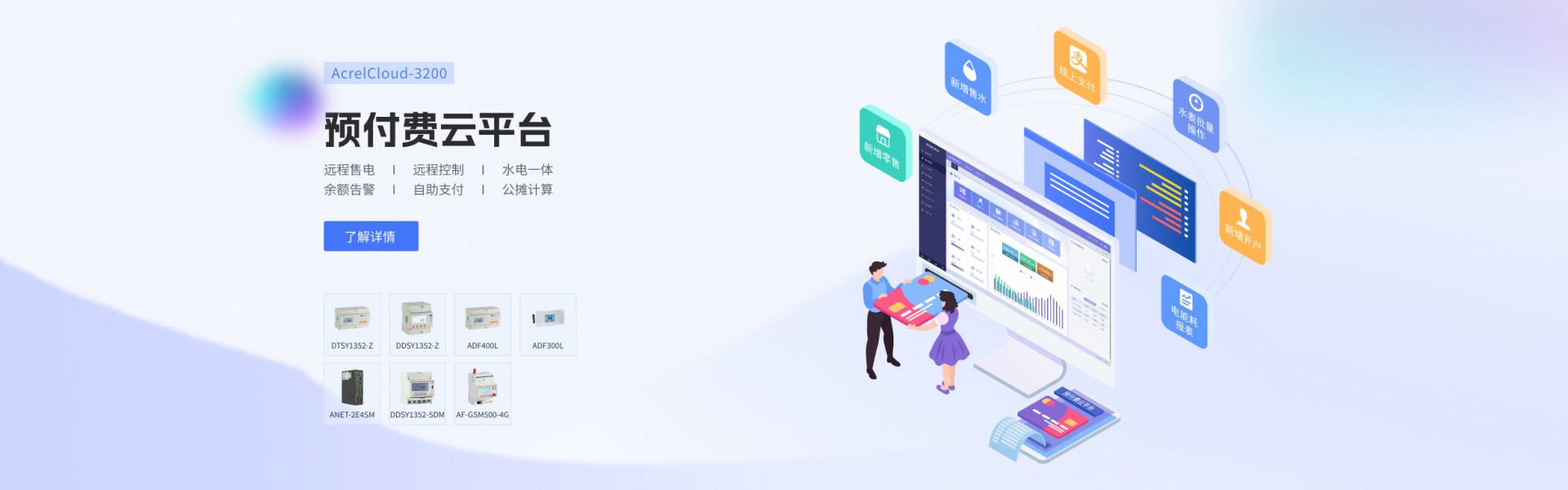
The platform features a time-scheduled meter reading and summary function, allowing users to freely inquire about the power consumption of each distribution node within any time period since the platform's normal operation.
9. Charging Station Management
Platform management for electric vehicle and battery-powered vehicle charging stations, including fee management and asset management.

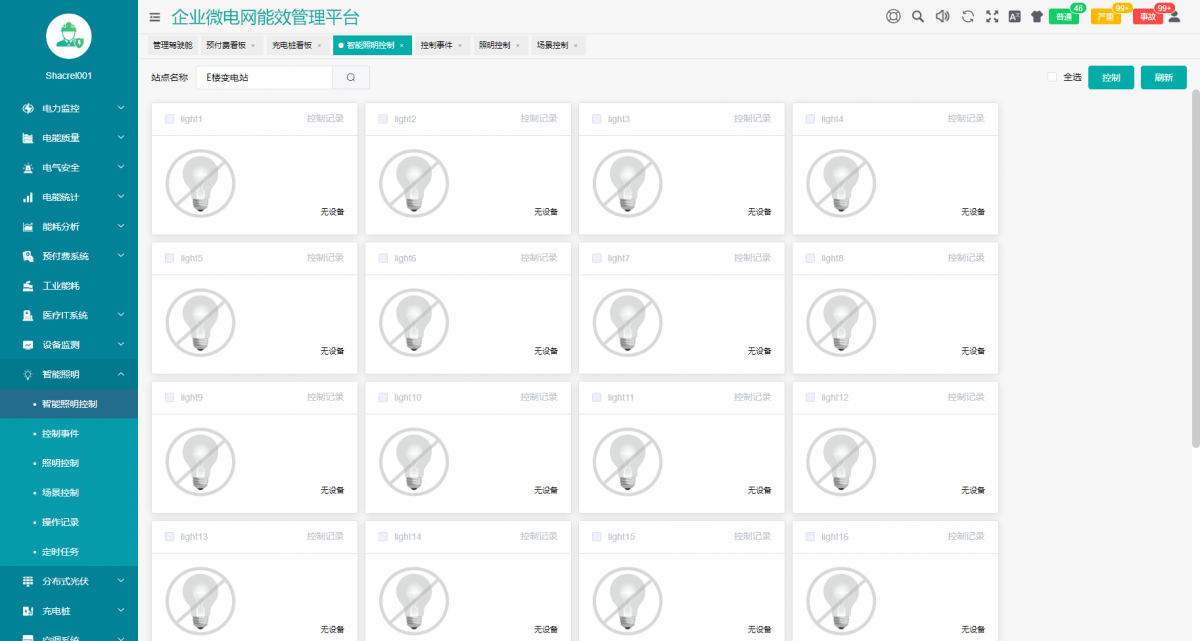
10. Smart Lighting
Switch control for enterprise lighting circuits, featuring dimming, scene, and timing functions.
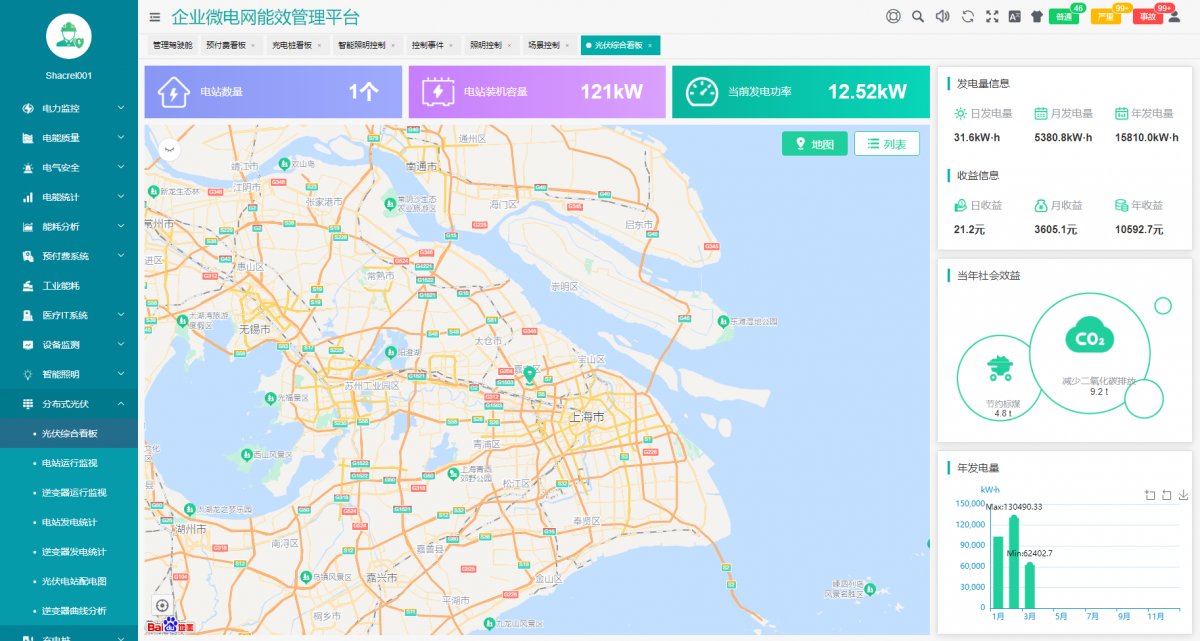
11. Distributed Photovoltaic Systems
The platform monitors inverter operation, generates power station electricity statistics, analyzes power station electricity production, and monitors power distribution at the power station.
12. Environmental Monitoring
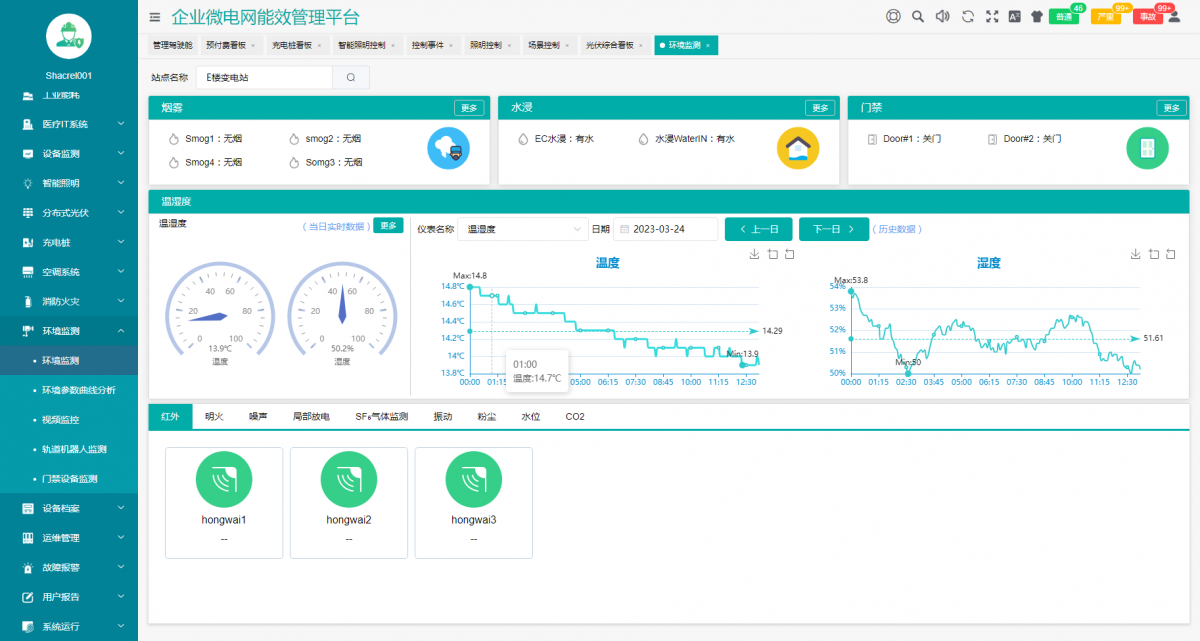
The platform can remotely monitor overall operation via a video camera, and it supervises and records the historical data of environmental parameters such as temperature and humidity inside the substation, cable temperature, water immersion, smoke, and door magnetic sensors.
13. Equipment Records
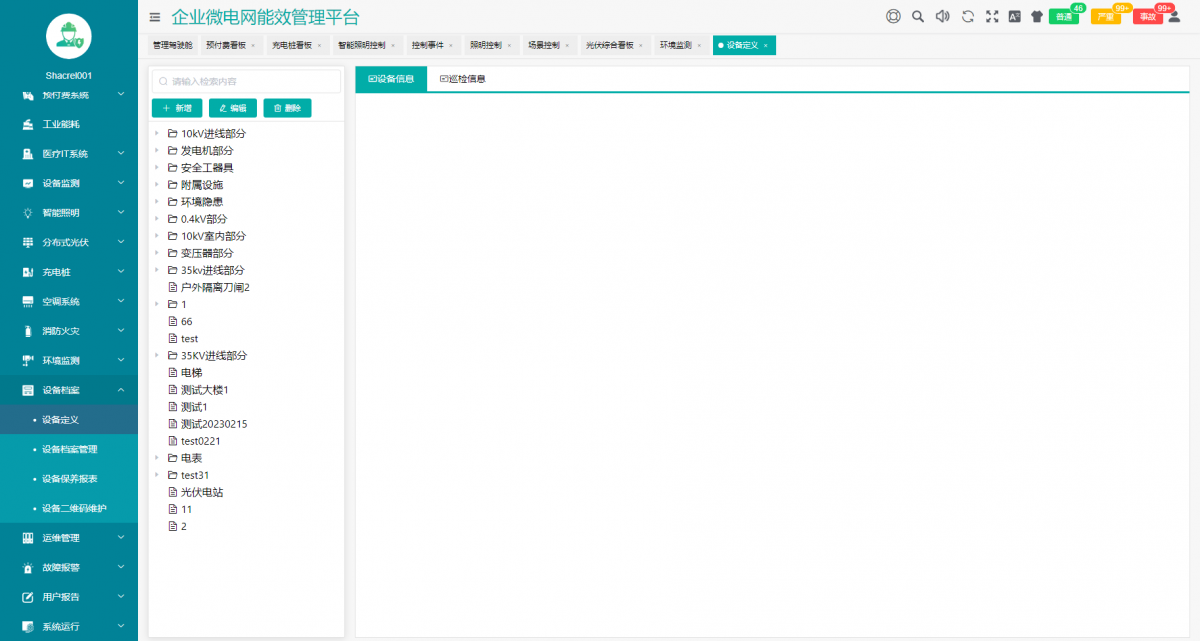
The platform can establish an electronic record for all equipment within the substation (including transformers, switch cabinets, cables, safety tools, and auxiliary facilities), documenting specifications, technical parameters, manufacturers, and commissioning dates. It also reminds users to replace or maintain equipment based on the maintenance and保养 cycle.
14. Operations Management
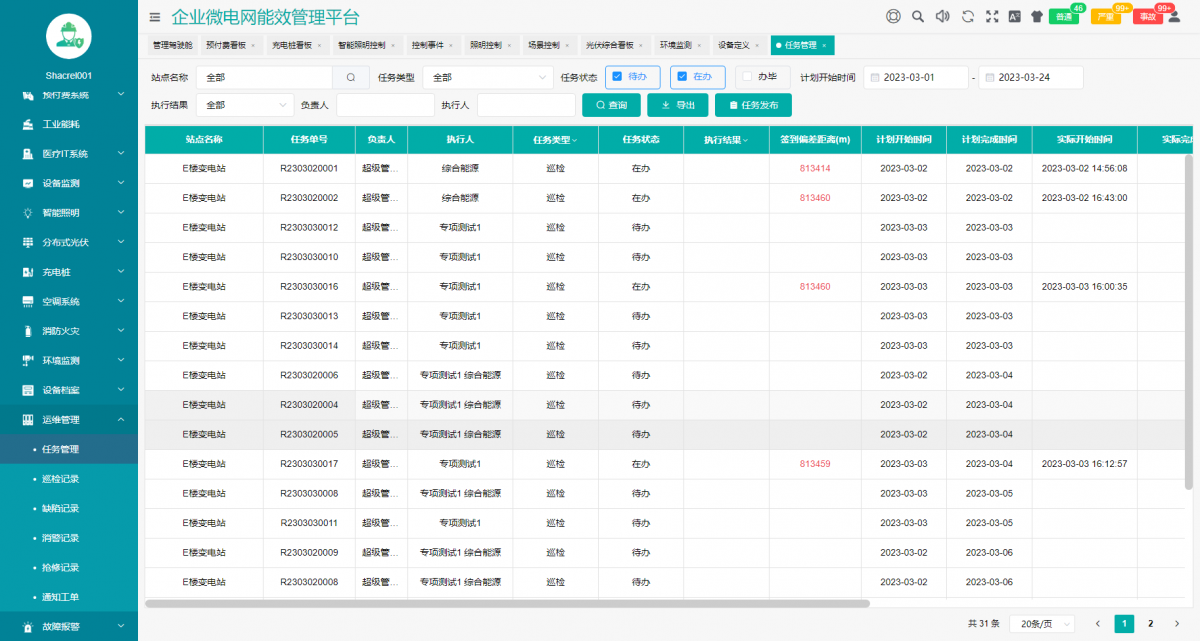
The platform features task management, patrol records, defect records, alarm clearing records, emergency repair records, and notification work orders.
15. Fault Alarm
Upon receiving an alarm notification, the platform can send it via SMS or push notifications through the APP. Alarm thresholds can be flexibly set according to requirements, and different levels of alarm settings can be applied.

16. Platform Operation
The platform logs communication status, server status, offline events, operation logs, control logs, online users, and visitor information.

