


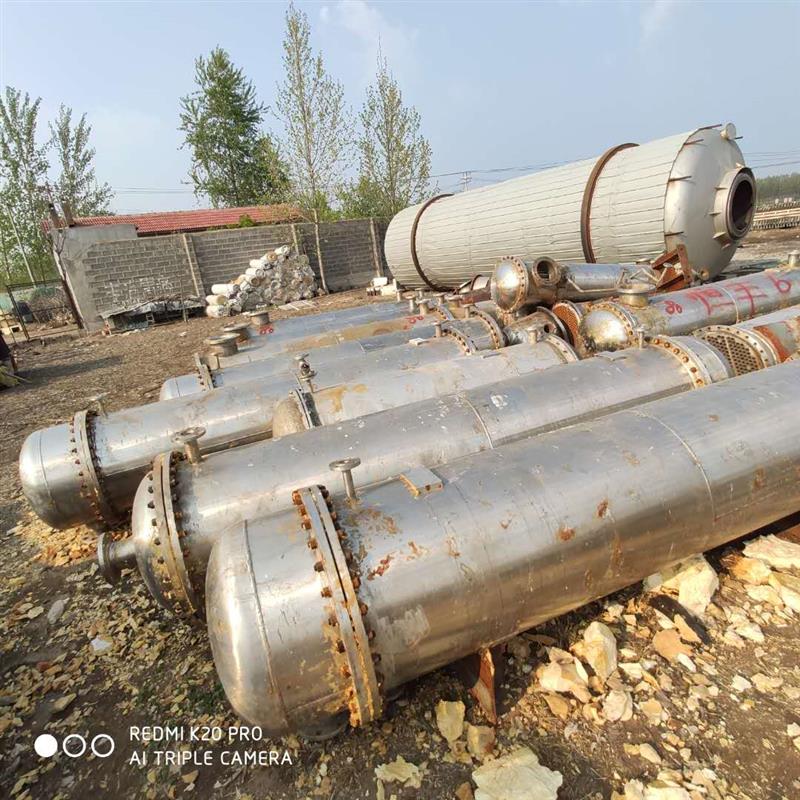
Vertical Stainless Steel Condenser
Vertical stainless steel condensers should be located outside the machine room and should be avoided from direct sunlight exposure. The water tank wall of the stainless steel condenser should be kept 3 meters away from the wall of the equipment room to minimize damage to the wall from cooling water splashes. Vertical stainless steel condensers typically use the bottom water tank as the foundation. Adequate space should be left above the condenser for cleaning and tube replacement. A steel structure operation platform should be provided for ease of operation.
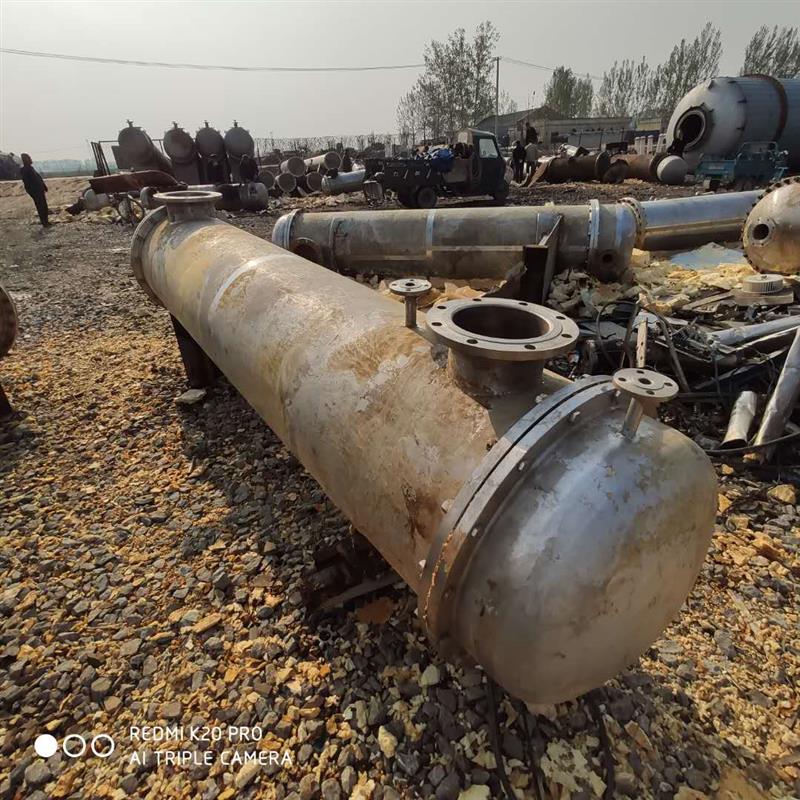
One significant difference between contact testing of stainless steel condenser thin-walled tubes and plate testing is that the testing of stainless steel condenser thin-walled tubes requires the probe to have a contact surface that matches the shape of the tube's outer surface well. To achieve inspections in both the axial and circumferential directions, probes are individually crafted to fit the shape of the tube's axial and circumferential arcs.

Recently, many customers have reported that when using the condenser, the pressure gauge shows a continuous increase in pressure, and they are unclear on how to effectively prevent this phenomenon. Below are some suggestions to effectively avoid the pressure increase in the condenser: 1. Avoid using an overly small condenser during operation; instead, increase the number of condensers or the quantity of condensers. 2. High cooling water temperature in the condenser can easily lead to temperature increase. Use frost water to ensure the cooling tower's cooling effect. The cooling tower is installed outdoors, where dust, leaves, insects, and other particles can enter due to the fan's action. Over time, this can cause clogging in the tower's packing and pipes. Additionally, over time, the distributor's spray may also become clogged with scale, affecting the cooling effect. Regular cleaning should be ensured during daily use. 3. Uneven water distribution in the condenser can lead to scale buildup on some pipes, increasing thermal resistance and reducing the heat transfer coefficient, thereby decreasing the heat exchange efficiency and causing the condenser temperature to rise. Improve water quality and descale in a timely manner. 4. Air inside the condenser can increase the partial pressure in the system, raising the total pressure. Air can also form a gas layer on the condenser surface, creating additional thermal resistance and reducing heat transfer efficiency. It is important to release air promptly to prevent an increase in condenser pressure and temperature.
