

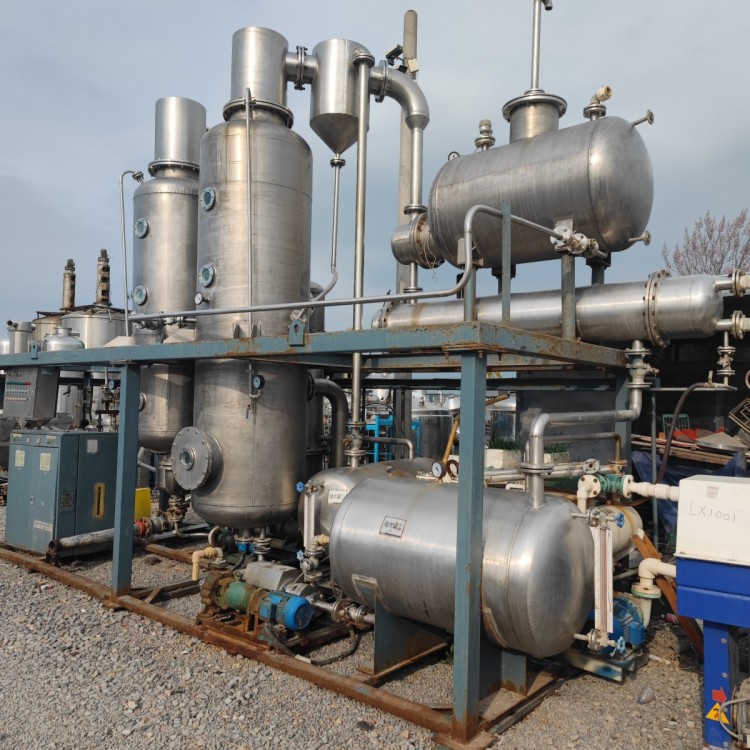


Forced Recirculating Evaporator
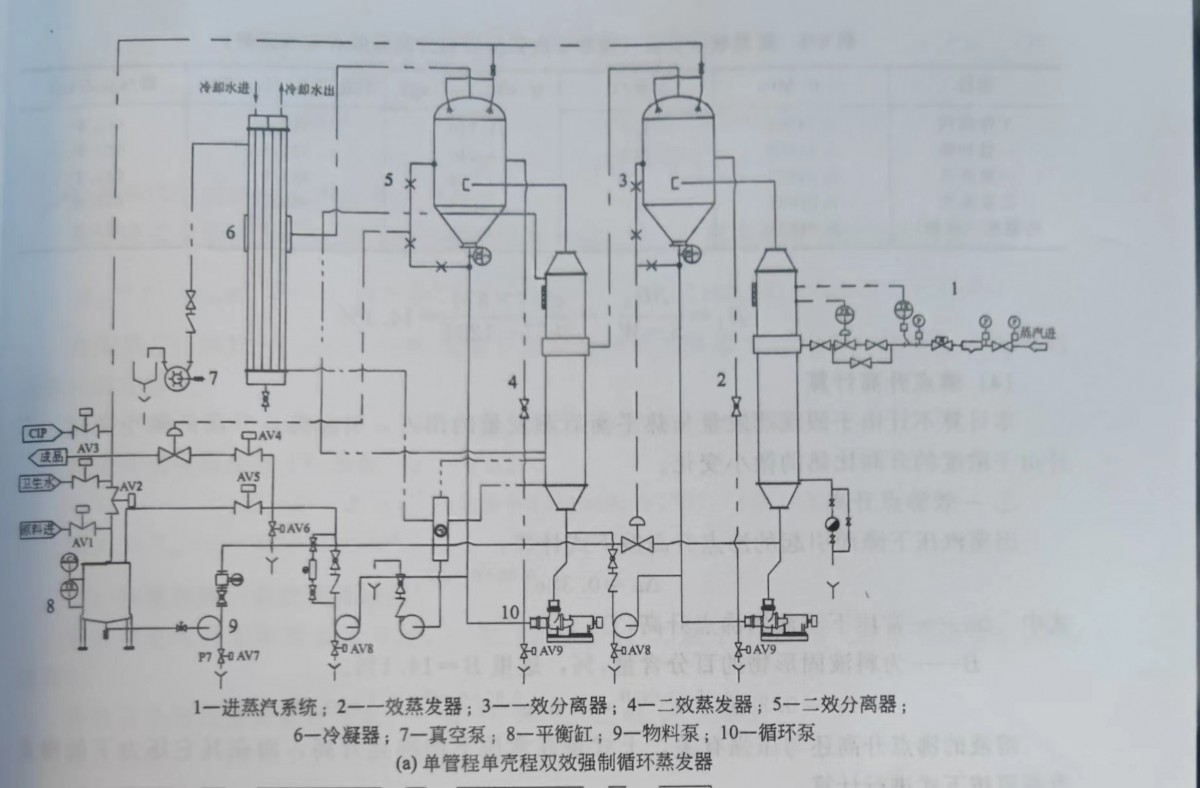
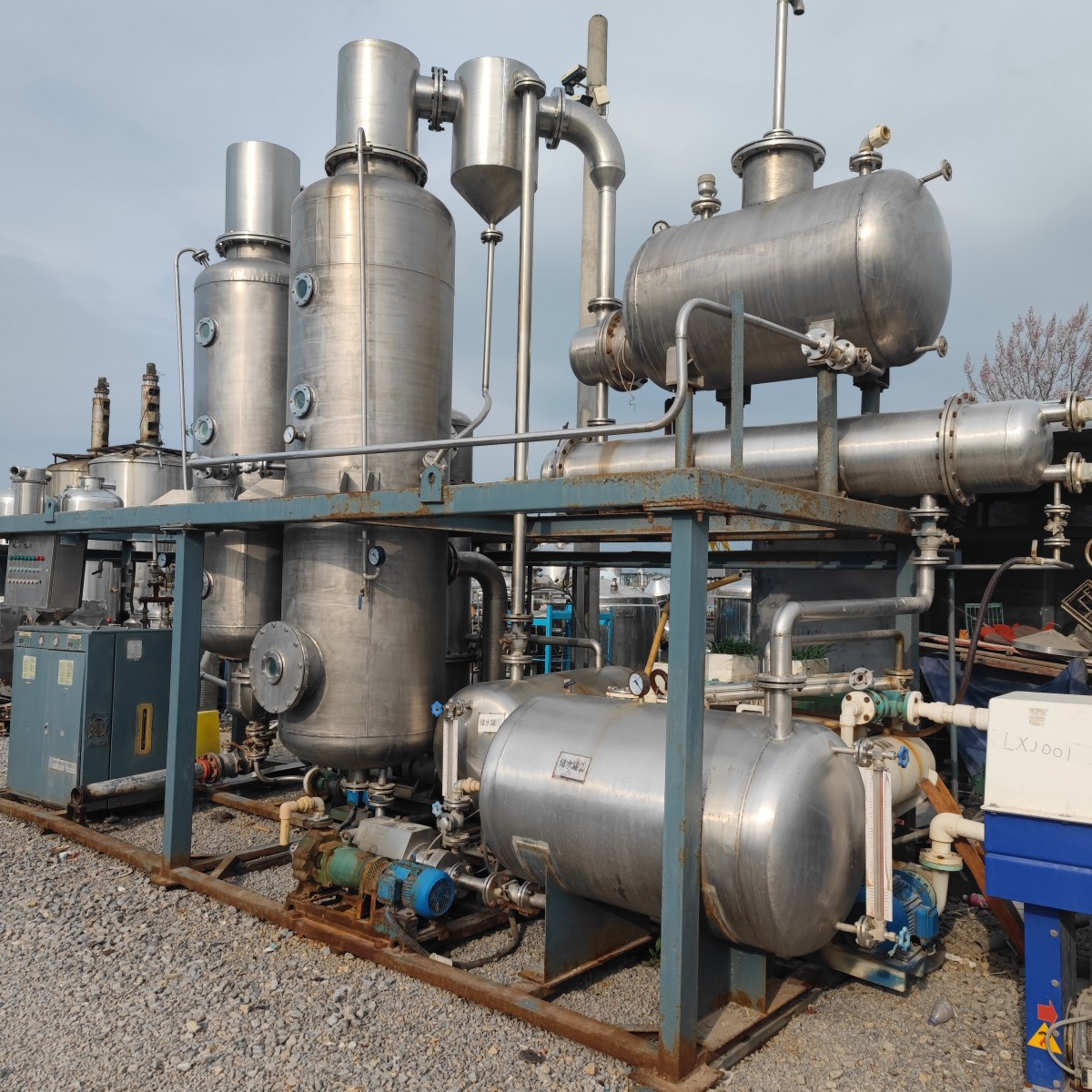
Primarily used for the evaporation of materials with high concentration, high viscosity, prone to scaling and fouling, and even crystallization during the evaporation process, such as tomato paste, glutamic acid mother liquor, bone broth, acids, bases, salts, and wastewater. Commonly used types include single-effect, double-effect, and triple-effect forced circulation evaporators. Forced circulation evaporators have high energy consumption and lower efficiency, typically ranging from 0.4 to 0.8 kW/m. The circulation speed of the material in the heater is between 2 to 5 m/s, but for energy-saving purposes, it is usually selected between 1.5 to 2.5 m/s in practical applications, which requires a higher power for the forced circulation pump. Although this type of evaporator uses an external pump to force the fluid to circulate within the evaporator, its heat transfer coefficient is generally not more than 1200 kcal/(m²·h·°C). Evaporators are available in vertical and horizontal configurations. The separator in this type of evaporator, like in the external circulation evaporator, is located on the upper side of the evaporator, with the fluid entering the heat exchange tubes from the bottom of the evaporator. The evaporator can be single-tube, double-tube, or multi-tube feed, as shown in Figure 6-1. Double-tube feed enters from one side of the heater baffle, completes heat exchange, and then enters the separator from the other side, as shown in Figure 6-1(b), which is a single shell with double tubes. Horizontal forced circulation evaporators are not as effective as vertical ones, both theoretically and in practical application. The double-tube double-shell forced circulation evaporator is shown in Figure 6-2. This structure can lead to the evaporator tubes not being fully filled at the outlet of the separator, even causing short-circuiting, and accumulating a large number of bubbles in the circulation pump, making it difficult to control and maintain the liquid level in the separator to prevent uneven fluid distribution. There is also a double-tube single-shell evaporator, where the outlet enters the separator from the lower side, similar to the position of the separator in a falling film evaporator, as shown in Figure 6-3. The drawback of this double-tube single-shell structure is that it is easy to cause the tubes to not be fully filled with fluid when the fluid returns from the upper part to the lower part. The main purpose of using double-tube or multi-tube feed is to reduce the circulation pump's flow rate and power consumption.