
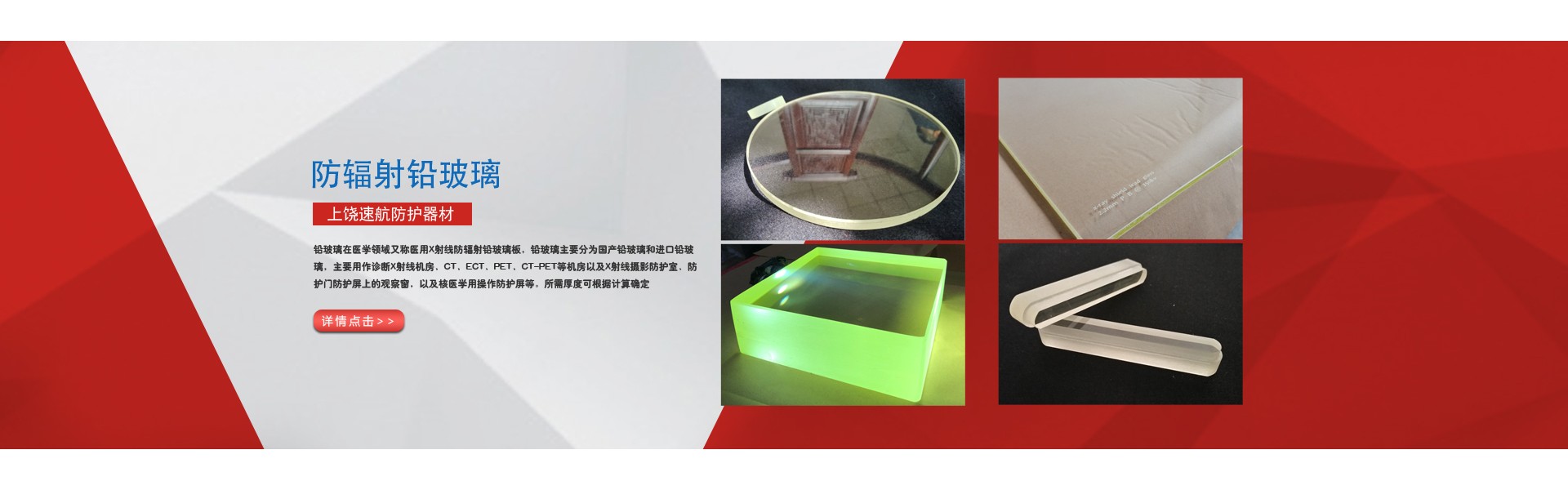

Physical Properties of Radiation Shielding Lead Glass:
Radiation shielding lead glass is categorized into different series based on varying lead content, primarily including ZF2, ZF3, ZF6, and ZF7. Currently, the ZF2 series is commonly used, while the ZF3 series is no longer produced. The ZF6 and ZF7 series, both high radiation shielding lead glasses, have higher lead content and thus offer greater protection at the same thickness, but are also heavier.
Radiation-proof lead glass is used in the production of optical glass, vacuum glass, low-temperature sealing glass, radiation-proof glass, lead crystal glass, flint optical glass, low-melting glass, delay line glass, high-refractive pearl glass, and artware glass.
Characteristics of the glass result in increased values for performance indicators such as density, refractive index, dispersion, dielectric constant, X-ray and X-ray gamma-ray absorption coefficients, while decreasing values for hardness, high-temperature viscosity, softening temperature, and chemical stability. The glass forming material becomes longer, the coloring agent produces brighter colors, the surface luster increases, and the sound of tapping becomes clearer.
Radiation Protection Measures for Lead Glass
One or both sides of the radiation shielding lead glass should be equipped with guardrails or placed with flowers and salt to protect the facility's front width from being too narrow or too wide. The vertical protective structures should be aligned with the center of the glass, while the horizontal protective structures should be positioned near the floor at 800 to 1100mm.
2. Protective measures should make the presence of radiation shielding lead glass apparent, while also preventing intense impacts on the glass by the human body. Additionally, they should serve a decorative purpose. As the transparency size of the radiation shielding lead glass increases, the protective facility should also be capable of withstanding more concentrated impacts.
3. Radiation shielding lead glass must not bend due to facility breakage or impact; it should be replaced or repaired promptly if it fails to meet the requirements.
