


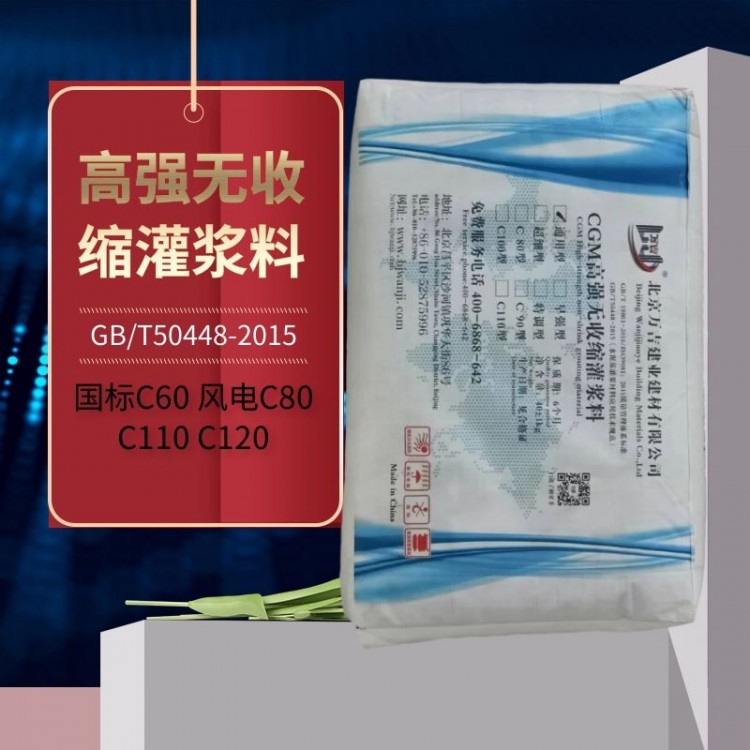
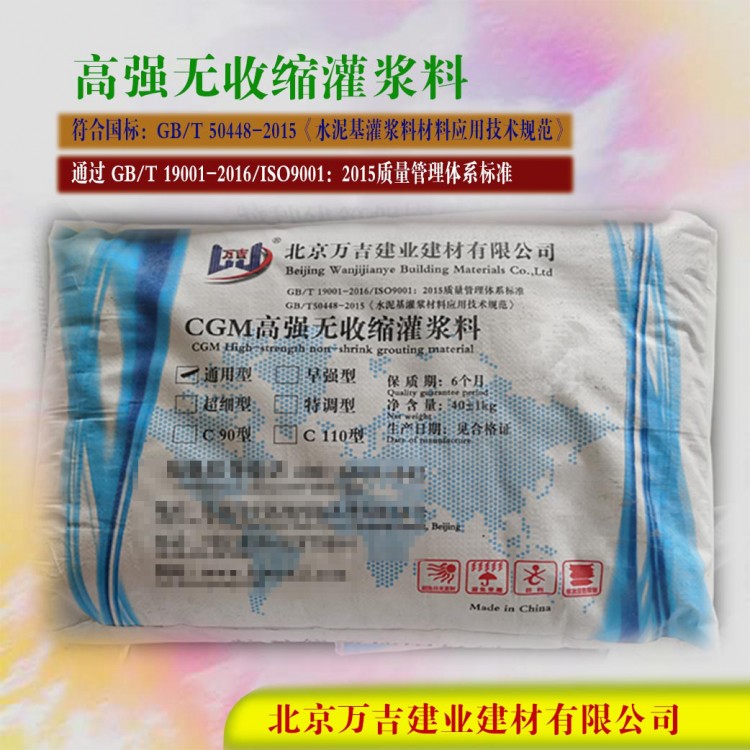
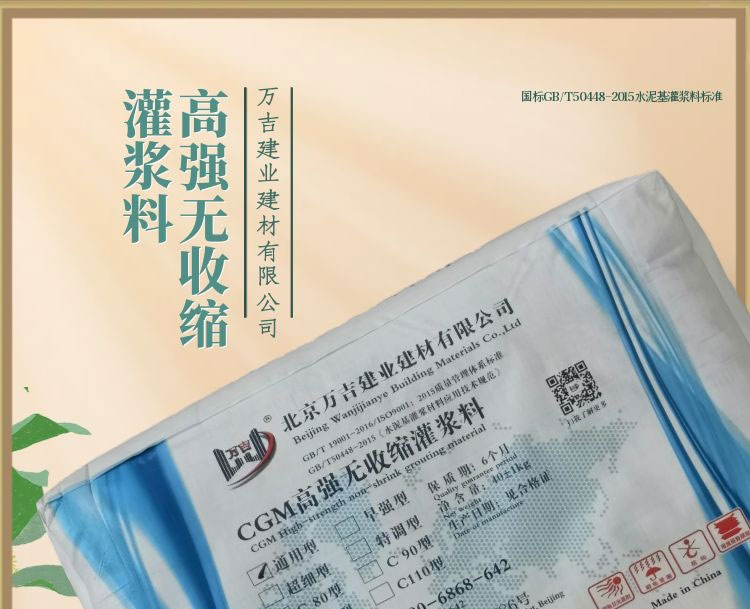
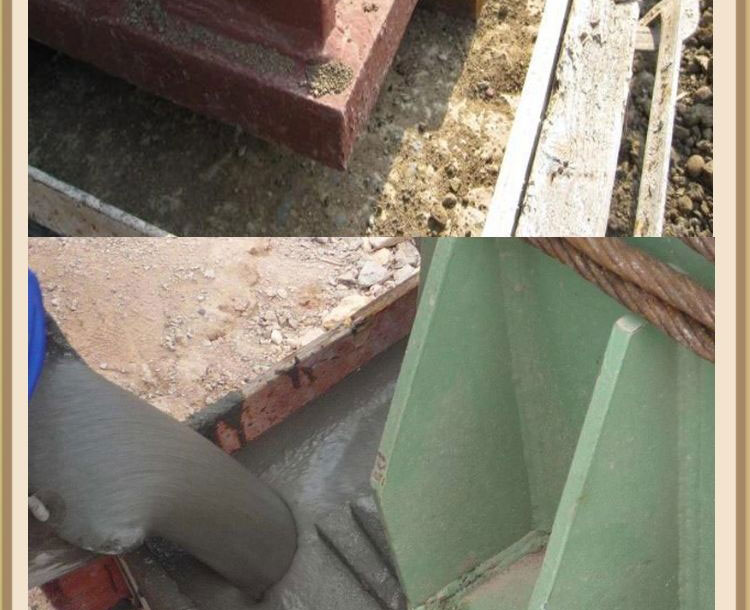
CGM High-Strength Non-Shrink Grouting Material
Grout material is made by using high-strength materials as aggregates, cement as the binder, and supplemented with substances such as high fluidity, slight expansion, and anti-segregation. It adds a certain amount of water on the construction site, stirs it well, and it's ready to use. It offers advantages such as cost reduction, shortened construction time, and ease of use.
Product Features
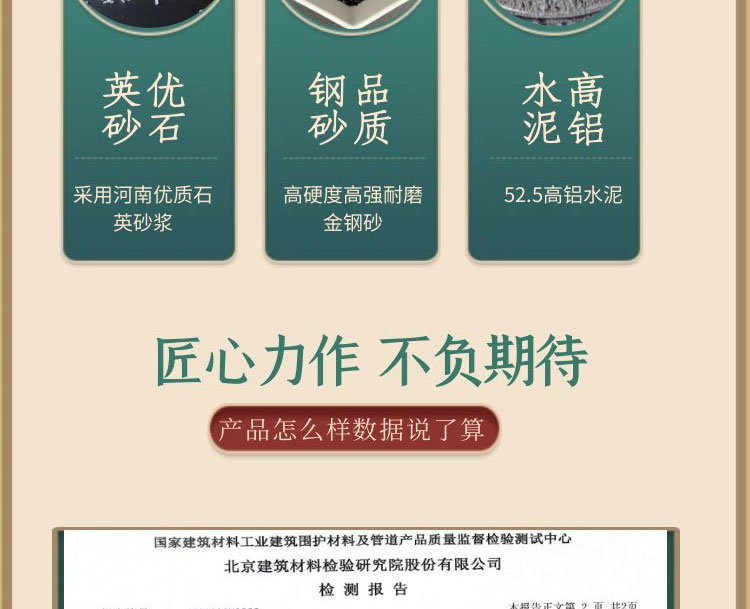
Good self-sealing properties, rapid hardening, early strength, high strength, no shrinkage, slight expansion; non-toxic, harmless;DurableAging-resistant, non-polluting to water quality and surrounding environment, with good self-sealing properties and rust-proof features.
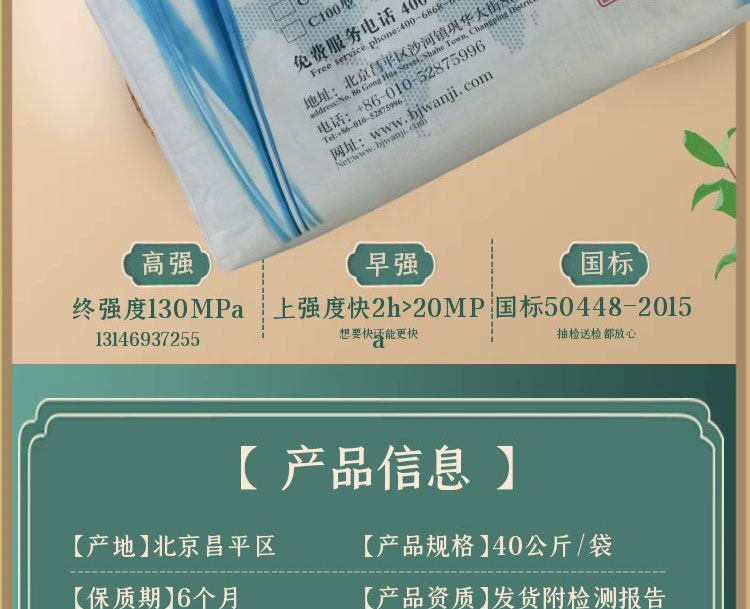
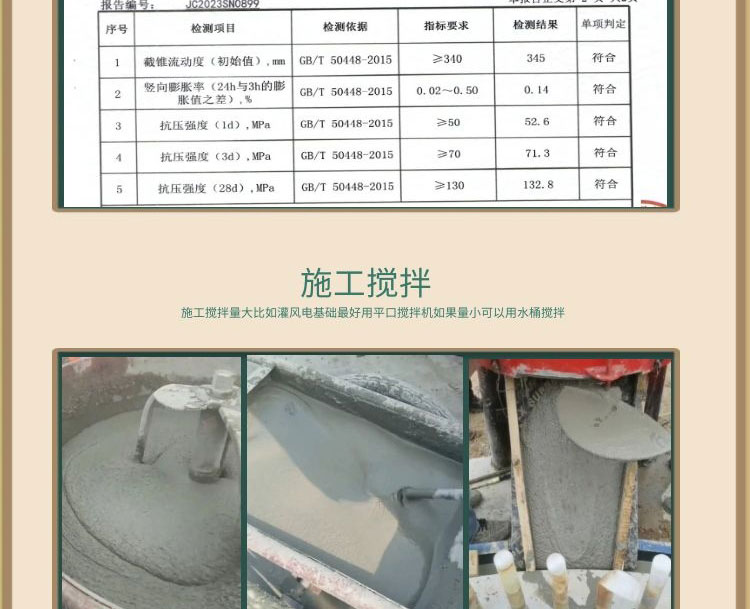
Early and high strengthIrrigationNoteAfter1-3 days high intensity2Over 0-50Mpa, reduced construction period.
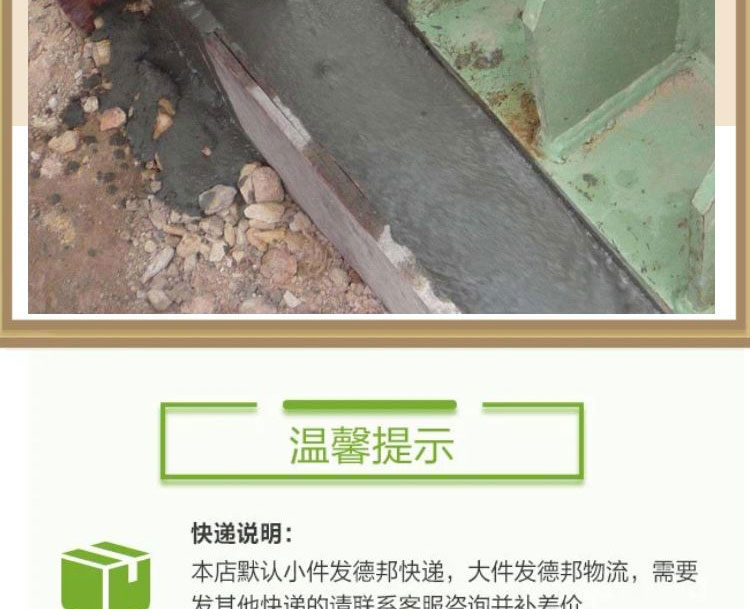
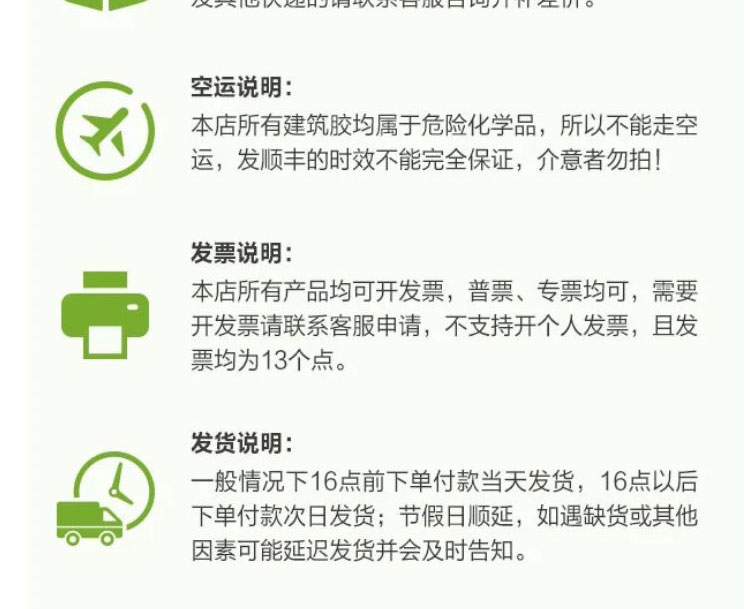
Self-flowingOn-site, just add water and mix; pour directly into the equipment foundation. The mortar self-levels, ensuring vibration-free, long-distance grouting construction.
Slight expansionThe casting material maintains no shrinkage over long-term use, ensuring tight contact between the equipment and the foundation, no shrinkage between foundations, and appropriate expansion pressure stress to ensure the equipment operates safely for a long time.
Oil-resistantAfter 30 days of soaking in engine oil, its strength increases by over 10%, featuring a formed body, compactness, anti-leakage, and compatibility with oil-soiled bases, environmentally friendly.
Durability200,000 fatigue tests, 50 freeze-thaw cycle tests, with no significant change in strength.
Excellent weather resistance-40°C to 600°C for long-term safe operation
Low alkali and corrosion-resistant; strictly controlled raw material alkali content, suitable for projects with alkali-aggregate reaction inhibition requirements.
Application Scope
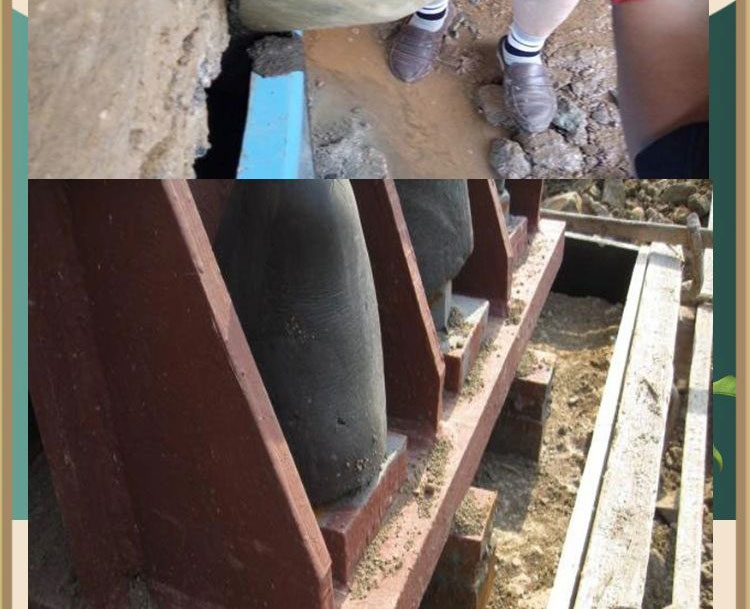
Grouting materials are primarily used for: anchoring anchor bolts, emergency repairs of airport runways, fixing nuclear power equipment, reinforcing road and bridge projects, machine bases, steel structures and foundation sockets, secondary grouting of equipment foundations, embedding rebars, reinforcing and renovating concrete structures, treating cracks in old concrete structures, installation of mechanical and electrical equipment, track and steel structure installation, static pile engineering pile sealing, thickening of wall structures and repairing leaks, grouting for foundation project collapses, and emergency repairs for various roads, bridges, tunnels, airports, and more.
Grouting material classification
1. High-strength general-purpose grouting material, primarily used for: anchoring foundation bolts, embedding steel bars, secondary grouting of equipment foundations with a grouting layer thickness of 30mm < δ < 200mm, and secondary grouting of equipment foundations with oil resistance requirements.
2. High-strength aggregate grouting material, mainly used for: secondary grouting of equipment foundations with grouting layer thickness ≥ 150mm. Reinforcement and strengthening (repair thickness ≥ 40mm) of beams, slabs, columns, foundations, and floors of buildings, as well as secondary grouting of equipment foundations with oil resistance requirements.
3. High-strength ultra-fine specialized grouting material, primarily used for: prestressed channel grouting, secondary grouting for equipment with grouting layer thickness of 10mm < δ < 150mm, and grouting of gaps between angle steel and concrete for reinforced concrete beams and columns.
Usage Instructions
1. Basic Processing
Clean the base surface of the sweeping equipment, ensuring there are no debris such as gravel, slurry, dust, oil stains, and release agents. Before grouting,24 hours, the base surface of the equipment should be fully moistened. One hour before grouting, standing water should be cleared.
2. Determine Grouting Method
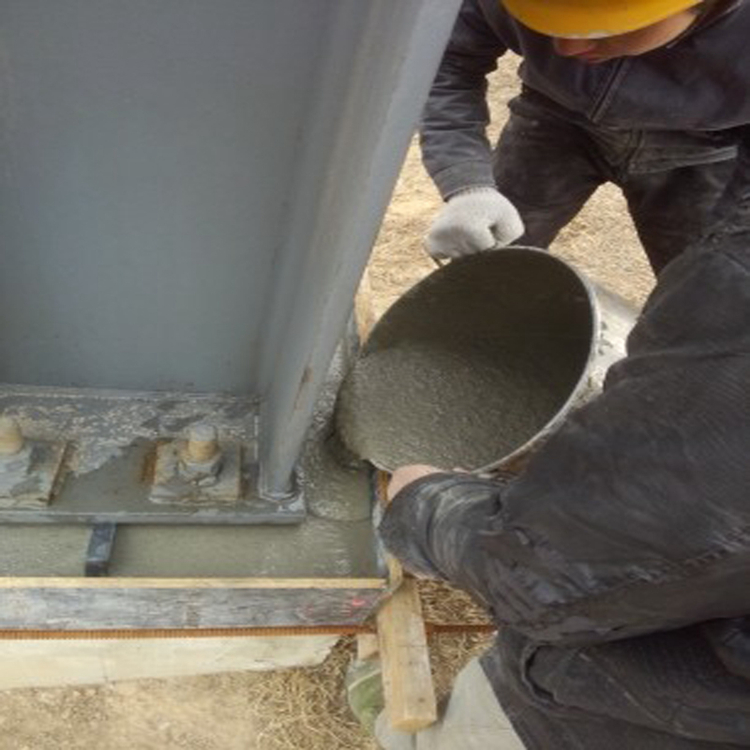
Based on the actual conditions of the equipment base, select the corresponding grouting method. Due to the excellent flow properties of the grouting material, in most cases, using"Gravity Grouting" is sufficient, where the slurry is directly poured into the mold opening, relying entirely on its own weight to level out and fill the entire grouting space. In cases where the grouting area is large, the structure is particularly complex, or the space is small with a significant distance, "High-Position Funnel Grouting" or "Pressure Grouting" can be used to ensure the slurry fills all corners adequately.
3. Formwork
Based on the determined grouting method and the grouting construction drawing for setting up forms, the elevation of the form should be at least 10 inches higher than the surface of the equipment base.50mm, the template must be securely and firmly set up to prevent loosening and leakage of concrete.
4. Grouting Material Mixing
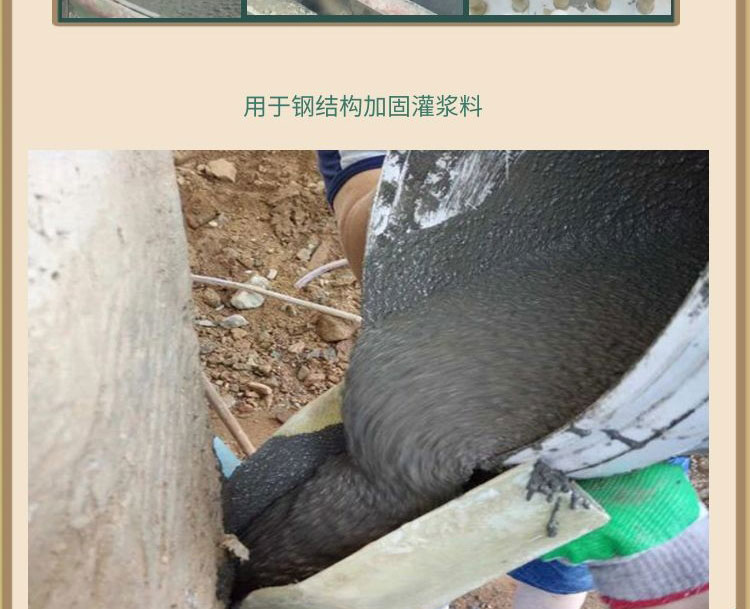
Determine the water amount based on the recommended water material ratio on the product's certificate. The water for mixing should be potable, with the water temperature kept atOptimal temperature range is 5-40°C, mechanical or manual stirring is acceptable. For mechanical stirring, the general stirring time is 1-2 minutes. For manual stirring, first add 2/3 of the water and stir for 2 minutes, then add the remaining water and continue stirring until uniform.
5. Grouting
Grouting construction should comply with the following requirements:
1,The slurry should be poured from one side until it overflows from the other, to facilitate the expulsion of air between the equipment base and the concrete foundation, ensuring the grout is fully compacted. Grouting should not be conducted simultaneously from all four sides.
2,After grouting begins, it must be conducted continuously without interruption, and the grouting time should be minimized as much as possible.
3,Do not over-vibrate during grouting; in necessary cases, use bamboo strips or similar for guiding the flow.
4,Each grouting layer should not exceed100cm。
5,Grouting of longer equipment or track foundations should be done in sections. The length of each section shall be determined...7 meters is ideal.
6,If water leakage is observed on the surface during the grouting process, a small amount can be sprinkled.LGM dry material, absorbs moisture.
7,After the equipment foundation grouting is completed, the parts to be removed should be handled before the grouting layer has fully set.
8,Throughout the grouting construction process until demolding, it is essential to avoid vibration and impact on the grouting layer to prevent damage to the unhardened grout.
9,The horizontal distance between the template and the base of the equipment should be controlled atApproximately 100mm, for ease of grouting construction.
10,In case of slurry leakage during grouting, it should be addressed promptly.
11,When the base grouting volume of the equipment is large, mechanical stirring should be used.Do not use high-speed mixers for blending.To ensure grouting construction.
6. Maintenance
1,The average temperature during grouting should not be lower than5°C, within 30 minutes after grouting is completed, apply curing agent immediately or cover with plastic film and then cover with rock wool blankets, wet straw bags, etc. for maintenance, or immediately water the grouting layer to maintain moisture after the grouting layer has reached final setting. The maintenance period should not be less than 7 days.
2,During winter construction, maintenance measures should also comply with the current "Code for Construction and Acceptance of Reinforced Concrete Engineering."Regulations of (GB50204).
3,Curing and Demolding Time Tables at Different Temperature Conditions
Lowest daily temperature(℃) | Demolding Time(h) | Maintenance Duration(d) |
-10~0 | 96 | 24 |
0~5 | 72 | 10 |
5~15 | 48 | 7 |
≥15 | 24 | 7 |
4,The surface temperature of the cement-based grouting material after demolding is higher than the ambient temperature by more thanAt 20°C, the material should be covered with insulating material for maintenance.
5,If the ambient temperature falls below the minimum construction temperature required for cementitious grouting materials or if an accelerated strength gain is needed, artificial heating and curing may be employed. Protection methods; maintenance measures should comply with the current national standard "Regulations for Winter Construction of Construction Projects"Regulations regarding JGJ104.
Recommended Dosage
Reference dosage calculation is 2.2-2.4 tons/cubic meter basis, calculate actual usage,Water content addedApproximately 13%, which can be appropriately increased or decreased based on the on-site environment.。
Packaging and Storage
Packaging Specifications:40kg±1kg/Bag, store in a well-ventilated and dry place, and prevent direct sunlightRain-soaked。
2. Shelf life is6Month, retest and ensure qualification before use if expired. 。
3. Free of benzene derivatives, halogenated hydrocarbons, formaldehyde, heavy metals, and other harmful components; non-toxic, odorless, pollution-free, non-flammable, and non-explosive, suitable for general cargo transportation.
We hereby solemnly declare
This product is used beyond the manufacturer's control. Our company assumes no liability for any issues arising from improper use. Please refer to this manual for usage instructions, and consult our technical service department for any related questions.
