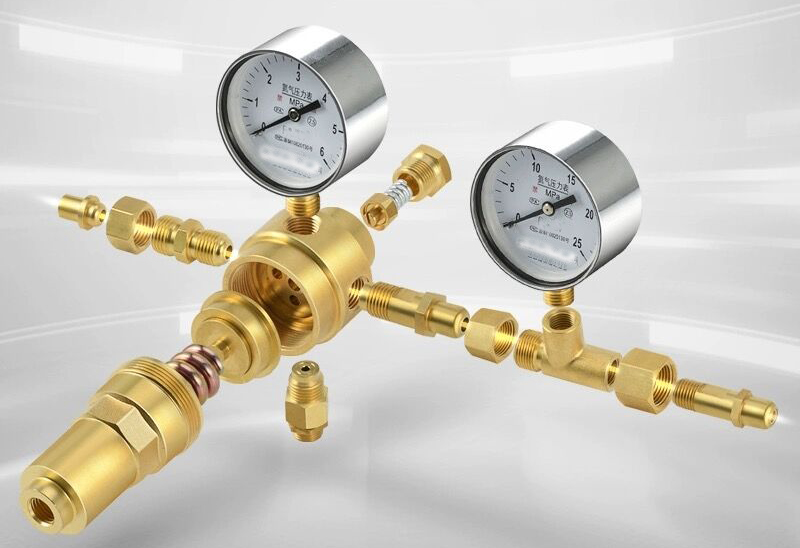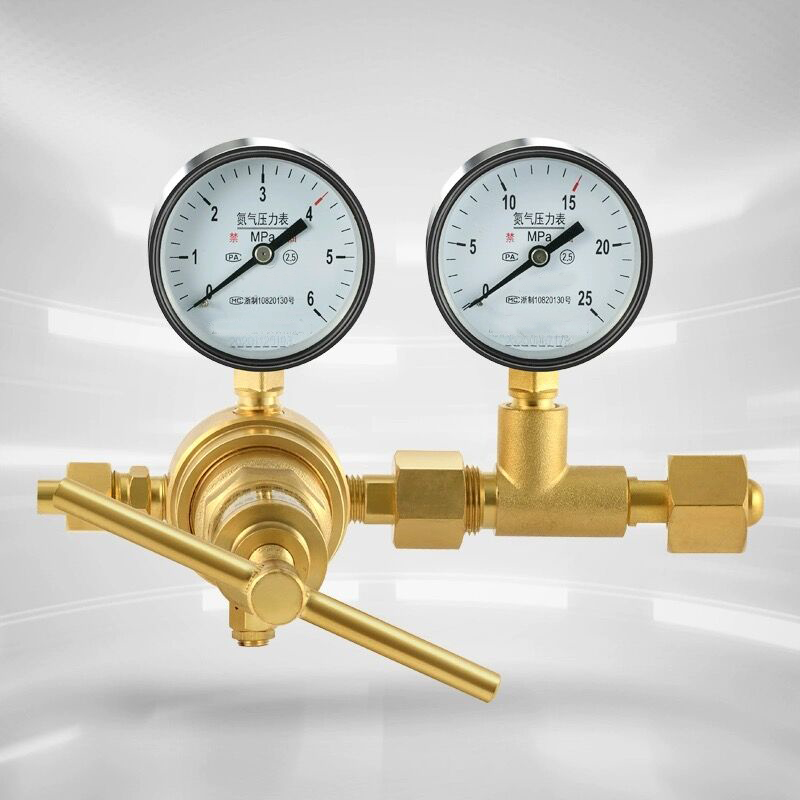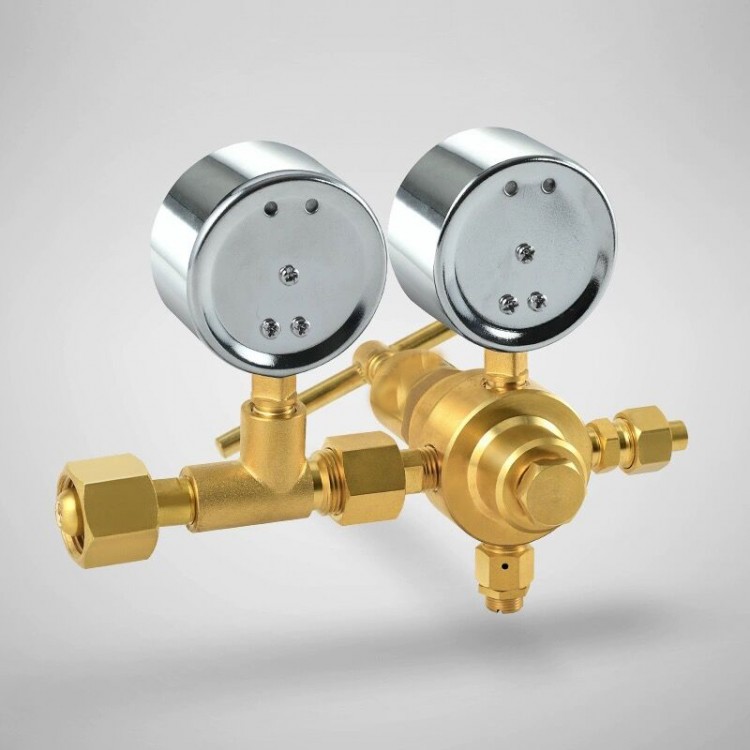
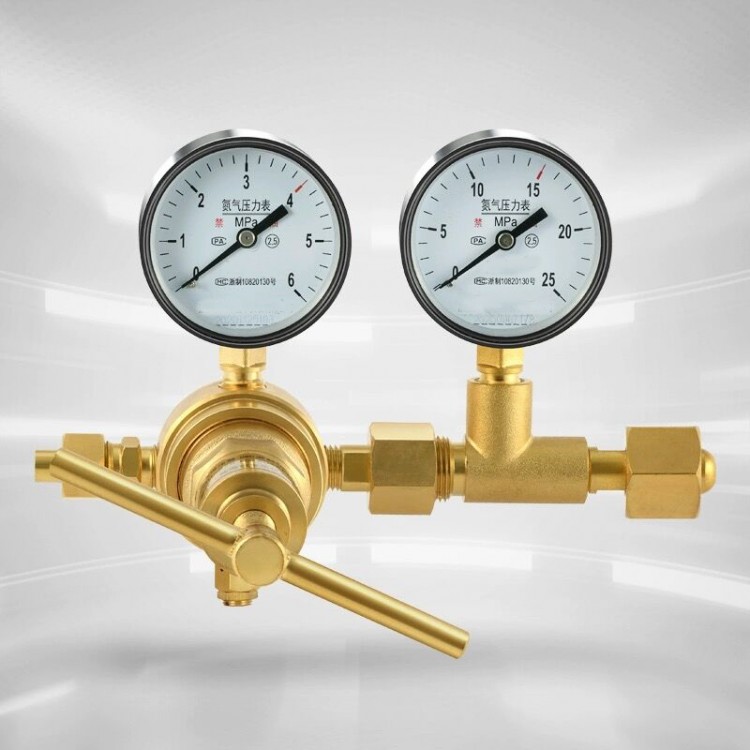
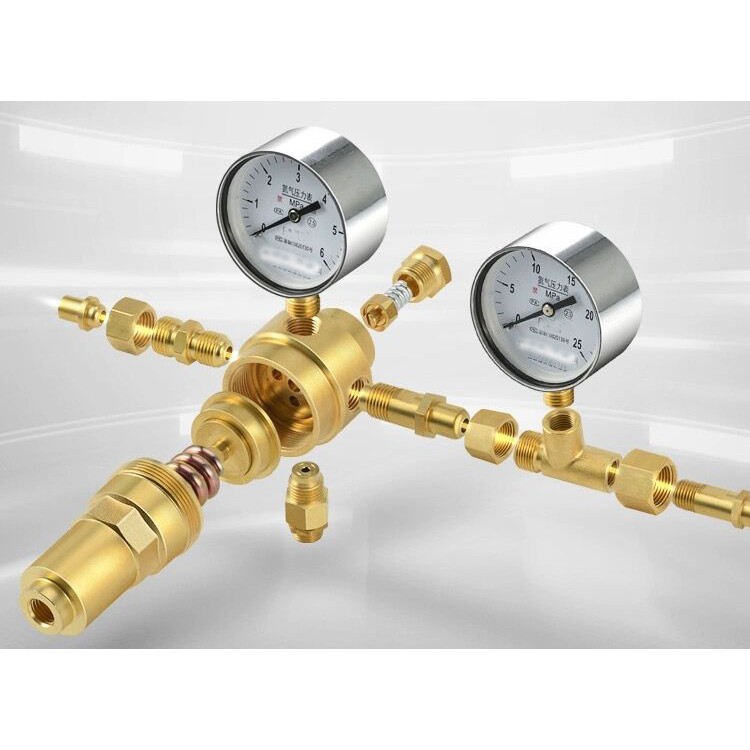
YQD-370 Nitrogen Regulator, YQD-370 Nitrogen Regulator, 370 Nitrogen Regulator
YQD-370 Nitrogen RegulatorThe Function and Classification Principles
Due to the higher pressure inside the gas cylinder, while the pressure required for gas welding and cutting, as well as at the usage point, is relatively low, therefore, it is necessary to useYQD-370 Nitrogen RegulatorTo reduce the high-pressure gas stored in cylinders to low-pressure gas, while ensuring the required working pressure remains stable throughout the process. In summary, it is a regulating device that lowers high-pressure gas to low-pressure gas and maintains a constant pressure and flow rate of the output gas.
YQD-370 Nitrogen Pressure Reducer
Model: YQD-370
YQD-370 Nitrogen RegulatorMeasurement Range: 0-6, 0-25 MPa
Import Pressure: 15 MPa
Adjustment Range: 0.4-4 MPa
Flow rate: 16 m³/h
Female Thread G5/8"
Threaded Output: M16 x 1.5
Dimensions: 200x160x145
Weight: 1.9 Kg
YQD-370 Nitrogen RegulatorStructure
The top cover and housing are made of forged copper.
Intake air filter mesh
The internal bushing of the top cover is made of a special plastic material for more stable and smooth pressure regulation.
YQD-370 Nitrogen Pressure ReducerThe Functions and Classification Principles
Due to the higher pressure inside the gas cylinder, whereas the pressure required for gas welding and cutting at the point of use is relatively low, it is necessary to useYQD-370 Nitrogen Pressure ReducerTo reduce the high-pressure gas stored in cylinders to low-pressure gas, ensuring the required working pressure remains stable throughout the process. In summary, it is a regulating device that lowers high-pressure gas to low-pressure gas while maintaining a constant pressure and flow rate of the output gas.
YQD-370 Nitrogen Pressure ReducerCentric and job-type categories based on usage; single and double-stage types based on construction; positive and reverse-acting types based on working principle. Currently, common domestic pressure reducers are mainly of two types: single-stage reverse-acting and double-stage mixed (with the first stage as positive-acting and the second stage as reverse-acting).
B, Construction and Working Principle of High-Pressure Reducing Valve
1.YQD-370 Nitrogen RegulatorThe body is made of brass. The two-stage pressure reducing systems have a basic similar structure, both composed of components such as the valve stem, pressure regulating spring, elastic membrane assembly, and pressure reducing valve. The *-stage pressure reducing system is primarily used to automatically reduce high-pressure gas to high-pressure gas, down to the actual operating pressure, which is then sent to the second-stage pressure reducing system. In the second-stage system, when the pressure-regulating screw is turned, the pressure reducing valve is opened and closed to varying degrees through the pressure regulating spring, elastic membrane assembly, and valve stem, to adjust the degree of pressure reduction of the oxygen supplied to the *-stage system or to stop the supply of gas.
2.YQD-370 Nitrogen Pressure ReducerThe threaded size at the intake joint is 315.875mm, the internal diameter of the joint is 5.5mm, the internal diameter of the exhaust joint is 6mm, and its maximum flow rate is 80m³/h. The pressure reducer is also equipped with a high-pressure oxygen gauge and a low-pressure oxygen gauge, which indicate the pressure in the high-pressure chamber (i.e., within the oxygen cylinder) and the low-pressure chamber (i.e., working pressure), respectively. The range of the high-pressure oxygen gauge is 0-25MPa. The range of the low-pressure oxygen gauge is 0-6MPa.
UtilizeYQD-370 Nitrogen RegulatorWhen turning the adjustment screw clockwise, it can lift the pressure-reducing valve, allowing high-pressure oxygen to flow into the low-pressure chamber through the gap. As the oxygen expands in volume within the low-pressure chamber, the pressure is reduced, which is the pressure-reducing effect.
YQD-370 Nitrogen RegulatorSafe Use
(1) When releasing air from a gas cylinder or opening the pressure reducer, the motion must be slow. If the valve is opened too quickly, the gas in the working part of the reducer will be significantly heated due to adiabatic compression, which could cause organic material components like rubber gaskets, rubber film fibers, and cushioning pads to burn and be damaged. Additionally, the static sparks generated by rapid air release and oil污 on the reducer can also ignite and burn, damaging the reducer components.
(2) Precautions before installing the pressure reducer and when opening the gas cylinder valve: Before installing the pressure reducer, slightly open the oxygen cylinder valve to blow out impurities to prevent dust and moisture from entering the reducer. When opening the gas cylinder valve, the outlet of the cylinder valve must not be aimed at the operator or others to prevent the sudden expulsion of high-pressure gas from causing injury. The outlet of the reducer must be securely fastened with annealed wire or a clamp at the connection with the gas rubber hose to prevent disconnection after the gas is sent, which could be dangerous.
(3) Notes for the装卸 and operation of the pressure reducer: When installing or removing the pressure reducer, be cautious to prevent the pipe joint threads from slipping to ensure a secure fit and prevent ejection. During operation, always monitor the pressure gauge for pressure readings. When stopping work, first loosen the pressure reducer's adjustment screw, then close the oxygen cylinder valve, and slowly release the gas inside the reducer to protect the spring and pressure relief valve from damage. After completion of work, remove the reducer from the cylinder and store it properly.
(4) Regulators must be regularly calibrated and pressure gauges must be periodically inspected. This ensures the reliability of pressure regulation and the accuracy of pressure gauge readings. If any leakage from the regulator or a stiff pressure gauge needle is observed during use, it should be repaired promptly.
(5) Treatment of Pressure Reducer Freezing: If freezing is detected during the use of the pressure reducer, defrost it with hot water or steam, never use a flame or red iron to bake. After heating the reducer, be sure to blow off any remaining moisture.
(6) The pressure reducer must be kept clean. No oil or dirt should be present on the reducer; if oil is present, it must be wiped clean before use.
(7) Reducers and pressure gauges for various gases must not be interchanged; for example, a reducer used for oxygen cannot be used in acetylene or similar systems.