







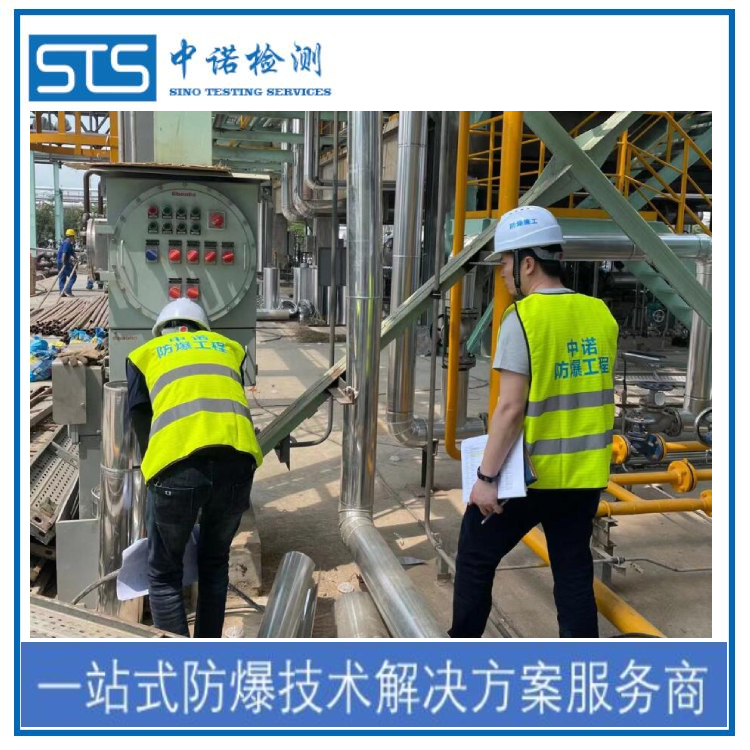
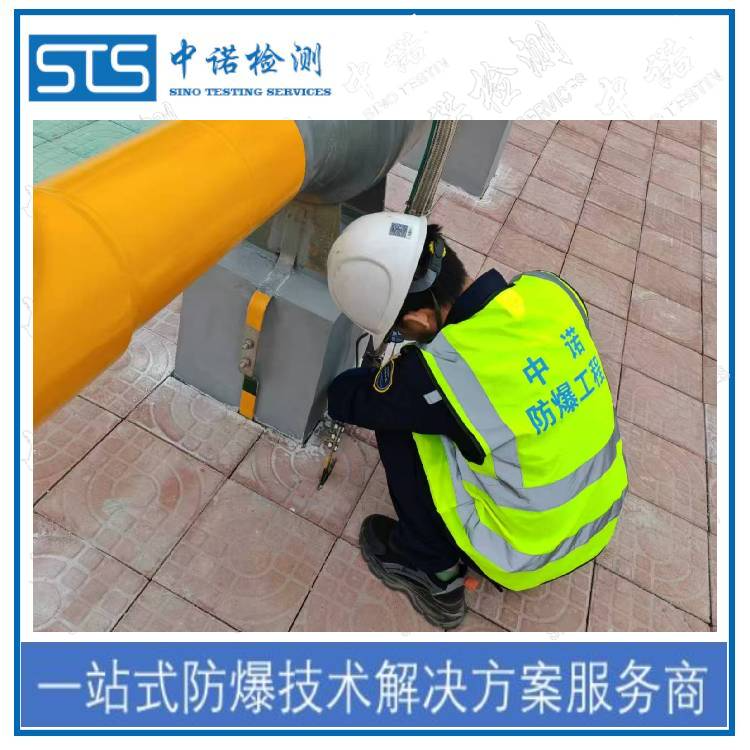
The installation and use of explosion-proof electrical equipment in hazardous explosive areas is the most basic safety requirement.
But what should be taken into account when selecting and installing explosion-proof electrical equipment? Below, Zhongnuo Testing shares some points.
One, the selection of explosion-proof electrical equipment must meet the requirements of hazardous areas.
Select electrical equipment for explosive hazardous environments based on the risk level of the installation location, the group and class of hazardous substances, and the type and operating conditions of the electrical equipment.
(2) The group and classification of the electrical equipment selected should not be lower than the group and classification of the hazardous substances in the environment.
(3) When there are two or more hazardous substances, the one with the higher degree of hazard should be selected.
(4) Gas-proof electrical equipment and dust-proof electrical equipment must not be mixed.
(5) In explosive hazardous environments, it is recommended to minimize or avoid the use of portable electrical equipment.
(6) Minimize the installation of plug sockets.
Section II: The wiring and installation of explosion-proof electrical equipment comply with regulatory requirements.
In explosive and fire hazard environments, the installation location, laying method, conductor material, and connection methods of electrical equipment lines should all be appropriate to the hazardous area classification.
Avoid exposed and aging cables that may cause sparks leading to explosion accidents.
III. Explosion-proof Safety Technology Requirements for Hazardous Explosive Sites
Eliminate or reduce explosive mixtures
Eliminate or reduce explosive mixtures, including adopting closed operations to prevent the leakage of explosive mixtures.
(2) Clean up accumulated dust on-site and prevent the buildup of explosive mixtures.
(3) Design positive pressure rooms to prevent explosive mixtures from entering areas with ignition sources.
(4) Employ open operations or ventilation to dilute explosive mixtures.
(5) Fill inert or non-reactive gases in hazardous areas to prevent the formation of explosive mixtures.
2. Isolation
Large hazard equipment should be installed in separate rooms and sealing measures should be taken on the partition walls.
(2) Wall-separated motor transmission and glass-window-illuminated lighting fixtures are all types of isolation measures.
Eliminate ignition sources
Select electrical equipment and design electrical circuits according to the characteristics of explosive hazardous environments and the level, group of hazardous substances.
(2) Ensure safe operation of electrical equipment and wiring. Safe operation includes maintaining current, voltage, temperature rise, and temperature within permissible limits, as well as good insulation, secure connections and contacts, overall integrity without damage, cleanliness, and clear markings.
4. Grounding Measures
In environments with explosive hazards, grounding precautions include: all non-electrified metallic objects should be bonded to the same potential.
(2) If low-voltage power distribution is from the grounding system, a TN-S system should be used; a TN-C system is not permitted.
(3) When low-voltage distribution is from an ungrounded system, an IT system should be used, and a protective device capable of automatically disconnecting power in the event of severe leakage, or an alarm device that emits both audible and visual signals, should be installed.
IV. Conduct periodic on-site explosion-proof safety inspections in hazardous explosive areas
In accordance with the AQ 3009-2007 "Electrical Safety and Explosion-Proof Rules for Hazardous Areas" standard, it is stipulated that explosion-proof electrical equipment in use must be inspected by a testing center with explosion-proof qualifications at least once every 3 years for performance, installation, and maintenance. Immediate corrective actions must be taken for any non-compliance issues, and the inspection report and corrective measures must be filed with the安全生产监督管理部门 (Occupational Safety and Health Supervision and Administration Department). Regular on-site explosion-proof inspections of electrical equipment in use can help promptly identify issues in hazardous areas.zuiMaximize the prevention and elimination of potential accidents. This is not just a requirement for the safety production department, but also a reflection of the company's emphasis on its own life and property safety.
