
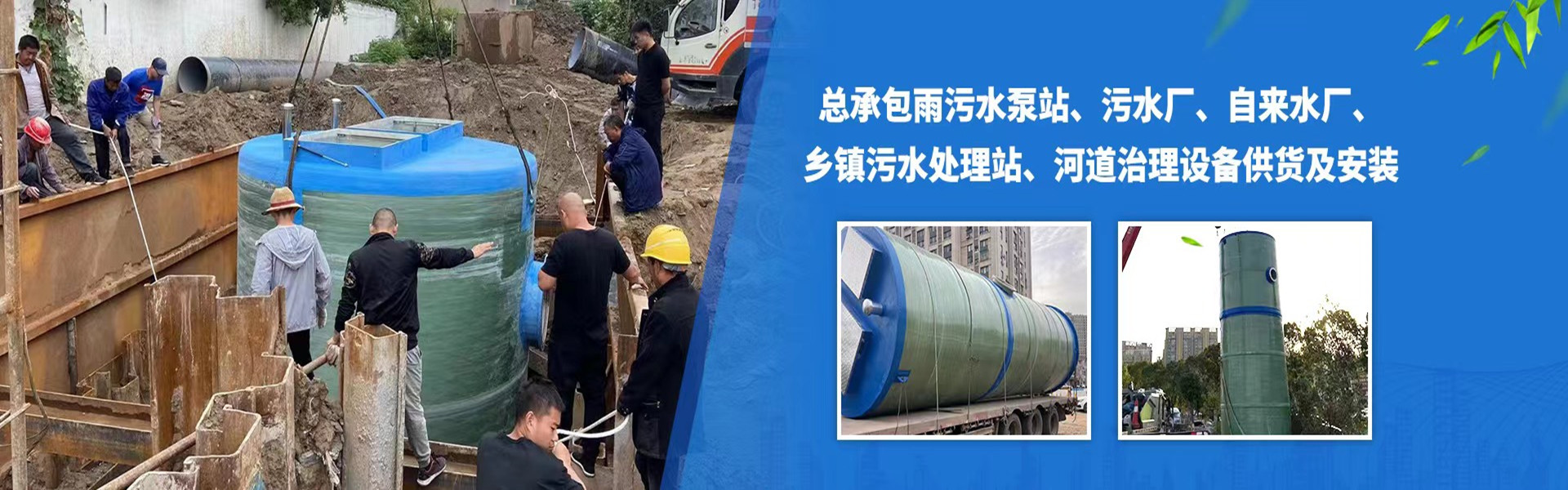


Product Description
The integrated pump cabinet is made using glass fiber reinforced plastic (GRP) mechanical winding technology, with a cylindrical shape. The diameter and height of the cylinder are determined based on the required wastewater volume for the project. Inlets and outlets are provided on the cylinder, connecting to the pipeline. Wastewater or rainwater flows into the GRP cylinder through the municipal pipeline, where pressure sensors or liquid level sensors are installed. When the liquid level reaches a certain height, the sensors send signals to the control system, which then starts the submersible pump. The integrated pump cabinet provides potential and pressure energy to the water through the pump, solving the problem of drainage and irrigation under non-gravity conditions.

Function of the Equipment
Wastewater collection and conveyance, rainwater collection and conveyance, and water supply for domestic and industrial use are crucial aspects of municipal water supply and drainage. The integration of tanks and pumps is vital to the normal operation of urban water supply, usage, and sewage construction. What is the role of tank-pump integration in municipal water supply and drainage?
Public transportation facilities, water supply and drainage, gas, urban flood control, environmental health, and lighting infrastructure are essential material foundations for the survival and development of urban construction.
Modern plumbing and drainage engineering has become essential infrastructure for controlling the spread of waterborne infectious diseases and environmental water pollution. It is one of the fundamental infrastructures for the development of cities and industries, and a major component of municipal engineering.
As times evolve and society progresses, city dwellers' demands for the quality of living facilities provided by the city are increasingly high, which also poses higher requirements for the construction quality of municipal water supply and drainage projects.
It is of great significance to ensure the collection of urban municipal rainwater, supply of residential and industrial water, pretreatment and discharge of wastewater, and maintenance of the ecological environment.
Equipment Installation
1. Integrated pump and tank foundation backfilling should be performed after the pump station cylinder is properly installed.
2. Backfill materials should be gravels, sands, etc., with particle sizes not exceeding 32mm. Sharp fillers should not be used to avoid damaging the cylinder.
3. Backfill should be layered, with each layer not exceeding 300mm in height. The compactness of the backfill soil should meet the design requirements and the relevant provisions of the current national standard "Code for Acceptance of Construction Quality of Foundation Engineering" GB50202.
4. The backfill soil at the in and out water pipes within the foundation pit should be compacted. It is strictly prohibited to use compaction equipment such as a roller when the backfill layer is 300mm away from the top of the pump cylinder.

Smart Control
The integrated pump in a box not only features self-diagnosis, self-control, and self-protection capabilities essential for outdoor or field work environments, but also incorporates intelligent functions such as data remote transmission, automatic storage, automatic alerting, manual intervention, log recording, historical data querying, and remote login with tiered management.
Signals are transmitted to the data collection and control module through various sensors installed inside the pump and at the pump station. The module filters out interference signals, extracts useful signals, and makes comprehensive judgments, issuing control commands to the pump. Simultaneously, the collected data is uploaded to the remote server wirelessly via the GPRS module. Upon receiving the pump station data, the remote server categorizes and stores it. Authorized users can log into the server from anywhere to view real-time and historical sensor data, and can forcibly intervene in the pump station's operation based on actual conditions. The system reserves options for automatic alarm settings, alerting specific individuals' computers or mobile devices via wired or wireless signals.
Product and Service Philosophy
During the warranty period, our after-sales service team is responsible for arranging maintenance groups to track and provide services for construction projects undertaken by our company. Issues identified during site visits are addressed promptly; those that cannot be resolved on the spot are reported to the company, who will send personnel to the site within 1 hour to resolve the issue. An annual site visit is conducted twice.
Post-warranty, our company will continue to maintain contact with customers, promptly understand our after-sales information, and take corrective and preventive measures in a timely manner, while assigning专人 for regular inspections to ensure customer confidence in using our products.
Upon expiration of the warranty, a maintenance agreement can be renewed at the cost of product materials only. Response to repair calls within 30 minutes, providing appropriate solutions. A professional with the necessary tools arrives on-site within the hour to resolve the issue.
During the after-sales service period, a customer survey will be provided to the client. We hope the principal will offer feedback to assist our company in continuous growth.

