
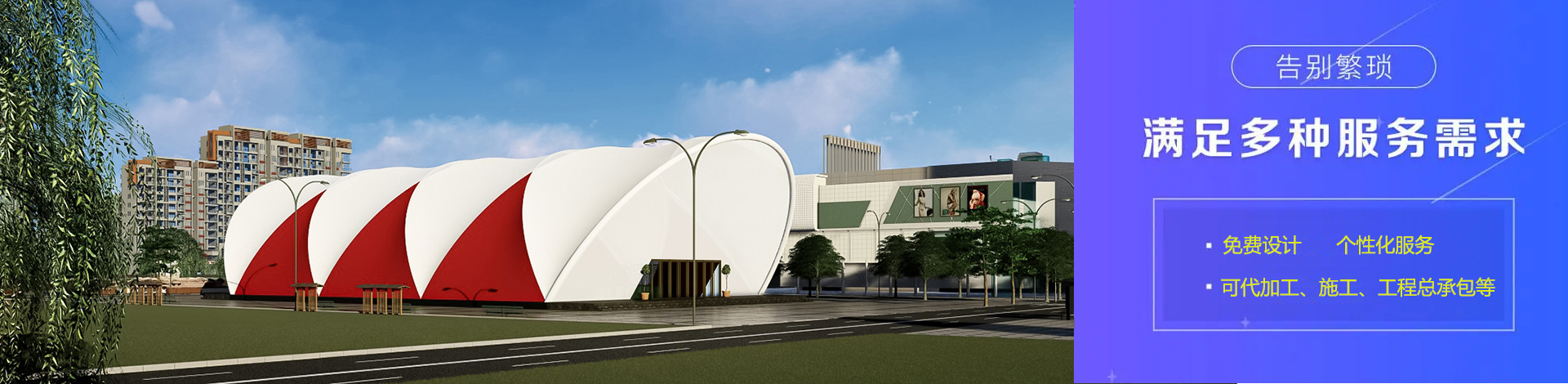
Membrane Structure Building Categories
Structural shapes can be categorized into the following three types:
1. Skeleton membrane structure
This type of membrane structure is fixed to a frame, spatial truss, or other sturdy framework, known as a skeletal membrane structure.

2. Tensioned membrane structure
This type of membrane structure is formed solely by utilizing a simple supporting system and the inherent tensile properties of the membrane material.
Unlike traditional structures, membrane structures primarily use flexible films and cables as the main load-bearing materials.

Film materials for construction engineering can be divided into two main categories: woven membrane materials and non-woven membrane materials.
Among the commonly used fabric-based film materials are PVDF-coated polyester fabric and PTFE-coated glass fiber fabric.
Non-woven membrane materials are represented and competitively dominated by ETFE film.
The choice of membrane materials is often highly dependent on the function of the building, fire safety requirements, design lifespan, and investment amount.
3.Air-supported membrane structure architecture
Inflatable membrane structures, also known as pneumatic membrane structures, are constructed using specialized architectural membrane materials (PVDF membrane materials) for their exterior shell.
An intelligent electromechanical equipment set provides air pressure within the fully enclosed air film building, ensuring the entire structure maintains consistent internal air pressure.
Maintain a positive pressure on the external environment.A structural system that supports the main body of a building through the pressure difference between the inside and outside. Widely used in industrial applications.
Industry factories, logistics warehouses, sports and entertainment facilities, and military installations.Ultra-spacious, highly flexible in design, and with a short installation period,
Low construction and maintenance costs, low energy consumption, environmental friendliness, durability, weather resistance, and lightweight structure.
Typically, the service life can exceed 25 years.

