


I. Overview of Laboratory Wastewater Treatment Equipment
Processing Purpose
Remove harmful substances from wastewater, such as heavy metals (mercury, cadmium, lead, etc.), organic pollutants (organic solvents, phenols, etc.), biological pollutants (bacteria, viruses, etc.), and chemical substances like acids and bases. For instance, chrome-containing wastewater commonly used in chemical experiments, which contains hexavalent chromium with strong toxicity, can be reduced to less toxic trivalent chromium and removed by precipitation through treatment equipment.
Reduce the Chemical Oxygen Demand (COD) and Biochemical Oxygen Demand (BOD) of wastewater. Organic matter in the experimental wastewater consumes dissolved oxygen in the water. Treatment reduces COD and BOD, preventing eutrophication and other water pollution.
Equipment Categories
Physical, chemical, and biological treatment equipment can be categorized based on their processing principles. Physical treatment equipment primarily removes suspended solids from wastewater through methods like filtration, sedimentation, and centrifugation. Chemical treatment equipment utilizes chemical reactions, such as neutralization, oxidation-reduction, and coagulation-sedimentation, to eliminate harmful substances. Biological treatment equipment, on the other hand, relies on the metabolic actions of microorganisms to decompose organic pollutants.
Small-scale lab equipment (processing capacity typically a few to several dozen liters per hour) and medium to large-scale comprehensive lab equipment (processing capacity up to hundreds of liters per hour or more) can be categorized based on the scale of processing.
Collection System
Including sinks, pipes, and other components. Sinks are used to collect various wastewater generated during the experiment process, typically made of corrosion-resistant materials such as PP (polypropylene) plastic or stainless steel. Pipes transport the wastewater collected from the sinks to the main part of the treatment equipment. The material of the pipes must also be considered for corrosion resistance, and the appropriate pipe diameter should be selected based on the characteristics of the wastewater to ensure smooth transportation.
Pre-treatment Unit
Grates or screens: Installed at the front of the equipment where wastewater enters, they are used to remove larger solid debris such as filter paper, glass fragments, etc. The gap size of the grates typically ranges from 1 to 10mm, while the mesh size of the screens is finer, reaching several micrometers, which prevents these solid materials from causing blockages in the subsequent treatment units.
Adjustment Tank: Regulates the quality and volume of wastewater. Due to the significant variations in the amount and composition of wastewater generated at different experimental stages, the adjustment tank ensures a more stable flow and quality of wastewater. For instance, in a laboratory where biological and chemical experiments alternate, the pH levels and types of pollutants in the wastewater change frequently. The adjustment tank can buffer these fluctuations, providing stable conditions for subsequent treatment. The adjustment tank is typically equipped with a mixing device to prevent the settling of suspended solids in the wastewater.
Physical Processing Unit
Settling Equipment: Utilizes gravity to settle suspended particles in wastewater to the bottom. Common settling equipment includes vertical flow settling tanks and horizontal flow settling tanks. The water flow in vertical flow settling tanks is vertical, with wastewater entering through a central pipe, where particles settle as it rises, offering high settling efficiency and suitable for treating smaller suspended particles. Horizontal flow settling tanks, on the other hand, have wastewater flowing horizontally, with suspended particles gradually settling during the flow, ideal for treating larger suspended particles.
Filtering Equipment: Utilizes filter media (such as quartz sand, activated carbon, etc.) to filter wastewater, further removing fine suspended particles and certain organic matter. Quartz sand filtration primarily removes larger particles, while activated carbon filtration has a good adsorption effect on organic matter and odors. For instance, when treating experimental wastewater containing a small amount of organic dyes, activated carbon can effectively adsorb dye molecules, lightening the wastewater's color.
Chemical Treatment Unit
Neutralization Equipment: Used to adjust the pH level of wastewater. When wastewater is acidic or alkaline, the pH level is neutralized or brought close to neutral by adding neutralizing agents (such as sodium hydroxide, sulfuric acid, etc.). For instance, in the case of strongly acidic acidic wastewater, the pH level can be adjusted to between 6 - 8 by slowly adding a sodium hydroxide solution and monitoring it in real-time with a pH sensor.
Coagulation Sedimentation Equipment: By adding coagulants (such as polyaluminum chloride, ferrous sulfate, etc.), colloidal and fine suspended particles in wastewater are aggregated into larger particles, which are then removed through sedimentation or filtration. The role of coagulants is to disrupt the stability of colloids, allowing them to settle. For instance, when treating experimental wastewater containing emulsified oil, the addition of polyaluminum chloride causes the emulsified oil to coalesce into larger droplets, facilitating subsequent separation.
Redox Equipment: For wastewater containing heavy metal ions or toxic organic substances, harmful materials are converted into harmless or low-toxic substances through redox reactions. For instance, using hydrogen peroxide, organic pollutants in the wastewater can be oxidized and decomposed; for wastewater containing heavy metal ions, by adding a reductant (such as sodium sulfide), heavy metal ions can be reduced to metallic elements or low-valent ions, facilitating precipitation and removal.
Bio-treatment Unit
Primarily bioreactors, such as activated sludge reactors or biofilm reactors. The activated sludge reactor contains a large number of microorganisms (bacteria, fungi, etc.), where wastewater is thoroughly mixed with the activated sludge. The microorganisms convert organic pollutants in the wastewater into carbon dioxide, water, and cell material through decomposition and metabolic processes. The biofilm reactor utilizes microorganisms forming a biofilm on the surface of the media, where organic pollutants are decomposed by the microorganisms as the wastewater flows through the biofilm.
Disinfection Unit
Utilizing ultraviolet (UV) sterilization, ozone sterilization, or chemical disinfectants (such as chlorine dioxide) for disinfection. UV sterilization involves using UV lamps to irradiate wastewater, achieving disinfection. Ozone sterilization exploits the strong oxidizing properties of ozone to oxidize the cell membranes and other structures of microorganisms. Disinfected wastewater meets discharge standards or can be reused after further treatment.
Monitoring and Control System
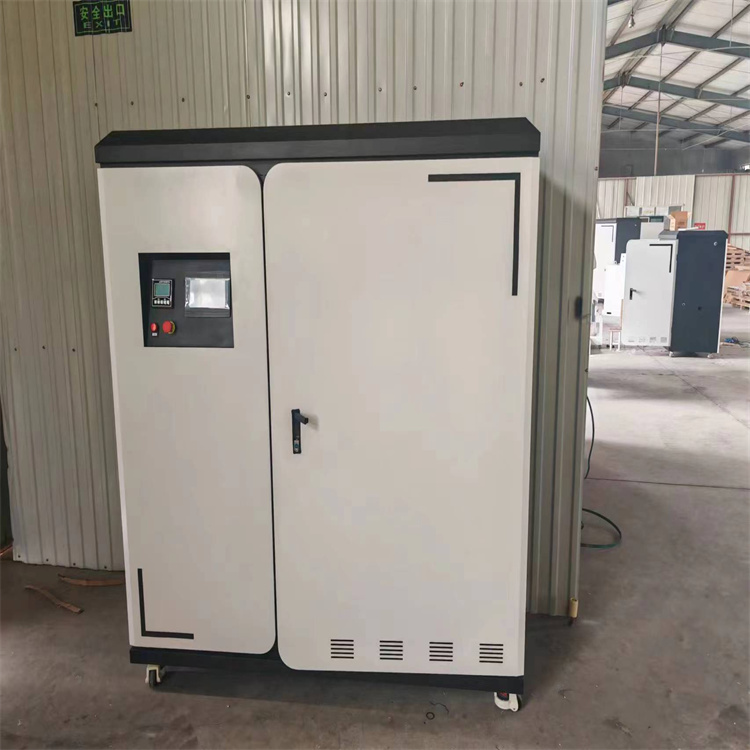
Equipped with various sensors such as pH sensors, dissolved oxygen sensors, and COD sensors, it monitors the water quality parameters of wastewater in real-time. Through the control system, operation parameters of the treatment equipment can be automatically adjusted based on monitoring data, such as dosage of chemicals and equipment runtime. For instance, when the pH sensor detects that the wastewater pH level is below the set value, the control system will automatically activate the neutralizing agent addition unit until the pH level reaches the set range.
Advantages
High level of automation: Most modern laboratory wastewater treatment equipment is highly automated. It can operate automatically based on pre-set programs and real-time monitoring data, reducing the complexity and errors of manual operation. For instance, an automatic dosing system can accurately add the required chemicals to the wastewater based on its flow rate and water quality.
Small footprint: Equipment is typically designed to be compact, suitable for limited-space environments like laboratories. Compared to traditional wastewater treatment facilities, laboratory wastewater treatment equipment can complete complex processes in a smaller space. For instance, a laboratory wastewater treatment unit with a processing capacity of 100L/h may only occupy a few square meters.
Environmental and Safety Protection: By effectively treating laboratory wastewater, we prevent direct discharge into the environment, thereby safeguarding the ecological system. Additionally, we reduce the risk of laboratory personnel being exposed to toxic and harmful substances, ensuring the safety of the lab.
