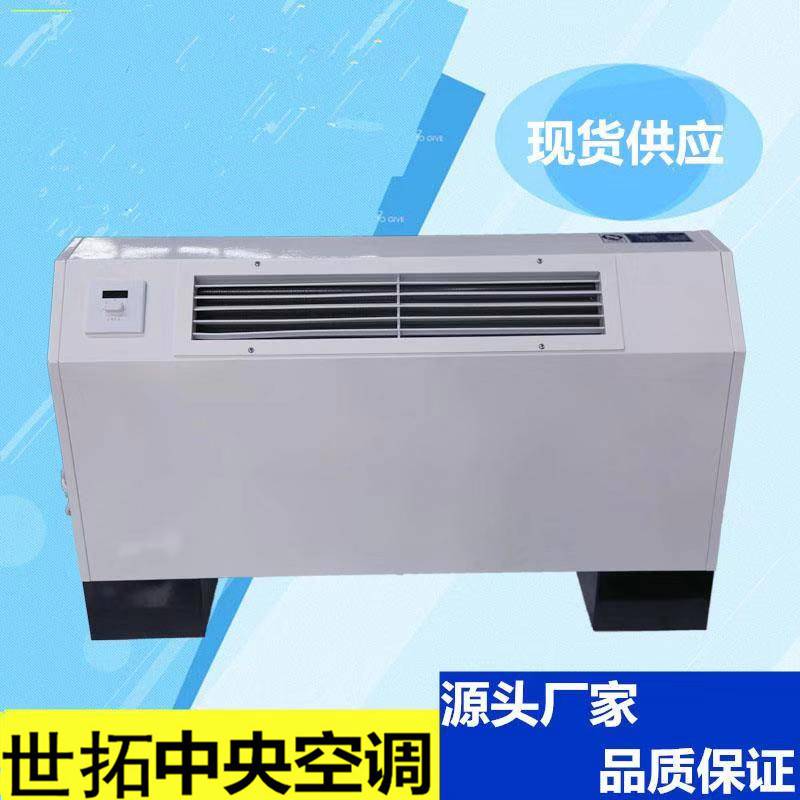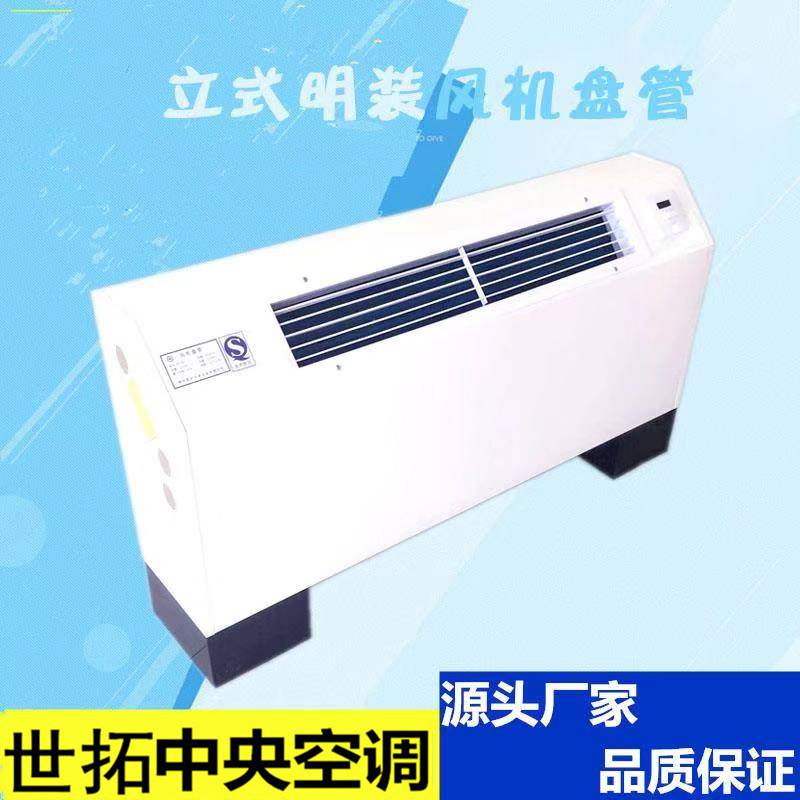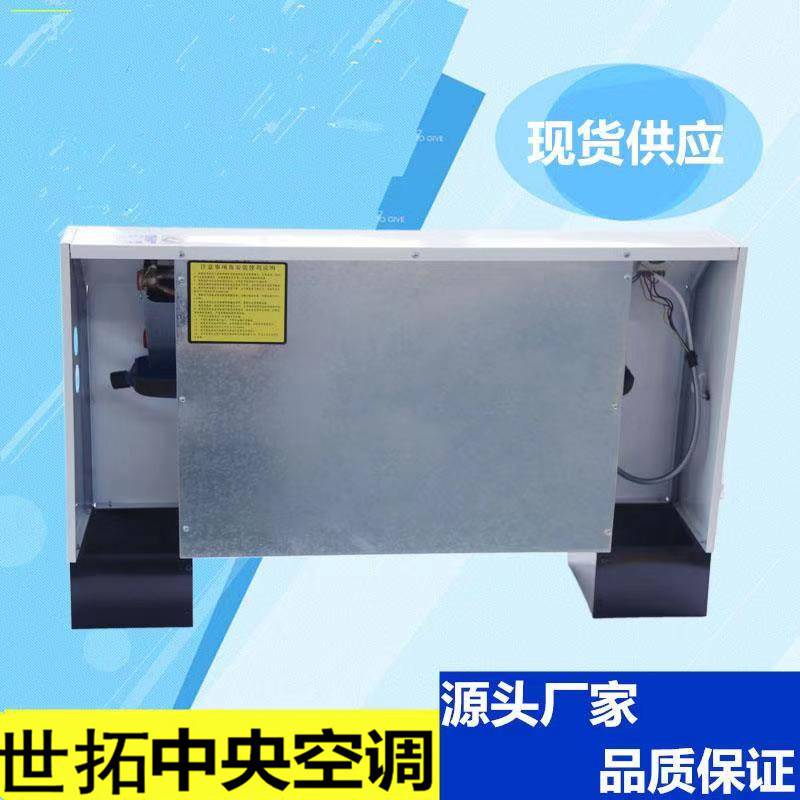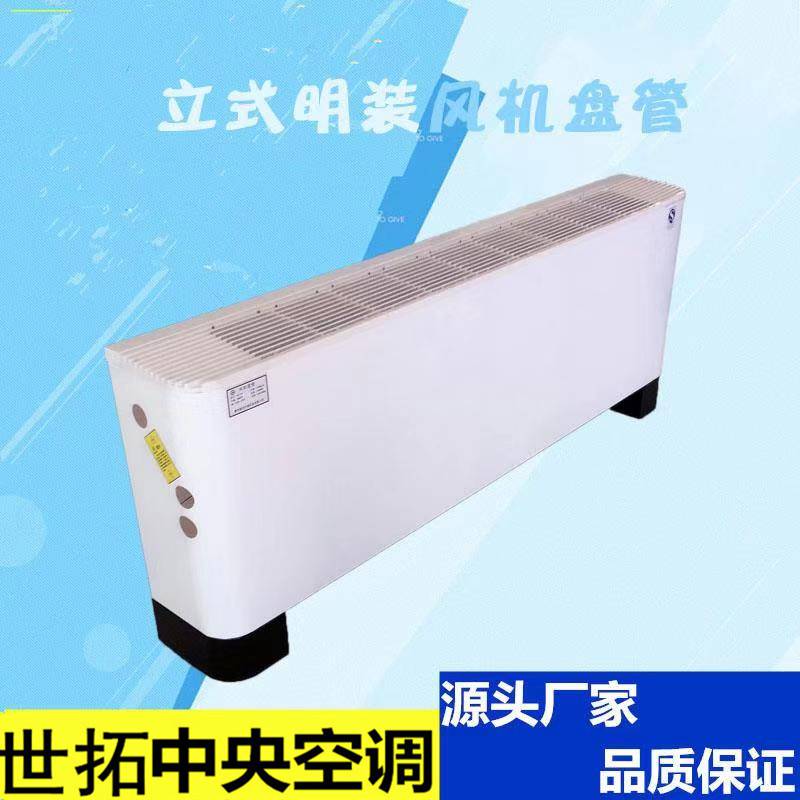


What do most users want to know when considering purchasing a fan coil unit? In fact, it's quite simple. When you see a fan coil unit, you might wonder how it operates and what principle it works on. What do we need to understand when purchasing a fan coil unit? What should we know about the fan coil unit manufacturer when making the purchase? And what valuable information do you want to obtain from the fan coil unit manufacturer when you decide to buy? Below, we'll look at some advantages provided by fan coil unit manufacturers. Next, let's see what knowledge is required for purchasing a fan coil unit. Next, let's see what advantages the Dezhou Shituo Air Conditioning Equipment Co., Ltd., a fan coil unit manufacturer, introduces regarding their strengths.Factory Advantages of Fan Coil Unit Manufacturers, Fan Coil Unit Manufacturers, Fan Coil Unit SuppliersWhat information can we obtain here? What useful information, if any?
Can you provide fundamental knowledge of the product we offer?
1. Refrigeration Principle:
During the summer, low-temperature water is circulated through pipes into the evaporator within the coil. Simultaneously, the fan inside the coil draws indoor hot air into the evaporator, utilizing the principles of thermodynamics for heat exchange. The low-temperature water absorbs heat from the hot air through the pipe walls and fins, causing the air to cool down. The cooled air is then blown back into the room by the fan. The water, having absorbed heat, increases in temperature and flows back into the return water pipe to the sump. This cycle continues, with the indoor hot air being continually cooled by the water, achieving the purpose of refrigeration.
World Book Day
2. Heating Principle:
Hot water is pumped through pipes into the coil evaporator, where it evaporates. Meanwhile, the fan inside the coil draws in cold indoor air into the evaporator, utilizing the principles of thermodynamics. Both exchange heat, with the water transferring its heat through the pipe walls to the fins, which are then fully absorbed by the cold air. After absorbing heat, the cold air's temperature rises and is blown into the room by the fan, cooling the water that has given off heat. This cooled water then returns through the return pipe to the boiler to be reheated. This cycle repeats, with the cold air in the room continuously absorbing the heat released by the water, thereby increasing its temperature and achieving the heating purpose. The entire process, due to its self-circulating design, requires no auxiliary power, completely overcoming the drawback of other coils that rely on pump-driven circulation.
Second, provide core knowledge of fan coil units; the rated heating capacity of a single coil unit is generally 1.5 times the rated cooling capacity; when selecting units, consider the deviation between actual performance and rated values, and note the following features:
1) The rated cooling capacity of the unit is generally the test value under the condition of air enthalpy drop equal to 15.9 kJ/kg.
1) The rated cooling capacity of the unit is generally the test value under the condition of air enthalpy drop equal to 15.9 kJ/kg.
2) The rated heating capacity of a single tube unit is generally 1.5 times the rated cooling capacity.
3) All rated values are parameters at the high-speed operation of the fan. During design, it is generally advisable to select values from the product sample at the medium-speed wind speed. If the product does not provide rated values at different wind speeds, refer to Table 3 for conversion.
Table 3: Airflow Conversion Coefficient
Rated Value Category
High-end wind speed
Mid-range wind speed
Low-grade wind speed
Airflow
1
0.75
0.50
3. For dual-pipe water systems (air conditioning systems that only switch between heating and cooling seasonally or within specific cooling zones), the fan coil units should be equipped with a single coil set, a dual-purpose model for both winter and summer heating/cooling. For four-pipe water systems (air conditioning systems with frequent heating/cooling switches), a combination model with both heating and cooling coil sets should be configured.
7. For low-temperature and chilled air conditioning systems, large temperature difference units should be selected.
8. Currently, the fan coil units come in the following control types:
1) Equipped with a three-speed selection switch, capable of switching between winter and summer modes, it connects to the waterway electric valve via an indoor temperature controller for automatic control.
2) Equipped with a three-speed selection switch, capable of switching between winter and summer modes; the fan's on/off is controlled by a room temperature controller for semi-automatic operation.
3) Features a three-speed selector switch for manual control only.
4) Variable speed control for fan.
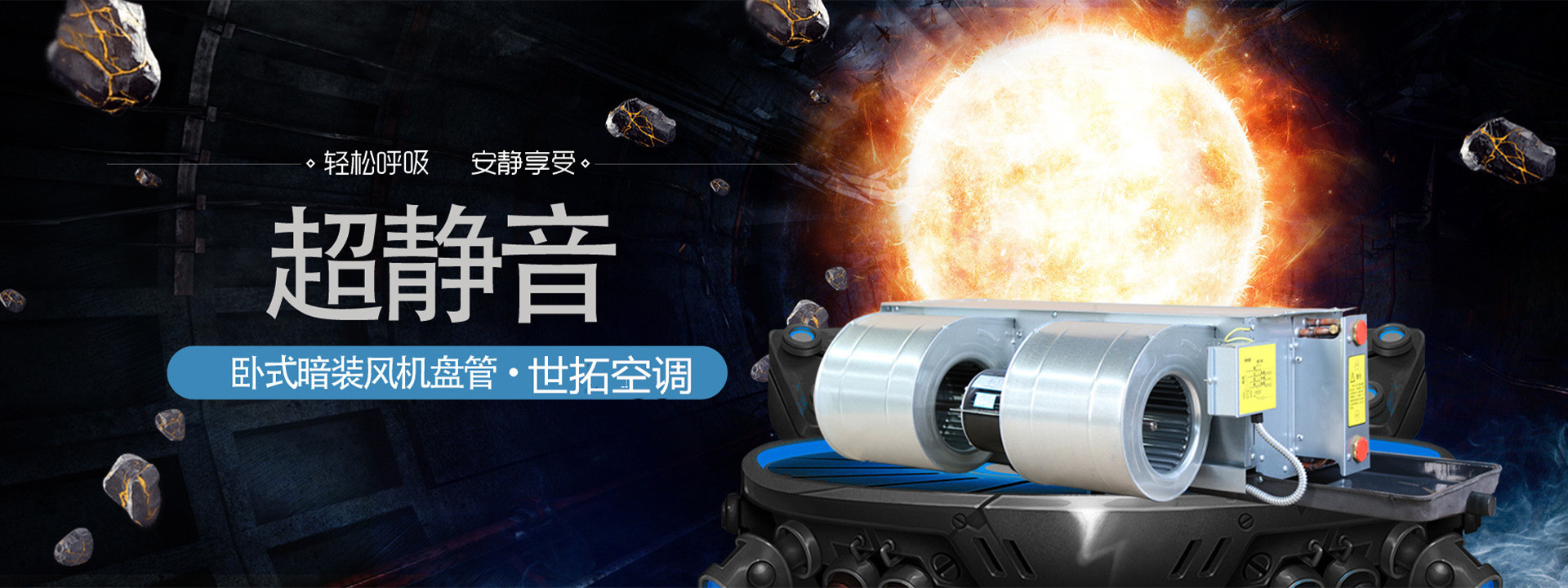
Horizontal Concealed Ceiling Fan Coil Unit
In compliance with relevant energy-saving standards, the combination of an electric temperature control valve and a three-speed fan control method should be employed.
When selecting products, attention should be given to three aspects: noise, condensation, and the quality of the motor. These are currently the items with the most quality issues in the random inspections.
10. Domestic and international fan coil units have different marking methods, which should be noted and distinguished during design selection.
The third fan coil unit manufacturer can distinguish priorities for users and highlight precautions.
Construction and Installation Key Points
1. At the water supply entrance of the unit, a filter should be installed. When flushing the main trunk of the refrigerant water system, wastewater must not pass through the coils. Exhaust and drain devices should be installed at the connection points of the coils.
The condensate discharge pipe of the fan coil unit must have a certain slope to ensure no water accumulation in the drip tray.
3. The installation of fan coil units can be referred to in the Architectural Standard Design Collection 01K403, "Fan Coil Installation."
3) All rated values are parameters at the high-speed setting of the fan. During design, it is generally advisable to select values based on the medium-speed wind velocity under the product sample.
6. For fan coil units in dual-pipe water systems (suitable for heating/cooling conversion in only seasonal or only in air conditioning zones), a single coil set is provided, suitable for both winter and summer heating/cooling. For fan coil units in four-pipe water systems (suitable for frequent heating/cooling conversions), a combination model with both heating and cooling coil sets should be configured.
7. For low-temperature and chilled air conditioning systems, large temperature difference units should be selected.
8. Currently, fan coil units come in the following control types:
1) Equipped with a three-speed selector switch, capable of switching between winter and summer modes. The room temperature controller is connected to the waterway electric valve for automatic control.
2) Equipped with a three-speed selector switch for seasonal conversion between winter and summer, the unit connects to a room temperature controller to automatically start and stop the fan, implementing semi-automatic control.
3) Equipped with a three-speed selector switch only, for manual control implementation.
4) Variable speed control for fan.
In compliance with relevant energy-saving standards, the use of an electric temperature control valve combined with a three-speed fan control method is required.
9. When selecting products, pay attention to three issues: noise, condensation, and the quality of the matching motor. These are currently the items with the most quality issues in random inspections.
10. Marking methods for domestic and international fan coil units differ; attention and distinction should be paid to design selection.
Horizontal exposed ceiling fan coil precautions
1. Filters should be installed at the water inlet for the aircraft's water supply system. When flushing the main trunk of the refrigerant water system, wastewater must not pass through the coils. Exhaust devices should be installed at the connection points of the coils, and drain valves should be set at these points as well.
2. The condensate drain pipe of the fan coil unit must have a certain slope to ensure no water accumulates in the drip tray.
3. The installation of fan coil units can be referred to in the architectural standard design collection 01K403, "Fan Coil Installation."
Factory advantages of fan coil units, Fan coil units manufacturers, Fan coil units suppliersFan coil units comply with national standards
GB/T 19232-2003 "Air-cooled Ceiling Fan Coil Unit"
Room Fan Coil Air Conditioner Safety Requirements - JB9063-1999
ZBJ72.027.1-89 Model and Basic Parameters of Cabinet Type Fan Coil Unit
ZBJ72.027.2-89 Technical Conditions for Cassette-type Fan Coil Units
ZBJ72.027.3-89 "Performance Test Method for Cabinet-Type Fan Coil Units"
JB4292 "Coil Technology Specifications"
And has been inspected by the National Quality Supervision and Inspection Center for Compressor and Refrigeration Equipment, all indicators meet the national standards.
Heat Exchanger
Utilizing high-quality copper tube with aluminum fin technology, the overall expansion of the tube is completed in one go, ensuring tight tube and fin joints and high heat transfer efficiency. Standard copper tube specifications are φ7×0.3, with aluminum fin thickness of 0.12mm and fin spacing of 1.4mm. The fins are surface corrugated, offering high heat exchange efficiency, and are easy for operation, maintenance, and cleaning.
The fin perforations are double rolled, ensuring uniform spacing between fins. Taking into account factors such as wind resistance, water resistance, blower motor power, and heat exchange area, the design is optimized using computer-aided design, achieving the optimal spacing. Additionally, while maintaining the heat exchange capacity index, the water resistance is minimized.
Aluminum fins with immersion film surface treatment, providing surface corrosion protection and ensuring condensate flows smoothly, offering excellent dehumidification performance in high humidity areas.
The standard pressure for the heat exchanger's airtightness test is 2.0 MPa, and the operating pressure is 1.6 MPa.
(2) Fan:
The fan impeller is a double-inlet, centrifugal metal impeller, made from high-quality cold-rolled steel plates. After machining and shaping, the impeller is fully galvanized. The impeller undergoes rigorous dynamic balancing tests to ensure excellent aerodynamic performance, minimizing aerodynamic noise.
The impeller housing is formed as a monolithic bite-type, made of galvanized steel plate. The inner surface of the housing is smooth with no air leakage, which improves the aerodynamic performance of the fan and reduces noise.
The fan motor is a low-noise single-phase capacitor motor with three speeds, utilizing high-quality cold-rolled non-oriented silicon steel sheets, with an integrated insulation layer, E-grade insulation, and IP20 protection rating. It boasts a high electromagnetic power conversion efficiency. The motor winding features an internal thermal protection sensor, which automatically shuts off the motor in case of overheating to prevent damage. The motor bearings are Japanese-made NSK double-sided self-aligning bearings, pre-filled with high-temperature-resistant lubricating grease, requiring no maintenance.
(3) Drain Trays
High-quality cold-rolled steel plate is used for the entire stretch, with surface powder coating and flame-retardant polyethylene insulation layer applied externally. Suitable for use in high humidity areas, the condensate tray can be extended according to customer requirements.
(4) Engine Housing
Darkly installed products are made of high-quality galvanized steel plate with a thickness of 1.0mm, while exposed products use high-quality cold-rolled steel plate with a powder-coated finish. In the unit, where contact with cold water and cold air occurs, flame-retardant polyethylene insulation is applied to effectively prevent cold bridges and condensation.
(5) Safety Performance:
The motor wiring of the unit is protected by a metal flexible hose, making it difficult for moisture to enter; the high and low-pressure startups, high-voltage dielectric strength, insulation resistance, and leakage current of the unit all comply with the safety standards stipulated in JB-J72-018.
(6) Production Equipment and Testing Methods:
Key Processing Equipment:
① 1 U.S.A. OAK High-Speed Punching Machine (for processing heat exchanger fins)
② 1 German ET-300 high-precision multi-station CNC turret punch press (for processing sheet metal parts of the unit)
③ German PR6-100×300 CNC hydraulic bending machine, 2 x 6-3000 shearing machines (for processing sheet metal components of the unit)
④ 2 Vertical Tube Expanding Machines (for heat exchanger tube expansion)
2 units of South Korean automatic welding machines (for copper tube welding in heat exchangers)
⑥ 2 Programmable Automatic Tube Bending Machines (for manufacturing elbows of heat exchangers)
Annual production line for 40,000 unitary fan coil units, assembled in a continuous chain-link process.
Testing Methods:
Air curtain and fan coil unit test room, fully constructed according to the GB19232-2003 "Fan Coil Unit" standard.
Noise test room constructed in strict accordance with the GB9068-88 standard "Determination of Noise Power Levels of Heating, Ventilation and Air Conditioning Equipment - Engineering Method."
In compliance with the GB19232-2003 "Fan Coil Unit" and JB4292 "Technical Conditions for Coils" standards, an electrical safety testing station for units is set up on the assembly line.
All construction and acceptance are carried out in strict accordance with the GB50243-2002 "Code for Construction and Acceptance of Ventilation and Air Conditioning Engineering."
Air Handler Manufacturer Advantages Air Handler Manufacturers Air Handler SuppliersThe introduction by the fan coil unit manufacturer, Dezhou Shituo Air Conditioning Equipment Co., Ltd., has been completed.