

Air Handler Coil Manufacturer Rankings - Ranking Information - Ranking Understanding
How do we determine the rankings of air handling unit manufacturers? Why do we mention the rankings of air handling unit manufacturers today? It's because there are many air handling unit manufacturers with intense competition. To survive and develop better, each manufacturer needs to enhance high-quality products, a strong technical team, robust after-sales support, and excellent service. What's more, having these is not enough; they also need solid product knowledge. Why is that? It's because all customers who purchase air handling units now look for air handling unit manufacturers. Each air handling unit manufacturer is doing promotions, and so are the agents. Those involved in e-commerce air handling unit代理 never stop promoting. When Guangdong users ask, "Are you an air handling unit manufacturer?" everyone claims to be one, offering direct sales, source factory, and even saying they are leading brands. The statements are diverse, making it difficult for customers to decide. So, how do we distinguish between air handling unit manufacturers? How can we truly verify them? Below, please see the introduction and explanation from Dezhou Shitu Air Conditioning Equipment Co., Ltd.Air Handler Manufacturers Ranking - Ranking Information - Ranking Understanding
Brand – The Symbol of a Corporation
ShiTuo Air Conditioning is renowned for its brand. It was the first to obtain a production license for refrigeration equipment in 2004, followed by winning the Shandong Province Trademark and Shandong Province honors in 2006. In 2008, its refrigeration units were included on the energy-saving product procurement list, and ShiTuo Air Conditioning Group was listed as a high-tech enterprise under the Torch Program.
Strength – Robust Support
A team of 3,000 employees; over 100 high-precision CNC machines; ten automatic assembly production lines; a refrigeration equipment center; a stringent ISO9001 quality assurance system; and the meticulous professional spirit of Grede staff, all serve as a robust foundation for crafting superior Shituo Air Conditioning products.
Innovation – The Guarantee of Development
We continuously innovate in management and technology, driving product innovation in our fan coil units. Shituo Air Conditioning always keeps pace with the times. We have launched full-liquid units, ground-source heat pump units, ultra-low temperature units, and roof-mounted units, all of which have been granted multiple patents, ensuring our independent intellectual property rights.
Service – The Eternal Pursuit
Centered around the group, with branches and offices in major and medium-sized cities such as Beijing, Tianjin, Shanghai, Xi'an, Jinan, Wuhan, and others as the base, we have formed a service network that radiates across the country and connects to ***. A green service channel has been established to bridge the gap between us and our users.
Success – A Higher Starting Point
Shituo Air Conditioning's central air conditioning projects are spread across major and medium-sized cities nationwide and exported to dozens of countries and regions. Including more than a dozen Beijing Olympic projects, the new CCTV headquarters, the General Administration of Quality Supervision, Inspection and Quarantine, Beijing Olympic venues, and the Papadara project in India, as well as the Metropolis Square in Phnom Penh, Cambodia.
Future — A Bright Tomorrow
With the new beginning of creating a diversified group, striving towards domestic large-scale corporate groups, the overall goal is:
Step one, leading within the Chinese industry; step two, expanding to the global market.
Check it outAir Handling Unit Manufacturer Rankings - Ranking Information - Ranking InsightsNext, let's examine the working principle of the fan coil unit: The unit continuously recirculates air from the room or outdoors, cooling (heating) it through a cold (hot) water coil to maintain a constant room temperature. Typically, fresh air is processed by a fresh air handling unit and then supplied to the room to meet the demand for fresh air in air-conditioned spaces.
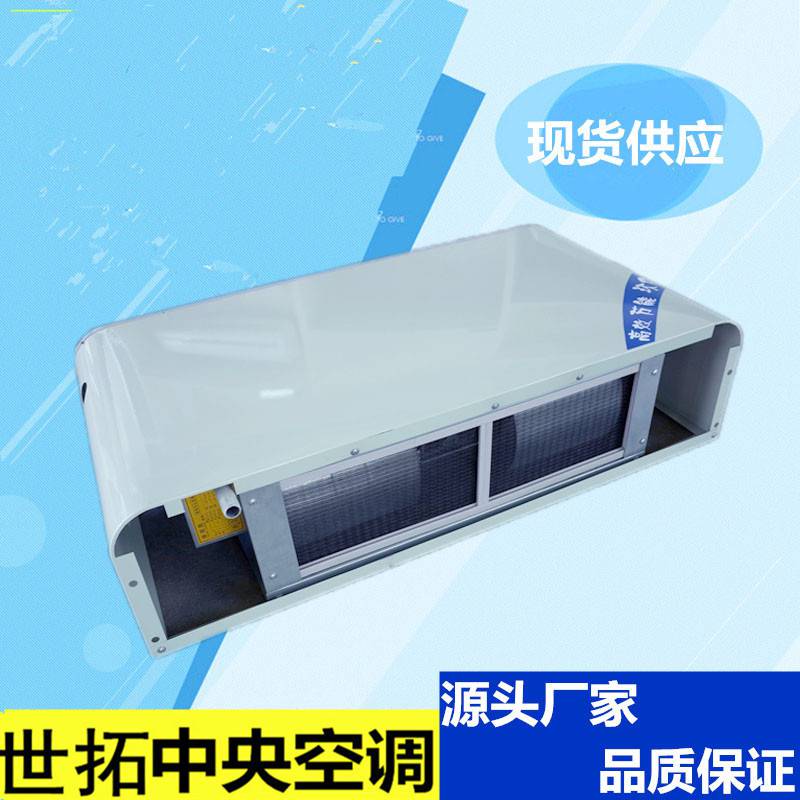
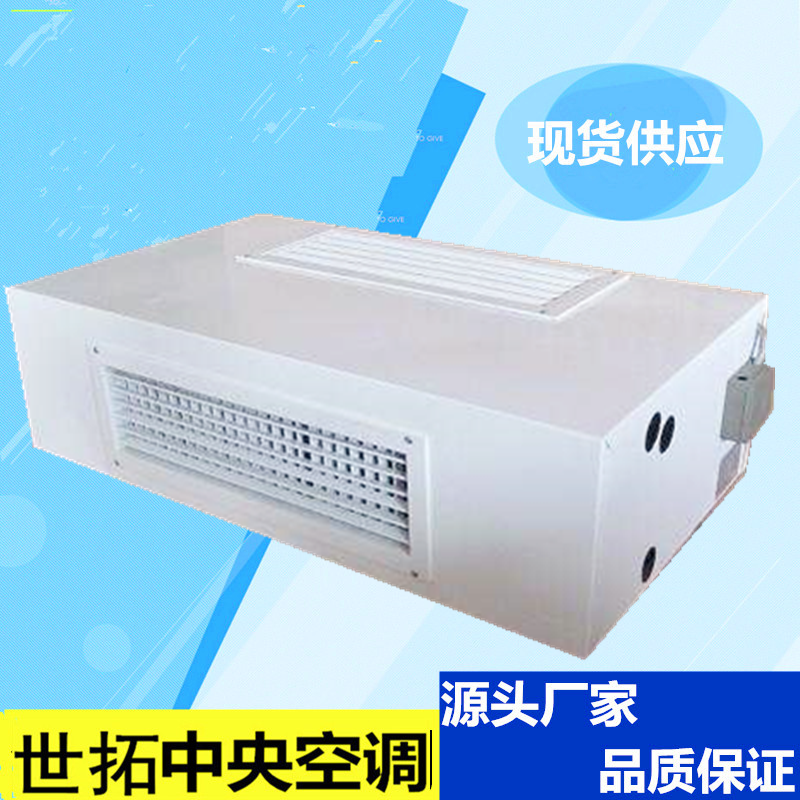
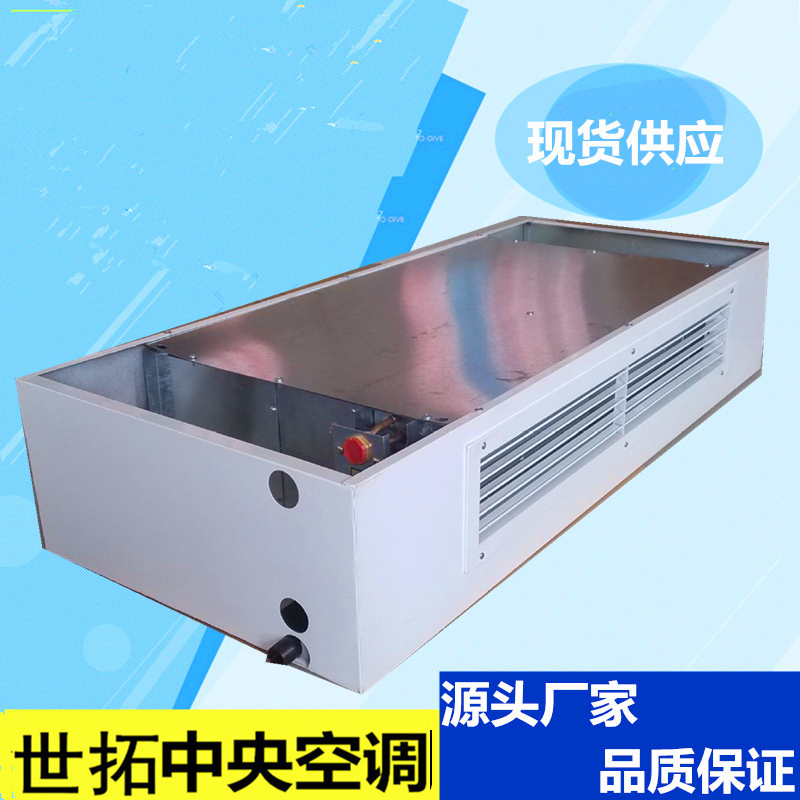
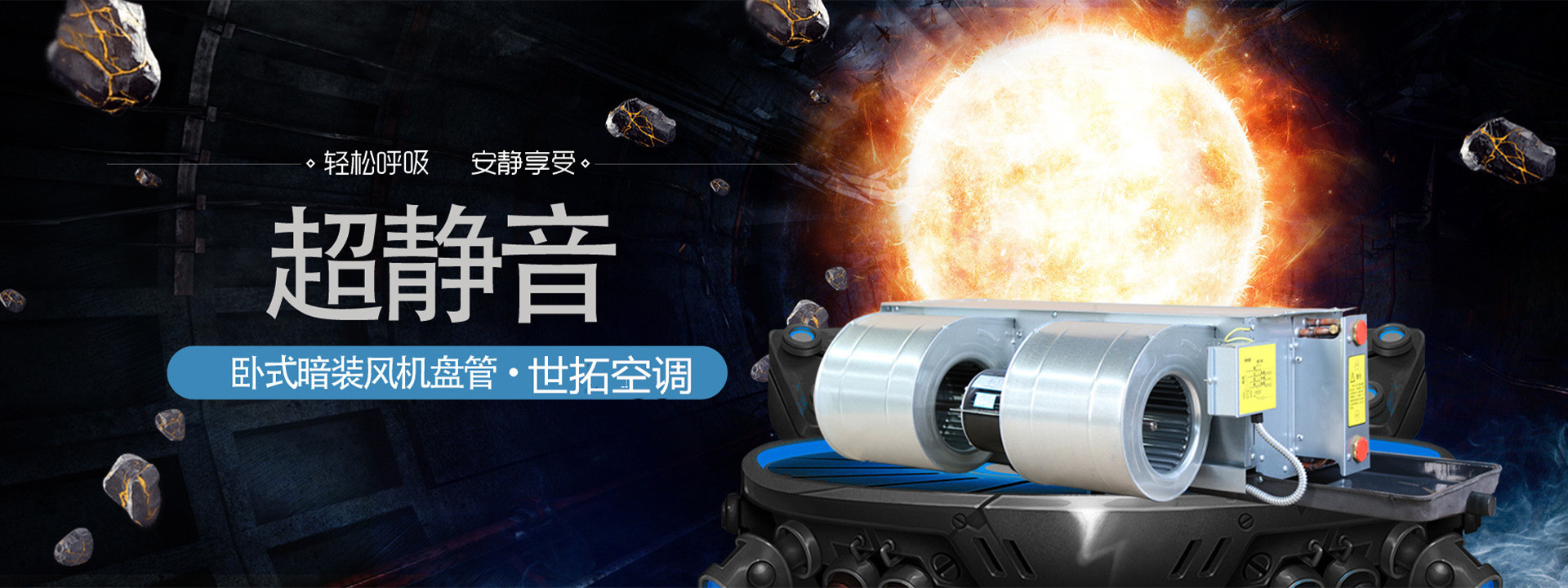
Category and Models of Fan Coil Units: Fan coil units can be divided into six types based on their installation forms, including horizontal installation, surface-mounted horizontal, concealed vertical, surface-mounted vertical, cassette type, and general surface-mounted.
Detailed Air Handler Coil
The models can be categorized into standard and deluxe types, depending on whether a condensate pump is included.
The piping can be categorized as: two-row piping and three-row piping.
Note: The term "reels" in the case of fan coils refers to the number of rows of copper tubes in the coil. Generally, two reels mean two rows of copper tubes, with 8 tubes per row, totaling 16 copper tubes; three reels mean three rows of copper tubes, with 8 tubes per row, totaling 24 copper tubes. The more copper tubes, the better the cooling effect.
Two-pipe system: Commonly used in air-handling unit coils, it cools with chilled water in summer and heats with hot water in winter. Four-pipe system: Often employed in luxurious locations, it allows simultaneous chilled and hot water circulation, enabling cooling in some rooms and heating in others as needed.
Detailed Air Handler Coil
Left-right judgment method: When facing the outlet of the fan coil unit, if the cold and hot medium supply and return pipes are on the left side, it is left-hand type; otherwise, it is right-hand type.
Airflow Range: 350~2380 m³/h
Cooling Capacity Range: 2-13 kW
Chilled Water System: Two-pipe, Four-pipe.
Detailed description of fan coil
Design Selection Key Points for Fan Coil Units:
1. Determine the Air Handler Model: Refer to the manufacturer's product model for fan coil units, paying attention to the number of pipes and the connection method. When the noise of larger-sized fan coil units does not meet the room requirements, use multiple smaller capacity units. Select the fan coil unit capacity according to the table below:
Detailed Description of Fan Coil Unit
Here are the national standard models of fan coil units for your reference:
Detailed description of fan coil
2. Impeller Diameter接管管径
Detailed Description of Air-Cooled Coil
3. Condensate outlet pipe diameter of the air cooler:
The diameter of the condensate discharge pipe for the fan coil is determined based on the cumulative cooling capacity of the terminal fan coil, as per the table below:
Detailed Air Handler Coil
Installation of Air Handling Units:
1. Basic Knowledge:
(1) Indoor fan coil units should be installed horizontally.
(2) Installed using a Φ10mm diameter suspension rod, which is treated for rust prevention. The rod is securely fastened to the internal unit with a tight nut, ensuring no loosening.
(3) The lifting location conforms to indoor air circulation and the drawing requirements, maintaining a certain distance from the floor.
(4) Installation method of the zone manifold: The main pipe between the water module and the manifold uses Φ40 or Φ32 PPR pipe. Aluminum-plastic pipes are used to connect the zone manifold to the fan coil unit, ensuring even flow distribution and minimizing leakage. The hydrostatic test pressure is 0.6 Mpa, with no leakage observed for 2 hours.
(5) Pipelines must be insulated with a thickness of 20mm, and the condensate pipeline insulation must be 10mm thick.
(6) Secure with U-shaped clips or other methods, ensuring the compressive amount of the insulation material does not exceed 2 to 3 millimeters.
(7) Maintain a certain slope in the condensate drainage piping, ensuring that the slope of the drain outlet for fan-coil units with natural drainage is not less than 1% to ensure smooth drainage. No leakage in the full water test, and no water remaining in the drainage test.
(8) Pipeline吊hangers are used for fixation.
Installation Precautions for Fan Coil Units:
1. When the ceiling height exceeds 3 meters, it is not advisable to choose the ceiling-type model.
Why: Choose a ceiling fan due to the high ceiling, as warm air cannot be blown down effectively, affecting the heating effect.
2. The condensate pipe should be connected to the unit with a flexible hose.
Why: Not using hoses to connect the units can cause water pipes to detach and leak, as well as pipeline cracking and noise issues during operation.
3. When the room height exceeds 3 meters, it is not advisable to use ceiling blowers with diffuser outlets. Instead, use double louvre outlets with downward air outlets.
Why: The winter warm breeze cannot descend, affecting the heating effect.
4. Ensure proper indoor air flow organization to avoid short-circuits and dead ends in the air flow.
Why: Short-circuiting primarily refers to the improper arrangement of the outlet and return air vents, where the supply air returns to the unit through the return air vent before reaching the occupied area. Open-circuiting mainly points to the return air not being in the same air conditioning zone or the supply air not reaching the air conditioning zone. Both short-circuiting and open-circuiting will severely affect the cooling and heating performance.
Piping Installation Precautions:
1. The fan coil units must be installed with a return air box.
Why: Without a return air box, the indoor air in the air conditioning area cannot be effectively circulated, resulting in poor cooling and heating performance.
2. The air outlet, return air outlet, and duct dimensions and materials meet the specified requirements.
Why: Excessive wind speed or insufficient airflow due to small air outlets and ducts will inevitably result in noise and poor cooling and heating performance. Generally, the size of the outlet is determined by the wind speed not exceeding 2m/s, and the size of the return air outlet is determined by the wind speed not exceeding 1.5m/s.
3. The ductwork must be connected to the air outlets with canvas or other flexible materials.
Why: If not soft-connection, the vibration during the operation of the unit will be transmitted along the air duct, resulting in vibration noise.
4. When using flexible air ducts, the length of the duct should not exceed 4 meters.
Why: Generally, softer air hoses are more commonly used for FP-136WA to 238WA units due to their higher resistance. Moreover, these units have lower static pressure. If the connection pipe is too long, it can cause the air volume at the farthest outlet to be reduced and lead to uneven air volume distribution among different outlets.
4. Water System Installation Precautions
1. The fan coil must be connected to the water pipes using a stainless steel flexible connector.
Why: It prevents vibration transmission from the equipment to the water pipes during operation, reducing noise and preventing issues such as pipe vibration, loosening, cracking, and leaking.
2. The flexible connector between the fan coil and the water pipe must be installed horizontally directly; it must not be bent.
Why: Because excessive bending of the soft coupling can lead to cracks and leaks at the vulnerable spot.
3. When connecting pipes to fan coils, a "Y" type filter should be installed on the inlet pipe.
Why: To prevent impurities and debris from the water system from entering the fan coil and damaging or clogging the heat exchanger.
4. When installing an electric two-way valve in a system with energy-saving requirements, it must be mounted on the return pipe.
Why: Ensure the required normal water flow for the fan coil unit.
Electrical System Installation Precautions:
1. The equipment must be properly grounded.
Why: Lack of a safe ground connection can easily lead to electric shock accidents.
2. Power cable specifications must comply with the unit's requirements.
Why: The power cord specifications do not meet the requirements, causing the equipment to operate abnormally, and potentially leading to power cord burnouts or even fire accidents.
3. One control switch can operate only one fan coil, and it is not permitted to control multiple fan coils simultaneously.
Why: Controlling multiple fan coil units with a single control switch can lead to the motor of the fan coil units being burnt out.
Common issues with fan coil units:
1. The fan's air volume is low, and the cooling capacity is poor.
Reason: In the normal operation of the fan, the only issues are either a small amount of air intake or air leakage in the duct. Air leakage in the duct is rare and easily resolved. However, a small air intake is often due to a blocked return air filter. The solution is to regularly clean the filter. If not cleaned promptly, dust and debris will further adhere to the coil fins and fan blades, causing a decrease in the fan's ventilation capacity. Dust can also accumulate on the fan blades, reducing blade angle and thus reducing air volume, and increasing the fan's current. Therefore, it is very necessary to clean the return air filter. Generally, it should be cleaned at least once every quarter to prevent severe blockage and increasingly difficult maintenance.
2. Large coil noise, noise increases with higher wind speed
This issue typically stems from several causes: 1) Poor vibration reduction measures during installation and construction, leading to resonance during operation. 2) Foreign objects within the duct. 3) Deformed fan blades or damaged motor bearings, resulting in poor dynamic balance. When encountering this issue, first check if the coil support brackets are loose, then open the duct to inspect and remove any foreign objects.
3. The coil motor is not rotating. 4. The air volume is normal, but there's a deviation in the blowing temperature.
5. Equipment and piping leakage.
Alright regardingFan Coil Unit Manufacturer Rankings - Ranking Information - Ranking InsightsAnd issues with terminal fan coils, central air conditioning fan coils, and fan coil units. I'll introduce these to you for now. If you have any other needs, please contact us.