
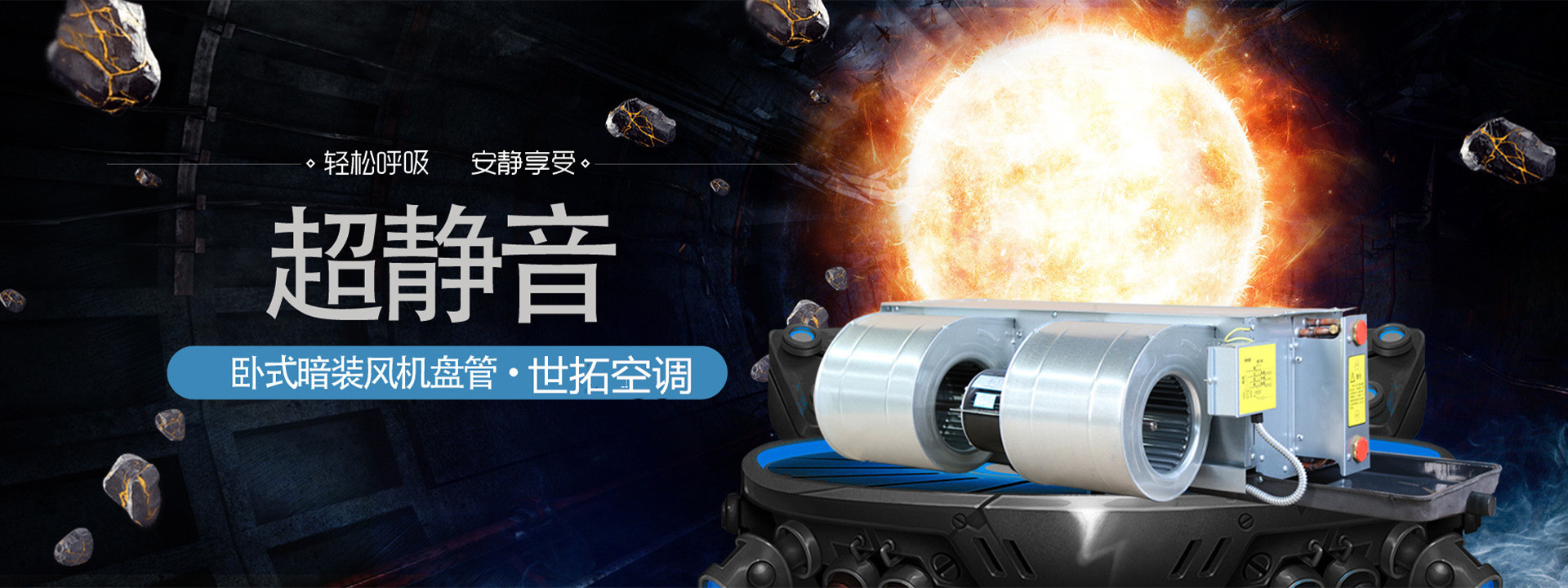


Air Handler Coil Model Explanation - Parameter Specifications - Performance Knowledge,
Let's take a look first.Fan coil unit modelExplanation of Terms: First, "FP" stands for "Fan Coil," the initials of the two Chinese characters. "Fan Coil" refers to the air handling unit. Inside the fan coil, there are two main components: the "fan" and the "coil." The fan is easy to understand; each fan coil is equipped with 1-4 centrifugal, snail-shaped fans, and the wind we feel when using it is produced by these fans.
"The 'coil' refers to a heat exchanger with water flowing inside, which we call an evaporative cooler. It is made up of copper tubes with double flanged finned aluminum fins, wound into coils, hence the name 'coil.' When the fan coil operates, either cold or hot water flows through the 'coil,' and the fan blows air forward from behind the 'coil,' producing cool or warm air."
"68" refers to the rated airflow of the fan coil unit, which is 680 m³/h at high speed (the fan coil unit has three speed levels: high, medium, and low). That means it produces 680 cubic meters of airflow per hour.
"WA" stands for "W" (卧式) and "A" (暗装), indicating that the installation method of the fan coil unit is horizontal and concealed. Concealed installation means that the entire fan coil unit is installed within the ceiling, with only the supply and return air outlets embedded in the ceiling visible, and the fan coil unit itself is not seen. This type of installation is most commonly chosen in hotel rooms, hotels, and office buildings.
"H" indicates that the fan coil unit comes with a rear return air box. What is a return air box? It's a galvanized steel box that covers the fan coil unit, leaving an opening at the rear or bottom for air intake, which effectively reduces dust from entering through the return air opening. At the opening of the return air box, you can directly connect the return air with a flexible connection, eliminating the need for additional elbows and short air ducts made of metal sheet.
The "G30" refers to high static pressure for fan coil units. The static pressure value is 30Pa, as the standard coil static pressure is 12Pa, and for high static pressure, one would choose either 30Pa or 50Pa. If the fan coil unit in your installation site needs to deliver air through a straight pipe to a greater distance, you should opt for a high static pressure model to extend the air delivery distance. This situation is common in business halls, as the fan coil units are installed near the wall, while the air outlet is designed in the center of the room, necessitating the addition of a straight air duct to extend the air delivery distance.
The last letter "Z" indicates the water flow direction of the fan coil unit. Fan coil units require both supply and return water pipes, as well as a condensate drain pipe. Choose the water flow direction of the fan coil unit based on the on-site water pipe layout for easier installation. The standard left-right orientation of fan coil units is determined by facing the outlet of the fan coil unit. If the water pipe is on the left when facing the outlet, it is a left-hand unit; otherwise, it is a right-hand unit.
Above, we've deciphered that long string of letters and numbers for the fan coil model. Now, let's talk about...Air Handler SelectionStep:
Secondly, specify the type, specifications, and air outlet position requirements of the selected fan coil unit.
1) When selecting a chilled water coil unit, the design preheat load is matched with the unit's sensible heat load. In most cases, the coil has sufficient latent heat capacity to meet the design requirements. Adjustments should be made accordingly if outdoor air is used.
2) Heating: Typically, the heating capacity of the unit selected for cooling is sufficient. The return heat is selected based on the same water flow rate, i.e., the incoming water temperature is used to meet the indoor heating load requirements.
3) Refrigeration: Indoor preheating cooling load, total indoor cooling load, incoming air temperature, incoming water temperature, airflow.
Determine the specifications of the fan-coil unit, water volume, required water temperature, and pressure drop, etc.
1) Specify whether the wind turbine motor bearing uses an oil-filled or oil-free shaft pump. If an oil-free shaft pump is selected, oil should be refilled according to the manufacturer's schedule during operation.
2) Specify the left or right outlet direction of the selected unit's intake pipe (related to pipeline layout, etc.).
3) The inlet chilled water temperature of the fan coil unit should not be below 5°C, otherwise it may cause condensation on the unit; during winter, when hot water is circulated, the water temperature should generally not exceed 60°C to reduce scaling, and at the same time, it will alleviate the alternating action of cold and hot, weakening the expansion and tension of the pipes, which affects heat transfer.
4) Be mindful of the water outlet's insulation to prevent condensation and staining indoor structures during summer use.
5) An air vent is installed at the unit's coil.
Three, we have reviewed the explanation of fan coil unit models and the knowledge of selecting fan coil units. Next, let's systematically examine them.Fan Coil Unit Model Explanation - Parameter Specifications - Performance KnowledgeWanting to gain such comprehensive knowledge isn't easy. Below, check out the professional fan coil unit manufacturer's explanation of fan coil model types, performance parameters, and specifications. Feel free to call and consult our technical core staff if you have any questions.
What are the types of fan coils? What are the specifications of fan coils? How much do you really know about the performance knowledge of our fan coils? Firstly, let's address the issue of fan coil types for our users. Then, we'll explain what the specifications of fan coils are. Finally, we'll provide the key explanations of fan coil performance knowledge. These professional questions require us to find a professional fan coil manufacturer to provide the necessary information.
Air Handler Models: The air handler first includes seven styles: vertical surface-mounted air handler, vertical concealed air handler, horizontal surface-mounted air handler, horizontal concealed air handler, wall-mounted air handler, card-type air handler, and cabinet-style air handler. These seven types of air handlers have different applications and product features. Below, we'll briefly introduce you to the actual images of these air handlers. Please take a look at the on-site air handler photos provided by the air handler manufacturer.
Air Handling Unit Models - Specifications - Performance KnowledgeWall-mounted Fan Coil Unit Diagram {High-end American-style Wall-mounted Fan Coil Unit Diagram FP-5BG} Fan Coil Model, Performance Parameters, Specifications
Carded fan coil actual photo

Vertical concealed ceiling fan coil actual photo

Vertical exposed ceiling fan coil actual photo

Horizontal Concealed Ceiling Fan Coil Physical Image

Horizontal Surface-Mounted Fan Coil Unit Photo

Rack-type fan coil actual photo

Various air-cooled water-cooled ceiling fan coil actual photos have been provided above. After viewing the actual photos of the fan coil, we can identify the fan coil models. The fan coil is represented by FP, which is an abbreviation for the first letters of the Chinese words "fan" and "coil." The correct representation of the fan coil model is FP followed by the air volume parameter, making it the complete fan coil model. Typically, the fan coil models we refer to are the national standard fan coils, and the national standard fan coil air volumes include these 9 types: 340, 510, 680, 850, 1020, 1360, 1700, 2040, and 2380. Therefore, our fan coil models are denoted as FP-34, FP-51, FP-68, FP-85, FP-102, FP-136, FP-170, FP-204, and FP-238.
You've probably already understood by now, right? What types of fan coils are included, and doesn't knowing the fan coil models greatly help in our selection? Let's talk about fan coil performance knowledge again:
Air Cooled Coil Working Principle and Types.
The air-cooled coil unit is an air conditioning system that places the unit, consisting of a fan and coil, directly inside the room. During operation, hot water or cold water flows through the coil as needed. The fan draws indoor air into the unit, filters it, and then passes it through the coil for cooling or heating before returning it to the room, thereby creating a cycle to regulate the room's temperature and humidity. Fresh air required for the room is typically supplied through a pipeline after being centrally processed by a fresh air handling unit. Since the refrigerant and heat medium used in the fan coil unit are also centrally supplied, the air-cooled coil unit is a semi-centralized air conditioning system. In this system, cooling or heating is provided by air and water separately into the air-conditioned room, making it an air-water system.
Features (Advantages) of Fan Coil Units:
Vertical, horizontal, wall-mounted, card-style, etc., with vertical types further categorized into pillar and low-profile; installation-wise, they are available in surface-mounted and concealed-mounted options; and by water inlet orientation, they come in left-hand and right-hand versions.
All wall-mounted fan coil units are surface-mounted, featuring a compact structure and good appearance, directly hung above the wall.
The casing of concealed units is generally made of galvanized steel plate. National Standard "Fan Coil Units" (GB/T 19232-2003)
Carded (ceiling-mounted) unit, with the inlet and outlet air openings aesthetically exposed beneath the ceiling, the fan, motor, and coil are located above the ceiling, classifying it as a semi-exposed unit.
The high-pressure unit's outlet static pressure at the rated airflow is not less than 30 Pa.
All exposed units come with an aesthetically pleasing housing, featuring built-in intake and exhaust vents, for open installation within the room.
[2] The regulation states that fan coil units are divided into two categories based on the external static pressure: low static pressure type and high static pressure type.
Low-pressure type units have an outlet static pressure of 0 or 12 Pa at the rated air volume.
For units with air outlets and filters, the outlet static pressure is 0; for units without air outlets and filters, the outlet static pressure is 12Pa.
We have already fully mastered the performance and knowledge of fan coil units. Let's take a look at what parameters are included in fan coil units? Do you know about the fan coil unit parameters? Understanding these will help us determine the fan coil unit model, which is related to the selection and matching of fan coil units. Below, please see the fan coil unit parameter knowledge provided by the fan coil unit manufacturer for you.
The parameters of the fan coil include rated airflow, rated cooling capacity, rated heating capacity, input power, noise level, water flow rate, water resistance, number of fans, weight, power supply, and dimensions, among others. These are the parameters inherent to the fan coil itself.
However, sometimes due to variations in the manufacturers of fan coil units, the configurations of the units differ, including copper tubes, motors, aluminum foil, water pans, left and right orientations, wiring, and the number of rows of pipes. These are also parameters of fan coil configurations.
Alright, once we know the fan coil parameters, we can select the specific model of fan coil. Knowing the fan coil model makes it effortlessly easy to understand the fan coil parameters. After understanding the performance and functionality of fan coils, we clearly grasp their role and where they are installed, creating a spring-like living environment for people year-round.
Fan Coil Unit Model Explanation - Parameter Specifications - Performance KnowledgeThere is already a fan coil unit manufacturer, Dezhou Shituo Air Conditioning Equipment Co., Ltd., providing for you. Please see the detailed description below.
| Technical Performance Performance Parameters of Fan Coil Unit (GB/19232 2003) | ||||||||||||||||||||||
| Model Performance | FP--34 | FP-51F | FP-68 | FP-85 | FP-102 | FP-136 | FP-170 | FP-204 | FP-238 | |||||||||||||
| Rated Airflow m³/h | High | 340 | 510 | 680 | 850 | 1020 | 1360 | 1700 | 2040 | 2380 | ||||||||||||
| Please provide the Chinese content to be translated. | 260 | 390 | 510 | 640 | 770 | 1020 | 1280 | 1530 | 1790 | |||||||||||||
| Low | 170 | 260 | 340 | 430 | 510 | 680 | 850 | 1020 | 1190 | |||||||||||||
| Rated Cooling Capacity Kw Kcalh | H | 1.98 | 2.8 | 3.87 | 4.58 | 5.42 | 7.38 | 9.08 | 11.1 | 12.9 | ||||||||||||
| H | 1702 | 2408 | 3328 | 3938 | 466 | 6346 | 7808 | 9546 | 11094 | |||||||||||||
| Gu Dian Heat Kw Kcalh | H | 3.39 | 4.5 | 6.35 | 7.45 | 9.22 | 12.4 | 16.3 | 19.5 | 20.2 | ||||||||||||
| H | 2915 | 3870 | 5460 | 6407 | 7930 | 10665 | 14020 | 16770 | 17370 | |||||||||||||
| Input Power W | 12Pa | H | 37 | 52 | 62 | 76 | 96 | 134 | 152 | 189 | 228 | |||||||||||
| 30Pa | H | 44 | 59 | 72 | 87 | 108 | 156 | 174 | 212 | 253 | ||||||||||||
| 50Pa | H | 49 | 66 | 84 | 100 | 118 | 174 | 210 | 250 | 300 | ||||||||||||
| Noise (dB) | 12Pa | H | 37 | 39 | 41 | 43 | 45 | 46 | 48 | 50 | 52 | |||||||||||
| 30Pa | H | 40 | 42 | 44 | 46 | 47 | 48 | 50 | 52 | 54 | ||||||||||||
| 50Pa | H | 42 | 44 | 46 | 47 | 49 | 50 | 52 | 54 | 56 | ||||||||||||
| Flow rate kg/h | 350 | 510 | 660 | 800 | 980 | 1280 | 1600 | 1920 | 2230 | |||||||||||||
| Water Resistance/Ka | 30 | 3 | 30 | 30 | 40 | 40 | 40 | 40 | 50 | |||||||||||||
| Number of fans | 1 | 2 | 3 | 4 | ||||||||||||||||||
| Weight: kg | WA | 7 | 18 | 1 | 22 | 2 | 39 | 49 | 52 | |||||||||||||
| Belt-type Blower | 20 | 22 | 23 | 27 | 30 | 44 | 48 | 54 | 58 | |||||||||||||
| Inlet and outlet pipe | 3/4" Male Thread | |||||||||||||||||||||
| Condensate Pipe | 3/4" female thread | |||||||||||||||||||||
| Power Supply | 220V/50HZ | |||||||||||||||||||||

