
Product Details

Spectrometers, Phased Array, Ultrasonic Flaw Detectors, Endoscopes

产品Price 5000.00/Set
最小起订Quantity:1 Set 供货总Quantity: 10000 Set


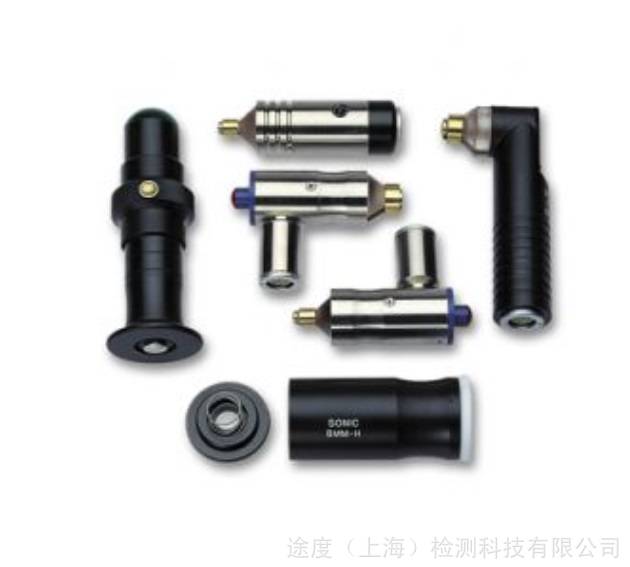
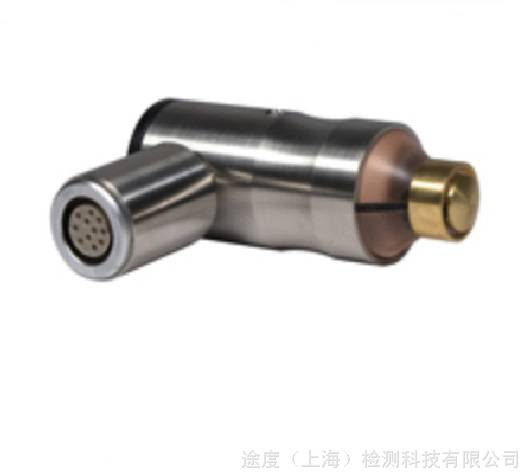
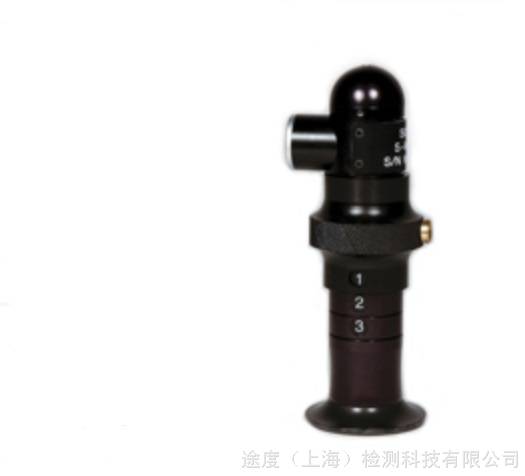
BondMaster 600 Multi-Mode Adhesive Inspection Device – Mechanical Impedance Analysis (MIA) and Probe BondMaster 600 Portable Adhesive Inspection Device features a 5.7-inch VGA display, which becomes brighter and clearer when switching to full-screen mode. Regardless of the display mode or detection method being used, simply click the full-screen mode switch button to activate full-screen mode.The ndMaster 600 bonding tester is equipped with various standard testing methods, including single transmit/receive RF, single transmit/receive pulse, single transmit/receive sweep, resonance, as well as the significantly improved mechanical impedance analysis (MIA) method. Mechanical Impedance Analysis (MIA) method can measure the mechanical impedance of materials, i.e., the material's stiffness. The MIA probe emits a fixed, audible frequency. Changes in material stiffness are represented as BoSignal amplitude and phase changes in the X-Y view of the ndMaster 600 instrument. BondMaster 600 instrument features a simple mechanical impedance analysis calibration wizard, which guides users in selecting the appropriate frequency for detecting smaller defects in cellular composite structures and other hard-to-find defects. Mechanical Impedance Analysis Probe Characteristics: Ideal for debonding the skin and core of cellular composite materials. Effectively detects delamination under core chipping conditions. Highly sensitive to minor defects. Easily identify the repair (casting seal) areas on adhesive failure defects. Suited for continuous scanning. We offer various probe housings. No coupling agent required. Mechanical Impedance Analysis Probe Technical Specifications S-MP-3 Technical Specifications Operation Mode: MIA (Mechanical Impedance Analysis) Probe Design: Right-angle probe, spring-loaded requires BMM-H End: 12.7mm end diameter Detection Capabilities: Detects defects in the Graphite Composite skins bonded to Nomex honeycomb structures; skin thickness from 2 to 7 layers. Defect size: 25.4 mm x 50.8 mm; from 2 to 18 layers. Defect size: 12.7 mm or larger. Typical Applications Detects irregular or curved surfaces. Suitable for detecting skin-core delamination, broken cores, and other typical skin-core bonding defects. Suitable for continuous or mechanical scanning by applying spring-loaded or constant pressure at the probe tip. Operation Mode: MIA (Mechanical Impedance Analysis) Probe Design: Right-angle probe, spring-loaded requires BMM-H End: 6.35mm end diameter Detection Capability: Capable of detecting defects in a metal-to-metal bond layer as thick as 2mm, with detectable defect sizes of 6.35mm or larger; and detecting defects on glass fiber skins bonded to foam cores with a maximum thickness of 6.35mm, with detectable defect sizes of 12.7mm or larger. Typical Applications Detectable of irregular or curved surfaces Suitable for detecting delamination of the sheath and core, broken cores, and other typical bonding defects between the sheath and core. Suitable for continuous or mechanical scanning by applying spring-loaded or constant pressure at the probe tip. Operation Mode: MIA (Mechanical Impedance Analysis) Probe Design: Right-angle probe, adjustable spring tension End: 12.7mm end diameter Detection Capability: The tension of the spring-loaded internal mechanism can be adjusted across 3 levels to enhance consistency and accuracy. Particularly suitable for suspended detection. Equipped with a removable Delrin wear plate. Typical Applications Detectable of irregular or curved surfaces Suitable for detecting skin-to-core delamination, broken cores, and other typical skin-to-core bonding defects. Applicable for continuous or mechanical scanning by utilizing spring-loaded or constant pressure at the probe tip. Typical Applications For S-MP-03 and S-MP-4 probes. Ensure constant pressure is applied to the workpiece. While maintaining the probe perpendicular to the detection surface, it also significantly enhances stability. Includes a Teflon wear plate and a spring-loaded probe holder. Operation Mode: MIA Probe Design: Right-angle probe, unloaded spring End: 12.7mm end diameter Detection Capability: Detects defects in the composite skin of graphitic materials bonded to a cellular structure. Typical Applications Detects irregular or curved surfaces. Ideal for detecting adhesive failures between the jacket and core, broken cores, and other common jacket-core bonding defects. Can detect in hard-to-reach areas. Operation Mode: MIA Probe Design: Straight probe, no spring loaded End: 6.35mm end diameter Typical Applications Detects irregular or curved surfaces. Ideal for detecting adhesive failure, core cracking, and bonding defects in the inner wall of composite material structures. Can detect in hard-to-reach areas. Mechanical Impedance Analysis (MIA) Cable SBM-CPM-P11 BondMaster Cable: 11-pin to 11-pin cable, designed for single transmit and receive probe applications and Mechanical Impedance Analysis (MIA) probes, 3.3 meters in length.
Mechanical impedance analysis mode uses a small tip probe, with BondMaster 600 instrument's high-performance electronic devices, when combined, simplify the operation of detecting small-scale debonding in cellular composite materials, compared to other detection methods. Additionally, BoThe ndMaster 600 instrument expands the frequency range for mechanical impedance analysis (from 2 kHz to 50 kHz), allowing for a vast array of results, even for delamination defects on the far side.


S-MP-4 Technical Specifications 
S-MP-5 Technical Specifications 
BMM-H probe housing 
S-MP-1 Technical Specifications 
S-MP-2 Technical Specifications 

Phone Consultation