
Product Details

Spectrometers, Phased Array, Ultrasonic Flaw Detectors, Endoscopes

产品Price 6000.00/Set
最小起订Quantity:1 Set 供货总Quantity: 10000 Set


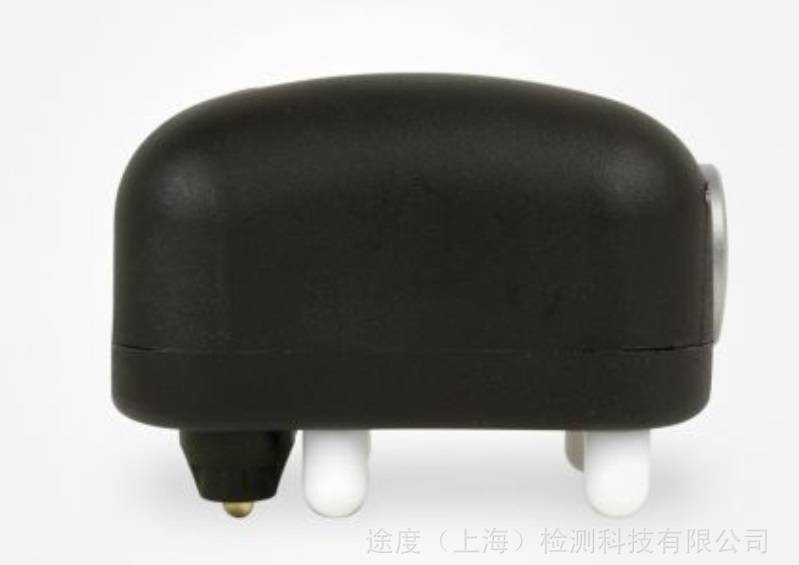
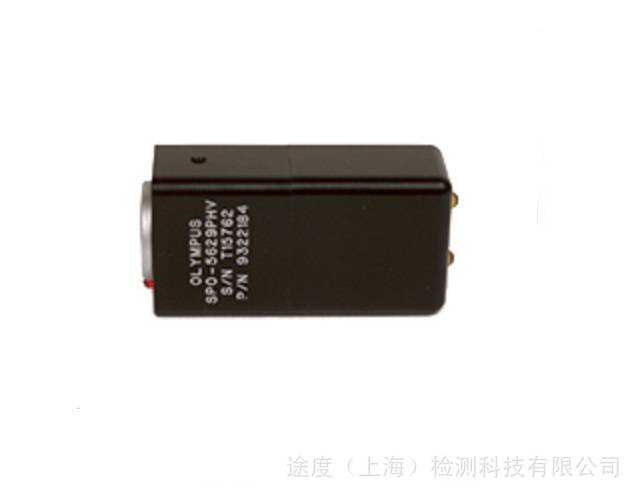
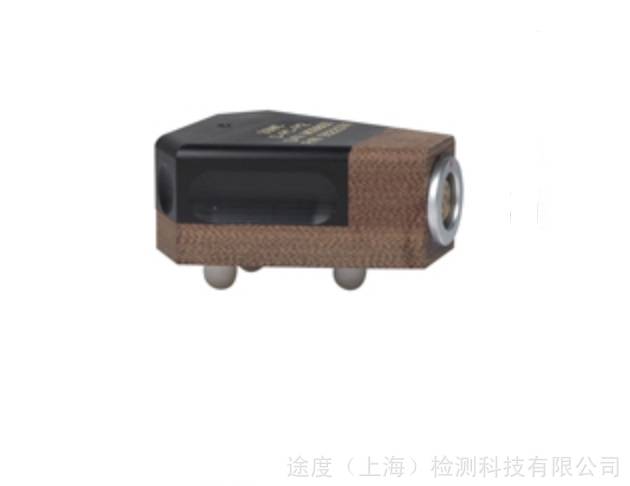
BondMaster 600 Multi-Mode Adhesive Inspection Device —— Single Transmission and Single Reception Mode BondMaster 600 Handheld Adhesive Detection Instrument features a 5.7-inch VGA display, which becomes brighter and clearer when switching to full-screen mode. Regardless of the display mode or detection method being used, a single click on the full-screen mode switch initiates full-screen mode.The ndMaster 600 bonding tester is equipped with various standard testing methods, including single transmit/receive RF, single transmit/receive pulse, single transmit/receive sweep, resonance, as well as the significantly improved Mechanical Impedance Analysis (MIA) method. In adhesive bond testing, a transmitter and receiver probe generates flexible flat plate waves and compressional waves. As the sound waves pass through the workpiece being tested, adhesive bond defects near and far can be detected by comparing the amplitude changes of the signals between the transmitter and receiver of the probe.The ndMaster 600 instrument offers three one-transmit-one-receive mode options: RF (fixed frequency waveform), pulse (traditional view with envelope filter), or sweep (scanning different frequencies sequentially within an optional frequency range). BoThe ndMaster 600 instrument's one-to-one menu has been optimized for quick access to frequently adjusted parameters during calibration and testing processes. Real-time readings can immediately provide information on signal amplitude or phase, making it easier to interpret defects. The newly added automatic gate mode can automatically detect the appropriate "gate" position based on radio frequency or pulse signals, thereby reducing human errors and optimizing test results. OEM-friendly: New frequency tracking tool for process development BoThe ndMaster 600 instrument's one-transmit-one-receive sweep mode not only improves signal quality but also introduces a new "spectrum" display format. This new view shows the real-time amplitude and phase of the signal relative to the frequency range. Two new frequency markers, known as frequency tracking, allow users to observe the signal conditions of two specific frequencies, thus helping them select appropriate detection parameters for a particular application. This new feature is an ideal tool for developing processes or creating new applications. Transmit-Receive Probe Characteristics Excellent for debonding the skin and core of cellular composite materials. High sensitivity, with clear signals and responses. Detected near and far side defects in most applications. Compatible with one-way and two-way RF, pulse, or sweep modes. Ergonomically designed with user-friendly configuration. No coupling agent required. Primary Probe Technical Specifications S-PC-P14 Technical Specifications Operation Mode: One Send, One Receive Frequency: Broadband End section: Spacing 14mm Ergonomically designed General-purpose broadband transducer, ergonomically designed with four feet and the probe tip at the edge of the probe. It can easily scan flat surfaces or curved surfaces with larger radii. The tip at the edge allows for stable edge testing of workpieces. This is a commonly used probe model in most composite honeycomb structure inspections. S-PC-P16 Technical Specifications Operation Mode: One Send, One Receive Frequency: Broadband End: 14mm spacing Broadband transceiver probe, ergonomically designed with the probe tip within 4 feet, facilitating detection on narrow, rounded workpieces such as wing leading edges. Although the probe was designed for narrow, rounded workpieces, it also excels in inspecting flat composite honeycomb structures. Operation Mode: One send, one receive Frequency: Broadband, High Voltage End: 12.7mm spacing, spring-loaded end Broadband transceiver probe with a compact footprint, slender in design, suitable for inspecting narrower areas. Compared to the S-PC-P14 or S-PC-P16 models, this probe is generally more sensitive to smaller defects due to its closer proximity at the tip. Although it may not perform as stably as the S-PC-P14 or S-PC-P16 when inspecting flat surfaces, the SPO-5629-PHV probe can simplify the inspection of honeycomb composite materials when used with the friction bracket SPO-5629-H-R1. For use with the SPO-5629PHV probe. Enhances stability while maintaining the probe perpendicular to the detection surface, and increases the distance to the workpiece surface to alter the tension at the probe tip on the measured surface. Transmit and Receive Probe Cable SBM-CPM-P11 BondMaster Cable: SBM-CPM-P11 11-pin to 11-pin cable, for single transmit/receive probe and Mechanical Impedance Analysis (MIA) probe. 3.3 meters long.
The pulse display shows the one-transmit-one-receive mode signal in the split screen. The X-Y view (on the right) displays the records of near and far debonding (different phases).
Spectrum view with frequency tracking feature.


SPO-5629-PHV Technical Specifications 
SPO-5629-H-R1 

Phone Consultation