

Abstract:The Energy Consumption Online Monitoring System serves as a crucial means to achieve the "Dual Carbon" goals. This article summarizes the application effectiveness of the Energy Consumption Online Monitoring Systems in key energy-consuming units in Fujian Province, analyzes the existing issues, and proposes the application directions for the Energy Consumption Online Monitoring Systems under the dual carbon targets.
Keywords:Dual Carbon Goals; Online Energy Consumption Monitoring System; Application Direction
Introduction
"Embarking on the new journey of building a modern socialist country in all respects, the '14th Five-Year Plan' (2021-2025) clearly outlines the vision of reaching peak carbon dioxide emissions and carbon neutrality, which provides a direction for the comprehensive green transformation of China's economic and social development. Strengthening the management of key energy-consuming units and continuously enhancing energy utilization efficiency is the most effective path to achieve these goals. Constructing an energy consumption monitoring system for key energy-consuming units is an important task to accelerate ecological civilization construction, as designated by the Party Central Committee and the State Council. It is also a fundamental and critical step towards achieving the dual carbon goals. In recent years, the national plans related to peak carbon dioxide emissions and carbon neutrality have all included the construction of online energy consumption monitoring systems in the systems for energy conservation and emission reduction, as well as in the monitoring capacity building. These plans have raised higher requirements for the monitoring and management of energy consumption. Government authorities can use the system to centrally monitor and manage various indicators of key energy-consuming enterprises, constantly observing changes in energy use, and promoting the shift from a qualitative, extensive management model to a feasible quantitative management model. This aids in achieving the dual carbon goals in the industrial sector. Enterprises, through the construction of access-end systems, can achieve real-time monitoring of their own energy consumption and carbon emissions, thereby providing reliable data support to help establish and improve energy consumption statistics, energy efficiency benchmarking, energy-saving diagnostics, carbon tracking, and intelligent management. This article will summarize the application effectiveness of the online energy consumption monitoring system for key energy-consuming units in Fujian Province, analyze the existing problems, and explore how to achieve fine management of carbon emissions from industrial energy activities through the construction and improvement of online energy consumption monitoring systems, in order to promote green transformation and sustainable development in the industrial sector."
II. Overview of the Double Carbon Target and Energy Consumption Monitoring System
2.1 The "Double Carbon" Target and Its Challenges
Carbon emissions are influenced by numerous factors, including economic development, industrial structure, energy use, and technological level, with the root cause being the extensive use of fossil fuels. Currently, fossil fuels account for a significant portion of China's industrial energy consumption. To address the issue of carbon emissions, the key lies in reducing energy-related carbon emissions. The fundamental solution is to shift the way energy develops, accelerate the substitution of clean energy and electricity, completely break the dependence on fossil fuels, and eliminate carbon emissions at their source. Additionally, it is crucial to actively leverage digital and intelligent energy management, vigorously promote advanced energy consumption technologies and intelligent control technologies, enhance the energy efficiency of key energy-consuming industries, and promote energy conservation in the industrial sector. It can be said that energy conservation and the substitution of green energy are the most effective and cost-effective ways to achieve the "double carbon" goal.
2.2 Carbon Monitoring Technology
The goal of carbon neutrality is to balance greenhouse gas emissions and absorption. Carbon measurement and monitoring are crucial tools for achieving carbon neutrality and peaking. Currently, there are two main methods: carbon measurement and Continuous Emissions Monitoring System (CEMS). In the current stage, where the testing methods for carbon emissions measurement and continuous online monitoring technologies are not yet mature, the emission factor method remains the primary carbon accounting approach in China. The main sources of carbon dioxide emissions from key enterprises are energy activities and industrial processes. With the mature and reliable measurement technologies for various energy sources and materials, by quickly and accurately obtaining the data on energy consumption of enterprises, their carbon emissions can be calculated.
2.3 Energy Consumption Online Monitoring System
The Energy Consumption Online Monitoring System is an energy monitoring system based on Internet and Internet of Things technologies. It enables real-time monitoring and recording of energy consumption by key energy-consuming units, allowing for accurate and timely understanding of the operation and energy consumption of key industries, enterprises, processes, and equipment. Initiated in 2017 by the National Development and Reform Commission and the State Administration for Market Regulation, the system promotes dynamic tracking and information sharing of enterprises' energy consumption by relevant departments, supports comprehensive macro-level decision-making on energy and energy conservation, and encourages enterprises to apply information technology to digitalize, networkize, and visualize their energy use and conservation management. This helps establish a scientific and comprehensive energy management system, enhance the level of refined energy management, quickly identify and resolve energy waste issues, thereby reducing energy consumption, improving energy utilization efficiency, and ultimately decreasing corporate carbon emissions.
Section 3: Current Application Status and Existing Issues of Energy Consumption Online Monitoring Systems
The Fujian Province's Key Energy-Consuming Unit Energy Consumption Online Monitoring System was launched in 2018. It has now connected over 960 key energy-consuming enterprises across the province, accounting for over 90% of the total energy consumption of large-scale industrial enterprises. It has achieved full coverage monitoring of all energy types, accumulating a comprehensive data foundation for carbon statistics and accounting. The platform utilizes advanced technologies such as the Internet of Things, cloud platforms, and big data, and has built functional modules for energy consumption monitoring, energy efficiency benchmarking, energy-saving management, and modeling and forecasting applications, creating the "Fujian Province Industrial Energy Consumption Management Big Data Platform." The provincial platform aggregates multi-dimensional information on energy-saving supervision, energy-saving diagnosis, energy-saving review, green manufacturing, and energy utilization status reports, forming a comprehensive green energy profile of key energy-consuming enterprises.
The system currently offers real-time presentation of energy consumption changes in key areas, parks, and enterprises across the province, enabling the monitoring of energy consumption trends among major energy-consuming enterprises and the operational status of industrial enterprises. Compared to traditional statistical methods, the online energy consumption monitoring system provides a significant advantage in terms of timeliness and data granularity. However, with the national initiative to shift from energy "double control" to carbon emissions total and intensity "double control," the current online energy consumption monitoring system is unable to support related "double carbon" applications. There is a need to promote a transition towards a "carbon peak and carbon neutrality management and service platform."

Figure 1 visually presents the changes in energy consumption of Quanzhou's ceramic enterprises during the period of Typhoon Duanmu's impact on Fujian Province.
3.1 Data collection scope is insufficient to support dual-control management of carbon emissions
The shift from dual control of energy consumption to dual control of carbon emissions has altered the design under the dual control system that did not differentiate between fossil and non-fossil energy sources, promoting the optimization of the energy structure. The new dual control policy on energy consumption proposes not to include the additional renewable energy and raw material consumption in the total energy consumption control, preparing data for the calculation of total carbon emissions using energy consumption data. Currently, the data sources for the online monitoring system of energy consumption are concentrated on the collection of full energy品种 data at the legal person's boundary of enterprises, lacking the collection of process emissions materials. The consumption data of renewable energy and raw materials have not been collected separately, and it is not yet possible to directly convert energy consumption data into total greenhouse gas emissions data, making it impossible to meet the data needs for dual control management of carbon emissions.
3.2 The energy efficiency monitoring standard system is yet to be完善.
The Energy Consumption Online Monitoring System is an Internet of Things system designed for collecting, analyzing, and summarizing energy consumption data of energy-consuming units. The state has successively issued a series of construction standards, including the "Technical Specification for Online Energy Consumption Monitoring System of Key Energy-consuming Units," but the industry data collection guidelines only cover three industries, lacking content related to energy efficiency monitoring and management. The absence of these standards results in a lack of unified standard constraints on energy efficiency data collection, coding specifications, and calculation methods in key energy-consuming industries, leading to insufficient support for energy efficiency benchmarking and promoting energy-saving and efficiency improvements in major processes and equipment.
3.3 Ensuring Data Quality is a Challenge
Data quality is the core of the online energy consumption monitoring system. Only accurate and comprehensive monitoring of energy consumption data can provide total data support for the dual control of carbon emissions and offer strong support for decision-making. As an IoT system involving hundreds of key energy-consuming enterprises, it encompasses a vast number of metering devices, communication equipment, end devices, and other equipment and processes. For most industrial enterprises, ensuring 100% data quality is challenging, and it's even more difficult for the competent authorities to achieve full coverage supervision. The human and material resources required to maintain the system are substantial.
- Under the dual carbon targets, application directions of energy consumption online monitoring systems
Under the background of the national policy shifting from "dual control" of energy to "dual control" of carbon emissions and clarifying the "dual carbon" goal, the current commonly used accounting methods primarily consider the total carbon dioxide emissions resulting from energy activities, i.e., emissions from fossil energy consumption and embedded emissions from electricity imports. Therefore, the application of energy consumption online monitoring systems will become even more crucial. To better fulfill the data support role of energy consumption online monitoring systems in carbon accounting, it is necessary to further refine several aspects of application design to meet the management demands of the new era for "dual carbon."
4.1 Expand data collection for carbon management activities
By establishing data collection guidelines for industries such as cement, ceramics, glass, and chemical fibers, leveraging the extensibility of existing access terminal equipment, renewable energy, raw material consumption, and process emissions data are integrated. Through standardized upload coding and collection boundaries, the provincial system is also developed with process and equipment-level energy consumption and energy efficiency benchmarking analysis functions. By capitalizing on the system's accumulated data advantage in the same industry, relying on the comprehensive energy consumption profile of key enterprises, a horizontal comparison of energy efficiency and emission intensity among enterprises is conducted. This guides companies to align with industry benchmarks, target-specific improvements in energy efficiency, and implement energy-saving and consumption-reduction strategies through the "Industrial Internet +" approach, promoting green and low-carbon development while reducing carbon emissions.
4.2 Enhanced Data Quality Assurance Function
To ensure the completeness, accuracy, timeliness, and verifiability of data, it is necessary to convert quality issues with interconnected data into management requirements for the specification operations of measuring instruments, data transmission, end devices, and application systems. Guide enterprises to strengthen the construction and operations management of their end systems. Introduce a comprehensive data quality tracking and early warning system on the provincial platform. This system analyzes the causes of data deviations and progressively improves them. Additionally, it is essential to refine data quality evaluation standards and establish a management system to ensure data quality from the source.
Intelligent management is a crucial direction for future energy management, as the high-cost operation and maintenance methods relying on substantial human resources are unsustainable. To ensure the vast amount of Internet of Things data, it is necessary to establish a comprehensive automated operation and maintenance support system. By introducing intelligent management models and leveraging technologies such as artificial intelligence and big data, data tracking models can be established, and quick alert and interactive function modules can be built to enhance the automation and accuracy of data quality supervision. Intelligent management can also assist energy-intensive enterprises with lower levels of informatization in implementing real-time monitoring and management of key equipment, thereby improving production efficiency and economic benefits.

Figure 2: System Data Quality Tracking and Management Module
4.3 Enhanced Carbon Functionality Applications
Only by fully leveraging the application value of the system can its lifespan be extended. The data for the energy consumption online monitoring system originates from the metering equipment at the enterprise end, and the quality of the data needs to be guaranteed by the enterprise. From the outset of system construction, we determined that the construction of the Fujian Province energy consumption online monitoring system should start from the needs of enterprises. Only when the system is valuable to the enterprise users can the stability and accuracy of the data source be ensured, and only then can the lifespan of the system be prolonged. By formulating technical solutions for system construction at the enterprise end, controlling the quality of construction from the source, and promoting excellent cases, we guide key energy-consuming enterprises to fully recognize that the construction of an energy consumption online monitoring system can effectively help enterprises save energy, reduce consumption, and improve efficiency. By building and utilizing the access system based on their own needs, they elevate the application value of the access system to the level of a small-scale energy management system. At the provincial aggregation system level, we also use large model technology to model and analyze historical energy consumption trends, and add functions such as energy consumption forecasting and multi-energy complementary scheduling. Gradually perfecting the records of energy consumption and energy-saving effectiveness, we apply the accumulated data to promote the integration and innovation of manufacturing and energy data, significantly improving the macro-level energy utilization efficiency and reducing carbon emissions. We move forward towards "carbon" on the basis of existing energy consumption monitoring, expanding the construction of carbon emission analysis and accounting, peak carbon assessment and prediction, carbon project, and carbon asset management functions. We leverage the functional elements of energy consumption data to promote enterprise energy-saving and carbon reduction.
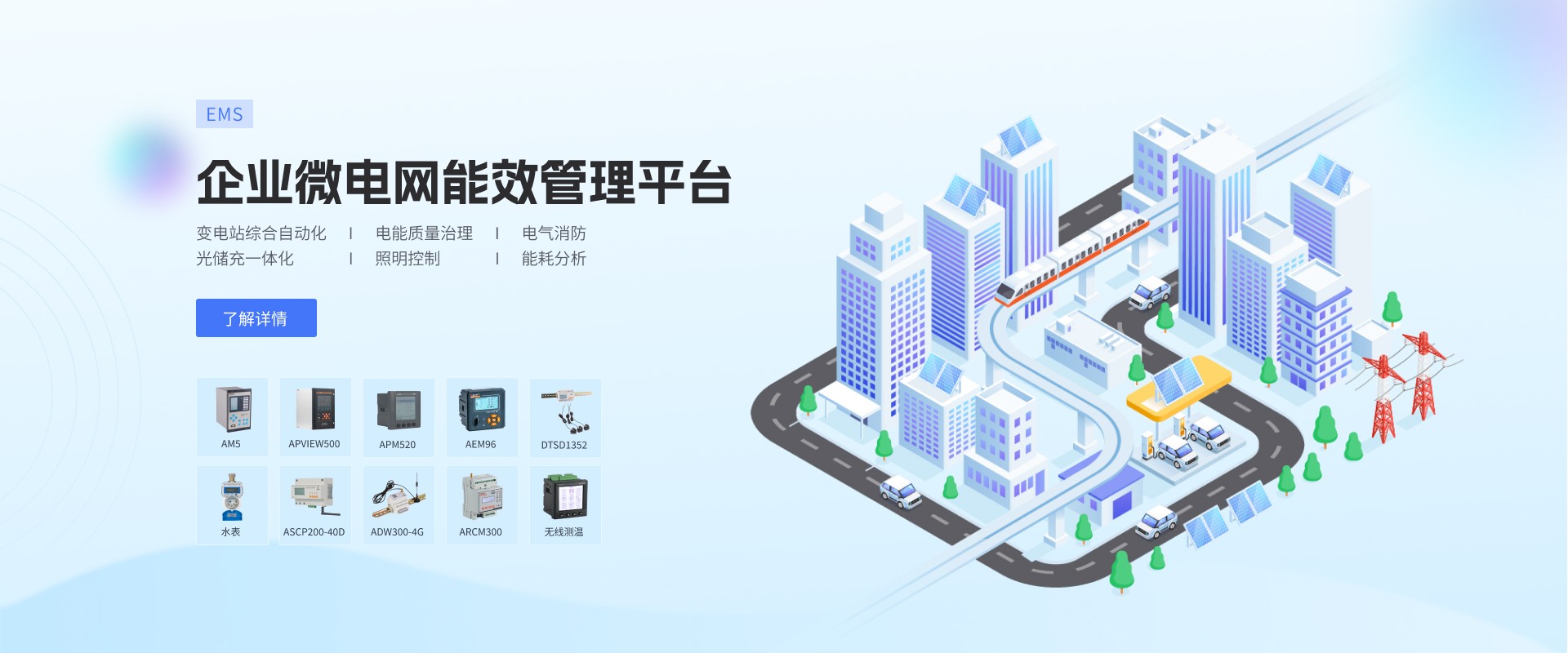
Ankorri's Enterprise Energy Management System utilizes automation, information technology, and centralized management to implement dynamic monitoring and data management of the production, distribution, and consumption phases. It monitors the energy consumption of electricity, water, gas, steam, and compressed air, etc., and assists in energy consumption statistics, year-on-year and month-on-month analysis, energy cost analysis, and carbon emission analysis through data analysis, mining, and trend analysis. This helps the company in managing energy use, improving energy efficiency, tapping into energy-saving potential, and conducting energy-saving assessments, providing foundational data and support.
Section V: Application Sites
Steel, petrochemical, metallurgy, non-ferrous metals, mining, pharmaceuticals, cement, coal, papermaking, chemicals, logistics, food, water plants, power plants, heating stations, rail transit, aviation industry, timber, industrial parks, hospitals, schools, hotels, office buildings, and discrete manufacturing sectors including automotive manufacturing, machinery and equipment, electrical products, and tool manufacturing.
VI. System Architecture
The system is connected through the factory's local area network and platform communication, with the platform hosted on the customer's self-configured servers. Upon completion, the customer can log in to the web page and mobile app from anywhere with network access to check the operation status remotely.
The system is divided into three layers: the field equipment layer, the network communication layer, and the platform management layer.
Field equipment layer: Primarily consists of various types of instruments connected to the network for the collection and measurement of parameters such as water, electricity, and gas, which are essential basic components in constructing the power distribution, water, and gas consumption systems. These devices bear the responsibility of data collection and can support our company's series of communication network power meters, temperature and humidity controllers, switch quantity monitoring modules, as well as water meters, gas meters, and heat meters from qualified suppliers.
The Network Communication Layer includes devices such as on-site intelligent gateways and network switches. The intelligent gateway actively collects data from devices in the field layer, performs protocol conversion, data storage, and uploads the data to the established database server via the network. In the event of a network failure, the intelligent gateway can store data locally and resume uploading from the point of interruption when the network is restored, ensuring no data loss on the server side.
Platform Management: The platform consists of application servers, WEB servers, and data servers, where application servers and WEB servers can typically be configured as a single unit.
The platform is designed with a layered distributed architecture. The detailed topology is as follows:

Section 7: System Features
The platform employs automated, informational technologies, and a centralized management model to implement dynamic monitoring and data management of the production, distribution, and consumption phases of enterprises. It conducts real-time monitoring of energy consumption across various categories, assisting in enhancing energy management, boosting energy utilization efficiency, and identifying energy-saving potential through data analysis, mining, and trend analysis, providing a data foundation for energy-saving transformations.
7.1 Platform Login
Access the cloud platform link in a browser, enter the username and permission password to log in, and prevent unauthorized personnel from browsing relevant information.
7.2 Large Screen Display
Upon successful user login, the dashboard display page is accessed, showcasing corporate and regional energy consumption standards, output value, anomalies, rankings, proportions, and communication statuses. Clicking on a region reveals detailed information about its categorized energy consumption and output value.
7.3 Home Page
The homepage showcases enterprise-level statistics such as peak and valley power usage, transformer conditions, annual energy consumption trends, unit energy consumption trends, and categorized energy consumption.
7.4 Data Monitoring
Real-time monitoring of energy consumption and alarm conditions at various corporate locations. This enables enterprise users to monitor the operation of each location in real-time, as well as quickly grasp alarm notifications, providing data support for technical measures such as peak shaving and load adjustment.
- Real-time Energy Monitoring: Provides real-time monitoring of energy consumption for water, electricity, gas, etc., ensuring continuous and stable operation of energy use. Features include distribution diagrams, energy flow charts, energy balance network diagrams, and energy metering network diagrams.
- Energy Flow Diagram: Requires real-time display of water, electricity, and gas consumption on the energy flow diagram; provides alarm importance classification when energy parameters exceed limits; supports app notifications, SMS, email, DingTalk, voice alerts, and system pop-up alerts for alarm prompts.
- Power Distribution Diagram: Illustrates the actual condition of the power distribution room in the diagram, featuring real-time parameters of access control, water leakage, electricity, water, and gas meters, as well as the status of access control and water leakage, and energy consumption data.
- Real-time Statistics: Real-time monitoring of energy consumption values for the factory, workshops, processes, and equipment, covering the current year, quarter, month, week, day, and shift.
- Data Display: Visualizes different energy consumption parameters for various regions and equipment through both real-time and historical curves.
- Monitoring: Centralized display of energy alarm information allows for related operations on alarm threshold information, online settings for alarm parameters, and classification of alarm importance levels when energy parameters exceed limits. Features include APP push notifications, SMS, email, DingTalk, voice announcements, and system pop-up alerts.
7.5 Video Surveillance
Integrate cameras to real-time monitor the actual situation within the enterprise.
7.6 Transformer Monitoring
Demonstrate the load conditions of various voltage transformers to facilitate scientifically and rationally planned transformer provisioning. Conduct comparative analysis of energy efficiency under various operating parameter states to identify better operational modes. Adjust loads based on these operational modes to reduce energy consumption per unit and minimize power loss.
7.7 Real-time Instrument Monitoring
Display real-time parameter changes of water, electricity, and gas meters in the form of line graphs.
7.8 Energy Control Center
Centralize all energy-related parameters on a single dashboard, enabling comparative analysis from multiple dimensions, achieving comparisons across various production lines, and helping leaders to manage the entire factory's energy consumption, energy costs, and standard coal emissions.
7.9 Energy Consumption Statistics
From various dimensions such as energy types, monitoring areas, workshops, production processes, operations, time slots, equipment, teams, and sub-items, we utilize methods like curves, pie charts, histograms, cumulative charts, and digital tables to analyze energy consumption statistics, year-on-year and month-on-month comparisons, and actual performance. We conduct benchmark comparisons, calculate energy consumption per unit product, and track energy consumption per unit of output. This helps identify inefficiencies and不合理ities in energy use, enabling us to adjust energy allocation strategies and reduce waste during energy consumption.
7.10 Cost Analysis
We compile annual, quarterly, monthly, weekly, and daily energy consumption costs across various monitoring points (factories, workshops), including electricity which covers peak electricity consumption, peak electricity costs, off-peak electricity consumption, off-peak electricity costs, as well as average electricity usage and average electricity costs.
7.11 Product Unit Consumption Statistics
By integrating with the company's MES system, we generate product-specific energy consumption trend charts through product output and energy consumption data collected by the system. We also conduct year-on-year and month-on-month analyses. Additionally, we compare the product-specific energy consumption with industry, national, and international benchmarks to enable the company to adjust production processes based on product-specific energy consumption, thereby reducing energy consumption.
7.12 Performance Analysis
The company conducts daily, weekly, monthly, annual, and specified time period performance statistics on energy usage, consumption, and conversion by team, region, workshop, production line, section, and equipment. It compares KPIs based on performance indicators set according to energy plans or quotas, helping the company understand its internal energy efficiency levels and potential for energy savings, and assess the rationality of energy consumption.
7.13 Operations Monitoring
The system collects data on regional, section, and equipment energy consumption, monitors equipment and process operating conditions such as temperature, humidity, flow rate, pressure, and speed, and supports primary operation surveillance of the power distribution system. It allows for a quick overview of managed energy consumption data from a dynamic monitoring plan, and supports queries of related energy usage by energy type, workshop, section, and time dimensions.
7.14 Custom Energy Consumption Report
Users can flexibly generate various reports by customizing report headers and columns, view energy consumption, specific energy consumption, costs, and comprehensive energy consumption information for different corporate nodes, and compare year-on-year and month-on-month reports. The system supports exporting reports.
7.15 YOY & MOM
Graphical comparison analysis of energy consumption costs, including year-on-year and month-on-month comparisons by time periods (daily, monthly, annually), as well as categorized, time-based, and itemized (location, institution, equipment) statistical graphical comparisons (bar charts, pie charts, stacked charts, etc.).
7.16 Analysis Report
We conduct a meticulous statistical analysis of the company's energy use, line losses, equipment operation, and maintenance status, by year, month, and day. This allows users to better understand the system's operation and provides a data foundation for identifying equipment anomalies, thereby pinpointing areas for improvement and uncovering energy-saving potential related to energy consumption.
7.17 Energy Consumption of Energy-Efficient Equipment
Monitor energy-consuming equipment for operation, shutdown, and abnormal states, promptly resolving equipment malfunctions that prevent normal production.
7.18 Line Loss Analysis
By querying energy loss data along each node's power lines based on node and energy categories, the system promptly identifies issues such as energy leakage and abnormal energy consumption during use, reminding users to intervene in a timely manner.
7.19 Carbon Emission Management
We statistically analyze the trend of total carbon emissions by region, conducting both year-on-year and month-on-month comparisons. We calculate carbon emissions per unit of output and combine it with emission reduction targets to implement超标early warnings, enhancing regional emission reduction levels and promoting the achievement of peak carbon emission targets.
7.20 Power Quality Monitoring
Real-time monitoring of harmonic content, unbalanced three-phase levels, power factor, etc., to ensure the power factor meets or exceeds the power supply authority's assessment criteria, avoiding fines and equipment malfunctions.
7.21 Operations Management
The system supports daily equipment patrol planning, dispatching, defect elimination, repair reporting, and dispatching for equipment operation and maintenance management, facilitating patrol planning and dispatching for operation management personnel, execution of patrols by patrol staff, completion of work orders, defect elimination of discovered issues during patrols, fault reporting, and tracking repair progress, meeting the needs for daily patrols and equipment maintenance.
7.22 Alarm Management
To ensure normal operation of electrical systems, prevent power outages and excessive energy consumption, the system implements abnormal parameter alarms for electrical systems, fire hazard alarms, over-consumption alarms, and power outage alarms, helping companies to preemptively warn against potential fire accidents and excessive energy costs due to fines. It supports graded and categorized alarms, allowing for dispatch and closed-loop handling of alerts.
7.23 Energy Consumption Meter Reading
Customizable meter reading values and differences for specific time periods, as well as customizable categories and sub-items for meter readings.
7.24 Customized Time Energy Consumption Analysis Meter Reading
Customizable energy consumption values for various topology nodes within a specified time period, as well as customizable categories and sub-items for meter reading energy consumption.
7.25 Capacity Requirement Report
Offer capacity requirement reports, displaying real-time changes in capacity and demand prices, to assist businesses in achieving capacity-to-demand conversion and reduce basic electricity charges.
7.26 Reimbursement Rate Report
Statistical analysis of peak, off-peak, and valley electricity consumption and cost, providing data support for enterprises to optimize cost-effectiveness through time-of-use electricity consumption.
7.27 Document Management
Archiving documents related to national standards, energy management systems, and energy indicator systems allows for quick access to relevant files. The system supports systematic management of instrument registers, including file uploads and downloads.
7.28 3D Visualization Large-Screen
The virtual simulation of scenarios showcases the operation and energy consumption in various regions. It enables layered preview, transition display, style switching, and intelligent patrol effects, supporting customizable binding of models with monitoring points.
7.29 3D Subsystem
Virtual simulations of all power sub-systems are conducted, showcasing the real-time status of the power pipelines and equipment, as well as energy consumption. This enables dynamic visualization of energy flow.
7.30 Industrial Configuration
Configure and visualize equipment operation status and energy consumption with a graphic editing interface. Upload custom materials and bind monitoring data.
7.31 Custom Cockpit
Customize your dashboard with a graphical interface, displaying collected data and various statistics through line graphs, pie charts, tables, and more. Data sources include APIs, database queries, MQTT, Excel, and other methods.
7.32 Basic Data Management
For the system's projects, detectorsEquipment ModelElectrical parametersConfigure, modify, and delete nodes, energy, announcements, and related parameters for management.Perform user addition and authorization management, as well as contract management.
7.33 Mobile App
The APP supports Android and iOS operating systems, enabling users to easily manage corporate energy consumption, production line comparisons, efficiency analysis, year-on-year and month-on-month analysis, energy consumption conversion, event recording, operational monitoring, abnormal alarm notifications, distribution diagrams, process flow charts, and energy flow charts by categorizing energy consumption, regions, workshops, processes, teams, and equipment from various dimensions.
Conclusion
In summary, the online energy consumption monitoring system is a crucial means to achieve the dual carbon goals. To better realize this objective, we need to address the current issues of insufficient data collection coverage, missing energy efficiency collection standards, challenges in ensuring data quality, and unclear application directions. We must strengthen the construction and application of corporate access systems and provincial data aggregation systems, continuously enhance the analysis of renewable energy and raw material consumption, reinforce energy efficiency benchmarking applications, and promote intelligent management. By fully leveraging the role of the online energy consumption monitoring system, we provide sufficient data support for decision-making and judgment in carbon emission dual control management. This will help drive the green transformation and sustainable development in the industrial sector, and fulfill the requirements of the dual carbon goals.
Reference
Xu Qiang. Accelerating the Construction of Online Energy Consumption Monitoring Systems for Key Energy-Using Units to Promote Eco-civilization and Green Development[J]. China Energy, 2018(4): 5-9.
[2] Yuju Su. Application Research of Energy Consumption Online Monitoring System in Energy-saving Management [J]. Chemical Engineering and Equipment, 2022(5): 193-195.
Ankorri Enterprise Microgrid Design and Selection Handbook. 2022.05 Edition.
Ankore Enterprise Energy Management Platform, Version 2023.06
