

Abstract:With the emergence of the smart grid, both the supply and demand sides will naturally move towards the Internet of Everything, giving rise to the ubiquitous power Internet of Things. The ubiquitous power Internet of Things unifies the power supply and demand systems, directly extending electricity management to the grid, creating a smart power management system for various aspects such as households, communities, buildings, cities, and social life. In this power system, smart meters undoubtedly become a core device in the management system. The role of smart meters will also evolve from mere electricity metering to becoming information, interaction, and control platforms in the power supply field. In the future, smart meters will play a significant role in modern life, such as in household living, smart communities, and smart cities.
Keywords:Smart Grid; Ubiquitous Power Internet of Things; Smart Meters
Ubiquitous Power Internet of Things
Prior to the birth of the ubiquitous power Internet of Things (IoT), the concept of IoT was limited to the interconnection of everything over the internet. All intelligent terminals formed by the interconnection of everything are intelligent electronic systems, each equipped with a power sub-system. In enhancing various intelligent functions, power management capabilities are required. In many small intelligent terminals, independent power sources are commonly used. In large-scale IoT applications, such as distributed systems, smart homes within local area networks, industrial production lines, electric vehicle charging stations, urban security systems, and urban lighting systems, they extend to the smart grid, bringing complex power and supply management. This, in turn, leads to the smart grid's perception and control over the terminal equipment on the electricity consumption side; coupled with the internet technology's enhancement of the smart grid's intelligence, it has achieved intelligent interconnection with all terminal equipment involved in massive power generation, transmission and distribution, power dispatching, and safe operation, thus forming a ubiquitous power IoT.
The dual-network structure is a unique system architecture of the ubiquitous power Internet of Things (IoT), with the internal network including the power generation side and the transmission and distribution grid side, and the external network encompassing the user side and the supplier side. Both the internal and external networks share a common interface, which is the intelligent substation and smart meter, facilitating perception, control, and information exchange between the supply and demand sides. The formation of the dual-network structure in the ubiquitous power IoT originates from the two distinct network systems of power supply and consumption. The former belongs to the strong power field, a monopolistic and closed network system; while the latter belongs to the weak power field, an open and free network system. The smart meters within the internal and external network interaction interface adopt a standardized dual-core structure system to address the dual-network structure of the power IoT, ensuring the safety of electricity metering at the power supply end and electricity consumption management at the demand end through a relatively independent manner.
2. Early-stage Ubiquitous Power Internet of Things
Currently, the Ubiquitous Power Internet of Things (IoT) is in the initial stage of intranet construction, primarily focusing on the construction of the "three types and two networks" within the intranet, cloud platform development, big data and data services, as well as the construction of intelligent energy service systems to address new energy challenges.
(1) Construction of Three Types and Two Networks
In October 2019, Grid Corporation released the "White Paper on the Ubiquitous Electric Power Internet of Things 2019." The white paper identifies the construction of "Three Types and Two Networks" as the strategic goal for the development of the ubiquitous electric power Internet of Things. The "Three Types" refer to the hub-type intelligent power grid, platform-type Internet of Things application services with shared internal and external networks, and the social attributes of shared internal and external networks. The "Two Networks" consist of the strong intelligent power grid and the ubiquitous electric power Internet of Things. Currently, in the construction of the two networks, based on the strong intelligent power grid, there is an ongoing expansion towards Internet of Things applications on the electricity consumption side. For embedded system professionals in the field of Internet of Things applications, they will focus on the foundational construction of the application layer, platform layer, network layer, and perception layer related to electricity management.
(2) Cloud Platform Development
The advent of the Internet of Things (IoT) inevitably led to big data and cloud computing, with cloud platforms being a crucial tool for delivering cloud-based services. The construction of the ubiquitous electric power IoT cloud platform includes: substation operation and maintenance cloud platform, energy management cloud platform, intelligent electricity consumption cloud platform, environmental protection electricity consumption supervision cloud platform, charging pile (for electric vehicles and bicycles) operation and management cloud platform, and pre-paid management cloud platform, among others. It is evident that the focus of the ubiquitous electric power IoT cloud platform construction is on the application fields of new energy generation, storage, grid connection, and power supply load in smart grid. Currently, numerous cloud platforms have emerged in China's IoT applications (such as Alibaba Cloud, Tencent Cloud, Huawei Cloud, etc.), all of which are open cloud platforms on the internet. From the perspective of grid monopoly and security, the power grid will build an independent, closed, and strictly controlled ubiquitous electric power IoT cloud platform.
(3) Big Data and Data Services
In the era of the Internet of Everything, an enormous amount of sensory data will inevitably emerge. IoT, big data, and cloud computing have thus become the tripartite key industrial application model in the IoT+ ecosystem.
All large-scale Internet of Things (IoT) systems on the electricity side will be connected to the smart grid in various ways. The perception layer of the ubiquitous electricity IoT will sense numerous electricity-related information, thereby forming a big data system for the power system. These electricity big data contain a wealth of information, leading to the emergence of a vast data service industry. Figure 1 illustrates the big data service fields and content within the ubiquitous electricity IoT. These service fields and content almost cover all aspects of social life.
A typical application case in the big data service of the ubiquitous power Internet of Things is the data statistics of urban housing vacancy rates. All newly constructed residential units are equipped with smart meters, from which the usage or idleness of the smart meters, as well as the electricity consumption count, can determine whether the housing is vacant or in use.
- Construction of Smart Energy Service System
Currently, a key task of the ubiquitous electricity Internet of Things (IoT) is the application services of new energy (such as wind power, photovoltaic distributed energy generation, grid connection, power dispatch, and energy supply and management services for new energy vehicles including hydrogen energy batteries and powertrains). Figure 2 shows a smart energy service system for electric vehicle charging.
In the future, numerous new energy sources will revolve around electricity as their core, be it for power generation (wind and solar) or energy conversion (hydrogen, geothermal, tidal energy, etc.), not to mention energy utilization, which all require the support of the power grid. Figure 2 illustrates a comprehensive system for electric vehicle charging in a ubiquitous power internet of things, covering both internal and external networks and power supply needs.
Trends in the Development of the Third Generation Smart Meters
From traditional electrical meters to the cutting-edge smart meters of the power Internet of Things, the trend in their development includes the construction of multifunctional intelligent platforms, participation from numerous semiconductor manufacturers, the comprehensive application of the integration of three meters, and the response to diverse multifunctional services.
- Building a Multi-functional Intelligence Platform
To address the intelligent power consumption management on the power consumption side of the power Internet of Things, we are transforming traditional electric energy meters into an intelligent platform that integrates perception, control, monitoring, and power consumption management, featuring communication, interaction, and display functions. To adapt to the future applications of big data and cloud computing, this platform should not only possess excellent intelligent control capabilities but also have robust computational power to meet the requirements of edge computing. Reflecting on the evolution from single-function mobile phones to today's smartphones, we can envision the promising future of intelligent electricity meters.
(2) Numerous semiconductor manufacturers participate
Intelligent electricity meters are powered by MCUs and are gradually transitioning to AI chips capable of edge computing, real-time perception, and control. Attracted by market demand, more than a decade ago, numerous semiconductor manufacturers had already begun developing intelligent electricity meter chips, including early models from Analog Devices' ADE series, Freescale's MZ series, NXP's LPC1700 series, and Siemens' Blackfin processors. The involvement of numerous international semiconductor manufacturers has been beneficial for the continuous updating of the hardware system for intelligent electricity meters, as well as the iterative upgrades from MCUs to AI chips.
(3) Comprehensive Application of the Three Tables into One
To meet the construction of smart buildings and smart homes, the previously separate meters (gas, water, and electricity) will gradually converge into a single unit, thus paving the way for an era of smart living with multi-sensor perception and intelligent control. In the future, the integrated metering, enhanced computing power of AI chips, specialized empowerment of edge computing, and remote measurement and control of power usage modes will greatly elevate the intelligent management level of home energy applications.
(4) Addressing Diversified Multi-functional Services
To address the increasingly diverse energy and energy management landscape, smart meters are gradually evolving from one-way to two-way, from short-range to long-range, and from communication to control functionalities. For instance:
- To address the grid transmission of distributed power and energy storage power, smart meters have evolved from one-way metering from the grid side to bidirectional transmission, metering, management, and monitoring functions on both the grid and user sides.
- To accommodate the interactive features on the supply side, the new intelligent electricity meters must have bidirectional communication capabilities, such as the ability to exchange power consumption information from the supply side and request regulation information from the consumer side.
- To address the power management requirements brought about by an increasing number of external devices connecting in the future, smart meters will develop a wide range of remote control and remote sensing functionalities. The future smart meter will serve as the control center for intelligent residential and building power usage patterns.
IR46 Dual-Core System for Smart Electric Meters
Early on, the international standard IR46 (International Recommendation 46) for the structure of smart electricity meters was established by the International Organization of Legal Metrology (OIML) and released in October 2012. Over the years, it has been continuously improved, and China has been adhering to this standard.
The core concept of the IR46 standard is to evolve smart meters towards measurement and control platforms, achieving a dual-core structure for metering and management, while ensuring the physical separation of the dual cores. Data exchange between the dual cores can only be done through the SPI interface. Figure 3 clearly illustrates the standard dual-core structure system of a smart meter.
The计量芯 serves as an independent legal computing component, subject to strict control and cannot be upgraded arbitrarily to ensure the accuracy and reliability of data, traceability, and the security of the clock.
The Management Chip meets platform management requirements, enabling two-way interaction, display, and communication, as well as power management and optimization of power consumption modes. Software downloads and updates do not affect the normal operation of the metering chip, and it must also meet edge computing requirements in the future.
The dual cores are connected via the SPI bus. SPI is a serial peripheral interface bus operating in a master-slave mode, supporting one or more slave devices, and is widely used for connecting microcontrollers (MCUs) and peripheral modules. This bus connection method effectively ensures the relative independence and secure operation space between the dual cores.
The dual-core design concept of smart meters originates from the internal and external network architecture of the ubiquitous power internet of things (IoT), as well as the different states between the two. The internal network of the ubiquitous power IoT is a monopolistic, closed system that concerns interests and security, while the external network is an open, free internet fraught with unsafe elements. The dual-core structure allows for full intervention in user-side electricity management while ensuring grid security and user data protection, facilitating free interaction with users and benefiting the platform-based application of smart meters on the user side in the future.
5 Acrel-EIOT Energy Internet of Things Cloud Platform
Summary
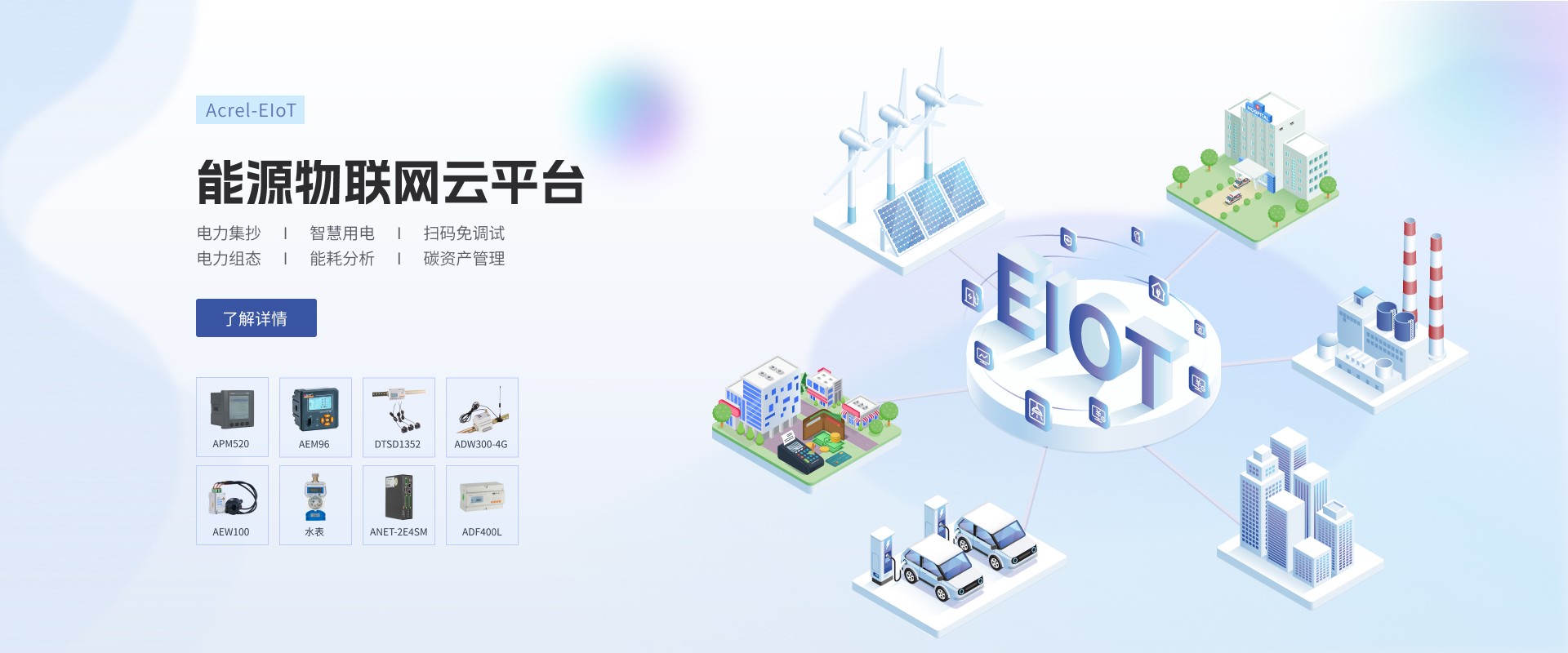
The Acrel-EIoT Energy Internet of Things Open Platform is a system based on an IoT data middleware, establishing unified uplink and downlink data standards, and providing energy IoT data services to internet users. Users simply need to purchase Acrel-EIoT IoT sensors, select optional gateways, install them independently, and scan to access the required industry data services on their smartphones and computers.
The platform offers features including data dashboard, electrical safety monitoring, power quality analysis, energy consumption management, pre-paid management, charging station management, intelligent lighting control, alarm and record of abnormal events, and operation and maintenance management, while supporting multi-platform, multi-language, and multi-device data access.
(2) Application Sites
This platform is suitable for apartment renters, chain convenience stores, small factories, building management system integrators, small property management companies, smart cities.Transformer substations, buildings, communication base stations, industrial energy consumption, smart beacons.Power operation and maintenance fields.
(3) Platform Structure

(4) Platform Features
Electricity Collection and Reading
The Power Collection and Monitoring Module enables the querying, analysis, early warning, and comprehensive display of various monitoring data to ensure an environmentally friendly power distribution room. In terms of intelligence, it achieves remote measurement, remote signaling, and remote control of the power supply and distribution monitoring system, providing comprehensive detection and unified management of the system; in data resource management, it can display or query the operation of various equipment within the power distribution room (including historical and real-time parameters) and allows for daily, monthly, and annual report queries or printing based on actual conditions, enhancing work efficiency and saving human resources.
Transformer Monitoring
Power distribution diagram
Energy Consumption Analysis
The Energy Consumption Analysis Module utilizes automation and information technology to achieve automated and scientific management throughout the entire process, from energy data collection, process monitoring, energy medium consumption analysis, to energy consumption management. It organically integrates the entire process of energy management, production, and usage, applying data processing and analysis techniques for offline production analysis and management. This results in a unified dispatch of the entire factory's energy system, optimizes energy medium balance, effectively utilizes energy, improves energy quality, reduces energy consumption, and aims to achieve energy-saving and consumption reduction, as well as enhance the overall level of energy management.
Energy Consumption Overview
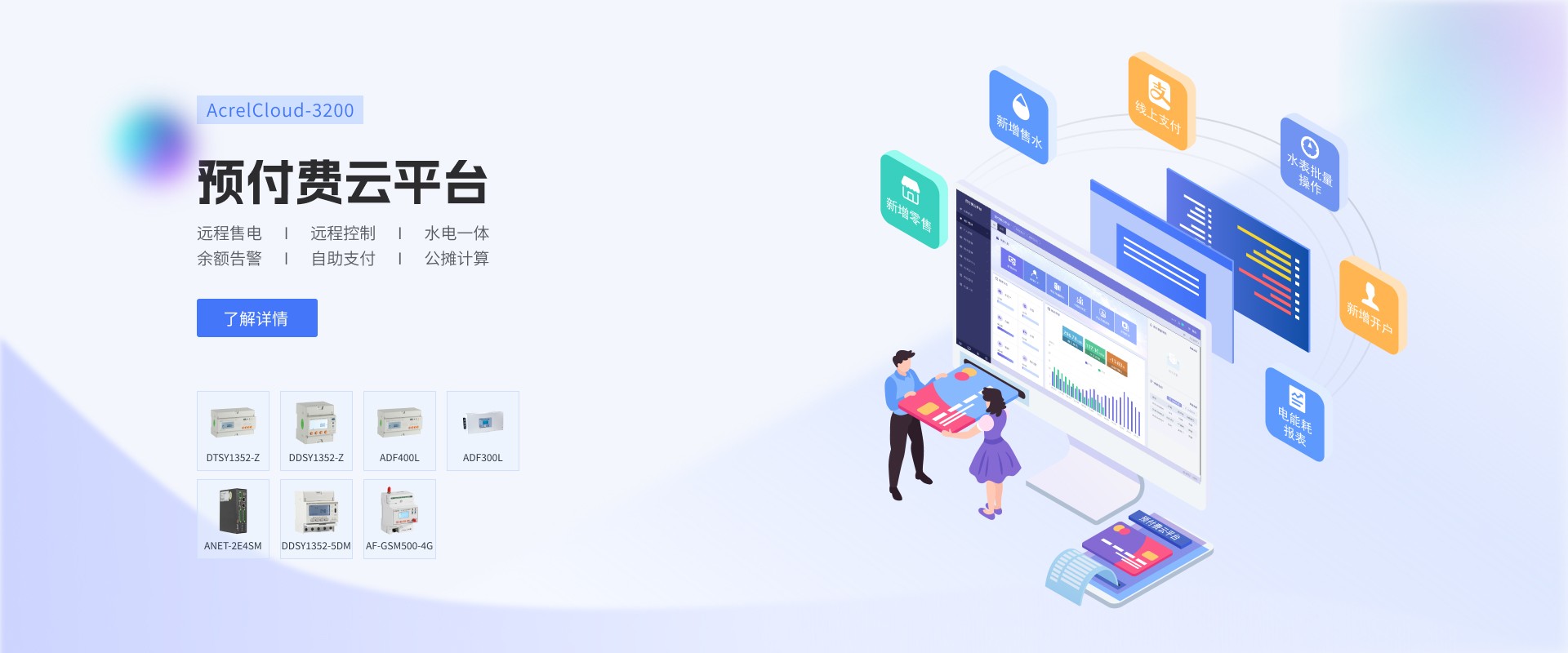
Pre-Paid Management
1) Login Management: Manage operator accounts and permission allocation, view system logs, and more.
2) System Configuration: Configure for buildings, communication management machines, instruments, and default parameters.
3) User Management: Perform operations such as account opening, account closing, remote switching, batch operations, and record inquiries for store users.
4) Electricity Sales Management: Remote operations for selling, returning, correcting, and record inquiries for meters that have already been registered.
5) Water Sales Management: Conduct remote operations such as water sales, returns, and record inquiries for meters that have already been registered.
6) Reports: Offer inquiries for financial reports on electricity and water sales, energy consumption reports, alarm reports, etc. All reports and records within this system support export in Excel format.
Pre-Paid Dashboard
Electric Vehicle Charging Station Management
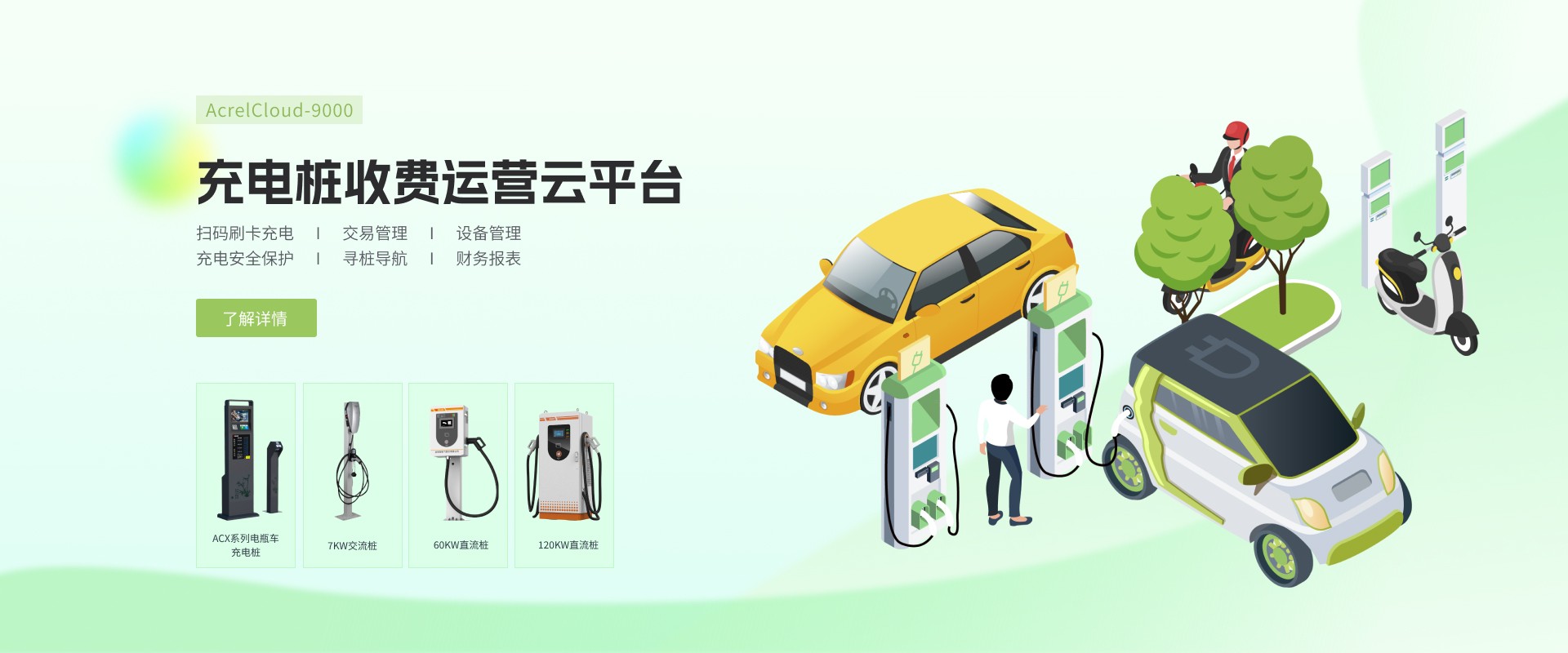
Utilizing IoT technology, the system continuously collects and monitors data from charging station sites and individual charging posts, while also providing early warnings for a range of faults such as over-temperature protection for charging machines, over-voltage and under-voltage issues, insulation detection failures, and more. The cloud platform encompasses all functionalities related to charging fees and charger operations, including city-level large screens, transaction management, financial management, transformer monitoring, operation analysis, and basic data management.
Charging Station Dashboard
Smart Lighting
Smart lighting continuously monitors the power status of lighting circuits, including indoor lighting and city streetlights, across various urban areas through IoT technology. It also allows for scheduled on/off configurations, remote management from the backend, and mobile management, reducing maintenance difficulties and costs for streetlight facilities, improving management levels, and achieving energy-saving and emissions-reduction effects.
Monitoring Page
Safe Electric Usage
Our company employs residual current transformers, temperature sensors, and electrical fire detectors to continuously track and statistically analyze the main factors causing electrical fires (cable temperature, current, and residual current). We promptly deliver any隐患 information to corporate management, guiding them in timely identification and treatment, aiming to eliminate potential electrical fire hazards and achieve the goal of "preventing problems before they occur."
Smart Fire Protection
By leveraging cloud platforms for data analysis, mining, and trend analysis, we help achieve scientific early warnings for fires, grid management, and the implementation of multi-responsibility supervision. This fills the gap previously unable to effectively monitor "small, scattered, and hidden" places and hazardous chemical production enterprises. It is suitable for all public and civilian constructions, realizing unmanned, intelligent fire protection. It meets the actual needs for intelligent fire protection to be "automated," "intelligent," and "systematic," and for electricity management to be "refined."
6 Conclusion
The Internet of Things (IoT) in ubiquitous electricity is a significant transformation following the IoT, merging the power supply system of the large-scale IoT system with the power consumption system into a unified, complete IoT world.
The Ubiquitous Power Internet of Things (IoT) has evolved from the Smart Grid, which is still in its infancy. The "2019 Ubiquitous Power Internet of Things White Paper" released by the grid in 2019 outlined the specific goal of building the Ubiquitous Power Internet of Things by 2024, focusing on the application of intelligent systems in the low-voltage field. As multi-modal systems are integrated into the domain of networking applications, it is inevitable that they will be associated with the Internet of Things in large-scale applications such as new energy and electric vehicles. At the same time, the deep application of smart meters on the electricity consumption platform will undoubtedly bring a unified application model for power supply in smart homes, smart buildings, smart cities, and smart transportation.
Reference
He Limin: Smart Meters in the Internet of Things for Ubiquitous Electricity
[2] Enterprise Microgrid Design and Application Handbook, 2022.05 Edition.
