

Abstract: This study explores the construction methods of a building energy consumption perception and prediction system based on the Internet of Things technology to ensure the comfort of building use and to monitor and predict the building's electrical energy consumption in real-time. It proposes the system architecture and related configurations, describes typical applications of the system, and provides insights for the development of energy consumption perception and prediction systems. This aids in achieving energy-saving and improving energy use efficiency during the operation of buildings, enhancing the modern urban management capabilities.
Keywords: Internet of Things Technology; Building Energy Consumption Prediction; Energy Consumption Monitoring System
1. Introduction
As the economy grows and the population increases, there's a rapid rise in energy demand. Statistics show that the national building process energy consumption and carbon emissions exhibit a consistent阶段性 pattern. From 2005 to 2019, China's building process energy consumption increased from 9.34 billion tons of standard coal to 22.3 billion tons, with an average annual growth rate of 6.3%. Meanwhile, building process carbon emissions grew from 2.34 billion tons of CO2 to 4.997 billion tons, with an average annual growth rate of 5.92%. In 2019, the carbon emissions from the building operation stage were 2.13 billion tons, accounting for 21.6% of the national carbon emissions. Although the average annual growth rate has slowed, energy consumption in the building operation process still accounts for a significant portion. Therefore, energy consumption monitoring and early warning for buildings have become a focus of many scholars. Hu Yingjian [1] developed an energy consumption monitoring system based on LoRa technology to avoid difficulties in wiring in basements. Chen Hui [2] studied the energy consumption characteristics of buildings, extracted the main factors affecting energy consumption in building energy-saving standards, and established a neural network algorithm for building energy consumption simulation to enhance the intelligence of building energy consumption assessment. Hou Xiaohu [3] developed an integrated energy consumption monitoring management platform for a university using Internet of Things technology, sensor technology, and software development, combining the experience accumulated by domestic and foreign universities in the development and application of energy consumption monitoring systems. The development of an IoT-based electricity energy consumption perception and prediction system allows for real-time prediction and monitoring of building electricity energy consumption, storing past historical data, predicting peak and off-peak electricity usage periods, and achieving the "filling valleys and hollowing peaks" of electricity resources, which can effectively improve energy use efficiency and reduce energy waste.
Building Energy Consumption Sensing and Prediction System
2.1 Overview of Internet of Things Technology
Since the 21st century, the development of the Internet of Things (IoT) technology has been rapid, becoming an integral part of China's information industry. IoT technology primarily connects collected signals to networks through the deployment of front-end devices, transmitting signals in real-time via wired or wireless means, enabling effective object positioning and identification. The IoT technology architecture is mainly divided into three layers: the perception layer, network layer, and application layer. The perception layer relies on sensor devices installed on objects for information collection and transmission. Upon receiving the information, the network layer uses the internet and wireless networks to transmit it to the application layer, where it is processed intelligently, achieving an intelligent management system for real-time monitoring or control of objects.
The development of the Internet of Things (IoT) and advancements in communication technology have accelerated the progress of smart city development in our country. As an important branch of intelligent buildings, building energy consumption perception and prediction will also see more widespread application.
2.2 System Architecture
The Building Energy Consumption Perception and Prediction System primarily relies on Internet of Things (IoT) technology and the Smart Urban Management Platform (see Figure 1). The overall system architecture is divided into three parts: perception layer, transmission layer, and application layer. The application layer is further divided into two sub-systems based on the actual system functions: Energy Consumption Data Management Subsystem and Energy Consumption Prediction Subsystem.
This study focuses on the energy consumption of buildings. The energy consumption management subsystem effectively records and stores the energy consumption that has already occurred in buildings. The energy consumption forecasting subsystem predicts the energy consumption of buildings based on predictive indicators collected by sensing equipment, facilitating building managers in effectively controlling energy consumption.

3 System Features
3.1 Energy Consumption Sensing Module
The essence of the Internet of Things technology is to connect objects with each other through the internet, achieving information interconnectivity and interaction between them [5]. Real-time perception of building energy consumption relies on the deployment of internet devices. After energy consumption data is collected through sensor equipment, it is transmitted to servers via wireless communication technology. The servers process the data and store it in the backend database, where it is then displayed on the energy consumption management platform.
Sensor devices are used to collect various data, including energy consumption monitoring data and environmental monitoring data. Energy consumption monitoring data is utilized for real-time sensing of building energy consumption, while environmental monitoring data is used for energy consumption prediction. The energy consumption perception module performs real-time monitoring and comparison of energy consumption in the room. When the energy consumption in the room exceeds the high value of historical consumption, an alert will be displayed on the system page to the building management staff. The staff can not only view real-time energy consumption data but also categorize, filter, and search historical data, facilitating decision-making.
3.2 Energy Consumption Forecasting Module
The Energy Consumption Prediction Module, in conjunction with the Energy Consumption Management System, accurately forecasts the future energy consumption of buildings based on historical data, optimizes electricity usage rationally, reduces energy waste and carbon emissions in buildings. This study is based on the Internet of Things technology to collect the necessary indicators for energy consumption prediction, constructs a BP (Back Propagation) neural network for building energy consumption prediction, with the basic process shown in Figure 2. Information such as outdoor temperature is collected through sensors and transmitted to the management platform. After fitting the model data, the predicted building energy consumption is obtained and returned to the user interface. The BP neural network algorithm is a multi-layer feedforward neural network, based on the descent method for solution [6], capable of simulating human thinking patterns to learn mechanisms, and is widely applied in the field of building energy prediction.
Measure.
BP neural networks consist of input, hidden, and output layers. In this study, the input layer indicators include floor area, outdoor temperature, air conditioning maintenance temperature, and personnel density. After fitting, the electricity consumption of the building is obtained as the output layer, with a single neuron. The number of neurons in the hidden layer is optimized through continuous adjustments during the algorithm training process.
In this study, the training data for the algorithm was historical data from a kindergarten in the Tianjin Sino-US Eco-City. The dataset covers temperatures from -8% to 32°C, basically meeting all working conditions throughout the year. After the algorithm was trained, it was encapsulated. When making energy consumption predictions, the algorithm takes four indicators—floor area, outdoor temperature, air conditioning maintenance temperature, and personnel density—as inputs. After fitting and calculating, the algorithm produces the predicted building energy consumption results, which are then returned to the user interface, as shown in Figure 2.
4 System Typical Applications
4.1 Information Storage Feature
The smart urban management platform's backend database stores historical building energy consumption data, facilitating managers' access and use, while also serving as a resource for algorithm training and optimization iterations.
4.2 Information Inquiry Function
Energy consumption data can be queried and filtered by time period, and also by energy consumption volume, facilitating managers in analyzing historical data and reasonably formulating energy use strategies.
4.3 Energy Consumption Anomaly Alert Feature
The system can perceive energy consumption in real-time and compare it with historical average data. If any abnormal conditions of excessive or low consumption occur, an alert will be displayed on the management platform, prompting building managers to investigate the energy consumption status of the building or room.
4.4 Energy Consumption Forecasting Feature
Construct a BP neural network, utilizing Internet of Things devices to collect relevant metrics, automatically predict energy consumption, and obtain the predicted energy consumption for a specific room or building, guiding energy allocation decisions for building managers.
Acrel-EIOT Energy Internet of Things Cloud Platform
(1) Overview
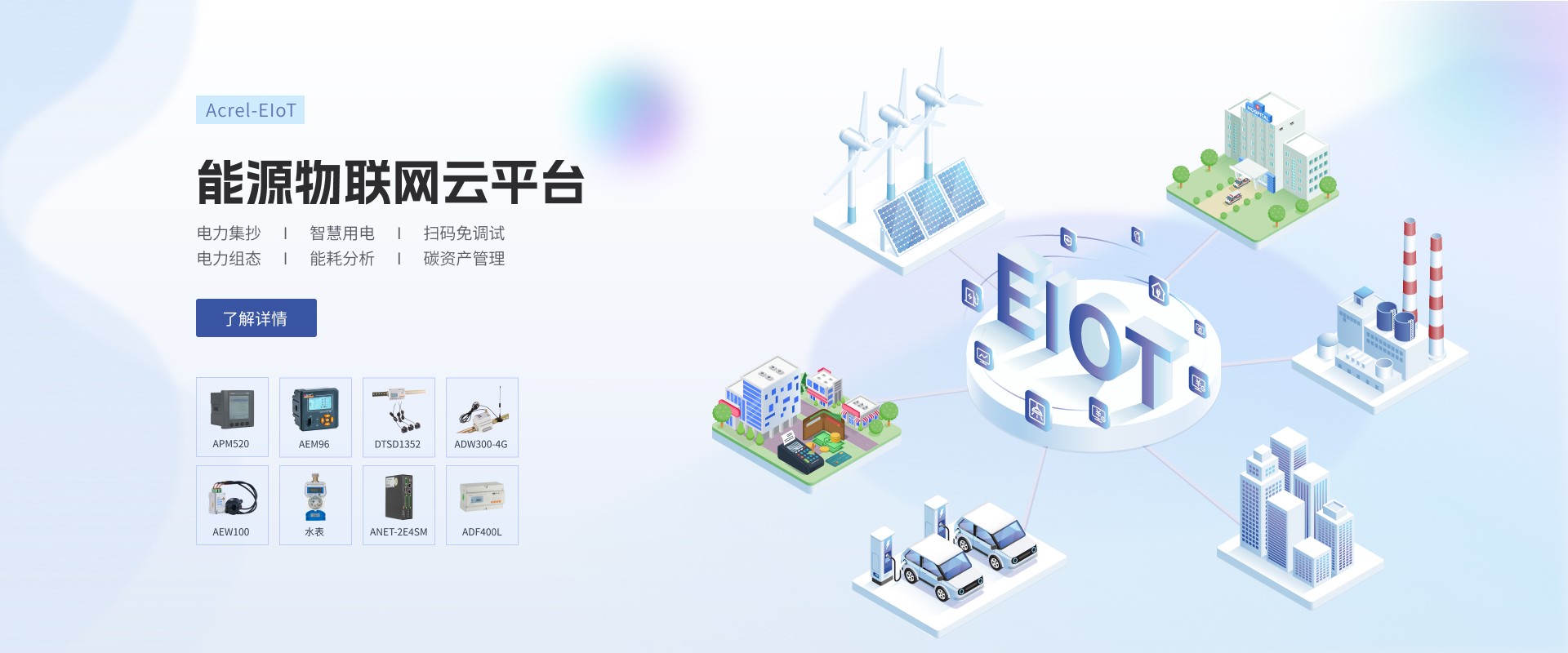
The Acrel-EIoT Energy Internet of Things Open Platform is a system based on an IoT data hub, establishing unified upstream and downstream data standards, and providing energy IoT data services to internet users. Users simply need to purchase Acrel-EIoT IoT sensors, select a gateway, install them independently, and scan a code to access the required industry data services on their smartphones and computers.
The platform offers functionalities such as data-driven dashboard, electrical safety monitoring, power quality analysis, electricity consumption management, pre-paid management, charging station management, intelligent lighting control, alarm and record of abnormal events, and operation and maintenance management, while supporting multi-platform, multi-language, and multi-terminal data access.
(2) Application Sites
This platform is suitable for apartment renters, chain convenience stores, small factories, building management system integrators, small property management, smart cities, substation transformer stations, buildings, communication base stations, industrial energy consumption, smart beacons, and power operation and maintenance fields.
(3) Platform Structure
(4) Platform Features
Power Metering and Collection
The Electric Power Collection and Monitoring Module enables the querying, analysis, early warning, and comprehensive display of various monitoring data to ensure the environmental friendliness of the distribution room. In terms of intelligence, it achieves remote measurement, remote signaling, and remote control for the power supply and distribution monitoring system, providing comprehensive detection and unified management of the system. In data resource management, it can display or query the operation of various equipment within the power supply and distribution room (including historical and real-time parameters) and allows for daily, monthly, and annual report queries or printing based on actual conditions, enhancing work efficiency and saving human resources.
Transformer Monitoring
Power distribution diagram
Energy Consumption Analysis
The Energy Consumption Analysis Module utilizes automation and information technology to achieve automated, scientific management throughout the entire process, from energy data collection, process monitoring, energy medium consumption analysis, to energy consumption management. It integrates the entire process of energy management, production, and usage organically, applying advanced data processing and analysis techniques for offline production analysis and management. This results in unified dispatching of the entire factory's energy system, optimizes energy medium balance, effectively utilizes energy, enhances energy quality, reduces energy consumption, and aims to achieve energy-saving and consumption reduction, as well as improve the overall energy management level.
Energy Consumption Overview
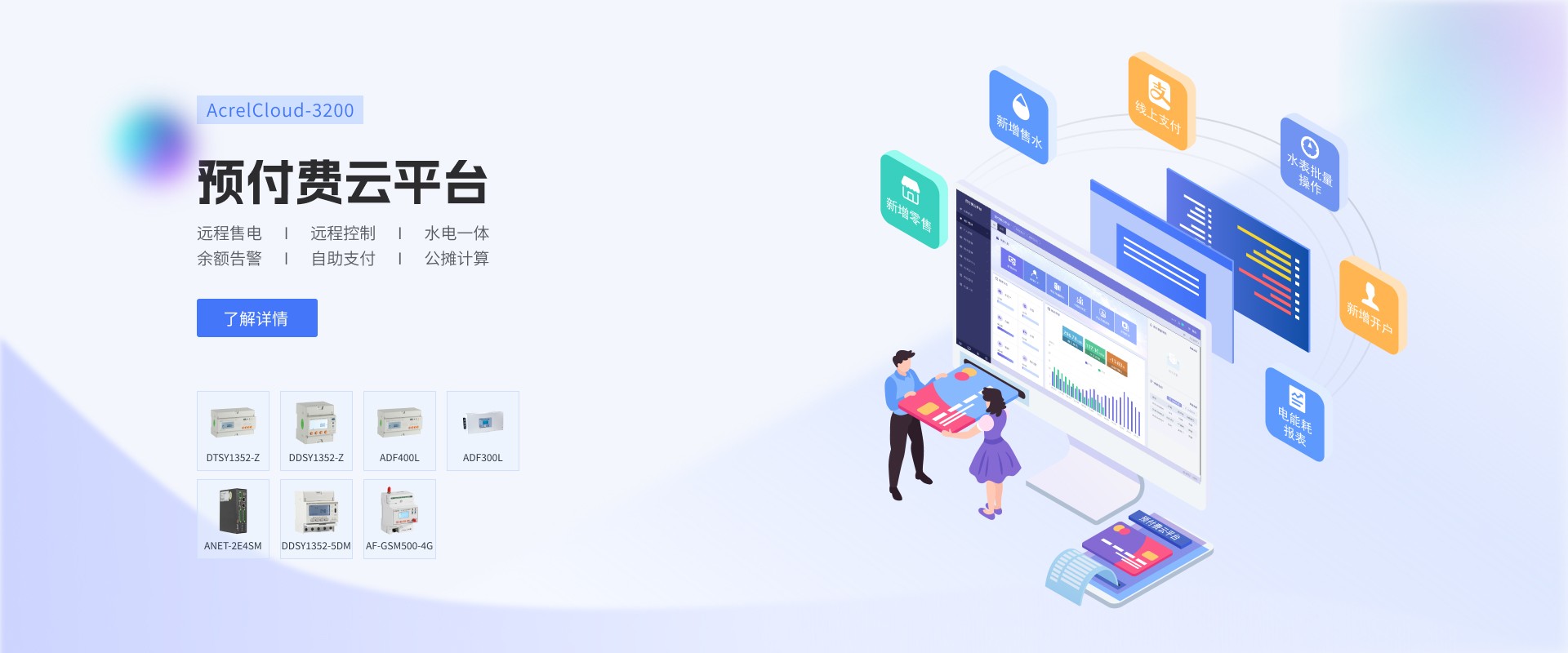
Pre-paid Management
1) Login Management: Manage operator accounts and permission allocation, view system logs, and more.
2) System Configuration: Configure for buildings, communication management machines, instruments, and default parameters.
3) User Management: Perform account opening, account closure, remote switching operations, batch processing, and record inquiries for store users.
4) Electricity Sales Management: Conduct remote operations such as electricity sales, returns, corrections, and record inquiries for meters that have already been registered.
5) Water Sales Management: Perform remote water sales, water returns, and record inquiries for meters that have been activated.
6) Reporting Center: Offers inquiries into financial reports for electricity and water sales, energy consumption reports, alarm reports, etc. All reports and records within this system support export in Excel format.
Pre-Paid Dashboard
Charging Station Management
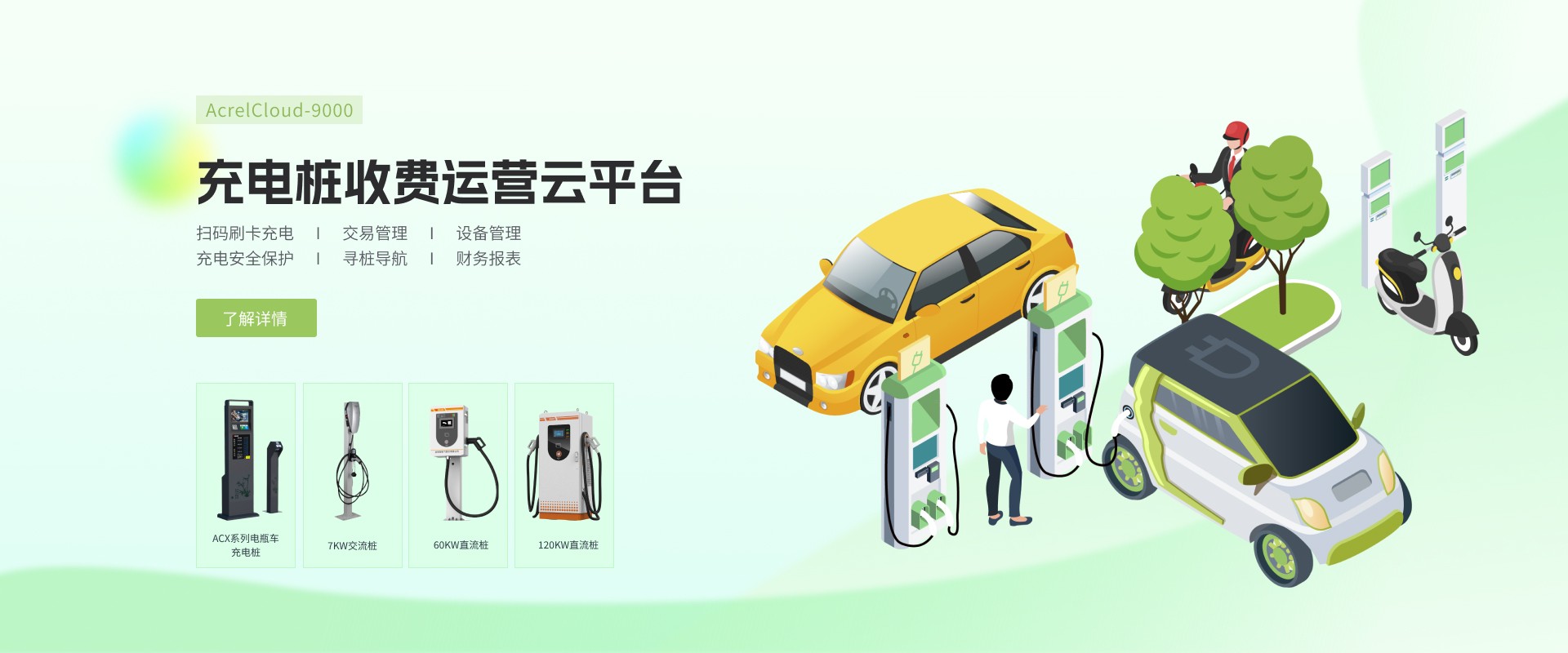
Utilizing Internet of Things technology, the system continuously collects and monitors data from charging station sites and individual charging stations. It also provides early warnings for a range of malfunctions, such as overheating protection in charging machines, over-voltage and under-voltage in input/output, and insulation detection faults. The cloud platform encompasses all functionalities related to charging billing and station operation, including city-level dashboards, transaction management, financial management, transformer monitoring, operation analysis, and basic data management.
Smart Lighting
Smart lighting continuously monitors the power status of lighting circuits in urban areas, such as indoor lighting and streetlights, through the Internet of Things technology. It also enables scheduling strategies for on/off control, as well as remote management and mobile management on the backend. This reduces the maintenance difficulty and costs of streetlight facilities, improves management levels, and achieves energy-saving and emission-reduction effects.
Monitor Page
Safe Electric Use
Our company utilizes self-developed residual current transformers, temperature sensors, and electrical fire detectors to continuously track and statistically analyze the primary causes of electrical fires (cable temperature, current, and residual current). We promptly deliver any potential hazard information to the enterprise management team, guiding them in immediate investigation and treatment to eliminate potential electrical fire hazards, achieving the goal of "preventing dangers before they occur."
Smart Fire Protection
By leveraging cloud-based data analysis, mining, and trend analysis, we assist in achieving scientific fire warnings, grid management, and the implementation of multi-responsibility supervision. It fills the gaps previously unable to effectively monitor "small nine places" and hazardous chemical production enterprises. Suitable for all public and civilian constructions, it realizes unmanned surveillance of intelligent fire protection, meeting the practical needs for the "automation," "intelligentization," "systematization," and "refinement" of electrical management in intelligent fire protection.
(5) System Hardware Configuration


6 Conclusion
In summary, with the advancement of IoT technology and the development of smart cities, constructing building energy consumption prediction systems based on IoT can make building energy consumption visible, store historical data, empower urban management levels, enhance building management capabilities, and improve energy use efficiency.
References
Yu Jiayi, Zhou Rui, Zhong Wei. Exploring the Application of Internet of Things Technology in Building Energy Consumption Prediction System
Hu Yingjian. Implementation of a Building Energy Consumption Monitoring System Based on LoRa Technology in Civil Defense Basement. Modern Building Electrical Engineering, 2020, 11(8): 28-30.
Chen Hui. Analysis of Building Energy Consumption Simulation Model Based on Neural Network Analysis [J]. Journal of Jiamusi University (Natural Science Edition), 2022, 40(1): 13-15+138.
Hou Xiaohu . Design and Implementation of a Comprehensive Energy Consumption Monitoring Management Platform for University Campuses
[4] Corporate Microgrid Design and Application Handbook 2022.0
