

Summary: In recent years, with the rapid progress of airport construction in our country, the level of automation and requirements for energy consumption management in airport construction have increased significantly. During operation, airports consume large amounts of water, electricity, gas, and other resources. How to reduce operating costs of airports, decrease energy consumption while maintaining high-quality service levels, and transform "energy guzzlers" into "energy savers" has become a key focus in airport operational management. By leveraging cutting-edge domestic technology and combining the experience of several energy consumption design experts from other large-scale projects, the article has developed a highly adaptable platform system for the energy consumption measurement system of the Third Phase (T4) of Xiaoshan International Airport. After multiple stages of platform testing, it is guaranteed to provide stable operational services to the airport upon the official launch of the energy consumption management system, alleviating the burden of energy consumption management for the airport.
Keywords: Green Airport; Energy Consumption Management
Project Overview
The Hangzhou Xiaoshan International Airport Phase III (T4) project is located at the original site of the airport in Xiaoshan District, Hangzhou City, Zhejiang Province. The total floor area reaches 1.5 million square meters, with the current phase focusing on the new terminal building and the land-side transportation center, including the passenger terminal building and the northern third concourse. This project is a landmark project for the construction of major transportation channels in Zhejiang Province and an important supporting project for the 19th Asian Games. The overall expansion project is designed to meet the requirements of 90 million passenger throughput by 2030. The main construction includes a new terminal building (with a design capacity of 50 million passengers), a land-side transportation center of 530,000 square meters, commercial development (hotels and offices) of 170,000 square meters, an energy center, and related municipal supporting facilities. Additionally, an airport high-speed railway station is being constructed underground alongside the new terminal building. Following the completion of the expansion project, Xiaoshan Airport has identified the construction of a "safe, green, smart, and people-oriented" airport as a key work agenda. In terms of green airport construction, the Phase III (T4) of Hangzhou Xiaoshan International Airport has obtained the green architectural design evaluation label.
1. System Architecture and Design Essentials
Multiple studies show that the comprehensive energy consumption management system is provided by Pano in Zhuhai. The system covers all intelligent electricity and water meters in this phase of construction (3080 intelligent electricity meters and 518 intelligent water meters). According to the overall design principles of the project, the front-end signal collection of the energy consumption management system uses halogen-free, low-smoke, flame-retardant, and fire-resistant B-grade control cables. The front-end data is collected through control cables to the Pano communication management unit in the low-voltage room, which uploads the data to the mechanical and electrical integrated network of Phase III of the airport via its network ports. Both the network transmission layer and the core layer use Hirschmann professional-grade industrial switches.
All data within the system platform is forwarded to the IBMS interface, power monitoring system, and thermal exchange station system in a classified and itemized form via the core switching of the electromechanical integrated network and the Web API, http, etc. It is then transmitted to the Hangzhou Energy Management Comprehensive Platform via the external network (dedicated line).
2 System Management Platform Performance
The Comprehensive Energy Consumption Management Service Platform meets the requirements of "Energy Management System - Requirements" (GB/T 23331-2012). As one of the core components for the overall energy management and daily operation of the airport, it is a key quality control target. The system utilizes a modularized software architecture, providing a suite of tools for users to easily implement data model establishment, component assembly, system interface configuration, system backup, and a series of comprehensive functions. Both in actual development and application of this platform, it ensures the following performance.
Reliability: The platform features an auto-diagnosis function, relying on the Zhuhai Pano Pi-MonitorDiagnosis tool to provide real-time background monitoring for CPU, memory, hard drive, and network, as well as early warning of network and hardware failures, ensuring continuous and uninterrupted operation of the platform.
The platform ensures effective resource utilization and timely recycling through an automated timed recycling mechanism for IIS application pool settings, preventing resource shortages and system crashes due to prolonged operation.
The platform processes data through data warehousing and preprocessing technologies to enhance access performance and reliability. This includes using anomaly data determination rules to assess data quality, identifying negative numbers, excessively large or small values, and empty data, and generating alert events based on alert rules; as well as summarizing energy consumption data at various granularities such as hourly, daily, monthly, and annual, categorized by type and regional domains.
(2) Usability. A key indicator of platform performance, usability is guided by the system platform architect. Based on the materials provided in subsequent design meetings or in written form, it clearly defines UI style, operational habits, and functional prompts. All functional interfaces and operational processes are consistent, and users are provided with rich list instructions, help documents, and operation manuals that meet requirements, making it easy for users to master and operate the software, alleviating the burden on operators, and leading to high software satisfaction.
(3) Maintainability. The platform can fix issues or defects in the existing system without affecting other modules, and features a comprehensive exception log management module that provides detailed information on exceptions when they occur. Additionally, an operationally robust maintenance manual is provided separately for the operators, allowing them to search for detailed troubleshooting steps and methods in the manual based on error codes after an issue arises.
(4) Integration Capabilities. The project demands a highly integrated platform that leverages third-party interface services to directly access other system applications or pull data from other systems. The integration between the platform and the application systems varies by specialized categories and integration depths, primarily encompassing information sharing, process unification, and data interaction.
System Data Processing Workflow
The data collection service primarily handles the collection, storage, and forwarding of original data from measuring instruments, manually entered data, and data forwarded from third-party systems.
The platform supports the collection of data from various standard protocols or the forwarding of data from third-party systems. It also boasts rapid protocol development capabilities. According to design requirements, the platform supports data collection from devices using standard protocols such as Modbus TCP, Modbus RTU, IEC104, and can collect data from third-party systems via standard protocols like Web Service, Web API, OPC, and ODBC. It automatically supplements missing or incomplete data, and for data that cannot be supplemented, it offers algorithmic repair or manual data entry for correction. Common data repair algorithms include the mean value algorithm and historical interpolation algorithm.
4 Platform Configuration
The energy management system is designed using componentized software technology, with each functional module constructed from multiple reliable independent components, each performing specific business tasks. The functional and interface modules can also be freely configured, allowing for rapid response to changes in user requirements with minimal modifications, significantly enhancing software efficiency and user satisfaction.
The airport customizes regional, category sub-items, and power distribution data models using the Pi-ModelManager tool. Customizations include model categories, names, data structures, and data sources.
The data source and display methods of the platform components can be configured according to requirements, meaning the same component can be configured to display single-dimensional data charts, multi-dimensional data charts, and combinations of various data presentation methods for different application scenarios. The platform can also configure multiple components to联动 display together. When the content of one component changes, it will联动 refresh the display of other components, achieving interconnectivity among multiple components.
Operators can utilize the SVG configuration tool associated with Pi-ModelManager for graphical configuration, which offers functions such as element editing, event binding, and data binding.
Integrated System of 5 Airport Energy Management Platforms
The platform supports two integration methods: application integration and data integration. It can integrate data from third-party systems or devices, enabling information intercommunication and sharing between multiple systems. Integration with third-party systems is achieved through a single sign-on method using "shared cookies." After users log into the platform with the relevant account and password on the browser, they can access other integrated third-party systems without re-authentication, allowing for the operation and use of multiple systems within the same platform.
Safety Design for Airport Energy Management Platform Management Layer
The system employs a disaster recovery approach with remote data replication and unified management. It performs incremental backups daily and full backups every 30 days. Backup data is stored offsite in an IDC data center via the network, with a corresponding disaster recovery plan in place. In the event of a disaster, the remote data backup management software transmits the backup data to the host system over the internet, enabling rapid data switching and ensuring the stable operation of the system.
When hardware failures or other issues occur within the system, the system's front-end collector supports data storage for up to 30 days. Data can be resent once the system is restored to normal. The data collection equipment has excellent self-recovery capabilities, automatically reconnecting and restoring communication upon anomalies. It also allows for remote system modifications and upgrades as needed.
The entire data collection chain utilizes an encrypted private protocol for transmission. Without the key, the original data cannot be deciphered, effectively ensuring the security of data transmission between the measurement devices and the collectors.
The platform offers comprehensive permission management and verification features, strictly defining page, data, and operational permissions for different user levels, ensuring that after logging into the system, users of various roles can only access and operate authorized interfaces and data, thereby guaranteeing the security of the platform's data.
7 Energy Consumption Forecast Analysis
Airport energy consumption predictions are highly correlated with factors such as weather, passenger volume, and the number of flights, and are cyclically related to time. Therefore, the energy management system can utilize historical energy consumption data, combined with future weather conditions and flight numbers, to predict future energy consumption. This assists airport managers in energy scheduling and the rational planning of equipment like lighting and air conditioning. Additionally, energy consumption prediction and trend analysis technologies can aid airport finance personnel in completing annual energy cost budgets.
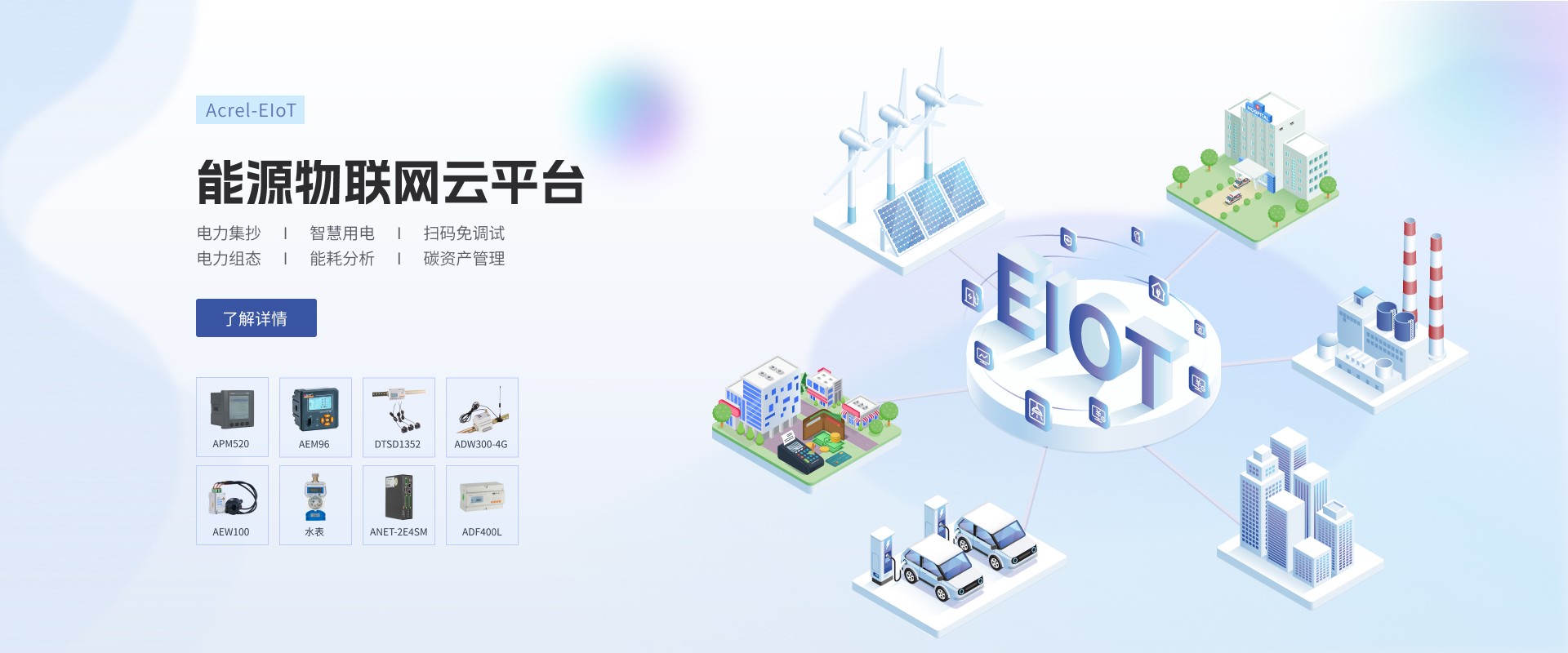
Acrel-EIOT Energy Internet of Things Cloud Platform
(1) Overview
The Acrel-EIoT Energy Internet of Things Open Platform is a unified data standard establishment based on an IoT data hub, providing energy IoT data services to internet users. Users simply need to purchase Acrel-EIoT IoT sensors, select a gateway, install them, and scan a code to access the required industry data services on their smartphones and computers.
The platform offers features such as data-driven dashboard, electrical safety monitoring, power quality analysis, energy consumption management, pre-paid management, charging station management, intelligent lighting control, alarm and record of abnormal events, and O&M management, while supporting multi-platform, multi-language, and multi-terminal data access.
Application Sites
This platform is suitable for apartment renters, chain convenience stores, small factories, building management system integrators, small property management companies, smart cities, substation transformer stations, buildings, communication base stations, industrial energy consumption, smart beacons, and power operation and maintenance fields.
(3) Platform Structure

(4) Platform Features
Electricity Collection and Reading
The Power Collection and Monitoring Module enables the querying, analysis, early warning, and comprehensive display of various monitoring data to ensure an environmentally friendly power distribution room. In terms of intelligence, it achieves remote measurement, remote signaling, and remote control for the power supply and distribution monitoring system, providing comprehensive detection and unified management of the system. In data resource management, it can display or query the operation of various equipment within the power distribution room (including historical and real-time parameters), and allows for daily, monthly, and annual report queries or printing based on actual conditions, thereby improving work efficiency and saving human resources.

Transformer Monitoring

Power distribution diagram
Energy Consumption Analysis
The Energy Consumption Analysis Module employs automation and information technology to achieve automated and scientific management throughout the entire process, from energy data collection, process monitoring, energy medium consumption analysis, to energy consumption management. It integrates the entire process of energy management, production, and usage organically, utilizing advanced data processing and analysis techniques for offline production analysis and management. This facilitates unified dispatching of the entire factory's energy system, optimizes energy medium balance, effectively utilizes energy, improves energy quality, reduces energy consumption, and aims to achieve energy-saving and consumption reduction while enhancing overall energy management levels.

Energy Consumption Overview

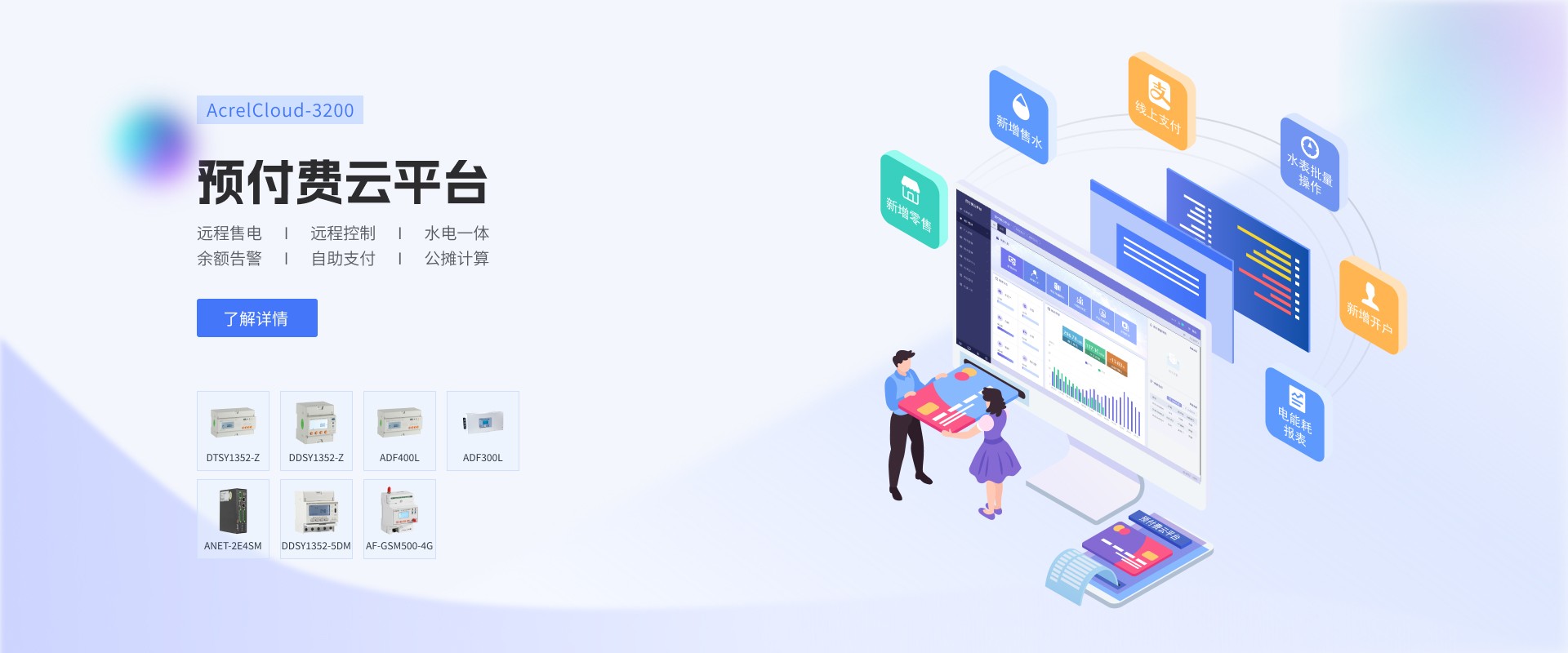
Pre-paid Management
1) Login Management: Functions include managing operator accounts and permission allocation, as well as viewing system logs.
2) System Configuration: Configure for buildings, communication management machines, instruments, and default parameters.
3) User Management: Performs operations such as account opening, account closure, remote switching, batch operations, and record inquiries for store users.
4) Electricity Sales Management: Perform remote operations such as electricity sales, returns, corrections, and record inquiries for meters that have been registered.
5) Water Sales Management: Remote operations for water sales, returns, and record inquiries on already opened meters.
6) Reporting Center: Offers inquiries for financial reports on electricity and water sales, energy consumption reports, alarm reports, etc. All reports and records inquiries within this system support export in Excel format.

Pre-Paid Dashboard
◆ Charging Station Management
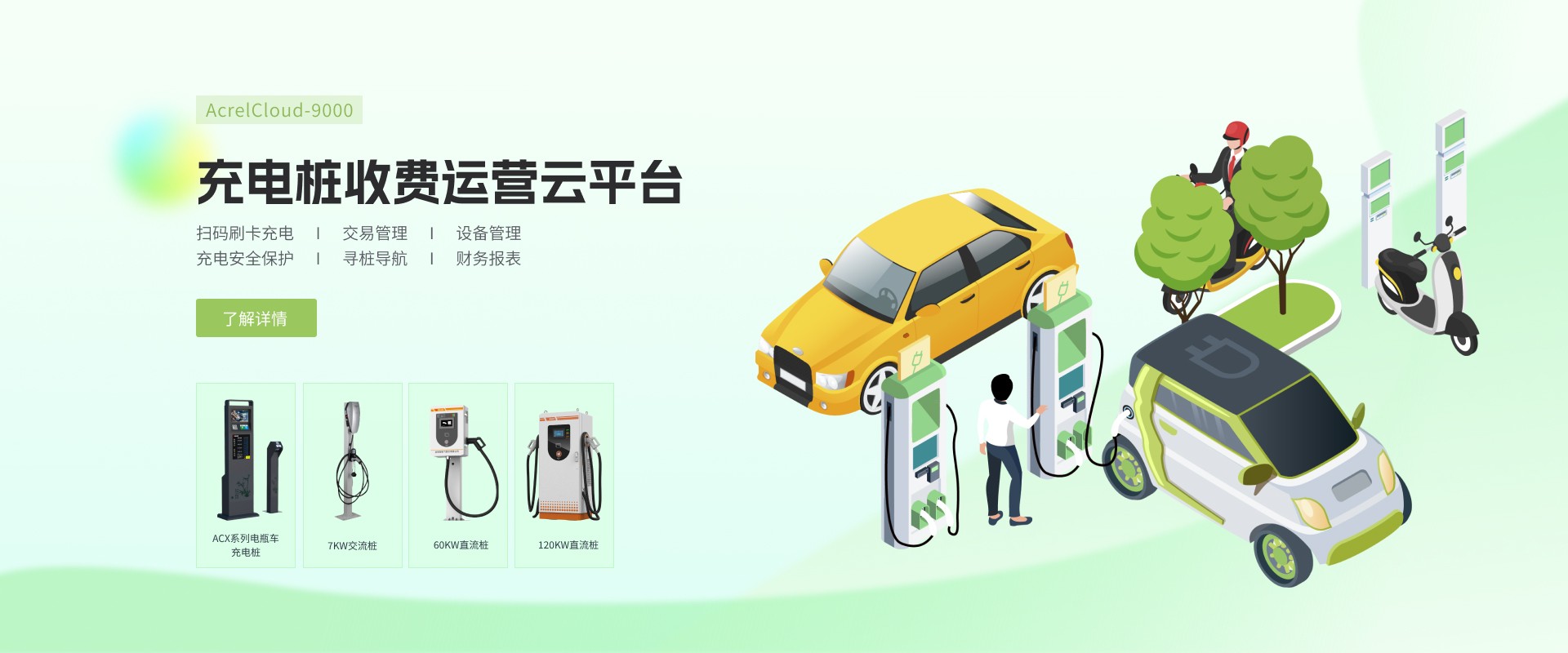
Through Internet of Things technology, the system continuously collects and monitors data from charging station sites and individual charging stations, while providing early warnings for a range of faults such as over-temperature protection of charging machines, over-voltage and under-voltage of charging machine inputs and outputs, insulation detection failures, and more. The cloud platform encompasses all functionalities for charging fees and the operation of charging stations, including city-level large screens, transaction management, financial management, transformer monitoring, operation analysis, and basic data management.
◆Smart Lighting
Smart lighting continuously monitors the power consumption status of indoor lighting and city streetlights across various urban areas through IoT technology. It also allows for scheduled on/off strategy configuration, as well as remote management and mobile management from the backend. This reduces the difficulty and cost of maintaining streetlight facilities, improves management levels, and achieves energy-saving and emissions-reduction effects.

Monitoring Page
Electrical Safety
Our company utilizes self-developed residual current transformers, temperature sensors, and electrical fire detectors to continuously track and statistically analyze the primary causes of electrical fires (cable temperature, current, and residual current). We promptly deliver any potential隐患 information to corporate management, guiding them to conduct immediate investigations and remediation, aiming to eliminate potential electrical fire hazards and achieve the goal of "preventing dangers before they occur."
Smart Fire Protection
By leveraging cloud platforms for data analysis, mining, and trend analysis, we assist in achieving scientific early warnings for fires, grid-based management, and the implementation of multi-responsibility supervision. It fills the gap of ineffective monitoring for "small, scattered, and less noticeable places" and hazardous chemical production enterprises. Suitable for all public and civilian constructions, it realizes unmanned, intelligent fire protection, meeting the actual needs for "automation," "intelligentization," "systematization," and "refined" electricity management in intelligent fire protection.
(5) System Hardware Configuration


9 Farewell
As the energy consumption monitoring system evolves, a plethora of brands emerge, but for airport projects, the focus lies more on comprehensive systems that are powerful in functionality, reliable and secure, and easy to operate. The article examines the energy system construction of Hangzhou Xiaoshan International Airport Phase III (T4), which holds significant reference value for future new airport projects.
Reference
Yuan Huangjun, Liu Hengjie, Liu Yang. Application of Energy Consumption Management System in Large Airports
Ye Shaowu, Yao Guoliang. Discussion on the Expansion and Air Conditioning Cold and Hot Source Transmission System of Hangzhou Xiaoshan International Airport [J]. Zhejiang Architecture
Xiao Qiong. Research and Analysis on Energy Consumption Data Collection and Management System of Kunming Changshui International Airport [D]. Kunming: Yunnan University, 2018.
[4] Corporate Microgrid Design and Application Manual, 2022.05 Edition.
